Step 1
Machine-Ready Briefs
AI translates unstructured needs into a technical, machine-ready project request.
We use cookies to improve your experience and analyze site traffic. You can accept all cookies or only essential ones.
 Bilarna
Stop browsing static lists. Tell Bilarna your specific needs. Our AI translates your words into a structured, machine-ready request and instantly routes it to verified E-commerce Conversion Enhancement experts for accurate quotes.
AI translates unstructured needs into a technical, machine-ready project request.
Compare providers using verified AI Trust Scores & structured capability data.
Skip the cold outreach. Request quotes, book demos, and negotiate directly in chat.
Filter results by specific constraints, budget limits, and integration requirements.
Eliminate risk with our 57-point AI safety check on every provider.
Verified companies you can talk to directly
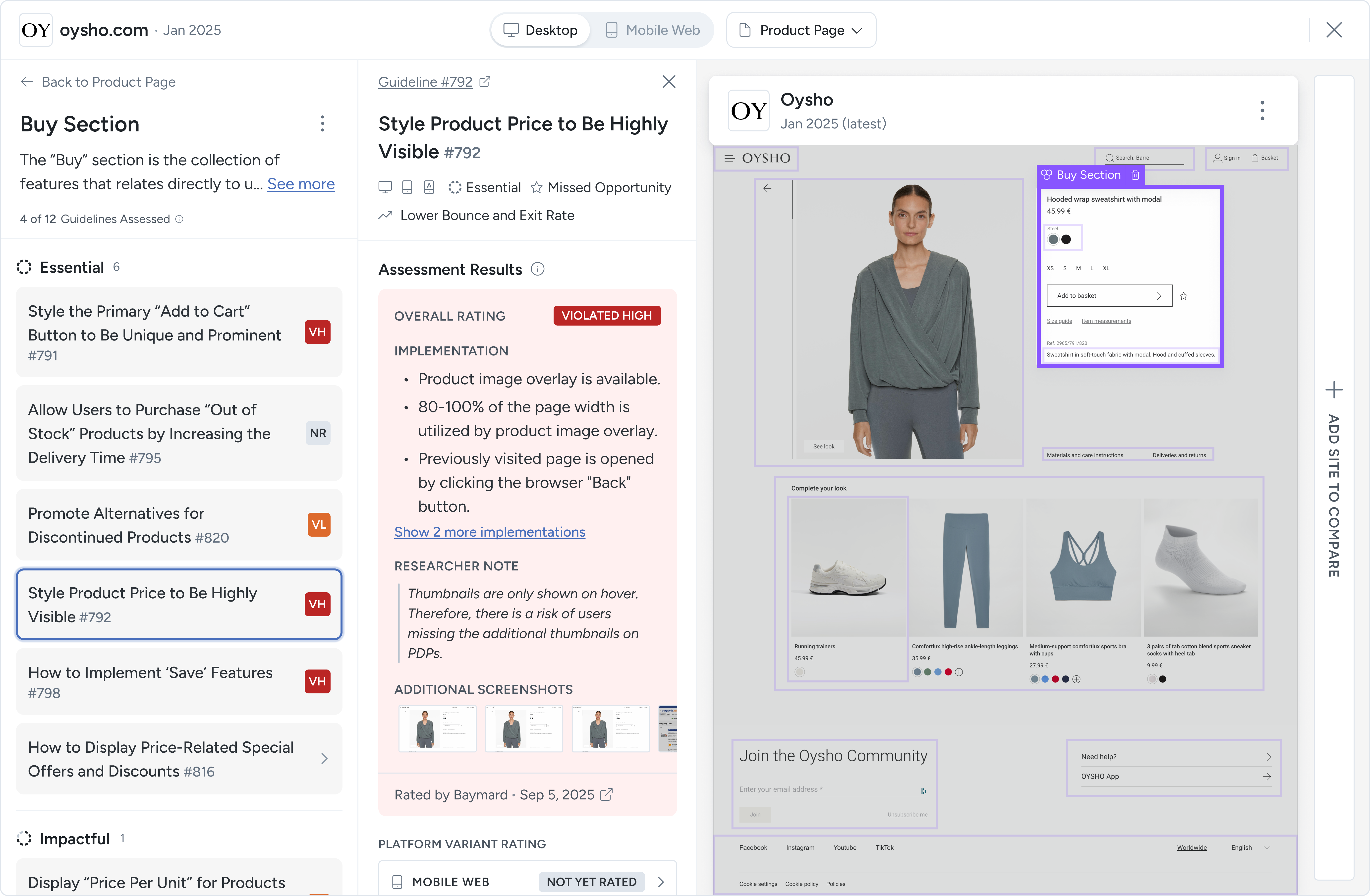
UX-Ray scans & analyzes every component type across your ecommerce site, giving you an instant UX to-do list in minutes. Sign up today.
Run a free AEO + signal audit for your domain.
AI Answer Engine Optimization (AEO)
List once. Convert intent from live AI conversations without heavy integration.
E-commerce conversion enhancement is a strategic process focused on increasing the percentage of website visitors who complete a desired transaction. It involves optimizing user experience, website design, and persuasive elements to guide customers effectively. The outcome is a measurable uplift in sales, average order value, and overall profitability from existing traffic.
Specialists conduct a detailed audit using analytics and session recordings to identify friction points and abandonment triggers in the customer journey.
Based on data, they deploy targeted improvements such as streamlining checkout, refining copy, or adjusting page layouts to boost user confidence.
A/B testing and continuous monitoring validate the changes' effectiveness, providing clear ROI data and guiding further refinement cycles.
Optimize product pages and cart flows to reduce abandonment and increase cross-selling opportunities for physical goods.
Improve free-trial sign-up rates and upgrade conversions by clarifying value propositions and simplifying onboarding steps.
Enhance landing page persuasiveness and streamline the subscription selection process to boost customer acquisition.
Convert high-intent industrial traffic by optimizing complex catalog navigation and streamlining quote request processes.
Increase sales velocity by optimizing individual seller storefronts, product listings, and promotional messaging within larger platforms.
Bilarna evaluates every conversion optimization provider through a proprietary 57-point AI Trust Score. This comprehensive assessment rigorously checks their technical expertise via portfolio audits, verifies client satisfaction through reference checks, and assesses their methodological rigor. Bilarna continuously monitors provider performance to ensure buyers connect only with reputable, results-driven experts.
Costs vary significantly based on project scope, store complexity, and the provider's expertise. Common models include monthly retainers for ongoing optimization, fixed-price project fees for specific audits, or performance-based pricing tied to achieved lift in conversion rates.
General marketing focuses on driving traffic to your site, while conversion rate optimization (CRO) is dedicated to improving the effectiveness of that traffic once it arrives. CRO is a systematic, data-driven process of testing and refining the user experience to maximize conversions from existing visitors.
Initial audit insights can be delivered within weeks, but statistically significant results from A/B testing typically require one to three full business cycles. Sustainable, data-backed improvements are an iterative process, not a one-time fix.
Success is measured by a sustained increase in the primary conversion rate, alongside improvements in secondary metrics like average order value, cart abandonment rate, and customer lifetime value. The ultimate metric is a clear return on investment from the optimization efforts.
Common pitfalls include making changes based on opinions rather than data, testing too many variables at once, ignoring mobile user experience, and stopping testing after a single win instead of pursuing continuous improvement.
Yes, batch processing is supported. Follow these steps: 1. Select the module you need such as Video AI, Image AI, or Audio AI. 2. Import multiple video, audio, or image files into the software. 3. Choose your preferred enhancement feature or AI model for all files. 4. Click the RUN button to start processing all files simultaneously, saving time and effort.
Yes, AI sketch conversion tools can be used for commercial purposes by following these steps: 1. Choose a professional AI sketch model that offers commercial licensing. 2. Purchase the required credits or subscription plan that includes commercial use rights. 3. Upload your images or sketches in supported formats like JPG, PNG, or WEBP. 4. Convert your files using the professional model to ensure high detail, texture, and realism. 5. Download the high-resolution outputs suitable for client projects, marketing, or business use.
Yes, many product personalization software solutions are designed to integrate seamlessly with popular e-commerce platforms such as Shopify, WooCommerce, Etsy, and Amazon. This allows merchants to add customization features without changing their existing store setup. Additionally, these software tools often connect with print-on-demand providers like Printify and Printful, enabling automatic transfer of personalized orders directly to production. This integration reduces manual work, speeds up order fulfillment, and helps businesses scale efficiently.
Most e-commerce platforms offer tools to manage orders and shipping details through a centralized dashboard, but they typically do not handle the physical delivery of products themselves. Instead, they allow integration with third-party logistics providers or shipping services, enabling you to automate shipping processes and track deliveries efficiently. You can create accounts with delivery partners and connect them to your store to streamline order fulfillment. This separation allows businesses to focus on sales and customer service while leveraging specialized delivery services to handle logistics and ensure timely delivery to customers.
No, a professional web design agency does not take any commission on your e-commerce sales. The standard business model is a fixed service fee, typically a monthly subscription, which covers design, development, hosting, maintenance, and support. This means 100% of the revenue generated through the online store belongs directly to the business owner. This transparent pricing structure eliminates hidden costs and aligns the agency's success with providing reliable service, not with taking a percentage of the client's profits. It allows for clear financial planning and ensures the agency is incentivized to build a high-performing, sales-optimized site.
Cookies and tracking technologies are used to monitor and improve the service. Follow these steps to understand their use: 1. Cookies store small files on your device to remember your preferences and login details. 2. Session cookies last only while your browser is open; persistent cookies remain after closing. 3. Tracking cookies collect data about website traffic and user behavior to analyze and enhance the service. 4. Web beacons and scripts help count users and monitor system integrity. 5. You can manage cookie preferences through your browser settings but disabling cookies may limit service functionality.
Credits are consumed based on the type and size of the file processed. Follow these steps: 1. Each PDF page consumes 1 credit. 2. Each image consumes 1 credit. 3. Video or audio files consume 0.1 credit per second. 4. The exact credit consumption is displayed next to the generate button before processing. 5. Monitor your credits to manage usage effectively according to your subscription plan.
A business can improve its conversion rates through digital marketing by implementing targeted, high-quality content and strategic advertising. The primary method is developing purposeful content marketing that directly addresses the needs of the ideal buyer, which can lead to conversion rates up to six times higher. Strategic social media management educates and engages the audience, building trust and fostering relationships that drive conversions. Running successful advertising campaigns with consistent A/B testing identifies the most effective messages and creatives to generate a high return on investment. Furthermore, utilizing full-production video and imagery delivers concise, engaging information that captures the limited average attention span, solidifies brand messaging, and significantly boosts conversions and sales by building greater audience trust.
A business can improve its performance advertising and conversion rates by implementing a data-driven strategy that focuses on optimization, targeting, and user experience. The first step involves precise campaign measurement and analytics to identify which channels and creatives deliver the best return on ad spend (ROAS). Utilizing advanced advertising services that connect across all digital touchpoints ensures consistent messaging and efficient budget allocation. To boost conversions, businesses should refine audience targeting using first-party data and lookalike modeling to reach high-intent users. On-site optimization is critical; this includes improving page load speeds, streamlining checkout processes, and employing AI search optimization (AIO) techniques to make websites more visible in AI answer engines. Additionally, integrating post-cookie solutions for privacy-compliant tracking and using AI agents for real-time bid management can significantly enhance campaign performance and drive sustainable growth.
Improving low conversion rates with high traffic requires a systematic analysis of the user experience and strategic optimization of key website elements. The primary step is to conduct a thorough audit of the customer journey, using analytics to identify where visitors are dropping off or failing to complete desired actions, such as making a purchase or filling out a contact form. Common fixes include refining and simplifying calls-to-action (CTAs) to make them more compelling and visible, streamlining website navigation and checkout processes to reduce friction, and optimizing page load speeds to prevent user abandonment. Furthermore, enhancing the quality and relevance of landing page content to better match visitor intent and implementing A/B testing on different page layouts, headlines, and offers are crucial for data-driven improvements. By addressing these usability and messaging gaps, businesses can more effectively guide qualified traffic toward conversion, transforming interest into tangible results like leads and sales.