Step 1
Machine-Ready Briefs
AI translates unstructured needs into a technical, machine-ready project request.
We use cookies to improve your experience and analyze site traffic. You can accept all cookies or only essential ones.
 Bilarna
Stop browsing static lists. Tell Bilarna your specific needs. Our AI translates your words into a structured, machine-ready request and instantly routes it to verified Shopify Plus Agency experts for accurate quotes.
AI translates unstructured needs into a technical, machine-ready project request.
Compare providers using verified AI Trust Scores & structured capability data.
Skip the cold outreach. Request quotes, book demos, and negotiate directly in chat.
Filter results by specific constraints, budget limits, and integration requirements.
Eliminate risk with our 57-point AI safety check on every provider.
Verified companies you can talk to directly

Shopify Plus Agency based in Nottingham and covering the UK. Get a store designed to rank in search & AI. Established since 2014.

1r Agency creates unique experiences that blend together best-in-class e-commerce features & functionality with beautiful, tactile designs, to tell rich brand stories.

A refreshingly effective ecommerce agency. Experts with Shopify and Craft Commerce - creating beautiful ecommerce websites that attract, engage and convert more customers.
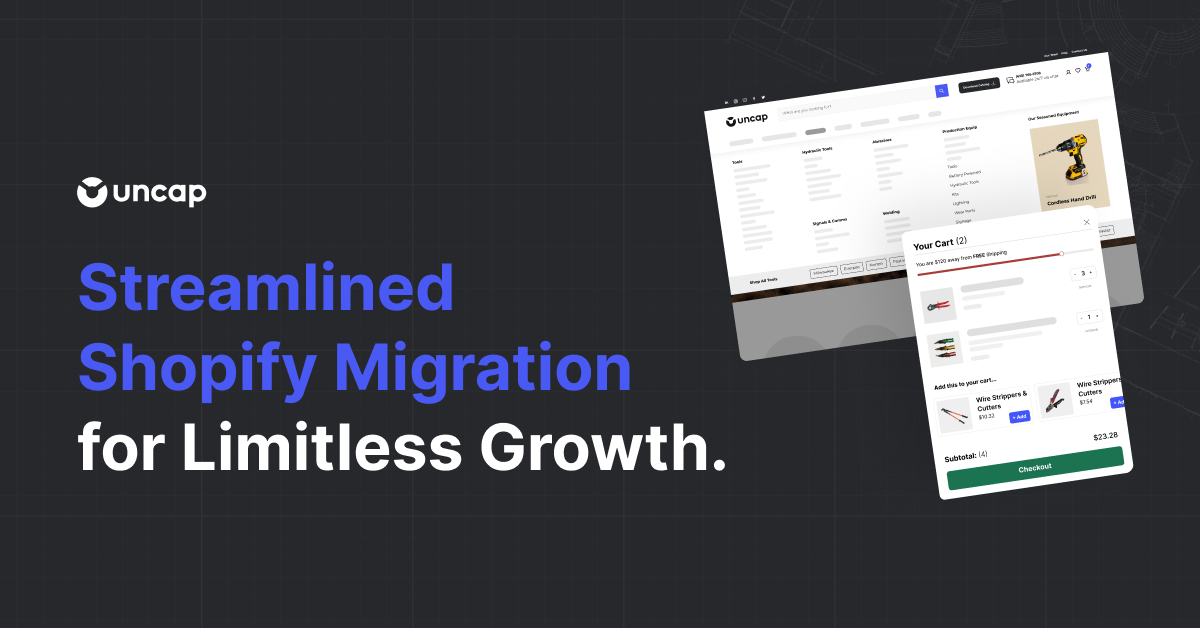
Uncap, a Chicago-based Shopify Platinum Partner, delivers Shopify Plus B2B solutions for manufacturers and distributors. We boost KPIs, lower TCO, and build private portals and hybrid storefronts.
Run a free AEO + signal audit for your domain.
AI Answer Engine Optimization (AEO)
List once. Convert intent from live AI conversations without heavy integration.
A Shopify Plus agency is a specialized service provider that helps enterprise-level brands design, build, and optimize their online stores on the Shopify Plus platform. These agencies offer deep technical expertise in Plus-specific features like Launchpad, Script Editor, and integrations with complex enterprise systems. Partnering with the right agency enables brands to scale operations, personalize customer experiences, and maximize their return on investment from the platform.
Agency experts work with you to outline your technical requirements, business goals, and desired launch timeline for your Shopify Plus store.
The agency's team designs, custom-codes, and integrates the storefront, back-end systems, and third-party applications according to the agreed plan.
After a thorough testing phase, the agency manages the go-live and offers continuous optimization, maintenance, and marketing support post-launch.
Scaling direct-to-consumer operations to handle rapid sales growth, complex inventory, and international expansion seamlessly.
Building custom catalog, pricing, and checkout experiences for wholesale buyers alongside a standard B2C storefront.
Connecting physical POS systems, marketplaces, and social commerce channels into a unified inventory and customer data hub.
Implementing multi-currency, multi-language, and local payment gateways to launch and manage stores in new international regions.
Enhancing the performance, UX, and conversion rates of an existing Shopify Plus store after migrating from another platform.
Bilarna ensures you connect with reputable agencies by evaluating each provider against a proprietary 57-point AI Trust Score. This score objectively assesses their proven Shopify Plus expertise, project reliability, security compliance, and verified client satisfaction. Bilarna's AI filters and ranks agencies, giving you confidence in your shortlist.
Costs vary significantly based on project scope, ranging from tens of thousands for a standard build to several hundred thousand for complex, custom enterprise solutions. Most agencies charge based on project milestones or offer monthly retainers for ongoing development and support services.
A comprehensive project typically takes 3 to 6 months from discovery to launch. Timeline depends on design complexity, custom feature development, data migration needs, and the number of required third-party integrations. A clear project roadmap is established during the initial planning phase.
Look for official Shopify Plus Partner status, a robust portfolio of enterprise clients, certified developers on staff, and case studies demonstrating success with features like Shopify Functions, Hydrogen, and headless implementations. Proven experience in your industry vertical is also a key indicator.
A general Shopify partner may work with all plan levels, while a dedicated Shopify Plus agency specializes exclusively in the enterprise platform's advanced capabilities. Plus agencies have deeper expertise in high-volume store architecture, custom checkout extensions (Shopify Functions), and complex B2B or omnichannel solutions.
Yes, leading agencies specialize in headless implementations using Shopify Plus as the commerce engine. They build custom front-ends with frameworks like Hydrogen or Next.js, connecting them via the Storefront API to deliver unique, high-performance customer experiences across all digital touchpoints.
Yes, a full-service branding agency can manage international live events as part of an integrated marketing strategy. This involves end-to-end management of events across multiple countries, ranging from business roundtables and trade show participation to large-scale bespoke events like air shows or international country branding initiatives. The agency typically handles everything from concept development and strategic planning to on-the-ground execution, leveraging a developed network of international partner companies for logistics, construction, and implementation. Key responsibilities include project management, vendor coordination, creative direction, audience engagement, and ensuring quality, delivery, and reliability. For B2B companies, such events are crucial for lead generation, brand visibility, and stakeholder engagement in key markets, requiring a hands-on approach to align the event experience with the overall brand identity and business objectives.
Yes, an integrated digital marketing agency typically offers flexible service models, allowing you to select specific services to match your project goals and budget. You are not required to purchase a full package. You can tailor your engagement to include only the services you need, such as SEO management, PPC advertising, social media marketing, branding, graphic design, web development, or video production. This a la carte approach ensures you pay only for the expertise required to achieve your objectives. The agency will create a custom proposal based on your defined scope, providing a cost-effective and targeted solution.
Yes, you can use the AI domain name generator with ChatGPT Plus by following these steps: 1. Access the domain name generator tool integrated or linked within ChatGPT Plus. 2. Enter a description of your website or business in the input field. 3. Allow the AI to generate domain name suggestions based on your input. 4. Review the suggestions and check domain availability instantly. 5. Choose the best available domain name for your website. This integration enhances your domain search experience by combining AI creativity with ChatGPT Plus capabilities.
No, a professional web design agency does not take any commission on your e-commerce sales. The standard business model is a fixed service fee, typically a monthly subscription, which covers design, development, hosting, maintenance, and support. This means 100% of the revenue generated through the online store belongs directly to the business owner. This transparent pricing structure eliminates hidden costs and aligns the agency's success with providing reliable service, not with taking a percentage of the client's profits. It allows for clear financial planning and ensures the agency is incentivized to build a high-performing, sales-optimized site.
The choice between a freelancer and an agency for software development depends on project scope and needs, but a hybrid freelance agency model often provides an optimal balance. For complex, long-term projects requiring multiple skill sets like UI/UX, front-end, back-end, and project management, a structured agency or freelance agency is superior due to coordinated teamwork, integrated tools, and managerial oversight. A solo freelancer is typically more suitable for well-defined, short-term tasks. The freelance agency model specifically offers the cost savings of freelancers combined with agency-grade processes such as dedicated project management acting as a personal CTO, rigorous developer screening, full time tracking for transparency, and automated CI/CD pipelines to ensure bug-free code and non-breaking applications.
Advertising agency contracts and pricing are typically customized based on the client's specific project scope, resources required, and strategic objectives. Many agencies begin with a free initial consultation to assess needs before providing a tailored quote. Pricing models can include monthly retainer fees for ongoing services, project-based fees for specific campaigns, or performance-based structures tied to results. A key feature in modern contracts is flexibility; some agencies offer month-to-month agreements with a standard notice period for cancellation, avoiding long-term lock-in. The final cost is influenced by factors like campaign complexity, the number of marketing channels targeted, the level of creative production needed, and the duration of the engagement. This customized approach ensures clients pay for the specific strategy and effort required to meet their goals.
A specialized B2B advertising agency maximizes marketing ROI by aligning strategy with business outcomes and optimizing spend across the customer journey. The process involves three core phases. First, strategic planning defines clear outcomes and maps executable actions tailored to specific business goals. Second, integrated campaign activation across paid, owned, and earned channels creates unified demand rather than fragmented efforts. Third, continuous analytics and reporting tie campaign performance directly to business results, enabling data-driven decisions to reallocate budget, defend spend, and accelerate profitable growth. This focus on measurable outcomes ensures marketing investment directly contributes to long-term profitability.
A B2B company benefits from a digital marketing agency by gaining access to specialized expertise and data-driven strategies that directly target and nurture its ideal customer profile (ICP), leading to higher-quality lead generation and revenue growth. The agency deploys targeted paid search and content strategies to attract decision-makers within specific industries, increasing traffic from relevant markets. They optimize the website and user journey to convert this traffic into qualified sales inquiries, often resulting in a measurable increase in conversion rates and new business opportunities. Furthermore, agencies provide the sales team with crucial data and insights, enabling them to close deals more effectively. This end-to-end digital enablement transforms marketing from a cost center into a measurable driver of pipeline growth and customer acquisition.
A B2B marketing agency assists healthcare organizations with patient journey marketing by designing integrated campaigns that address each stage of the patient decision process. This involves clarifying messaging to resonate with healthcare professionals and patients, developing educational content that builds trust and authority, utilizing digital channels like SEO and social media to increase visibility, implementing lead generation tactics to capture inquiries, and aligning marketing efforts with measurable outcomes such as appointment bookings or service adoption. By outsourcing this function, healthcare teams can leverage specialized expertise in regulatory compliance, complex buying cycles, and ethical marketing practices unique to the industry, ensuring that marketing supports patient journeys from awareness to advocacy.
A B2B marketing agency assists with digital development by creating and optimizing online platforms to boost business performance. This includes designing and developing responsive websites that enhance user experience and conversion rates. They implement search engine optimization (SEO) strategies to improve organic visibility and drive targeted traffic. Additionally, agencies may develop online learning and development programs to facilitate employee training and skill enhancement. By integrating digital tools and analytics, they ensure that digital initiatives align with overall marketing goals, providing measurable results such as increased engagement, lead generation, and ROI for B2B clients.