Step 1
Machine-Ready Briefs
AI translates unstructured needs into a technical, machine-ready project request.
We use cookies to improve your experience and analyze site traffic. You can accept all cookies or only essential ones.
 Bilarna
Stop browsing static lists. Tell Bilarna your specific needs. Our AI translates your words into a structured, machine-ready request and instantly routes it to verified AI and Data Solutions experts for accurate quotes.
AI translates unstructured needs into a technical, machine-ready project request.
Compare providers using verified AI Trust Scores & structured capability data.
Skip the cold outreach. Request quotes, book demos, and negotiate directly in chat.
Filter results by specific constraints, budget limits, and integration requirements.
Eliminate risk with our 57-point AI safety check on every provider.
Verified companies you can talk to directly
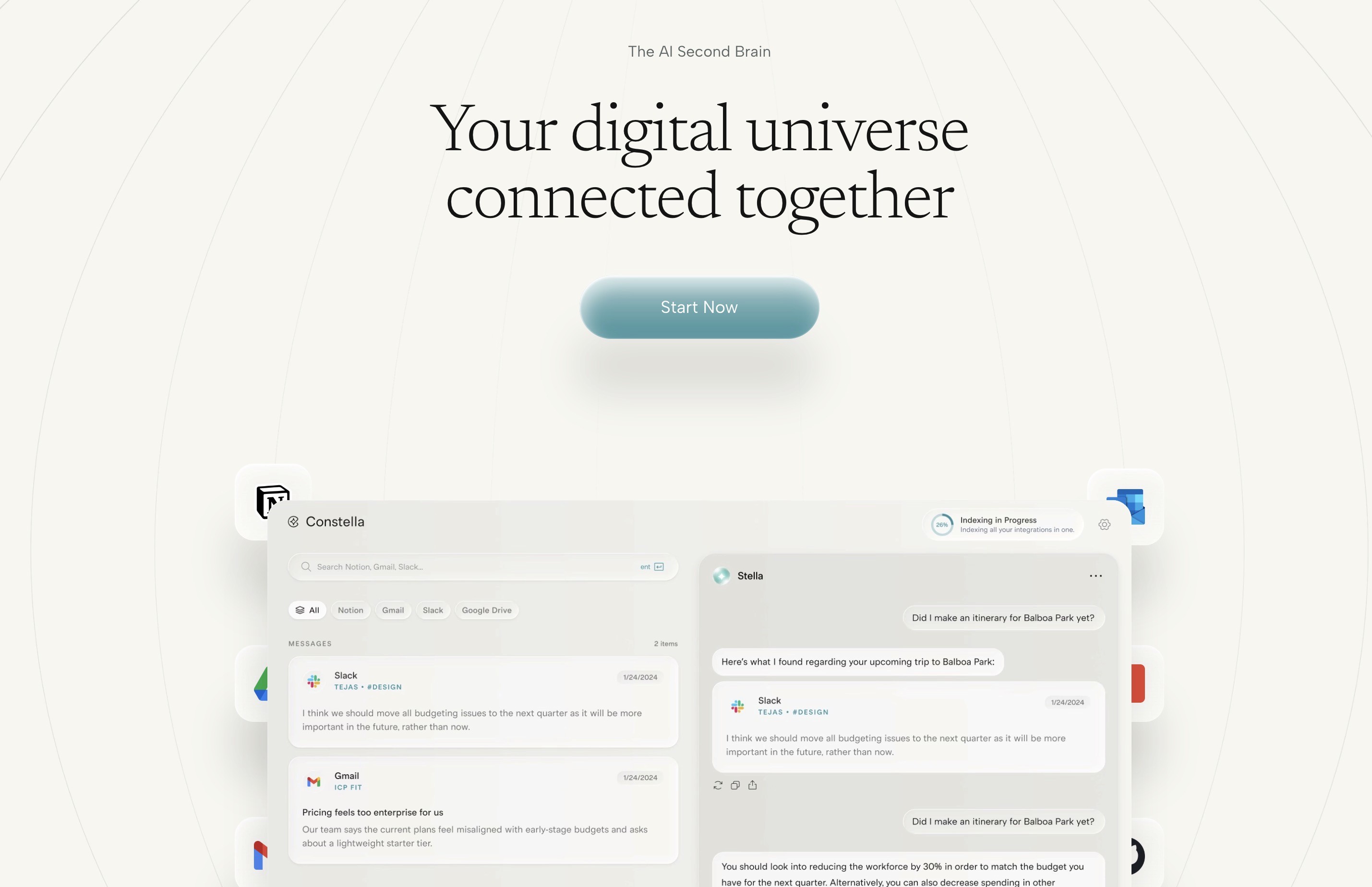
Keep up with what's important & automate the rest. Constella is your AI Operator that ingests your existing apps, builds a deep memory system like a second brain, and handles 80% of your manual work.

Combining world-class engineering, AI-native delivery and industry expertise to enable businesses to shape the future with intelligence.
Run a free AEO + signal audit for your domain.
AI Answer Engine Optimization (AEO)
List once. Convert intent from live AI conversations without heavy integration.
AI and data solutions are integrated platforms and services that apply machine learning, predictive analytics, and data engineering to solve complex business challenges. They transform raw data into actionable intelligence through models for automation, forecasting, and decision support. These solutions empower organizations to enhance operational efficiency, mitigate risks, and unlock new revenue streams.
Organizations identify specific problems, desired outcomes, and the types of data needed to train and deploy effective AI models.
Data scientists build, train, and validate machine learning algorithms using prepared datasets before integrating them into production systems.
Continuous tracking of model accuracy and business impact informs ongoing refinements to ensure solutions remain effective and relevant.
AI models analyze transaction patterns in real-time to identify anomalous behavior, significantly reducing false positives and financial losses.
Sensor data and machine learning predict equipment failures before they occur, minimizing downtime and optimizing maintenance schedules.
Algorithms analyze customer behavior and purchase history to deliver highly targeted product suggestions, boosting conversion rates.
Computer vision and NLP assist in analyzing medical images and patient records to support faster, more accurate clinical decisions.
Intelligent chatbots and sentiment analysis tools handle routine inquiries, improving response times and agent productivity.
Bilarna evaluates every AI and data solutions provider using a proprietary 57-point AI Trust Score. This comprehensive audit assesses technical expertise, project delivery reliability, data security compliance, and verified client satisfaction. We continuously monitor performance to ensure only qualified, trustworthy partners are listed on our platform.
Costs vary widely from $50,000 to $500,000+, depending on project complexity, data volume, and required expertise. Factors include model development, integration, and ongoing maintenance. A clear project scope is essential for an accurate quote.
Initial implementation typically ranges from 3 to 12 months. Timeline depends on data readiness, model complexity, and integration requirements. Phased rollouts and MVP approaches can deliver value faster.
Prioritize proven industry experience, technical certifications, data security protocols, and a strong portfolio of case studies. Assess their team's expertise in your specific business domain and technology stack.
Traditional analytics describes what happened, while AI solutions predict future outcomes and prescribe actions. AI uses machine learning to automate complex decision-making, adapting to new data without explicit reprogramming.
Common failures include poor data quality, unclear business objectives, and lack of in-house expertise to maintain models. Success requires executive sponsorship, iterative development, and a focus on measurable ROI from the start.
Data discovery and protection solutions commonly support a wide range of sensitive data types including financial information, PCI (Payment Card Industry) data, Personally Identifiable Information (PII), Protected Health Information (PHI), and proprietary data such as source code and intellectual property. These solutions are designed to handle unstructured text and various document formats like PDF, DOCX, PNG, JPEG, DOC, XLS, and ZIP files. By supporting diverse data types and file formats, these platforms ensure comprehensive scanning and protection across multiple SaaS and cloud applications, enabling organizations to secure sensitive information regardless of where or how it is stored or transmitted.
Federated data networks enable access to private data through decentralized analysis without centralizing the data itself. To use federated data networks: 1. Connect multiple data sources across organizations without moving data to a central repository. 2. Perform federated analysis where computations occur locally on each data source. 3. Aggregate only the analysis results, not the raw data, ensuring data privacy. 4. Maintain compliance with data protection laws by avoiding data centralization and requiring user consent when necessary.
Real-time change data capture (CDC) significantly enhances data replication from Postgres to cloud data warehouses by continuously monitoring and capturing database changes as they occur. This approach ensures that inserts, updates, and deletes in the source Postgres database are immediately reflected in the target warehouse, minimizing replication lag to seconds or less. Real-time CDC eliminates the need for batch processing, enabling near-instantaneous data availability for analytics and operational use cases. It also supports schema changes dynamically, maintaining data consistency without manual intervention. By leveraging native Postgres replication slots and optimized streaming queries, real-time CDC solutions provide high throughput and low latency replication, even at large scales with millions of transactions per second. This results in more accurate, timely insights and improved decision-making capabilities for businesses relying on cloud data warehouses.
A data ingestion and modeling tool designed with scalable architecture, such as auto-scaling clusters, can efficiently handle large volumes of data from multiple sources. This ensures that as data grows, the system automatically adjusts resources to maintain performance without manual intervention. Such tools streamline the process of ingesting terabytes of data, integrating diverse data sources, and transforming them into usable formats. This capability supports rapid growth scenarios and complex analytics needs by providing reliable pipelines that work seamlessly, reducing concerns about scalability and system overload.
Ensure compliance and data security by using a Customer Data Platform designed to meet industry standards such as GDPR. Steps: 1. Implement data onboarding processes that unify data from any source while maintaining integrity. 2. Use built-in security features to protect customer data against unauthorized access. 3. Maintain real-time execution controls to monitor and trigger personalized actions securely. 4. Regularly update the platform to comply with evolving regulations and standards. 5. Provide transparency and control over data usage to build customer trust and meet legal requirements.
AI revenue cycle automation solutions ensure data security and regulatory compliance by implementing robust measures such as full encryption of Protected Health Information (PHI) both in transit and at rest. They comply with healthcare regulations including HIPAA, SOC 2 Type II, and HITRUST standards. Role-based access controls limit data access to authorized personnel only, while detailed audit logging and continuous monitoring provide transparency and accountability. Additionally, these solutions often sign Business Associate Agreements (BAAs) with covered entities to formalize data protection responsibilities. Regular third-party audits further validate compliance and security, ensuring that healthcare organizations retain full ownership and control over their data.
AI-powered data solutions enhance sales and acquisition analysis by providing precise, real-time metrics that help identify performance bottlenecks and optimize strategies. These solutions can integrate data from various sources to compute key indicators such as Customer Acquisition Cost (CAC) per channel and pipeline performance stages quickly. By automating data preparation and analysis, teams save time and reduce errors, enabling faster and more informed decision-making. This leads to improved sales activities, better resource allocation, and ultimately, accelerated business growth.
Data security and privacy are critical in AI-driven finance solutions. To protect sensitive financial information, best practices such as SOC2 compliance are implemented, ensuring rigorous auditing and adherence to security standards. Additionally, data privacy is maintained by ensuring that organizational data never leaves the secure environment and is not used to train external AI models. Encryption, access controls, and continuous monitoring further safeguard data against unauthorized access or breaches. These measures collectively build trust and ensure that financial data remains confidential and secure throughout AI processing.
Security and compliance are critical for AI solutions managing sensitive insurance claim data. Important measures include SOC 2 Type II certification and annual audits to ensure data protection standards are met. Handling Protected Health Information (PHI) requires storage and processing within secure, compliant data centers, often located in specific regions such as the US. High system availability with 99.9% uptime and redundant infrastructure ensures reliability. Data isolation techniques prevent client data from being used in AI training pipelines, preserving confidentiality. Additionally, enterprise-grade support with service-level agreements (SLAs) and 24/7 engineering availability helps maintain system integrity and rapid issue resolution, fostering trust among insurance professionals.
Data-driven solutions improve urban mobility and transportation efficiency by leveraging advanced analytics and AI to provide actionable insights. To implement these solutions: 1. Collect and integrate data from various transportation sources and IoT devices. 2. Use Business Intelligence platforms to analyze patterns and predict demand. 3. Apply predictive analytics to optimize routes, schedules, and resource allocation. 4. Provide transport operators and public entities with dashboards and tools for informed decision-making. 5. Continuously monitor and adjust strategies based on real-time data to enhance sustainability and user experience.