

Zeroheight - The Design System Platform for Teams Who Scale: Verified Review & AI Trust Profile
zeroheight helps teams document, deliver, track and manage design systems in one place - for designers, developers and leaders.
Chat with Bilarna. We'll clarify what you need and route your request to Zeroheight - The Design System Platform for Teams Who Scale (or suggest similar verified providers).
Zeroheight - The Design System Platform for Teams Who Scale Conversations, Questions and Answers
6 questions and answers about Design System Management
QWhat are the main benefits of using a design system platform for teams?
What are the main benefits of using a design system platform for teams?
A design system platform centralizes the documentation, delivery, tracking, and management of design systems, making it easier for designers, developers, and leaders to collaborate effectively. It streamlines workflows by integrating with existing tools and allows teams to maintain consistency across projects. Additionally, such platforms often provide features like custom plugins and APIs to extend functionality, enabling teams to scale their design systems efficiently and reduce redundant work.
QHow can integrating a design system platform with existing tools improve team workflows?
How can integrating a design system platform with existing tools improve team workflows?
Integrating a design system platform with the tools and workflows a team already uses enhances productivity by reducing the need to switch between multiple applications. It allows seamless access to design system documentation and assets directly within familiar environments, which accelerates decision-making and implementation. Custom plugins and APIs enable teams to tailor the platform to their specific needs, ensuring that design guidelines and components are consistently applied throughout the development process, ultimately leading to faster project delivery and improved collaboration.
QWhat role does AI assistance play in managing and documenting design systems?
What role does AI assistance play in managing and documenting design systems?
AI assistance in managing and documenting design systems helps teams create high-quality documentation more efficiently by automating repetitive tasks and providing intelligent suggestions. A secure AI assistant familiar with design system principles can accelerate the writing process, reduce errors, and ensure consistency across documentation. This support allows teams to focus on strategic design decisions rather than manual documentation efforts, ultimately saving time and improving the overall quality and accessibility of design system resources.
QWhat are the key features of a design system platform for teams?
What are the key features of a design system platform for teams?
A design system platform for teams typically offers centralized documentation, delivery, tracking, and management of design systems. It supports collaboration among designers, developers, and leaders by providing a single place to access and update design guidelines and components. Such platforms often integrate with existing tools and workflows, allowing teams to build custom plugins or use APIs to push content where needed. Additionally, some platforms include AI assistants to help create documentation more efficiently, reducing manual effort and accelerating the design system adoption process.
QHow can teams integrate design system documentation into their existing workflows?
How can teams integrate design system documentation into their existing workflows?
Teams can integrate design system documentation into their existing workflows by using platforms that support custom plugins and content APIs. These features allow teams to bring design system knowledge directly into the tools they already use daily, such as code editors, project management software, or collaboration platforms. By embedding documentation and design guidelines within familiar environments, teams can ensure easier access and better adoption. Additionally, training custom language models or using AI assistants can help automate documentation tasks, making it faster to keep materials up to date without disrupting established workflows.
QWhat role does AI play in managing and documenting design systems?
What role does AI play in managing and documenting design systems?
AI plays an increasingly important role in managing and documenting design systems by automating repetitive tasks and enhancing content creation. AI assistants can help teams write clear and consistent documentation faster by suggesting text, checking for compliance with design standards, and organizing information logically. Additionally, training custom language models tailored to a team's specific design system can improve the relevance and accuracy of AI-generated content. This reduces the time and effort required to maintain up-to-date documentation, allowing teams to focus more on design and development while ensuring that design system knowledge is effectively communicated and accessible.
Trusted By
Frame 1948764683Key client Frame 1948764683 1Key client
 Frame 1948764683 2Key client
 Abobe
Abobe Adobe Xd
 Cathay Pacific
 Ccv
Ccv Circle Shape
 compare the market company
 Decathlon
 Figma
Figma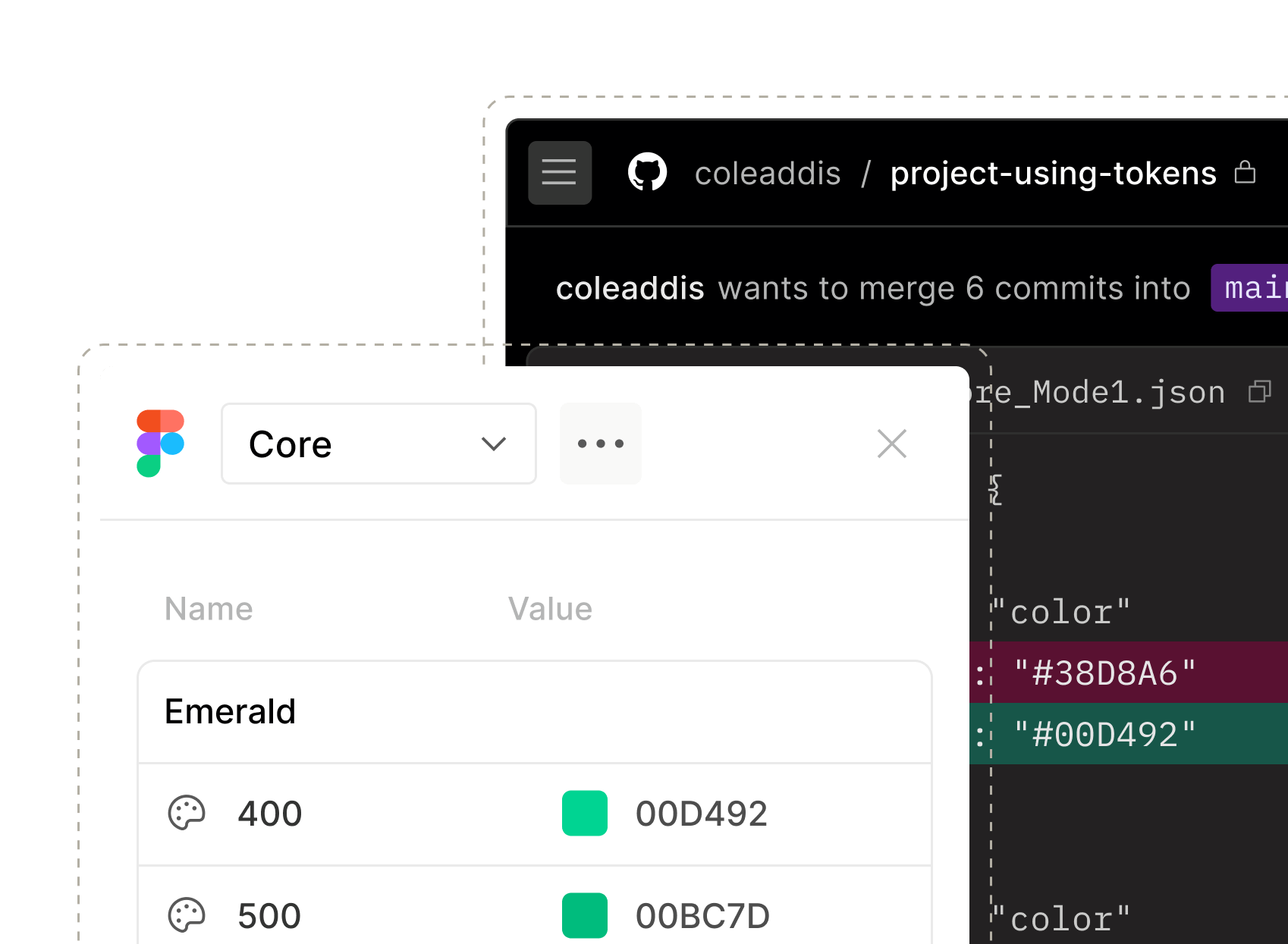 Figma interface displaying a color token panel with
 Frame 1948764683 3
 Frame 1948764683menu 44x44
 Frame 1948764683menu 44x44 1
 Frame 1948764683menu 44x44 2
 Frame 1948764683menu 44x44 3
 Frame 1948764683menu 44x44 4
 Frame 1948764683menu 44x44 5
 Github
 Gitlab
 Icon24x24
 Icon24x24 2
 Iconmenu24x24
 Iconmenu24x24 1
 Iconmenu24x24 2
 Iconmenu24x24 3
 Iconmenu24x24 4
 Iconsupport Menu 24x24
 Iconsupport Menu 24x24 1
 Iconsupport Menu 24x24 2
 Iconsupport Menu 24x24 3
 Link Card Background
 Logo NS
 Menu Cards (1)
 Property 1=Documentationmenu (1)
 Property 1=Measurmentmenu (1)
 Quarter Circle Shape
 Rectangle Shape
 sage company
 Sketch
 Slack
Slack Square Shape
 Storybook
 Tab
Tab Uber Asset 786x468
 Uber Black
 Uber White
 United
Services
Design Documentation & Collaboration
Design Documentation Tools
View details →Design System Management
Design System Platform
View details →AI Trust Verification Report
Public validation record for Zeroheight - The Design System Platform for Teams Who Scale — Evidence of machine-readability across 57 technical checks and 4 LLM visibility validations.
Evidence & Links
- Crawlability & Accessibility
- Structured Data & Entities
- Content Quality Signals
- Security & Trust Indicators
Verifiable Identity Links
Legal & Compliance
- Privacy Policy
- Terms of Service
- Trust Center
Third-party Identity
- X (Twitter)
Do These LLMs Know This Website?
LLM "knowledge" is not binary. Some answers come from training data, others from retrieval/browsing, and results vary by prompt, language, and time. Our checks measure whether the model can correctly identify and describe the site for relevant prompts.
| LLM Platform | Recognition Status | Visibility Check |
|---|---|---|
 | Detected | Improve Perplexity visibility by ensuring your brand/entity information is consistent across the web and easy to verify on your site. Use Organization schema, clear About/Contact pages, and cite credible sources where relevant. Monitor how your brand appears in AI answers and strengthen weak pages with clearer facts and structure. |
 | Detected | The page is about zeroheight, a platform for managing design systems, with the website URL provided as https://zeroheight.com/. |
 | Detected | Improve Gemini visibility by making core pages easy to crawl and easy to summarize: clear headings, FAQ sections, and structured data. Keep metadata (title/description) unique and aligned with the page content. Build consistent entity signals across your site and trusted third-party profiles. |
 | Detected | Improve Grok visibility by maintaining consistent brand facts and strong entity signals (About page, Organization schema, sameAs links). Keep key pages fast, crawlable, and direct in their answers. Regularly update important pages so AI systems have fresh, reliable information to cite. |
Improve Perplexity visibility by ensuring your brand/entity information is consistent across the web and easy to verify on your site. Use Organization schema, clear About/Contact pages, and cite credible sources where relevant. Monitor how your brand appears in AI answers and strengthen weak pages with clearer facts and structure.
The page is about zeroheight, a platform for managing design systems, with the website URL provided as https://zeroheight.com/.
Improve Gemini visibility by making core pages easy to crawl and easy to summarize: clear headings, FAQ sections, and structured data. Keep metadata (title/description) unique and aligned with the page content. Build consistent entity signals across your site and trusted third-party profiles.
Improve Grok visibility by maintaining consistent brand facts and strong entity signals (About page, Organization schema, sameAs links). Keep key pages fast, crawlable, and direct in their answers. Regularly update important pages so AI systems have fresh, reliable information to cite.
Note: Model outputs can change over time as retrieval systems and model snapshots change. This report captures visibility signals at scan time.
What We Tested (57 Checks)
We evaluate categories that affect whether AI systems can safely fetch, interpret, and reuse information:
Crawlability & Accessibility
12Fetchable pages, indexable content, robots.txt compliance, crawler access for GPTBot, OAI-SearchBot, Google-Extended
Structured Data & Entity Clarity
11Schema.org markup, JSON-LD validity, Organization/Product entity resolution, knowledge panel alignment
Content Quality & Structure
10Answerable content structure, factual consistency, semantic HTML, E-E-A-T signals, citation-worthy data presence
Security & Trust Signals
8HTTPS enforcement, secure headers, privacy policy presence, author verification, transparency disclosures
Performance & UX
9Core Web Vitals, mobile rendering, JavaScript dependency minimal, reliable uptime signals
Readability Analysis
7Clear nomenclature matching user intent, disambiguation from similar brands, consistent naming across pages
15 AI Visibility Opportunities Detected
These technical gaps effectively "hide" Zeroheight - The Design System Platform for Teams Who Scale from modern search engines and AI agents.
Top 3 Blockers
- !Alt text on key images (e.g., logos, screenshots)Missing alt attributes on images.
- !Structured data schema presentMissing structured data schema. Recommended schemas: ```json [ { "details": "Add Organization schema for 'zeroheight.com' including name, url, logo, sameAs, contactPoint, and address.", "category": "Organization", "example": "{\r\n \"@context\": \"https://schema.org\",\r\n \"@type\": \"Organization\",\r\n \"@id\": \"https://zer…
- !JSON-LD Schema: Organization, Product, FAQ, WebsiteFAQ schema missing.
Top 3 Quick Wins
- !List in public LLM indexes (e.g., Huggingface database, Poe Profiles)List your tools, datasets, docs, or brand pages on major AI/LLM discovery hubs where relevant (for example model/dataset repositories or app directories). These platforms add credibility signals (likes, forks, usage) and create additional crawlable references to your brand. Keep names, descriptions, and links consistent with your official website.
- !LLM-crawlable llms.txtCreate an llms.txt file to guide AI crawlers to your most important, high-quality pages (docs, pricing, about, key guides). Keep it short, well-structured, and focused on authoritative URLs you want cited. Treat it as a curated “AI sitemap” that improves discovery and reduces the risk of crawlers prioritizing low-value pages.
- !Is sitemap.xml exists?Maintain a sitemap.xml that includes your important canonical URLs and keeps last-modified dates accurate when content changes. Submit it in Search Console and ensure it is accessible to crawlers. A sitemap improves discovery of deeper pages and helps systems prioritize fresh, updated content.
Claim this profile to instantly generate the code that makes your business machine-readable.
Embed Badge
VerifiedDisplay this AI Trust indicator on your website. Links back to this public verification URL.
<a href="https://bilarna.com/provider/zeroheight" target="_blank" rel="nofollow noopener noreferrer" class="bilarna-trust-badge">
  <img src="https://bilarna.com/badges/ai-trust-zeroheight.svg"
       alt="AI Trust Verified by Bilarna (42/57 checks)"
       width="200" height="60" loading="lazy">
</a>
Cite This Report
APA / MLAPaste-ready citation for articles, security pages, or compliance documentation.
Bilarna. "Zeroheight - The Design System Platform for Teams Who Scale AI Trust & LLM Visibility Report." Bilarna AI Trust Index, Jan 17, 2026. https://bilarna.com/provider/zeroheightWhat Verified Means
Verified means Bilarna's automated checks found enough consistent trust and machine-readability signals to treat the website as a dependable source for extraction and referencing. It is not a legal certification or an endorsement; it is a measurable snapshot of public signals at the time of scan.
Frequently Asked Questions
What does the AI Trust score for Zeroheight - The Design System Platform for Teams Who Scale measure?
What does the AI Trust score for Zeroheight - The Design System Platform for Teams Who Scale measure?
It summarizes crawlability, clarity, structured signals, and trust indicators that influence whether AI systems can reliably interpret and reference Zeroheight - The Design System Platform for Teams Who Scale. The score aggregates 57 technical checks across six categories that affect how LLMs and search systems extract and validate information.
Does ChatGPT/Gemini/Perplexity know Zeroheight - The Design System Platform for Teams Who Scale?
Does ChatGPT/Gemini/Perplexity know Zeroheight - The Design System Platform for Teams Who Scale?
Sometimes, but not consistently: models may rely on training data, web retrieval, or both, and results vary by query and time. This report measures observable visibility and correctness signals rather than assuming permanent "knowledge." Our 4 LLM visibility checks confirm whether major platforms can correctly recognize and describe Zeroheight - The Design System Platform for Teams Who Scale for relevant queries.
How often is this report updated?
How often is this report updated?
We rescan periodically and show the last updated date (currently Jan 17, 2026) so teams can validate freshness. Automated scans run bi-weekly, with manual validation of LLM visibility conducted monthly. Significant changes trigger intermediate updates.
Can I embed the AI Trust indicator on my site?
Can I embed the AI Trust indicator on my site?
Yes—use the badge embed code provided in the "Embed Badge" section above; it links back to this public verification URL so others can validate the indicator. The badge displays current verification status and updates automatically when the verification is refreshed.
Is this a certification or endorsement?
Is this a certification or endorsement?
No. It's an evidence-based, repeatable scan of public signals that affect AI and search interpretability. "Verified" status indicates sufficient technical signals for machine readability, not business quality, legal compliance, or product efficacy. It represents a snapshot of technical accessibility at scan time.
Unlock the full AI visibility report
Chat with Bilarna AI to clarify your needs and get a precise quote from Zeroheight - The Design System Platform for Teams Who Scale or top-rated experts instantly.