Step 1
Machine-Ready Briefs
AI translates unstructured needs into a technical, machine-ready project request.
We use cookies to improve your experience and analyze site traffic. You can accept all cookies or only essential ones.
 Bilarna
Stop browsing static lists. Tell Bilarna your specific needs. Our AI translates your words into a structured, machine-ready request and instantly routes it to verified EdTech Software Solutions experts for accurate quotes.
AI translates unstructured needs into a technical, machine-ready project request.
Compare providers using verified AI Trust Scores & structured capability data.
Skip the cold outreach. Request quotes, book demos, and negotiate directly in chat.
Filter results by specific constraints, budget limits, and integration requirements.
Eliminate risk with our 57-point AI safety check on every provider.
Verified companies you can talk to directly
Your one-stop shop for lesson planning. Worksheets, activities, slide decks, assessments—any resource, any subject, any language. Never walk into class unprepared.
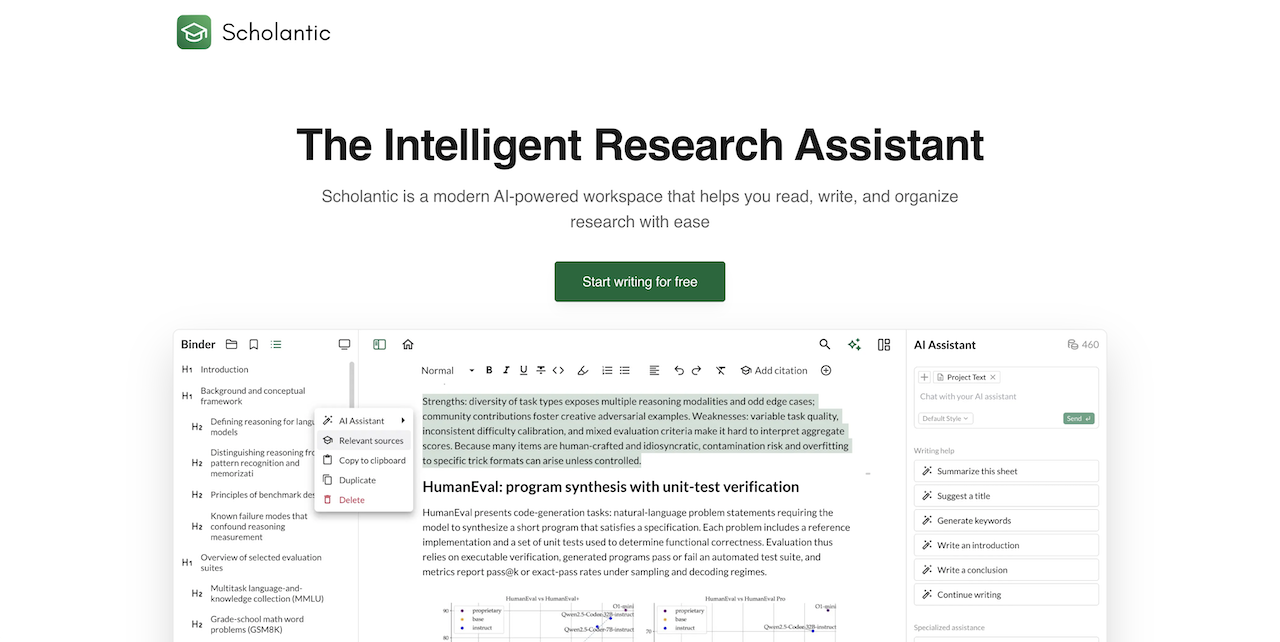
Scholantic is a modern AI-powered workspace that helps you read, write, and organize research with ease
Write fast scientific notes with just your keyboard, all in your browser.

Nimble’s ensures all students have access to life-changing teachers by putting cutting-edge technology and data tools in the hands of educators at all levels of the industry.
Run a free AEO + signal audit for your domain.
AI Answer Engine Optimization (AEO)
List once. Convert intent from live AI conversations without heavy integration.
Educational technology solutions are digital tools and platforms designed to support teaching, learning, and administrative efficiency within academic and corporate training environments. These solutions leverage software like Learning Management Systems (LMS), student information systems, and interactive content platforms to facilitate remote learning and personalized instruction. Implementing them leads to improved student engagement, streamlined operations, and data-driven insights into educational outcomes.
Educational institutions identify their specific pedagogical goals, technological infrastructure needs, and budget constraints for digital transformation.
Administrators choose and deploy a combination of software solutions, such as LMS or assessment tools, ensuring they integrate with existing systems.
Educators and staff receive training on the new tools, while administrators use analytics dashboards to monitor engagement and measure learning efficacy.
Universities deploy comprehensive LMS platforms to manage online course delivery, facilitate student collaboration, and automate grading and reporting.
Enterprises utilize training platforms to onboard employees, deliver compliance courses, and track skill development across the organization efficiently.
School systems implement classroom management software and adaptive learning tools to personalize student instruction and improve parental communication.
EdTech companies and MOOC platforms leverage sophisticated content delivery and student engagement tools to scale their offerings to a global audience.
Public sector and NGO programs use learning technology to deliver standardized training to dispersed workforces and measure program impact effectively.
Bilarna evaluates every EdTech provider through a proprietary 57-point AI Trust Score, scrutinizing their technical expertise, platform security, and client satisfaction history. Our verification process includes deep portfolio reviews, checks for relevant educational certifications, and analysis of proven implementation track records. This ensures all solutions listed on Bilarna meet high standards for reliability and pedagogical effectiveness.
Critical features include robust Learning Management System (LMS) capabilities, support for SCORM/xAPI compliance, detailed analytics and reporting dashboards, and tools for student engagement and assessment. Integration capabilities with existing student information systems and strong data security protocols are also essential for a successful implementation.
Costs vary widely based on institution size, required features, and deployment model (SaaS vs. on-premise). Pricing often involves per-user/per-student subscription fees, one-time implementation costs, and charges for ongoing support and training. Requesting detailed quotes is crucial for accurate budgeting.
A standard LMS implementation typically takes 3 to 6 months from selection to full rollout. The timeline depends on data migration complexity, required customizations, and the scale of training needed for instructors and administrative staff. A phased rollout approach is common for larger institutions.
A Learning Management System (LMS) focuses on the delivery, tracking, and management of educational courses and training content. A Student Information System (SIS) manages administrative student data like enrollment, grades, and attendance. Modern educational ecosystems often integrate both platforms for seamless data flow.
Common pitfalls include inadequate stakeholder training, poor change management strategies, selecting platforms that lack essential integrations, and underestimating the total cost of ownership. A thorough needs assessment and pilot program can mitigate these risks and ensure a smoother transition.
Health monitoring features in wellness technology products, such as tracking heart rate, breathing rate, and sleep patterns, are generally intended for informational and general wellness purposes. These features are not classified as medical devices and have not been approved or authorized by regulatory bodies like the U.S. Food and Drug Administration (FDA). They are not designed to diagnose, treat, or prevent any medical conditions and should not be used as a substitute for professional medical advice or clinical decision-making. Users should always consult qualified healthcare professionals for any health concerns or questions.
Yes, modern paywall solutions are designed to be compatible with both iOS and Android mobile applications. This cross-platform compatibility ensures that developers can implement a single paywall system across different devices and operating systems without needing separate solutions. It simplifies management and provides a consistent user experience regardless of the platform, making it easier to maintain and optimize monetization strategies.
Many modern data analytics platforms are designed to integrate seamlessly with your existing technology infrastructure. This means you do not need to replace your current systems to start using the platform. These solutions are built with flexibility in mind, allowing them to sit on top of your existing ecosystem without requiring extensive integration work on your part. This approach helps organizations adopt new analytics capabilities quickly while preserving their current investments in technology. It is advisable to check with the platform provider about specific integration options and compatibility with your current setup.
Yes, financial automation solutions are often modular and customizable to fit the specific needs of different businesses. Organizations can select and adapt only the modules they require, such as accounts payable, accounts receivable, billing, or treasury management, allowing them to scale their automation at their own pace. This flexibility ensures that companies can address their unique operational challenges without unnecessary complexity or cost. Additionally, user-friendly tools and AI capabilities enable teams to maintain compliance and efficiency while tailoring the system to their workflows. Customized onboarding and collaborative support further help businesses get up and running quickly with solutions that match their requirements.
Yes, video summarizer tools support multiple languages for educational content. To use this feature: 1. Open the video summarizer tool. 2. Upload or select the video to summarize. 3. Choose the desired language from the available options. 4. Run the summarization process to generate a summary in the selected language. 5. Review and adjust the summary as needed. This enables users to create accessible educational summaries in their native or preferred languages.
No, you do not need a photographer to get high-quality professional headshots using AI technology. Follow these steps: 1. Choose an AI-powered headshot platform. 2. Upload your photo to the platform. 3. Let the AI generate studio-quality images automatically. 4. Select your preferred headshot from the options provided. 5. Download and use your professional photo without any photographer involvement.
AI technology does not replace golf course staff but enhances their efficiency. 1. Use AI to automate routine tasks such as booking and customer inquiries. 2. Allow staff to focus on personalized customer service and complex issues. 3. Implement AI as a support tool to reduce workload and improve response times. 4. Train staff to work alongside AI systems for optimal results. 5. Continuously evaluate the balance between AI automation and human interaction.
Nanotechnology-based coating solutions are developed by designing materials and processes at the nanoscale with a clear target application in mind. This involves iterative cycles of testing and optimization to enhance performance and functionality. By focusing on the intended use from the start, developers can tailor the coatings to meet specific requirements such as durability, conductivity, or protective properties. The vertical integration of the development process ensures that each stage, from nanoscale design to final application, is aligned to achieve the best possible outcome.
Smart contracts are used in enterprise blockchain solutions to automate complex business processes, enforce agreements without intermediaries, and significantly reduce operational costs and manual errors. These self-executing contracts are deployed on blockchain platforms to manage and execute terms automatically when predefined conditions are met. Common enterprise applications include automating supply chain payments upon delivery verification, managing and executing royalty distributions in intellectual property agreements, and facilitating secure, instant settlement in trade finance. They are also foundational for creating decentralized autonomous organizations (DAOs), tokenizing real-world assets like real estate or carbon credits, and building transparent, tamper-proof voting systems for corporate governance. By leveraging smart contracts, enterprises can achieve greater transparency, enhance auditability, and streamline workflows across departments and with external partners.
3D vision technology enhances bulk inventory tracking by providing accurate and real-time measurements of inventory levels. Unlike traditional methods that rely on manual counting or 2D imaging, 3D vision captures depth and volume, allowing for precise monitoring of bulk materials. This technology reduces human error, increases operational efficiency, and enables better decision-making by offering clear visibility into inventory status. It is particularly useful in industries where bulk materials are stored in large quantities and require continuous monitoring to optimize supply chain management.