Step 1
Machine-Ready Briefs
AI translates unstructured needs into a technical, machine-ready project request.
We use cookies to improve your experience and analyze site traffic. You can accept all cookies or only essential ones.
 Bilarna
Stop browsing static lists. Tell Bilarna your specific needs. Our AI translates your words into a structured, machine-ready request and instantly routes it to verified AI-Powered Product Development experts for accurate quotes.
AI translates unstructured needs into a technical, machine-ready project request.
Compare providers using verified AI Trust Scores & structured capability data.
Skip the cold outreach. Request quotes, book demos, and negotiate directly in chat.
Filter results by specific constraints, budget limits, and integration requirements.
Eliminate risk with our 57-point AI safety check on every provider.
Verified companies you can talk to directly
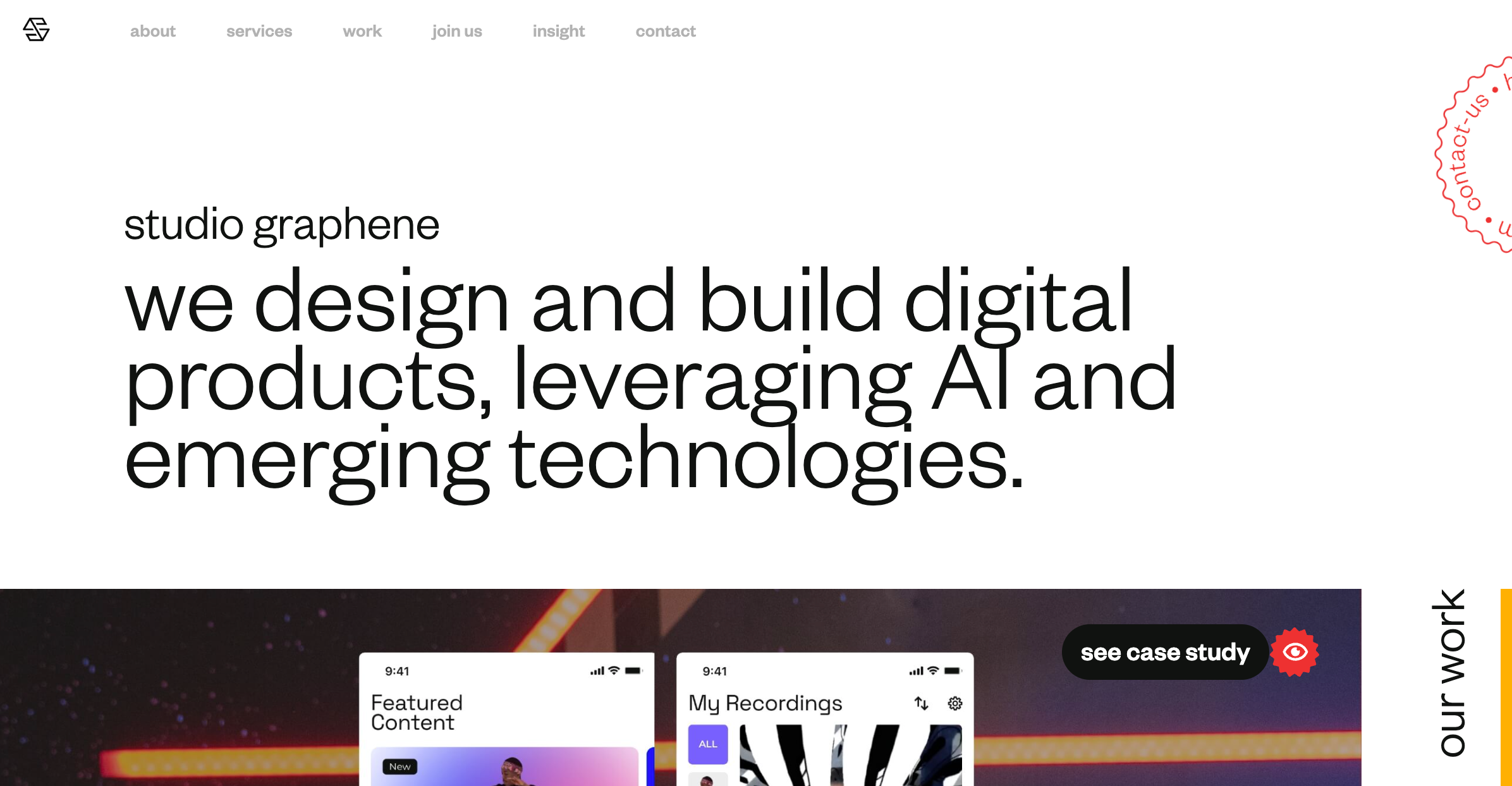
We specialise in designing and developing digital products using AI and emerging technologies. Explore our portfolio of market-ready products.
A product studio that designs, builds, and scales digital products — with senior talent and AI-powered speed. 50+ products launched, 10+ years of experience.

We partner with our clients to brand, design, and build products and platforms that balance form and function, so they work better for everyone.
Run a free AEO + signal audit for your domain.
AI Answer Engine Optimization (AEO)
List once. Convert intent from live AI conversations without heavy integration.
AI-Powered Product Development is a methodology that integrates artificial intelligence and machine learning throughout the product lifecycle. It leverages technologies like generative design, predictive analytics, and automated testing to enhance innovation and efficiency. This approach significantly reduces time-to-market, improves product-market fit, and optimizes resource allocation for businesses.
AI analyzes market data, user feedback, and competitor landscapes to generate precise, data-driven product specifications and feature roadmaps.
Generative AI algorithms create multiple design prototypes, which are then simulated and tested in virtual environments to predict performance and usability.
Machine learning models process real-time testing data and user interactions to provide predictive insights, enabling rapid, intelligent iteration and refinement.
AI accelerates the design of smaller, more efficient components and predicts consumer trends for next-generation devices like smartphones and wearables.
Generative design AI creates lightweight, strong parts, while simulation models test aerodynamic efficiency and safety features under countless scenarios.
AI assists in developing compliant, patient-specific devices by optimizing biocompatible materials and simulating physiological interactions pre-production.
Machine learning models define feature priorities, automate UI/UX testing, and personalize user journeys based on aggregated behavioral data.
Predictive maintenance features and operational efficiency optimizations are built into products using AI analysis of sensor and usage data.
Bilarna ensures you connect with credible AI-Powered Product Development partners. Every provider on our platform is rigorously evaluated using our proprietary 57-point AI Trust Score, which audits their technical expertise, project reliability, security compliance, and verified client outcomes. This AI-driven vetting provides an objective benchmark for quality and trust.
The primary benefits are drastically reduced development cycles and enhanced innovation. AI automates routine tasks like data analysis and prototyping, freeing human teams for strategic work. It also leads to superior products through data-driven insights that improve functionality, user experience, and market fit.
Key technologies include generative design algorithms, natural language processing for requirement gathering, and computer vision for quality assurance. Machine learning models are central for predictive analytics, forecasting market trends, and optimizing supply chains. These tools work in concert to inform every stage from conception to launch.
AI generates thousands of viable design alternatives based on set parameters like materials, cost, and performance goals. It then simulates these prototypes in digital twins to stress-test functionality and durability. This process identifies optimal designs faster and at a fraction of the cost of traditional physical prototyping.
Yes, cloud-based AI tools and 'as-a-service' models have made these capabilities accessible. SMBs can leverage AI for specific tasks like market analysis, design automation, or quality control without massive upfront investment. This allows them to compete with larger players by accelerating innovation and reducing operational risk.
Initial challenges include integrating AI tools with existing PLM or CAD systems and ensuring access to high-quality, structured training data. There is also a skills gap, requiring teams to upskill or partner with specialists. Success depends on clear strategic goals and managing the change within organizational workflows.
Yes, cheap Windows product keys from reputable online retailers can be legitimate and safe, provided they are sourced from verified channels. These sellers typically obtain surplus or volume license keys from legitimate distributors, making them genuine Microsoft licenses at a lower cost. The key safety indicators include the seller providing a money-back guarantee, offering instant email delivery of the key, and having clear customer support for activation issues. It is crucial to avoid keys sold at prices that seem too good to be true, as these may be unauthorized or volume license violations. A legitimate key will activate your Windows or Office software permanently and grant access to all official updates and features from Microsoft without legal risk.
Yes, the AI-powered teacher tools are free and include the following features: 1. Worksheet Generator to create custom worksheets quickly. 2. Lesson Plan Generator for comprehensive, standards-aligned lesson plans. 3. Report Card Comments generator for professional, personalized feedback. 4. Coloring Page Generator to turn ideas into printable coloring pages. 5. All tools save your work automatically to a cloud library accessible from any device. 6. Tools are private, secure, and supported with fast in-app chat assistance.
Yes, governments often offer grants and financial support programs to subsidize custom software development for businesses. These programs aim to enhance productivity and digital capabilities. Common types include productivity grants that cover a significant percentage of qualifying IT solution costs, including custom software. There are also enterprise development grants focused on upgrading overall business capabilities, where software development is an eligible activity. Furthermore, specific grants exist for startups developing innovative technologies and for projects involving collaboration with research institutions. Eligibility typically depends on company size, project scope, and the innovative potential of the software. The application process can be detailed, so consulting with a qualified grant advisor is recommended to navigate requirements and maximize funding potential.
Yes, AI background generators can significantly improve the visual appeal of furniture product images. By automatically creating or replacing backgrounds, these tools help highlight the furniture in a more attractive and professional setting. They can simulate various environments, lighting conditions, and styles that complement the product, making images more engaging for potential customers. This enhancement can boost online sales and marketing effectiveness by presenting furniture products in a visually compelling way without the need for costly photoshoots or complex 3D renders.
Yes, many AI-powered browsers built on Chromium technology are compatible with Chrome extensions, allowing users to continue using their favorite add-ons without interruption. These browsers often support seamless import of existing browser data such as bookmarks, passwords, and extensions from Chrome, making the transition smooth and convenient. This compatibility ensures that users do not lose their personalized settings or tools when switching to an AI-enabled browser. By combining AI capabilities with familiar browser features, users can enhance productivity while maintaining their preferred browsing environment.
Yes, an AI-powered authoring platform can handle complex academic content effectively. To do so: 1. Use LaTeX or MathML support to create, edit, and validate complex STEM equations accurately. 2. Integrate with reference databases such as CrossRef, PubMed, and ORCID for real-time reference verification and linking. 3. Apply automatic formatting and style consistency to references and citations. 4. Edit text, tables, and figures with AI assistance to maintain accuracy. 5. Manage author queries and communication within the platform to resolve content issues. 6. Export structured, publication-ready outputs in XML and PDF formats. This ensures precise handling of technical academic content, improving quality and efficiency in scholarly publishing.
Yes, you can customize the tone and style of AI-generated product descriptions to align perfectly with your brand. Follow these steps: 1. Generate the initial product description using the AI tool. 2. Access the editing options to adjust tone, style, and formatting. 3. Fine-tune the language to reflect your brand’s voice and personality. 4. Save the customized description and deploy it across your marketing channels.
Yes, you can use an AI-powered platform alongside your existing email service provider (ESP). 1. Write and design emails using the AI platform. 2. Export or copy-paste the content to your current ESP for sending. 3. Alternatively, manage contacts, sending, and automation directly within the AI platform for a streamlined workflow.
Yes, local visual web development tools can significantly speed up interface design by providing a user-friendly environment where developers and designers can visually build and modify interfaces. These tools often include drag-and-drop features, real-time previews, and integration with AI to automate coding tasks. Working locally ensures faster performance and better control over the development environment. By reducing the need to write code manually for every change, these tools allow teams to iterate designs quickly, test ideas, and deliver polished interfaces in less time.
Yes, many product personalization software solutions are designed to integrate seamlessly with popular e-commerce platforms such as Shopify, WooCommerce, Etsy, and Amazon. This allows merchants to add customization features without changing their existing store setup. Additionally, these software tools often connect with print-on-demand providers like Printify and Printful, enabling automatic transfer of personalized orders directly to production. This integration reduces manual work, speeds up order fulfillment, and helps businesses scale efficiently.