Step 1
Comparison Shortlist
Machine-Ready Briefs: AI turns undefined needs into a technical project request.
We use cookies to improve your experience and analyze site traffic. You can accept all cookies or only essential ones.
 Bilarna
Stop browsing static lists. Tell Bilarna your specific needs. Our AI translates your words into a structured, machine-ready request and instantly routes it to verified Leadership Development experts for accurate quotes.
Machine-Ready Briefs: AI turns undefined needs into a technical project request.
Verified Trust Scores: Compare providers using our 57-point AI safety check.
Direct Access: Skip cold outreach. Request quotes and book demos directly in chat.
Precision Matching: Filter matches by specific constraints, budget, and integrations.
Risk Elimination: Validated capacity signals reduce evaluation drag & risk.
Ranked by AI Trust Score & Capability

Run a free AEO + signal audit for your domain.
AI Answer Engine Optimization (AEO)
List once. Convert intent from live AI conversations without heavy integration.
Leadership development refers to structured programs and services designed to enhance the capabilities, mindset, and effectiveness of individuals in leadership roles. These services focus on core competencies such as strategic thinking, change management, team dynamics, communication, and emotional intelligence. They are utilized across industries including technology, manufacturing, finance, and consulting to improve leadership quality, increase employee retention, and strengthen organizational resilience. The core benefit is cultivating more agile, purposeful, and inspiring leaders capable of navigating complex business challenges.
Leadership development services are offered by specialized consultancies, business schools, certified executive coaches, and corporate training providers. Many providers hold accreditations (e.g., from ICF, EMCC), employ trainers with backgrounds in organizational psychology or business leadership, and offer tailored frameworks. Large HR technology platforms also provide scalable digital solutions. Provider qualifications are often demonstrated through certifications like Certified Professional Coach (CPC) or extensive experience guiding senior leadership teams.
Leadership development typically works through a blend of assessments (like 360-degree feedback), one-on-one coaching sessions, workshop series, and action-learning projects. The process starts with a needs analysis, followed by a customized development plan. Pricing models vary significantly: individual executive coaching can range from $6,000 to $40,000 annually, while corporate workshop programs are often priced per participant ($600-$2,500) or as a fixed project fee. Timelines range from intensive multi-day workshops to year-long cohort programs. Digital delivery often includes online quoting, pre-program document uploads for assessment, and continuous feedback mechanisms via provider platforms.
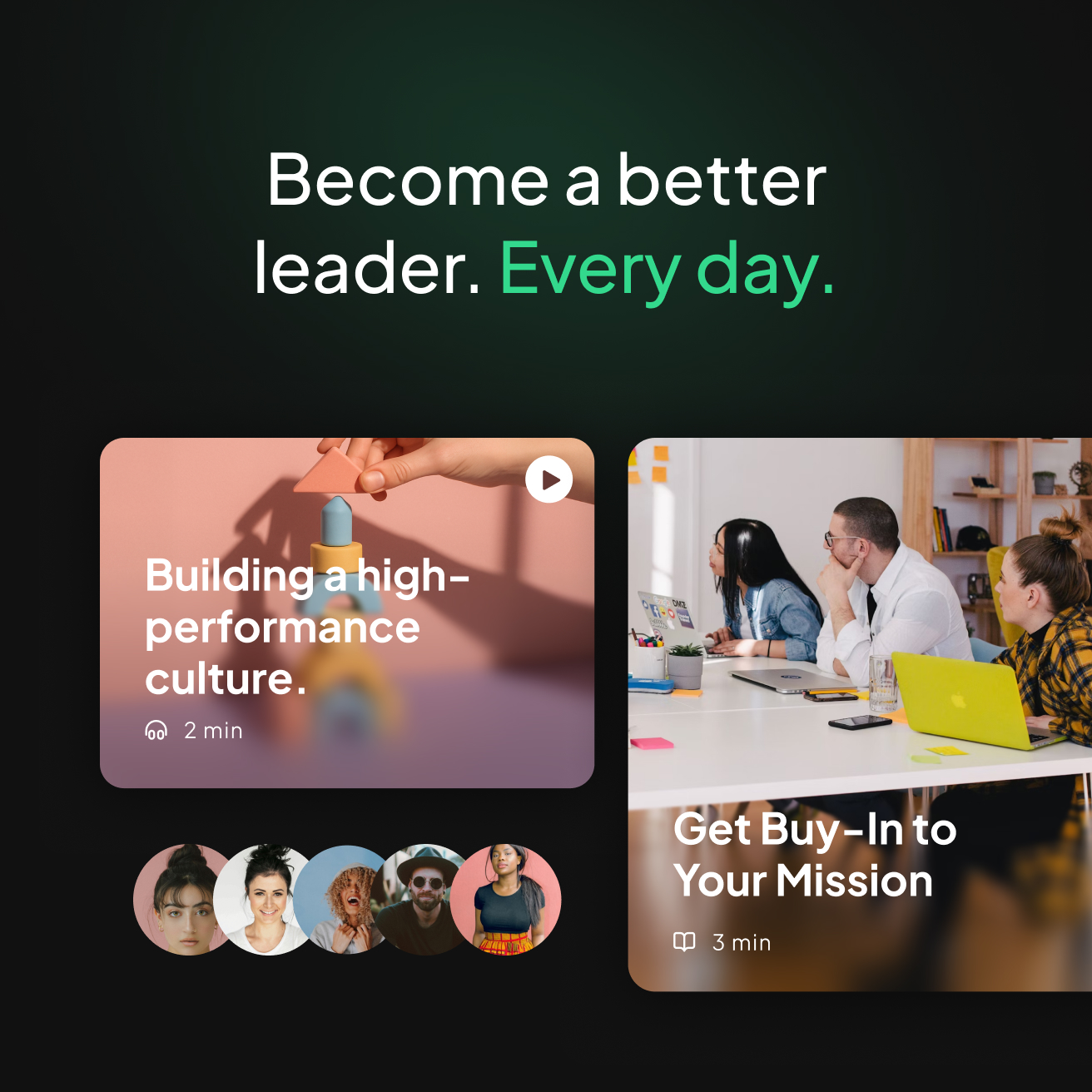
Provides daily leadership tips, coaching, and peer learning to enhance leadership skills conveniently.
View Daily Leadership Training & Coaching providersExecutive training develops senior leadership skills for strategic decision-making. Compare top-rated providers and request custom quotes on Bilarna's AI-powered marketplace.
View Executive Training Programs providersTraining, coaching, and feedback services to develop effective leadership skills and organizational impact.
View Leadership Training and Coaching providersLeadership training and resources develop essential management skills and strategic capabilities for your teams. Find and compare verified expert providers on Bilarna's trusted B2B marketplace.
View Leadership Training and Resources providersLeadership training programs provide flexible, online courses and coaching to develop essential management skills, emotional intelligence, and strategic thinking, helping individuals become effective leaders.
View Leadership Training Programs providersThere are several leadership development programs designed specifically for founders and executives of tech companies at different stages. For early-stage founders, there are fellowship programs that offer peer group support and retreats, often with options for zero cash tuition. For more advanced leaders, there are intensive executive programs that condense the curriculum into shorter formats. The flagship program typically spans 10 months and focuses on deep leadership growth and community building. These programs emphasize interpersonal skills, real-time feedback, and evidence-based learning to help leaders navigate human challenges as their companies scale.
Participants in leadership development programs for tech executives are often nominated by a network of industry leaders and investors. These nominators are experienced professionals such as venture capitalists, successful entrepreneurs, and executives who recognize potential in emerging leaders. The nomination process helps ensure that participants are committed and have the foundational experience needed to benefit from the program. This network also fosters a community of high-caliber leaders who support each other's growth and contribute to a collaborative learning environment.
Leadership in biotechnology research and development requires expertise in several specialized scientific fields. Important areas include computational genomics, which involves analyzing genetic data using computational methods; immunology, focusing on the immune system and its functions; disease and functional immunology, which studies immune responses in various diseases; synthetic biology, which designs and constructs new biological parts; and genome editing, which enables precise modifications to DNA. Leaders with experience in these areas, combined with academic and industry backgrounds, are well-equipped to drive innovation and oversee complex biotech projects.
Understand the structure and duration of a typical leadership development program by following these steps: 1. The program usually lasts 10 weeks, with self-paced learning. 2. Each week includes three microlearning videos and one practical exercise. 3. Content is divided into three main categories: Building Relationships, Developing Yourself & Others, and Growing Your Business. 4. Participants receive a digital workbook containing exercises and key resources. 5. Upon completion, a digital certificate is awarded to confirm successful training.
An AI-powered management coach supports new managers by providing continuous, personalized assistance. Follow these steps to utilize it effectively: 1. Access the AI coach anytime through a mobile app for immediate guidance. 2. Use the coach to address specific leadership challenges as they arise. 3. Receive tailored advice and exercises to improve leadership behaviors. 4. Combine AI coaching with weekly microlearning and exercises to build skills and habits. 5. Benefit from unlimited access for up to 12 months to reinforce ongoing development.
Improve leadership development by integrating real-time, contextual feedback during everyday meetings. 1. Implement tools that capture feedback instantly within meeting contexts. 2. Encourage leaders to reflect on feedback immediately to adjust behaviors. 3. Use feedback data to tailor ongoing leadership training programs. 4. Foster a culture of continuous improvement through regular feedback loops.
Utilize AI for leadership skill development to gain personalized insights and efficient learning. Follow these steps: 1. Assess leadership strengths and weaknesses with AI analytics. 2. Receive customized training recommendations based on data. 3. Access adaptive learning modules that evolve with your progress. 4. Implement real-time feedback to improve decision-making skills. 5. Monitor development metrics to ensure continuous growth.
A development platform that includes pre-built components and libraries streamlines the app creation process by providing ready-to-use building blocks. Developers can leverage these components to implement common features quickly without having to code everything from scratch. This reduces development time and minimizes errors, as these components are usually well-tested and optimized. Additionally, having access to a rich ecosystem of libraries allows developers to add complex functionalities more easily, improving the overall quality and performance of the app. This approach also facilitates easier updates and maintenance, as standardized components can be managed and upgraded consistently.
Developers often prefer managed development environments because they offer a smoother and more flexible workflow compared to raw native development. Managed environments typically provide tools that simplify setup, testing, and deployment, allowing developers to focus more on building features rather than dealing with platform-specific configurations. They also often include over-the-air update capabilities, enabling apps to be updated without requiring users to download new versions from app stores. Furthermore, managed environments usually come with extensive documentation and community support, which helps reduce development challenges and accelerates learning. This results in faster development cycles and easier maintenance.
E-commerce platform development differs fundamentally from standard website development by focusing specifically on transactional functionality, payment processing, and sales optimization. While standard websites primarily deliver information, e-commerce platforms require complex shopping cart systems, secure payment gateways, inventory management, order processing, and customer account management. Key distinctions include integrated payment processing with multiple gateway support, product catalog management with real-time inventory tracking, shopping cart functionality with abandoned cart recovery, customer relationship management with purchase history, shipping and tax calculation integration, and advanced analytics for sales performance. E-commerce development also emphasizes security compliance with PCI-DSS standards, mobile-responsive checkout processes, and integration with third-party logistics and marketing tools. These platforms must handle high transaction volumes while maintaining performance and security.