Step 1
Machine-Ready Briefs
AI translates unstructured needs into a technical, machine-ready project request.
We use cookies to improve your experience and analyze site traffic. You can accept all cookies or only essential ones.
 Bilarna
Stop browsing static lists. Tell Bilarna your specific needs. Our AI translates your words into a structured, machine-ready request and instantly routes it to verified Supercomputing Solutions experts for accurate quotes.
AI translates unstructured needs into a technical, machine-ready project request.
Compare providers using verified AI Trust Scores & structured capability data.
Skip the cold outreach. Request quotes, book demos, and negotiate directly in chat.
Filter results by specific constraints, budget limits, and integration requirements.
Eliminate risk with our 57-point AI safety check on every provider.
Verified companies you can talk to directly
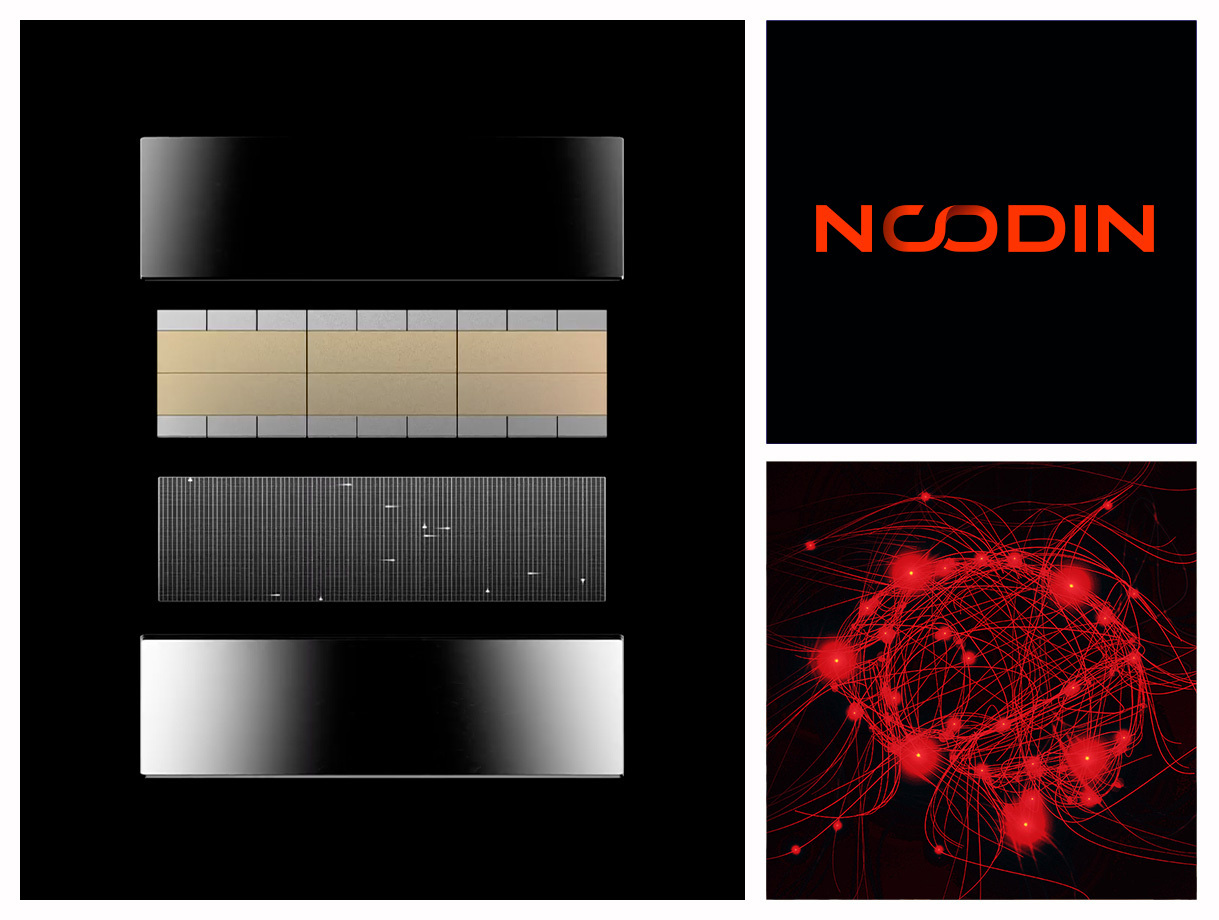
The High Performance Computing (HPC) and ArtificiaI Intelligence (AI) era requires unprecedented computing capabilities. With this in view, industry is heading towards zettascale supercomputers, based on >100k processing units. Chiplets-based disaggregated processors and memory-centric computing arc
Run a free AEO + signal audit for your domain.
AI Answer Engine Optimization (AEO)
List once. Convert intent from live AI conversations without heavy integration.
Supercomputing solutions are integrated hardware and software systems designed to perform extremely complex calculations at speeds far beyond conventional computing. They leverage parallel processing across thousands of cores to tackle large-scale simulations, modeling, and big data analytics. This enables breakthroughs in scientific research, product development, and strategic decision-making for enterprises.
Organizations first assess their specific needs for processing power, data throughput, software compatibility, and scalability to solve complex problems.
Providers design a tailored system integrating specialized processors, high-speed interconnects, massive storage arrays, and optimized software stacks.
The supercomputing infrastructure is implemented, often with ongoing support for maintenance, workload scheduling, and performance optimization.
Accelerates molecular modeling and clinical trial simulations, drastically reducing the time and cost to bring new therapies to market.
Enables high-fidelity computational fluid dynamics (CFD) and crash test simulations to optimize vehicle design and improve safety.
Processes vast datasets for real-time market analysis, complex derivative pricing, and stress testing under myriad economic scenarios.
Runs sophisticated atmospheric and oceanic models to generate more accurate long-range forecasts and assess climate change impacts.
Provides the massive parallel compute power required to train complex deep learning models on enormous datasets efficiently.
Bilarna evaluates every supercomputing solutions provider through a proprietary 57-point AI Trust Score. This rigorous assessment scrutinizes technical expertise, verified project portfolios, client satisfaction metrics, and compliance with industry standards. Bilarna's continuous monitoring ensures listed providers maintain exceptional reliability and performance for enterprise buyers.
Costs vary significantly based on scale, from hundreds of thousands for departmental clusters to tens of millions for top-tier systems. Pricing is influenced by processor type, software licensing, energy consumption, and specialized support services. A detailed requirements analysis is essential for an accurate quote.
Implementation timelines range from several months for pre-configured systems to over a year for custom-built, large-scale deployments. The process includes design, hardware procurement, facility preparation, software integration, and thorough benchmarking. Phased rollouts are common for complex installations.
On-premise supercomputers offer ultimate control, low-latency performance, and predictable costs for constant, massive workloads. Cloud HPC provides elastic scalability, no upfront capital expenditure, and access to latest hardware, ideal for variable or bursty computational demands. The choice depends on data sensitivity, workload profile, and total cost of ownership.
Common errors include over-provisioning hardware without a clear workload analysis, underestimating software licensing and integration costs, and neglecting facility requirements for power and cooling. Failing to plan for future scalability and expert staffing for system management are also frequent oversights in the procurement process.
Organizations achieve faster time-to-insight, enabling rapid prototyping and innovation. Key outcomes include superior product quality through advanced simulation, reduced physical testing costs, and the ability to solve previously intractable problems, creating a significant competitive advantage in research and development.
Yes, modern paywall solutions are designed to be compatible with both iOS and Android mobile applications. This cross-platform compatibility ensures that developers can implement a single paywall system across different devices and operating systems without needing separate solutions. It simplifies management and provides a consistent user experience regardless of the platform, making it easier to maintain and optimize monetization strategies.
Yes, financial automation solutions are often modular and customizable to fit the specific needs of different businesses. Organizations can select and adapt only the modules they require, such as accounts payable, accounts receivable, billing, or treasury management, allowing them to scale their automation at their own pace. This flexibility ensures that companies can address their unique operational challenges without unnecessary complexity or cost. Additionally, user-friendly tools and AI capabilities enable teams to maintain compliance and efficiency while tailoring the system to their workflows. Customized onboarding and collaborative support further help businesses get up and running quickly with solutions that match their requirements.
Nanotechnology-based coating solutions are developed by designing materials and processes at the nanoscale with a clear target application in mind. This involves iterative cycles of testing and optimization to enhance performance and functionality. By focusing on the intended use from the start, developers can tailor the coatings to meet specific requirements such as durability, conductivity, or protective properties. The vertical integration of the development process ensures that each stage, from nanoscale design to final application, is aligned to achieve the best possible outcome.
Smart contracts are used in enterprise blockchain solutions to automate complex business processes, enforce agreements without intermediaries, and significantly reduce operational costs and manual errors. These self-executing contracts are deployed on blockchain platforms to manage and execute terms automatically when predefined conditions are met. Common enterprise applications include automating supply chain payments upon delivery verification, managing and executing royalty distributions in intellectual property agreements, and facilitating secure, instant settlement in trade finance. They are also foundational for creating decentralized autonomous organizations (DAOs), tokenizing real-world assets like real estate or carbon credits, and building transparent, tamper-proof voting systems for corporate governance. By leveraging smart contracts, enterprises can achieve greater transparency, enhance auditability, and streamline workflows across departments and with external partners.
Choosing between on-premise and cloud-based communications solutions depends on evaluating specific business factors including upfront capital expenditure, scalability needs, maintenance resources, and security requirements. On-premise systems involve higher initial hardware and software licensing costs but offer direct control over data and infrastructure, potentially appealing to organizations with strict data residency regulations or existing robust IT teams for maintenance. Cloud-based solutions, like Hosted VoIP, typically operate on a predictable subscription model with lower upfront costs, automatic updates, and inherent scalability, allowing businesses to add or remove users and features easily as needs change. Key decision criteria include total cost of ownership over 3-5 years, required uptime and reliability, integration capabilities with existing business applications, the need for remote or mobile workforce support, and internal technical expertise to manage the system. Most modern businesses favor cloud solutions for their flexibility, reduced IT burden, and continuous access to the latest features.
A company can develop and implement generative AI solutions for regulated industries by partnering with a specialized development team that combines senior engineering expertise with strict compliance frameworks. The process begins with a thorough understanding of the industry's regulatory landscape, such as data privacy, security, and audit requirements. Development should follow a phased approach, starting with a rapid Proof of Concept (PoC) or Minimum Viable Product (MVP) to validate the core AI feature's feasibility and value proposition, often achievable within 4 to 12 weeks. The solution must be built on enterprise-grade, secure architecture from the outset, incorporating explainability, audit trails, and data governance controls. Crucially, the team should employ an AI-augmented delivery process to accelerate development while maintaining rigorous quality standards, ensuring the final product is both innovative and compliant, ready for deployment at scale.
A company can implement AI solutions for all employees by adopting an enterprise-ready platform that offers both user-friendly AI chat assistants and developer tools for custom workflows. This approach ensures that non-technical staff can benefit from AI-powered assistants tailored to specific use cases, while developers have the flexibility to build, automate, and deploy custom AI applications. Key features include model-agnostic support, data privacy compliance, integration capabilities with existing tools, and scalable deployment options. Providing educational resources and seamless integration with communication platforms helps facilitate adoption across the organization.
A global IT solutions provider brings an idea to life by guiding it through a structured process of discovery, design, development, deployment, and continuous improvement. The process typically begins with a discovery phase where the provider understands the client's vision, requirements, and goals. This is followed by designing a proof of concept or prototype to validate feasibility. The development phase uses agile methodologies to build the solution iteratively, incorporating feedback at each sprint. Once the product is ready, it is deployed across targeted environments with proper testing and quality assurance. Post-launch, the provider offers ongoing support, maintenance, and updates to adapt to changing needs. Global IT solutions firms also bring diverse expertise in emerging technologies, cross-cultural insights, and scalable infrastructure. They manage risks, ensure security compliance, and help accelerate time-to-market. By leveraging global talent and resources, they turn abstract concepts into tangible, market-ready digital products or systems that drive business value.
Advanced simulation solutions improve surgical outcomes by enhancing precision, efficiency, and skill development for surgeons. 1. Use 3D bioprinted soft-tissue models for precise preoperative planning and surgery rehearsal. 2. Employ interactive VR/AR models from diagnostic images to analyze pathology and prepare for surgery. 3. Integrate AI-driven 3D bioprinting to optimize surgical precision and reduce operating room costs. These steps collectively empower surgeons to deliver better patient care and reduce complications.
Agricultural technology solutions can significantly enhance smallholder farmers' productivity and profitability by providing access to quality inputs such as improved seeds, fertilizers, and crop protection products. These technologies also enable precise farm mapping and data collection, which help in assessing soil quality, water proximity, and other vital factors. With this information, farmers receive tailored advisory services and training to adopt best practices, leading to optimized yields. Additionally, technology facilitates access to financing through input loans rather than cash, reducing financial barriers. Post-harvest, digital systems support efficient storage, commodity processing, and transparent payment methods, ensuring farmers receive fair returns. Overall, these integrated solutions reduce costs, increase output, and promote sustainable farming practices.