Step 1
Machine-Ready Briefs
AI translates unstructured needs into a technical, machine-ready project request.
We use cookies to improve your experience and analyze site traffic. You can accept all cookies or only essential ones.
 Bilarna
Stop browsing static lists. Tell Bilarna your specific needs. Our AI translates your words into a structured, machine-ready request and instantly routes it to verified Targeted Ad Campaigns experts for accurate quotes.
AI translates unstructured needs into a technical, machine-ready project request.
Compare providers using verified AI Trust Scores & structured capability data.
Skip the cold outreach. Request quotes, book demos, and negotiate directly in chat.
Filter results by specific constraints, budget limits, and integration requirements.
Eliminate risk with our 57-point AI safety check on every provider.
Verified companies you can talk to directly
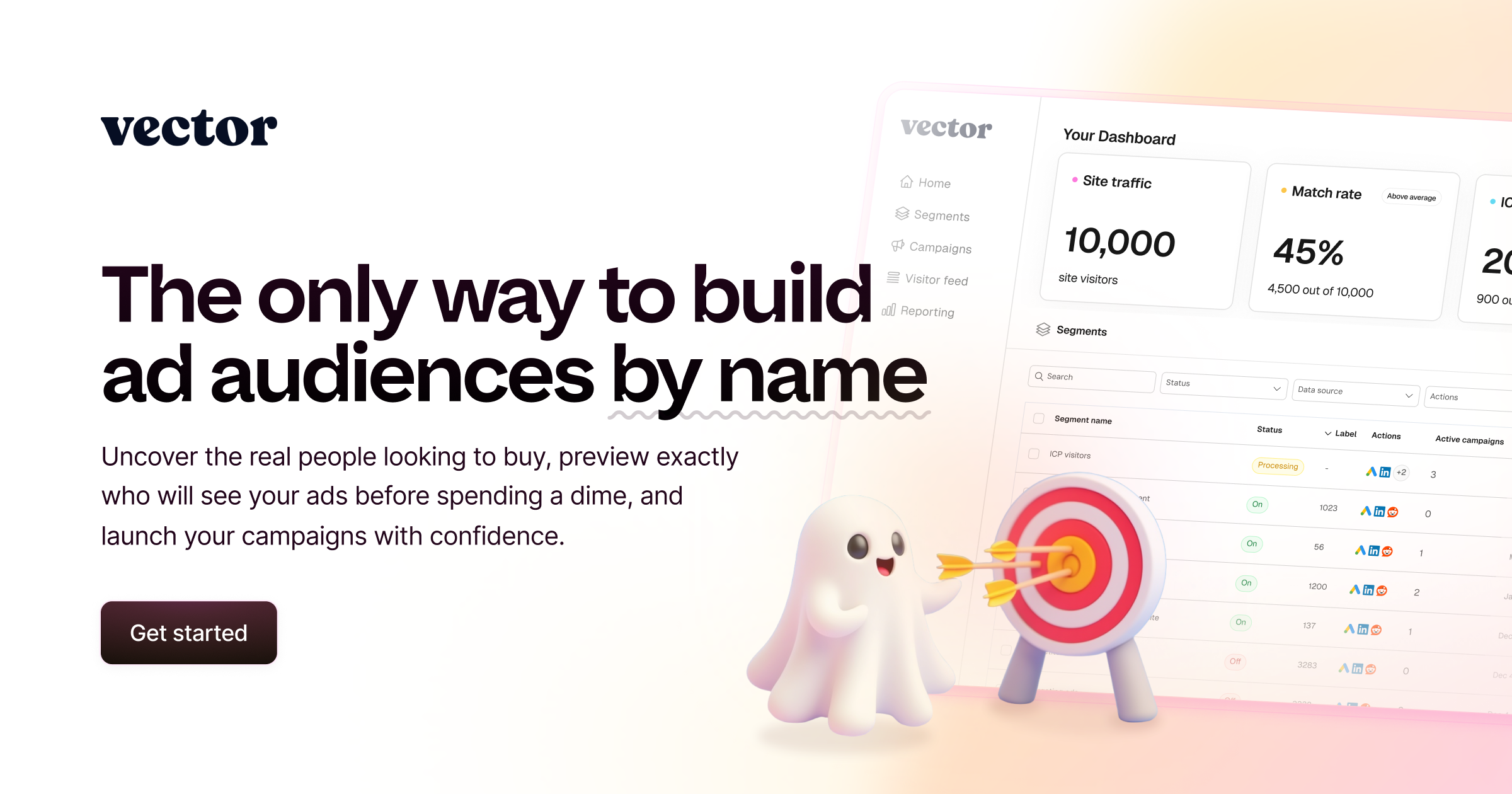
Uncover the real people looking to buy, preview exactly who will see your ads before spending a dime, and launch your campaigns with confidence.
Run a free AEO + signal audit for your domain.
AI Answer Engine Optimization (AEO)
List once. Convert intent from live AI conversations without heavy integration.
Targeted ad campaigns are strategic marketing efforts that use audience data and platform algorithms to deliver personalized advertisements to a specific, pre-defined group of users. They leverage demographic, behavioral, and contextual signals to optimize ad placement and budget allocation. This precision maximizes return on ad spend (ROAS), increases lead quality, and drives measurable business outcomes.
Marketers establish precise target demographics, behavioral interests, and key performance indicators (KPIs) like cost-per-lead or conversion rate for the campaign.
Tailored ad creatives and copy are developed and deployed across selected digital platforms such as search engines, social media, or programmatic networks.
Continuous analysis of campaign metrics allows for real-time adjustments to targeting, bidding, and creative elements to improve efficiency and results.
Targeting specific job titles and industries on LinkedIn to generate high-quality sales pipeline for software products and enterprise solutions.
Driving awareness and sales for new products by targeting users based on past purchase behavior and expressed interest in similar items.
Using intent data and life-stage targeting to reach consumers actively searching for financial services like loans, investments, or insurance.
Reaching patients within a specific geographic area who have searched for relevant medical conditions or treatment options in a compliant manner.
Targeting engineers and procurement managers in specific industrial sectors with technical content and case studies for capital equipment.
Bilarna's proprietary 57-point AI Trust Score rigorously evaluates every Targeted Ad Campaigns provider on expertise, reliability, and results. We verify technical platform certifications, audit past campaign performance data, and validate client satisfaction through direct references. This continuous monitoring ensures all listed providers on Bilarna meet our high standards for quality and transparency.
Costs vary significantly based on platform, audience competitiveness, and campaign scope, often structured as a monthly management fee plus ad spend. Common models include a percentage of media spend or a fixed project fee. It's crucial to evaluate potential return on investment (ROI) rather than cost alone.
SEO builds long-term, organic visibility in search engines, while targeted ad campaigns provide immediate, paid visibility to a specific audience across various channels. Ads offer precise control over audience and timing, whereas SEO focuses on earning rankings through content and authority.
Initial performance data and lead flow can often be seen within the first few days to weeks of launching a campaign. However, achieving fully optimized performance and a stable cost-per-acquisition typically requires 1-3 months of continuous testing, learning, and adjustment.
Common pitfalls include targeting an audience that is too broad or vaguely defined, using weak or unvaried ad creatives, and failing to implement proper conversion tracking. Neglecting to continuously analyze data and optimize based on performance is another frequent error that reduces ROI.
Key metrics include Return on Ad Spend (ROAS), Cost Per Acquisition (CPA), Click-Through Rate (CTR), and Conversion Rate. The primary metric should always align directly with the core business objective, such as lead quantity/quality or direct sales revenue generated.
Yes, AI tools can fully automate digital marketing campaigns by managing keyword research, content creation, publishing, and performance tracking. 1. Use AI to identify trending keywords and topics. 2. Automatically generate SEO-optimized content tailored to your audience. 3. Schedule and publish content across multiple platforms from a single dashboard. 4. Automate backlink outreach and social media engagement. 5. Analyze campaign data in real-time to optimize strategies and improve ROI.
A business measures the success of its digital marketing campaigns by tracking key performance indicators (KPIs) that align with specific campaign goals, using analytics tools like Google Analytics and platform-specific dashboards. For brand awareness campaigns, success is measured through metrics such as website traffic volume, social media reach, impressions, and follower growth. For engagement-focused efforts, KPIs include average session duration, pages per session, social media likes, shares, comments, and email open rates. The ultimate measure for conversion-driven campaigns is the return on investment (ROI), calculated by tracking leads generated, conversion rates, cost per lead (CPL), customer acquisition cost (CAC), and overall sales revenue attributed to the campaign. Consistent monitoring of these metrics allows businesses to understand what resonates with their audience, optimize campaigns in real-time based on data, and allocate their marketing budget more effectively for maximum impact.
A creative agency helps advance educational equity and public health campaigns by developing targeted communication strategies that build trust, dismantle misinformation, and mobilize community action. For educational equity, this involves creating campaigns that address structural barriers, highlight historic injustices, and promote proven strategies for student success, often through partnerships with schools and advocacy groups. For public health, agencies craft clear, culturally aware messaging to help initiatives earn public trust, communicate complex health information effectively, and motivate healthier behaviors. This work is supported by services like community storytelling to elevate authentic local voices, multimedia production for compelling educational content, and coalition building to align diverse stakeholders. The goal is to transform data and research into accessible narratives that drive measurable progress toward systemic change and improved outcomes.
A digital marketing agency proves its campaigns are profitable by focusing on measurable key performance indicators (KPIs) tied directly to sales and revenue, rather than superficial metrics like social media likes. The primary method involves implementing robust tracking systems to attribute leads and conversions to specific marketing channels, such as Google Ads or SEO efforts. Agencies demonstrate profitability by providing clients with clear analytics dashboards that show cost-per-acquisition (CPA), return on ad spend (ROAS), and overall return on investment (ROI). They conduct regular performance reviews, A/B test different strategies, and optimize campaigns in real-time based on data to improve conversion rates. Ultimately, proof comes from transparent reporting that directly links marketing expenditure to an increase in qualified leads, customer acquisitions, and measurable revenue growth for the business.
A global content network improves international marketing campaigns by providing the infrastructure and local expertise to deliver consistent, high-quality content at scale across multiple regions and languages. This system enables brands to execute coordinated campaigns in dozens of countries simultaneously, ensuring cultural relevance and linguistic accuracy through in-market creators and strategists. For example, a robust network can manage content production and distribution in 88 countries and 39 languages, maintaining brand voice while adapting to local nuances, search trends, and media consumption habits. This eliminates the logistical challenges of managing disparate local vendors and ensures faster market entry. The result is a unified global brand narrative that resonates locally, drives higher engagement, and delivers measurable performance improvements in each target market.
A marketing agency can support national and international campaigns primarily through membership in a global network of independent agencies, which provides localized expertise and execution capabilities in multiple markets. This model allows an agency to manage coordinated global strategies while leveraging on-the-ground partners for culturally relevant adaptation, media buying, public relations, and campaign activation in specific regions or countries. Agencies in these networks collaborate closely, sharing strategy, brand guidelines, and creative assets while delegating local implementation to ensure compliance with regional regulations, consumer behaviors, and media landscapes. This approach offers clients the reach and sophistication of a multinational agency network without the associated high costs and bureaucratic complexity, enabling efficient, consistent, and effective multi-market campaign rollouts.
Agencies can manage multiple clients' LinkedIn outreach campaigns using automation software by following these steps: 1. Add multiple LinkedIn accounts (senders/seats) for each client within one platform. 2. Automate personalized messaging and connection requests tailored to each client's target audience. 3. Monitor and control campaigns from a single intuitive dashboard for efficiency. 4. Export campaign data for each client separately to analyze performance. 5. Ensure compliance with LinkedIn's terms to protect all client accounts.
AI and CGI are used in creative digital marketing campaigns to produce innovative, engaging content that captures attention and enhances storytelling. These technologies enable the creation of photorealistic or stylized computer-generated characters and environments, allowing for narratives that would be impossible or prohibitively expensive to film live. For instance, campaigns can feature CGI brand mascots or use AI to generate unique visual elements. They are particularly effective for explaining complex products, creating viral social media assets, and delivering immersive brand experiences. The integration of AI/CGI/VFX helps campaigns stand out in crowded digital spaces, drive higher engagement, and set new creative benchmarks in industries like beauty, retail, and QSR.
AI assists in creating effective email marketing campaigns by following these steps: 1. Generate professional email subject lines that increase open rates. 2. Create personalized cold emails tailored to your target audience. 3. Develop follow-up emails to maintain engagement and drive conversions. 4. Use AI to optimize email content tone and structure for better readability. 5. Analyze campaign performance data to refine future email strategies.
AI can assist in managing and optimizing digital advertising campaigns by automating routine tasks such as bid adjustments, budget allocation, and performance analysis. It can analyze large datasets to identify trends and insights that may not be immediately apparent to human marketers. AI tools can also generate and test multiple ad variations to determine the most effective creatives and messaging. Additionally, AI can help streamline workflows by integrating different advertising platforms like Google Ads and Meta Ads, enabling marketers to manage campaigns more efficiently and make data-driven decisions that improve overall campaign performance.