Step 1
Machine-Ready Briefs
AI translates unstructured needs into a technical, machine-ready project request.
We use cookies to improve your experience and analyze site traffic. You can accept all cookies or only essential ones.
 Bilarna
Stop browsing static lists. Tell Bilarna your specific needs. Our AI translates your words into a structured, machine-ready request and instantly routes it to verified AI Creative Asset Production experts for accurate quotes.
AI translates unstructured needs into a technical, machine-ready project request.
Compare providers using verified AI Trust Scores & structured capability data.
Skip the cold outreach. Request quotes, book demos, and negotiate directly in chat.
Filter results by specific constraints, budget limits, and integration requirements.
Eliminate risk with our 57-point AI safety check on every provider.
Verified companies you can talk to directly
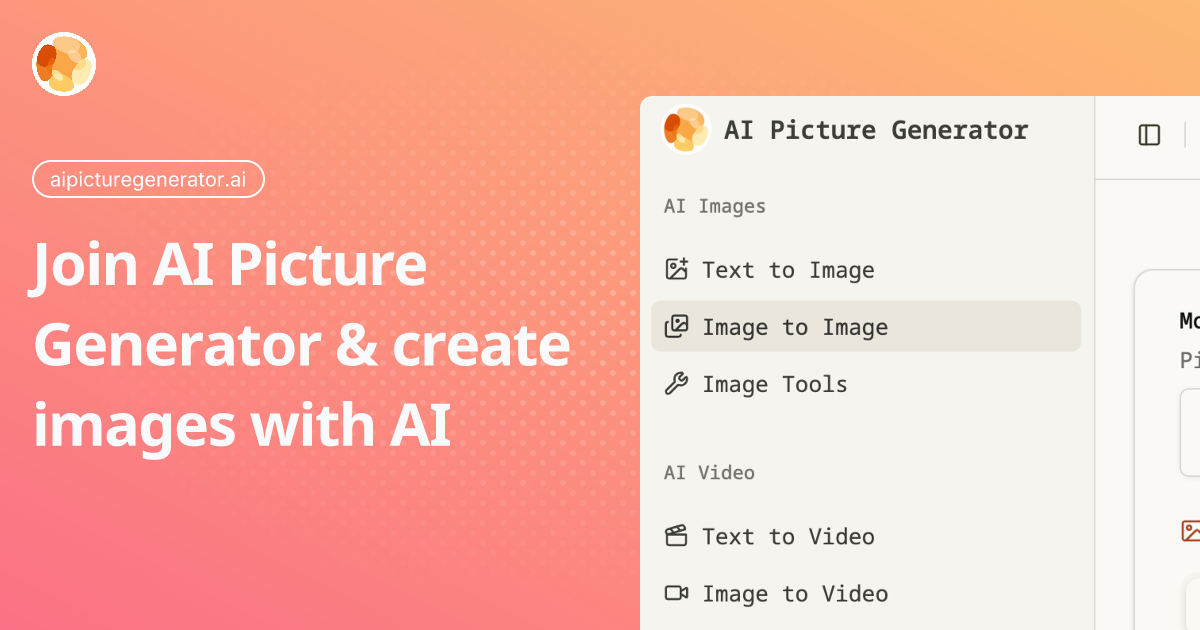
Turn ideas into images in minutes with text-to-image and image-to-image. Great for e-commerce, profiles, and social creatives. Privacy-first with saved history.
Run a free AEO + signal audit for your domain.
AI Answer Engine Optimization (AEO)
List once. Convert intent from live AI conversations without heavy integration.
AI Creative Asset Production is the use of generative artificial intelligence models to automate and scale the creation of visual, video, and textual marketing materials. This technology leverages machine learning algorithms, such as diffusion models and large language models (LLMs), to generate original content from text prompts or data inputs. Businesses adopt it to accelerate content pipelines, reduce production costs, and maintain brand consistency across numerous assets.
The process begins by establishing the project's goals, target audience, brand guidelines, and required formats such as images, videos, or copy.
Specialists fine-tune generative AI models with brand-specific data and craft detailed prompts to generate relevant, high-quality creative outputs.
Generated assets undergo human review for brand alignment and quality, are iteratively refined, and are then finalized for distribution across marketing channels.
Automates the generation of product images, lifestyle photography, and promotional videos for thousands of SKUs, enabling personalized campaigns at scale.
Scales content production for multiple client campaigns, creating social media graphics, ad creatives, and blog visuals faster and more cost-effectively.
Produces UI/UX mockups, explainer video animations, and technical documentation imagery to support product launches and user onboarding materials.
Generates compliant infographics, data visualizations, and educational content to explain complex financial products and services to customers clearly.
Creates accurate anatomical illustrations, patient education videos, and compliant marketing materials while adhering to strict regulatory guidelines.
Bilarna ensures quality by evaluating every AI Creative Asset Production provider through its proprietary 57-point AI Trust Score. This score rigorously assesses technical expertise in generative AI tools, portfolio quality, client delivery track record, and data security compliance. Bilarna continuously monitors provider performance, ensuring you connect with partners who are both technically proficient and reliably trustworthy.
Costs vary significantly based on project scope, asset complexity, and volume, ranging from subscription-based SaaS tools to custom enterprise contracts. Common models include per-asset pricing, monthly retainers, or outcome-based fees. Defining your output requirements and quality benchmarks is essential for obtaining accurate quotes.
AI-generated assets offer superior speed, scale, and cost-efficiency for volume production and data-driven personalization. Human creatives excel in high-concept strategy, nuanced emotional storytelling, and complex artistic direction. The most effective workflows combine AI for scalable production with human oversight for strategic refinement and brand guardianship.
Production time depends on asset type and customization but is drastically faster than traditional methods. A batch of 100 branded social media images can be generated in hours, not weeks. The timeline is primarily governed by the initial setup, prompt engineering, and the iterative review cycle, not the actual generation process.
Prioritize providers with proven expertise in your required asset types (e.g., video, 3D), strong examples in their portfolio, and a clear process for brand alignment and human quality assurance. Assess their familiarity with relevant AI tools and their ability to handle your data security, copyright, and compliance requirements effectively.
Yes, with proper technical setup. Providers train AI models on your brand assets—like logos, color palettes, and typefaces—to create a custom generative model. Establishing a detailed brand guideline document and implementing a robust human-in-the-loop review process are critical for ensuring all outputs adhere to your visual identity consistently.
Yes, many video production companies routinely work outside their local area and can service clients nationwide or even internationally. While some firms are based in specific cities or regions, it is common for them to travel for shoots, utilizing remote pre-production planning and flexible workflows. The feasibility depends on the project's budget, as travel and accommodation costs for the crew and equipment must be factored in. Many companies highlight this service, often noting that a significant portion of their business comes from non-local clients. This model allows businesses anywhere to access specialized production talent, often at more competitive rates than local providers in high-cost metropolitan areas.
Yes, many AI animation tools allow users to personalize and edit animations after the initial generation. This capability significantly impacts creative workflows by providing flexibility and control over the final output. Users can start with an AI-generated base animation and then customize elements such as timing, colors, graphics, and text to better align with their brand identity and creative vision. This reduces the need to create animations from scratch while still enabling unique and tailored results. The ability to refine AI-generated content accelerates the creative process, saves time, and allows creators to focus more on innovation and storytelling rather than repetitive technical tasks.
Yes, you can manage and edit all your documents on a dedicated platform. 1. Upload contracts and documents created outside the platform. 2. Use the built-in powerful document and template editor to modify or create new documents. 3. Organize and store all files securely in one place for easy access and management.
No programming skills are required to integrate a production monitoring system with your existing factory software. Many systems offer user-friendly tools such as Excel order upload features that allow you to input data without any coding. If you prefer a direct connection between your existing systems and the monitoring platform, professional setup services are often available to handle the integration for you. The system is designed to be configured and adjusted through simple interfaces, eliminating the need for in-house programming resources or technical expertise.
No technical skills or production team are required to create AI video ads. AI-powered video generators are designed to be user-friendly, allowing anyone to create professional-quality ads by simply providing product information and selecting preferences. The AI handles video editing, effects, and formatting automatically, eliminating the need for manual editing or specialized knowledge. This makes video ad creation accessible to businesses of all sizes and individuals without video production experience.
Advertising agencies are primarily evaluated and recognized for creative excellence through prestigious, peer-judged international award festivals and industry competitions. The most authoritative benchmark is the Cannes Lions International Festival of Creativity, often called the 'Oscars of Advertising,' where a jury of global experts assesses work based on creativity, innovation, and execution. Other significant awards include the Clio Awards, The One Show, and the D&AD Awards, each with rigorous judging criteria. National awards, like Canada's Cassies which focus on proven business effectiveness, also provide critical recognition. Evaluation criteria consistently focus on originality of the creative idea, the quality of its craft and execution, its cultural relevance or impact, and for some awards, the demonstrable business results achieved for the client. Winning these awards elevates an agency's global reputation and serves as third-party validation of its creative capabilities.
Developing an effective digital asset strategy involves systematically identifying, optimizing, and leveraging all digital properties owned by a business to achieve marketing and operational goals. First, conduct an audit to inventory digital assets such as websites, social media profiles, email lists, and online content. Then, assess their performance and alignment with business objectives. Next, optimize each asset for its specific purpose, ensuring technical SEO, user-friendly design, and consistent branding. Integrate assets to create a cohesive online presence, using analytics to track metrics and adjust strategies. This approach ensures that digital resources work together to enhance visibility, engage audiences, and drive conversions, ultimately supporting long-term business growth.
A business can evaluate a creative agency's expertise and track record by systematically reviewing their portfolio, client testimonials, industry awards, and case studies. First, examine the agency's portfolio for relevant work in your specific industry, assessing the creativity, strategic thinking, and measurable outcomes of past campaigns. Second, request detailed case studies that outline the client's challenge, the agency's strategic approach, the creative execution, and the final business results achieved, such as increased sales, brand awareness, or market share. Third, check for industry recognition through awards from reputable organizations, which can serve as an objective validation of quality and innovation. Fourth, seek client testimonials and references to understand the agency's reliability, communication style, and ability to meet deadlines and budgets. Finally, evaluate the agency's own brand positioning and thought leadership through published articles, environmental or social responsibility reports, and their approach to internal collaboration and external partnerships.
A business can evaluate a marketing agency's creative work and strategic capabilities by examining its portfolio for campaigns that demonstrate a clear fusion of insight, creativity, and commercial results. Look for case studies that detail how the agency's strategy influenced perception and decision-making, transforming a brand's core attribute into a competitive advantage. Assess the range of capabilities applied, such as branding, digital, predictive analytics, shopper marketing, and media planning, to ensure they align with your needs. Review the agency's published insights or press for evidence of strategic thinking, such as articles on 'Design as Strategy' or 'Storytelling Across Touchpoints.' Finally, evaluate the tangible outcomes described, like successful product introductions in over 1,600 retail locations or breaking into new social channels by challenging industry stereotypes.
A CGI production studio maintains brand consistency across marketing materials by developing and adhering to a precise, reusable digital model of a product or brand identity. Once a hyper-photoreal 3D model is created, it becomes a single source of truth for all visual assets. This model ensures that every product detail, color, material finish, and lighting condition is perfectly replicated across all outputs, from e-commerce images and social media ads to large-scale print campaigns. Studios can generate a high volume of consistent visuals for different regions, seasons, or promotional contexts without variations in quality or appearance. This digital-first approach eliminates the inconsistencies inherent in multiple traditional photo shoots, guaranteeing that the brand is presented identically everywhere, which strengthens recognition and trust.