Step 1
Machine-Ready Briefs
AI translates unstructured needs into a technical, machine-ready project request.
We use cookies to improve your experience and analyze site traffic. You can accept all cookies or only essential ones.
 Bilarna
Stop browsing static lists. Tell Bilarna your specific needs. Our AI translates your words into a structured, machine-ready request and instantly routes it to verified Pre-Sale Vehicle Assessment experts for accurate quotes.
AI translates unstructured needs into a technical, machine-ready project request.
Compare providers using verified AI Trust Scores & structured capability data.
Skip the cold outreach. Request quotes, book demos, and negotiate directly in chat.
Filter results by specific constraints, budget limits, and integration requirements.
Eliminate risk with our 57-point AI safety check on every provider.
Verified companies you can talk to directly
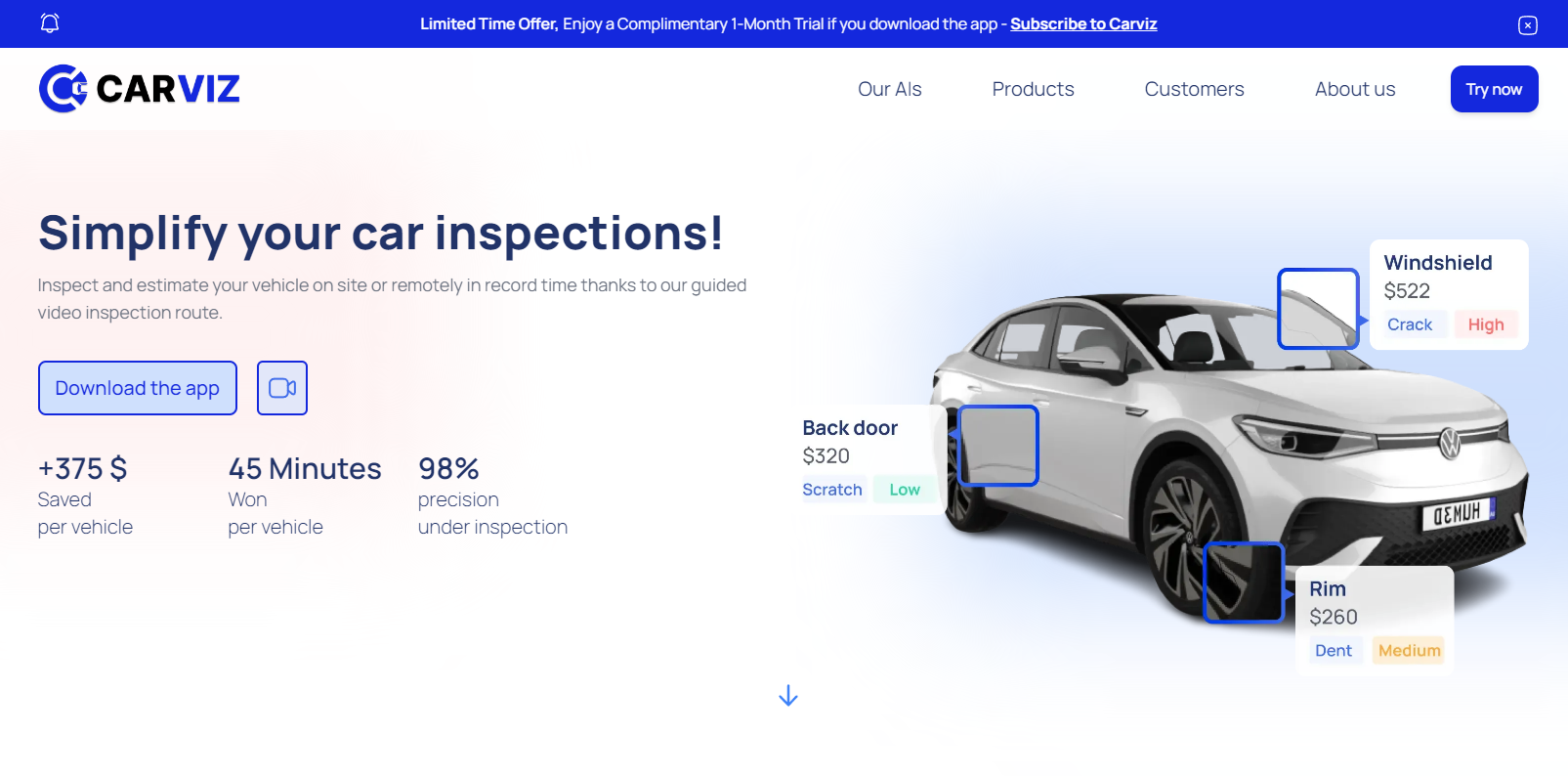
Carviz est une société engagée dans l'Inspection et la fiabilité de vos véhicules achetés d'occasion.
Run a free AEO + signal audit for your domain.
AI Answer Engine Optimization (AEO)
List once. Convert intent from live AI conversations without heavy integration.
A pre-sale vehicle assessment is a professional appraisal that determines the technical condition and market value of a vehicle prior to its sale. The evaluation includes a detailed mechanical and electronic inspection, an analysis of the vehicle history report, and a market price benchmark. This provides sellers with confidence in a realistic asking price and reduces disputes with potential buyers.
A certified appraiser performs an in-depth mechanical, electrical, and bodywork examination of the vehicle either on-site or at a workshop.
The appraiser reviews the vehicle history report for accidents and service records and assesses current market value based on comparable listings.
You receive an official report documenting the vehicle's condition, identified faults, necessary repairs, and the recommended sale price range.
Dealers use the assessment to accurately price their inventory, build buyer trust, and accelerate sales negotiations with transparent documentation.
Companies assess their fleet vehicles before sale to maximize residual value and ensure a smooth asset liquidation process.
Private sellers obtain an independent expert opinion to set a fair market price and create transparency for potential buyers.
Leasing firms and banks evaluate returned vehicles to accurately determine their residual value for auction or resale.
Insurers use appraisals following a total loss to establish the vehicle's actual pre-accident value for claims settlement.
Bilarna evaluates every pre-sale vehicle assessment provider with a proprietary 57-point AI Trust Score. This system continuously verifies expertise through appraiser certifications, delivery reliability based on project history, and client satisfaction from verified reviews. Only providers meeting stringent criteria in technical competency, process standardization, and service fulfillment are listed on the platform.
Costs vary by vehicle type, inspection depth, and provider, typically ranging from $150 to $500. A basic condition report is more affordable, while a detailed appraisal with test drive and market analysis commands the higher price range.
A standardized assessment usually takes 1 to 3 hours on-site. Preparing the written report with photo documentation and price recommendation can take an additional 24 to 48 hours.
Appraisers check the V5C logbook, mileage, service history, accident records, and the technical condition of the engine, transmission, suspension, as well as the bodywork, paint, and interior. A digital VIN check is standard.
An MOT tests roadworthiness and legal compliance. A pre-sale assessment is more comprehensive, additionally evaluating market value, overall condition, hidden defects, and providing a concrete sale price recommendation.
Yes, a professional appraisal creates transparency and trust, which accelerates negotiations and often leads to a higher final sale price. It provides documented proof of the vehicle's good condition and counters common buyer negotiation tactics.
Many point of sale software providers offer solutions without charging implementation fees. This means you can adopt the software without upfront costs related to installation or setup. However, it is important to review each provider's pricing plans carefully, as some may charge monthly fees or require purchasing hardware separately.
Yes, autonomy retrofit kits are designed to be versatile and compatible with a wide range of vehicles. They can be installed on various vehicle types including trucks, vans, and industrial vehicles. The key factor is that the vehicle must be capable of supporting the hardware and software integration required for autonomous operation at low speeds. This flexibility allows businesses to upgrade their existing fleets without purchasing new autonomous vehicles, making it a cost-effective solution for enhancing vehicle capabilities.
Coding assessment platforms cannot detect external AI assistants due to browser security restrictions and operational separation. Follow these steps: 1. Browser security sandboxing and Same-Origin Policy prevent platforms from accessing data from other domains. 2. Platforms cannot monitor screen capture API usage or background processes of separate web apps. 3. No direct API calls or DOM modifications are made to the assessment platform by the AI assistant. 4. Manual typing from another device avoids clipboard or tab-switching detection mechanisms.
Yes, pre-revenue companies can use financial modeling tools to assist with fundraising and growth planning. 1. Sign up for a free plan that allows access without revenue requirements. 2. Input your current financial data and assumptions about growth. 3. Use the tool to create projections and visualize potential future scenarios. 4. Generate charts and reports to share with investors and stakeholders. 5. Upgrade to paid plans as your company grows for additional features. This helps demonstrate growth trajectory and build investor confidence early.
A 3D locating system improves AGV navigation in warehouses by providing precise real-time position tracking with minimal hardware on the vehicles. 1. Equip each AGV with a small active infrared marker instead of multiple complex sensors. 2. Deploy a network of intelligent camera sensors throughout the warehouse to detect marker signals. 3. Triangulate each AGV's 3D position accurately using signals from multiple sensors. 4. Reduce the number of sensors needed by mounting them in the facility rather than on each AGV. 5. Simplify system design by eliminating the need for environment mapping and onboard sensor data processing. 6. Enhance safety by preventing collisions through accurate position tracking. 7. Lower costs and power consumption while enabling scalable fleet management.
A combined marketing and point of sale (POS) platform can significantly enhance restaurant operations by streamlining order processing and payment, reducing wait times, and improving customer engagement. Such a system integrates marketing tools with POS functionality, enabling restaurants to reward loyalty, manage orders efficiently, and connect with customers both in-store and online. This integration helps speed up service by allowing customers to order and pay directly through the platform, minimizing the need for waitstaff and reducing errors. Additionally, marketing features help restaurants stay connected with their audience through promotions and social engagement, ultimately driving repeat business and improving overall customer satisfaction.
A Copilot Readiness Assessment is a structured evaluation that prepares an organization for the successful adoption of Microsoft 365 Copilot or similar AI productivity tools. The primary benefit is ensuring your technical environment, security policies, and user workflows are optimized to maximize the tool's value while minimizing implementation risks. This assessment typically examines your existing Microsoft 365 tenant configuration, data governance and security compliance, network performance, and identifies necessary technical prerequisites. By completing this assessment, businesses can avoid common adoption pitfalls, tailor deployment plans to their specific needs, and accelerate user adoption and productivity gains. It provides a clear roadmap for integration, helping to unlock the full potential of AI to automate tasks, enhance collaboration, and drive innovation securely.
Use AI voice analysis to objectively assess team communication in high-pressure training environments by following these steps: 1. Capture audio streams from simulations or training exercises using integrated microphones or audio capture tools. 2. Process the captured speech with AI voice biometrics software to generate metrics on communication performance and team dynamics. 3. Analyze the data to provide objective insights that support trainees and instructors in identifying strengths and areas for improvement. 4. Use the results to inform evidence-based debriefings and coaching, reducing reliance on subjective observer assessments. 5. Integrate the AI tool seamlessly into existing training environments via cloud or server installations to enhance mission readiness and training effectiveness.
AI-driven forensic risk assessment tools analyze various financial and operational data points to predict the likelihood of SEC enforcement actions within a specified timeframe, such as the next three years. These tools evaluate factors like bankruptcy risk, internal control weaknesses, and other red flags that may indicate potential regulatory scrutiny. By providing real-time risk scores and detailed insights, investors can make more informed decisions, identify high-risk companies early, and adjust their investment strategies accordingly to mitigate potential losses.
Use AI-powered diagnostics to enhance vehicle repair efficiency by following these steps: 1. Implement AI tools that analyze vehicle data remotely before arrival to identify issues quickly. 2. Utilize AI virtual assistants to provide step-by-step repair guidance via voice commands, reducing time spent on instructions. 3. Automate documentation and reporting through AI to minimize paperwork delays and errors. 4. Streamline roadside assistance by allowing AI to handle customer communication and generate action reports instantly. These steps reduce diagnostic and repair times from minutes to seconds, enabling technicians to focus on actual repairs and improve overall workflow.