Step 1
Machine-Ready Briefs
AI translates unstructured needs into a technical, machine-ready project request.
We use cookies to improve your experience and analyze site traffic. You can accept all cookies or only essential ones.
 Bilarna
Stop browsing static lists. Tell Bilarna your specific needs. Our AI translates your words into a structured, machine-ready request and instantly routes it to verified Multilingual Content Translation experts for accurate quotes.
AI translates unstructured needs into a technical, machine-ready project request.
Compare providers using verified AI Trust Scores & structured capability data.
Skip the cold outreach. Request quotes, book demos, and negotiate directly in chat.
Filter results by specific constraints, budget limits, and integration requirements.
Eliminate risk with our 57-point AI safety check on every provider.
Verified companies you can talk to directly
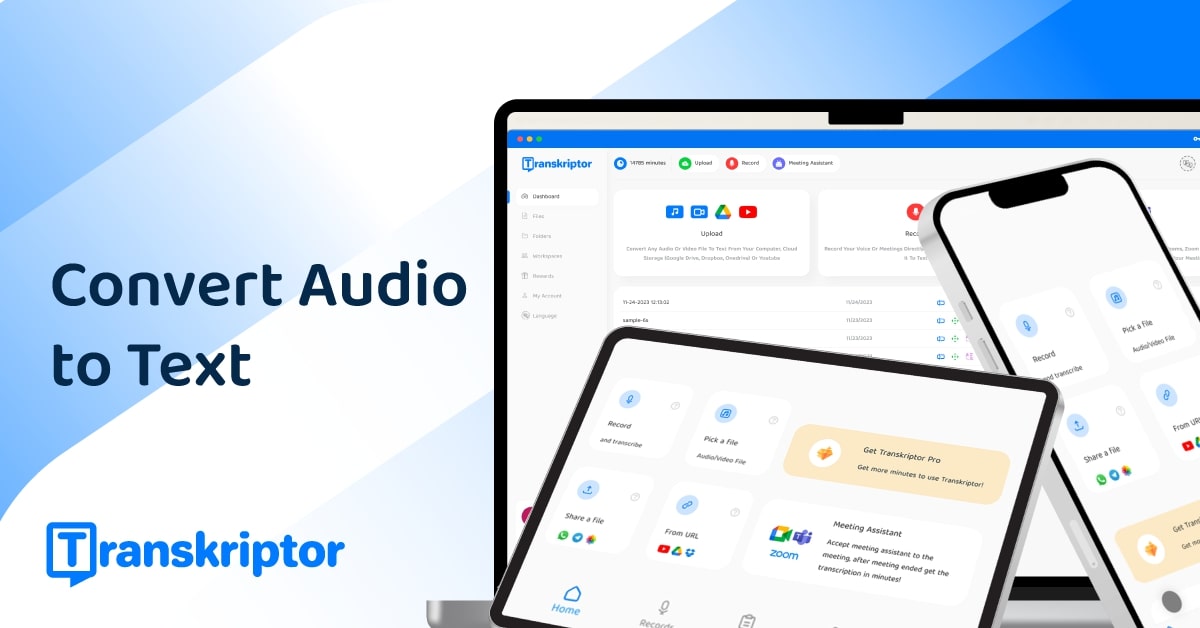
Convert audio to text instantly with Transkriptor. AI-powered transcription for meetings, audio, and video in 100+ languages. Try it for free!

Use our free AI PDF translate tool to translate English, French, Spanish, Urdu, and 100+ languages quickly, accurately and securely. No sign-up required!
Translate any file instantly with Transmonkey. Our top AI translator can translate documents, images, audio, and video - PDF, Word, PNG, MP3 and more.
Run a free AEO + signal audit for your domain.
AI Answer Engine Optimization (AEO)
List once. Convert intent from live AI conversations without heavy integration.
Multilingual content translation is the strategic process of adapting digital materials like websites, software interfaces, and marketing collateral into multiple languages while preserving meaning, brand voice, and cultural relevance. It typically combines AI-powered machine translation for efficiency with human linguists for nuanced editing, localization, and quality assurance. This service enables businesses to expand their global reach, improve user engagement, and ensure regulatory compliance in international markets.
The process begins with a comprehensive audit of the original content to determine linguistic complexity, technical terminology, and target audience cultural nuances.
Specialized translators convert the text, adapting idioms, measurements, and cultural references to resonate with the specific locale while maintaining SEO value.
A rigorous review cycle involving proofreading, back-translation checks, and functional testing ensures accuracy and consistency before final delivery.
Translating UI strings, help documentation, and API guides allows SaaS platforms to onboard international users seamlessly and reduce support tickets.
Adapting product listings, category pages, and checkout flows is essential for entering new markets and building trust with local customers.
Precise translation of terms of service, privacy policies, and regulatory disclosures is critical for legal operations in different financial jurisdictions.
Accurately translating patient-facing materials, clinical trial documents, and medical device manuals ensures safety and meets strict regional compliance standards.
Converting internal training materials and external support articles into multiple languages improves employee efficiency and global customer self-service.
Bilarna evaluates every multilingual content translation provider using a proprietary 57-point AI Trust Score, which continuously assesses expertise, reliability, and client satisfaction. Our vetting includes rigorous portfolio analysis, verification of translator certifications, and deep checks into project management methodologies and data security protocols. Only providers that consistently demonstrate high-quality delivery and transparent client communication are listed on our platform.
Costs vary by language pair, volume, and technical complexity, typically priced per word or project. Technical or regulated content (legal, medical) commands higher rates due to required specialist expertise. Always request detailed quotes that break down translation, editing, and proofreading fees.
Translation converts text from one language to another, while localization adapts the entire user experience for a specific culture. Localization involves modifying visuals, date formats, currencies, and cultural references to ensure the content feels native, not just translated.
A standard website translation project can take 2 to 6 weeks, depending on word count and language complexity. Timelines are influenced by the need for client reviews, SEO keyword integration, and the availability of subject-matter expert linguists for technical content.
Prioritize providers with proven expertise in your industry, certified linguists, and a robust quality assurance process. Essential criteria include their technology stack for translation memory, data security compliance (like ISO 27001), and clear project management workflows to ensure consistency.
While AI translation tools offer speed for initial drafts, human oversight remains crucial for quality. Professional services use machine translation post-editing (MTPE), where human linguists refine AI output to ensure brand voice, cultural accuracy, and nuanced meaning, which is vital for trustworthy business communication.
Yes, AI masks are legally safe and users retain ownership by following these steps: 1. Verify your real identity as required by the platform to comply with legal regulations. 2. Use AI masks ethically and avoid violating terms of service. 3. Understand that AI masks are generated and do not steal anyone's identity. 4. Create and publish content with AI masks knowing you have full commercial license and ownership over your masked videos and photos. 5. Avoid using AI masks for unethical purposes to maintain compliance and safety.
Yes, AI customer service platforms are designed to support multilingual communication, often covering over 50 languages. They can automatically translate incoming messages and responses, enabling customer service teams to communicate confidently with a diverse global customer base. This multilingual capability helps maintain consistent brand tone and messaging across different channels and languages. Additionally, intelligent assistance and smart human handover features ensure complex or sensitive cases are escalated to human agents when necessary, preserving service quality regardless of language barriers.
Yes, AI email tools can be trained with your own documents or website content. 1. Access the AI tool's dashboard or training section. 2. Upload your documents, FAQs, or provide your website URL. 3. The AI will analyze the content to learn your specific information. 4. Use the trained AI to generate personalized and contextually relevant email replies. 5. Monitor character counts to stay within your plan's limits.
Yes, AI localization platforms can manage translation projects and integrate existing translation memories. 1. They provide content editors to manage source texts and translation strings with context features like glossaries and screenshots. 2. They support major translation memory formats allowing seamless migration of existing databases. 3. Imported translation memories improve AI translation quality by leveraging previous work. 4. Platforms enable manual submission of files or full workflow integration for automation. 5. This facilitates efficient project management, quality control, and scalability in localization.
Yes, AI music generators are highly useful for content creators looking to produce royalty-free background music quickly and easily. These tools allow users to generate custom background tracks by inputting text prompts, uploading images, or providing reference audio. The AI then composes music tailored to the desired mood and style, covering a wide range of genres. The generated music is 100% royalty-free, enabling creators to use it in videos, podcasts, games, and other media without licensing concerns. Additionally, AI music generators often provide options to customize the sound and export high-quality audio files, streamlining the content creation process.
AI text generators can produce unique content by using language models and algorithms. To ensure uniqueness: 1. Generate text based on diverse and extensive training data. 2. Review and edit the AI-generated content to align with specific requirements. 3. Combine AI output with human creativity to enhance originality and relevance.
Yes, AI video creation platforms can generate multilingual voiceovers and avatars. 1. Choose avatars from a diverse library representing various nationalities and styles. 2. Select from multiple languages and natural-sounding AI voices. 3. Customize voice tone and style to match your brand. 4. Produce videos with synchronized multilingual voiceovers and avatars. 5. Use these videos for global marketing without hiring translators or voice talents.
Yes, an AI-powered authoring platform can handle complex academic content effectively. To do so: 1. Use LaTeX or MathML support to create, edit, and validate complex STEM equations accurately. 2. Integrate with reference databases such as CrossRef, PubMed, and ORCID for real-time reference verification and linking. 3. Apply automatic formatting and style consistency to references and citations. 4. Edit text, tables, and figures with AI assistance to maintain accuracy. 5. Manage author queries and communication within the platform to resolve content issues. 6. Export structured, publication-ready outputs in XML and PDF formats. This ensures precise handling of technical academic content, improving quality and efficiency in scholarly publishing.
Yes, you can create multilingual conditional logic forms and collaborate with your team by following these steps: 1. Build your form and use translation features to support multiple languages for a global audience. 2. Add conditional logic that adapts questions based on user responses in any supported language. 3. Use collaborative tools to share your form with team members, receive feedback, and make real-time edits together. 4. Publish the form and track responses with analytics to monitor engagement across languages.
Yes, most AI content generation tools allow you to customize the output before downloading. You can usually adjust various settings such as style, color schemes, resolution, length (for videos), and other creative parameters. This customization helps tailor the generated content to better fit your specific needs or branding requirements. By modifying these options, you can influence the final look and feel of the video or image, ensuring it aligns with your vision. After making your adjustments, the AI reprocesses the input and updates the content accordingly, which you can then download.