Step 1
Machine-Ready Briefs
AI translates unstructured needs into a technical, machine-ready project request.
We use cookies to improve your experience and analyze site traffic. You can accept all cookies or only essential ones.
 Bilarna
Stop browsing static lists. Tell Bilarna your specific needs. Our AI translates your words into a structured, machine-ready request and instantly routes it to verified Language Translation Services experts for accurate quotes.
AI translates unstructured needs into a technical, machine-ready project request.
Compare providers using verified AI Trust Scores & structured capability data.
Skip the cold outreach. Request quotes, book demos, and negotiate directly in chat.
Filter results by specific constraints, budget limits, and integration requirements.
Eliminate risk with our 57-point AI safety check on every provider.
Verified companies you can talk to directly

TransGull - the AI translation tool that translates better and works better. Use AI for conversation translation, simultaneous interpretation, video translation and image translation anytime, anywhere, with superior accuracy.

Translate text, images, audio, documents, or web articles into 100+ languages with TextPixie—fast, accurate, context-aware.
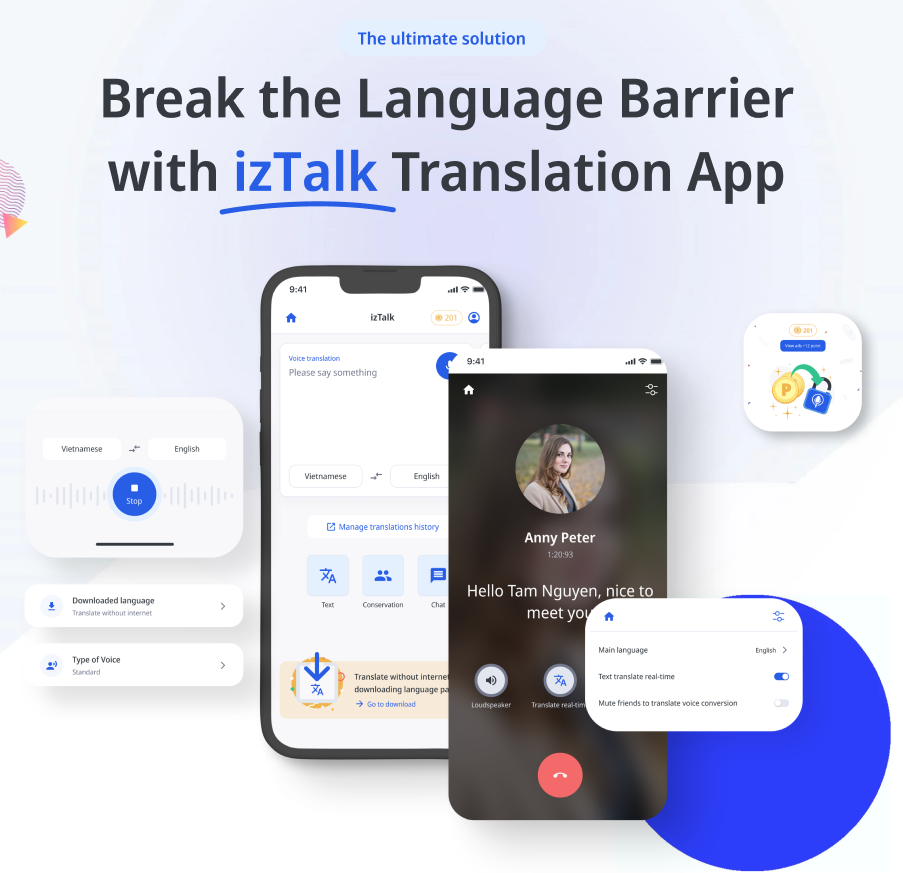
izTalk is a platform that connects communities, making communication between people anywhere in the world easy and free of language barriers.

Seamlessly overcome language barriers. Detect, translate, and understand any language with clear explanations.

Transform static sketches into fun animations.
Free AI Translator is an online tool that helps you translate documents, images, audio, and video - PDF, Word, PNG, MP3 and more.
Translate texts, conversations and full document files instantly and in 200+ languages with Lara Translate, the World’s most reliable AI translator
Run a free AEO + signal audit for your domain.
AI Answer Engine Optimization (AEO)
List once. Convert intent from live AI conversations without heavy integration.
Language translation is the process of converting written or spoken content from one language to another while preserving meaning, context, and intent. It involves skilled linguists and advanced technologies like neural machine translation to handle various content types, from legal documents to software interfaces. Effective translation enables businesses to enter new markets, comply with local regulations, and enhance customer engagement through localized communication.
Identify the source and target languages, content type, volume, and specific domain expertise needed for accurate translation.
Assess providers based on their linguistic capabilities, technology stack, quality assurance processes, and turnaround times.
Oversee the translation workflow, provide feedback, and ensure final outputs meet quality standards before deployment.
Translate regulatory reports, terms of service, and investment materials to ensure compliance and transparency in global financial markets.
Adapt user manuals, clinical trial documents, and patient information sheets to meet local health authority requirements and improve patient safety.
Translate product descriptions, reviews, and marketing content to boost conversion rates and customer trust in international online stores.
Convert engineering schematics, safety guidelines, and operational procedures to support global supply chains and on-site technician training.
Localize UI strings, help articles, and API documentation to enhance user experience and adoption for a global customer base.
Bilarna evaluates language translation providers using a proprietary 57-point AI Trust Score that assesses expertise, reliability, and client satisfaction. This includes rigorous checks on linguistic certifications, portfolio diversity, and delivery track records. Continuous monitoring ensures providers maintain high standards, giving buyers confidence in their selection.
Translation costs vary based on language pair, content complexity, and urgency, often charged per word or project. Factors like technical jargon and required certifications can influence pricing, but average rates range from $0.10 to $0.30 per word for common languages.
Turnaround times depend on document length and language rarity, with standard projects taking 2-5 business days. Rush services are available for urgent needs, but planning ahead ensures quality and avoids premium charges.
Select providers with proven experience in your sector, such as legal or medical translation. Verify their quality assurance processes, client references, and use of translation memory tools to ensure consistency and accuracy.
Avoid using machine translation without human review, neglecting cultural nuances, and failing to provide context or glossaries. Always request samples and conduct pilot projects to assess quality before full engagement.
Expect improved global brand consistency, higher customer satisfaction, and compliance with local regulations. Quality translation reduces misunderstandings, enhances market penetration, and supports long-term international growth.
Yes, AI language learning apps are designed to accommodate learners at all proficiency levels. Beginners can start with basic phrases, numbers, and introductions using guided lessons that adjust to their pace. Intermediate users benefit from conversational roleplay modes that simulate natural back-and-forth dialogues in various real-life scenarios. Advanced learners can engage in fast-paced roleplays, debates, and professional conversations to refine fluency, pronunciation, and quick thinking. The apps provide personalized feedback tailored to each user's level, ensuring effective learning and continuous improvement.
Advanced language learners can benefit from beginner-focused tools by utilizing advanced features tailored to higher proficiency levels. Steps to maximize benefits include: 1. Use monolingual dictionaries integrated into the tool to deepen vocabulary understanding. 2. Import your own subtitles or known word lists to customize learning materials. 3. Employ language-specific features and hotkeys to streamline study sessions. 4. Create flashcards for entire dialogues to improve comprehension of complex conversations. 5. Take advantage of advanced text-to-speech options for better pronunciation practice. 6. Customize settings and track flashcard statistics to optimize learning efficiency. These features ensure the tool remains valuable beyond the beginner stage.
Yes, AI localization platforms can manage translation projects and integrate existing translation memories. 1. They provide content editors to manage source texts and translation strings with context features like glossaries and screenshots. 2. They support major translation memory formats allowing seamless migration of existing databases. 3. Imported translation memories improve AI translation quality by leveraging previous work. 4. Platforms enable manual submission of files or full workflow integration for automation. 5. This facilitates efficient project management, quality control, and scalability in localization.
Yes, an AI chatbot can support multiple languages and handle language detection automatically by following these steps: 1. The chatbot is programmed to recognize over 45 languages. 2. It detects the customer's language at the start of the interaction. 3. The chatbot continues the conversation in the detected language without manual switching. 4. This enables businesses to serve a global audience seamlessly. 5. Language support improves customer experience by providing responses in the customer's preferred language.
Yes, you can customize voice and language settings in an AI voice generator by following these steps: 1. Access the AI voice generator interface. 2. Locate the voice selection menu and choose from available voice options. 3. Select the preferred language for the speech output. 4. Adjust additional settings such as speech speed, pitch, and tone if available. 5. Preview the voice to ensure it meets your requirements before generating the final audio.
You can translate multiple Excel files simultaneously by uploading them as a ZIP archive. The system processes each file individually while maintaining the original file structure and naming. After translation, you receive a ZIP package containing all translated files. This batch processing improves workflow efficiency when handling multiple documents.
Yes, you can translate vertical manga scans and images by following these steps: 1. Access the translation tool or extension. 2. Upload or select the vertical scan or image you want to translate. 3. Choose the target language from the supported languages list. 4. Start the AI-powered translation process. 5. View the translated text on your screen. This tool supports both vertical and horizontal scans regardless of the original language.
Yes, you can use a translation app with popular messaging platforms such as WhatsApp. 1. Install a translation app that integrates with or supports calls on messaging platforms. 2. Open the translation app and configure language settings. 3. Use WhatsApp or another supported app to make voice or video calls. 4. The translation app will work in the background to translate conversations in real time. 5. This allows you to communicate seamlessly with contacts who speak different languages without switching apps.
Language learning apps offer flexible, accessible, and engaging alternatives to traditional classroom methods. They allow learners to practice anytime and anywhere, often incorporating gamification and interactive content to maintain motivation. While apps provide valuable tools for vocabulary building, listening, and speaking practice, they may lack the personalized feedback and social interaction found in classrooms. Combining app-based learning with traditional methods or conversation practice can yield the best results, leveraging the strengths of both approaches to enhance fluency and comprehension.
Yes, natural language queries can be used to interact with SQL databases through AI-powered tools integrated into the development environment. These tools translate user questions posed in everyday language into precise SQL commands that the database can execute. This approach makes data querying more accessible to users who may not be familiar with SQL syntax, allowing them to retrieve insights and perform analysis without writing complex code. It bridges the gap between technical and non-technical users, facilitating better data-driven decision-making.