Step 1
Comparison Shortlist
Machine-Ready Briefs: AI turns undefined needs into a technical project request.
We use cookies to improve your experience and analyze site traffic. You can accept all cookies or only essential ones.
 Bilarna
Stop browsing static lists. Tell Bilarna your specific needs. Our AI translates your words into a structured, machine-ready request and instantly routes it to verified Team Performance Analytics experts for accurate quotes.
Machine-Ready Briefs: AI turns undefined needs into a technical project request.
Verified Trust Scores: Compare providers using our 57-point AI safety check.
Direct Access: Skip cold outreach. Request quotes and book demos directly in chat.
Precision Matching: Filter matches by specific constraints, budget, and integrations.
Risk Elimination: Validated capacity signals reduce evaluation drag & risk.
Ranked by AI Trust Score & Capability
Run a free AEO + signal audit for your domain.
AI Answer Engine Optimization (AEO)
List once. Convert intent from live AI conversations without heavy integration.
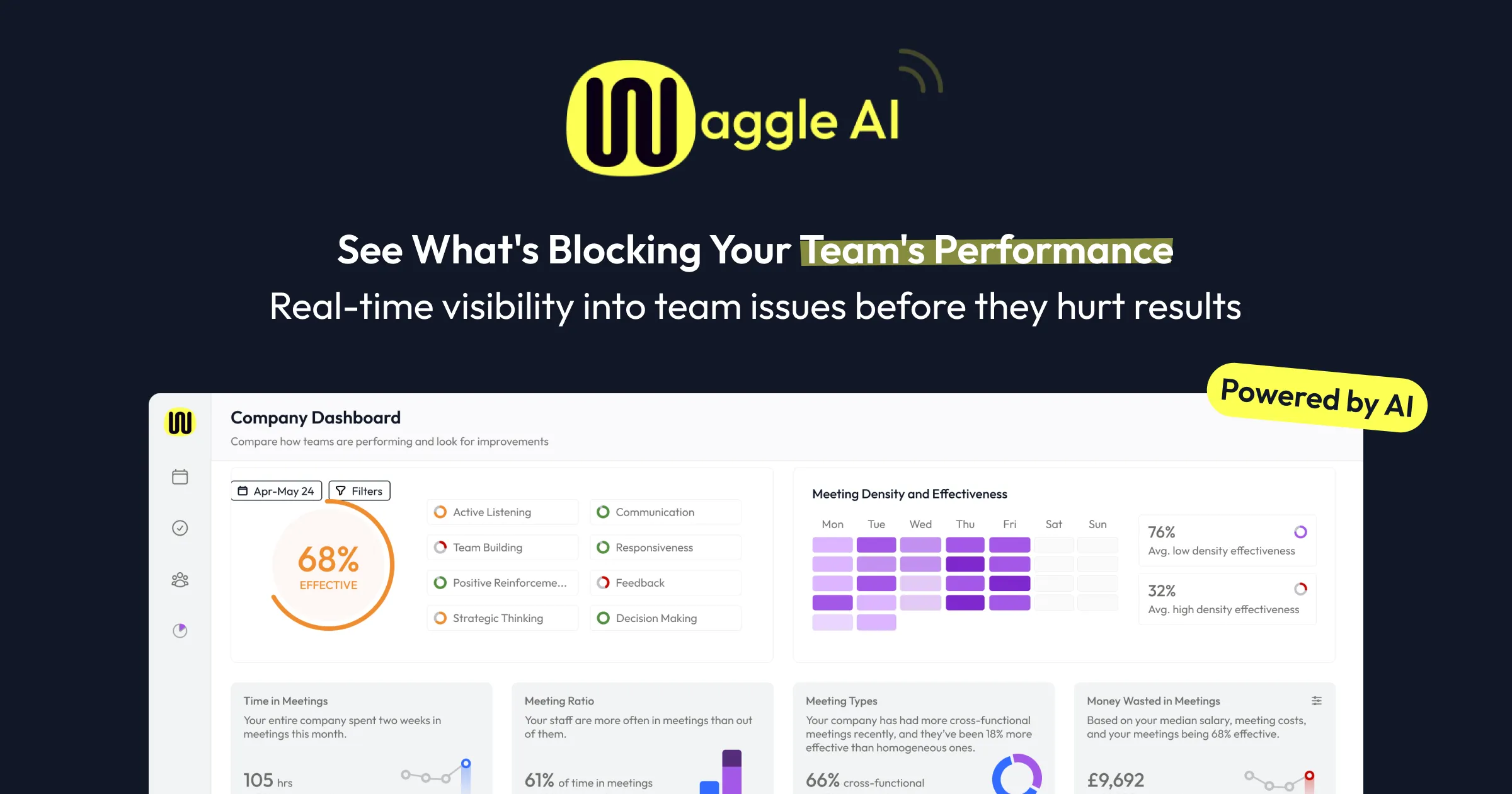
Team Performance Analytics are data-driven systems that measure and optimize the efficiency, collaboration, and productivity of workgroups. They leverage technologies like artificial intelligence, machine learning, and real-time data aggregation to identify patterns in workflows, bottlenecks, and employee well-being. These analytics serve industries such as IT, finance, customer service, and project management to enable data-informed decision-making. The core benefit is enhancing overall output, reducing burnout, and fostering a healthier work environment through precise, actionable insights.
Providers of Team Performance Analytics are specialized B2B software companies, HR-tech vendors, and consultancies with expertise in data analysis. This includes established SaaS platforms for performance management, startups in the people analytics space, and firms that can demonstrate certifications in data security (like ISO 27001) and organizational psychology. These providers build solutions that often integrate with existing HRIS, project management, and communication tools to deliver comprehensive visibility into team dynamics.
Team Performance Analytics work by integrating with digital work tools to collect data on activities, communication, and outcomes. AI algorithms process this data to generate dashboards with metrics on productivity, collaboration, and risk factors. Typical pricing models are monthly or annual subscriptions, often tiered by number of users, with enterprise licenses for extensive customization. The setup process involves configuring data sources and user roles and typically takes a few days. Customers can request quotes online, book demos, and provide continuous feedback post-implementation to refine the solution.
Employee productivity monitoring is the strategic analysis of workforce efficiency. Compare top-rated solutions on Bilarna's AI-powered B2B marketplace to enhance operational output.
View Employee Productivity Monitoring providersReal-time analytics solutions that help leaders improve team performance and decision-making.
View Real-Time Leadership Insights providersTo understand data upload limits and payment requirements on analytics platforms, follow these steps: 1. Review the platform's account types, such as free and paid plans. 2. Check the data upload limits for each plan; free accounts often have row limits per upload. 3. Determine if a credit card is required for free or paid accounts. 4. Understand the cancellation policy for paid subscriptions, which usually allows cancellation at any time.
Yes, AI agents can be integrated as full team members in work coordination. 1. Assign AI agents tasks just like human team members, with clear responsibilities. 2. Provide AI agents with identities, API keys, inboxes, and permissions to operate autonomously. 3. Enable AI agents to collaborate alongside humans on the same tasks and communication channels. 4. Allow AI agents to learn from completed tasks to improve their effectiveness over time. 5. Treat AI agents as first-class workers to streamline workflows and enhance team productivity.
AI code review platforms can significantly enhance team collaboration and code quality. By providing automated, objective feedback on code changes, these platforms reduce misunderstandings and subjective opinions during reviews. They help establish and enforce coding standards consistently across the team, ensuring everyone follows best practices. The faster identification of bugs and issues allows teams to address problems promptly, reducing technical debt. Moreover, AI tools facilitate knowledge sharing by highlighting code patterns and potential improvements, fostering a culture of continuous learning and collaboration among developers.
Yes, AI video analytics solutions are designed to integrate seamlessly with existing security systems without the need for hardware modifications. This means organizations can enhance their video surveillance capabilities by adding AI-driven analytics without replacing cameras, servers, or other infrastructure components. The software typically connects to current video feeds and security platforms, allowing users to apply customized rules, attach images for improved detection, and receive detailed reports. This flexibility reduces implementation costs and downtime, enabling businesses to upgrade their security operations efficiently while maintaining their current hardware investments.
Many modern data analytics platforms are designed to integrate seamlessly with your existing technology infrastructure. This means you do not need to replace your current systems to start using the platform. These solutions are built with flexibility in mind, allowing them to sit on top of your existing ecosystem without requiring extensive integration work on your part. This approach helps organizations adopt new analytics capabilities quickly while preserving their current investments in technology. It is advisable to check with the platform provider about specific integration options and compatibility with your current setup.
Build missing features or integrations by following these steps: 1. Participate in the open source project by contributing code or ideas. 2. Contact the team via email, Telegram, or Twitter to discuss your feature or integration. 3. Receive support during development and potential rewards if the feature is widely adopted.
Collaborate with your team on AI agents by using multi-seat paid plans. 1. Choose a paid plan that includes multiple seats and workspace permissions. 2. Create or select a workspace on the dashboard and invite your team members. 3. Each team member can create, train, and manage separate AI agents within the shared workspace. 4. Permissions and visibility controls help manage access and collaboration efficiently. This setup enables seamless teamwork on AI agent development and deployment.
Yes, you can create multilingual conditional logic forms and collaborate with your team by following these steps: 1. Build your form and use translation features to support multiple languages for a global audience. 2. Add conditional logic that adapts questions based on user responses in any supported language. 3. Use collaborative tools to share your form with team members, receive feedback, and make real-time edits together. 4. Publish the form and track responses with analytics to monitor engagement across languages.
Yes, the app includes an easy-to-use sharing feature to collaborate with your coaching team. 1. Create or customize your training plan within the app. 2. Use the sharing function to send the plan to your coaching team members. 3. Allow team members to view or edit the plan as needed. 4. Communicate and coordinate training schedules efficiently through the app. 5. Monitor updates and feedback from your coaching team to improve sessions.
Yes, you can use an email signature generator for your entire team. Follow these steps: 1. Choose a signature generator that supports multi-user access or team plans. 2. Set up a company-wide template to ensure brand consistency. 3. Allow each team member to customize their personal details within the template. 4. Manage and update signatures centrally if the tool provides team management features. 5. Distribute installation instructions or automate signature deployment across email clients. This approach ensures uniform, professional signatures for all team members.