Step 1
Machine-Ready Briefs
AI translates unstructured needs into a technical, machine-ready project request.
We use cookies to improve your experience and analyze site traffic. You can accept all cookies or only essential ones.
 Bilarna
Stop browsing static lists. Tell Bilarna your specific needs. Our AI translates your words into a structured, machine-ready request and instantly routes it to verified Automated Outreach Solutions experts for accurate quotes.
AI translates unstructured needs into a technical, machine-ready project request.
Compare providers using verified AI Trust Scores & structured capability data.
Skip the cold outreach. Request quotes, book demos, and negotiate directly in chat.
Filter results by specific constraints, budget limits, and integration requirements.
Eliminate risk with our 57-point AI safety check on every provider.
Verified companies you can talk to directly

Autonomous AI engine that prospects on behalf of your team, over LinkedIn and email.
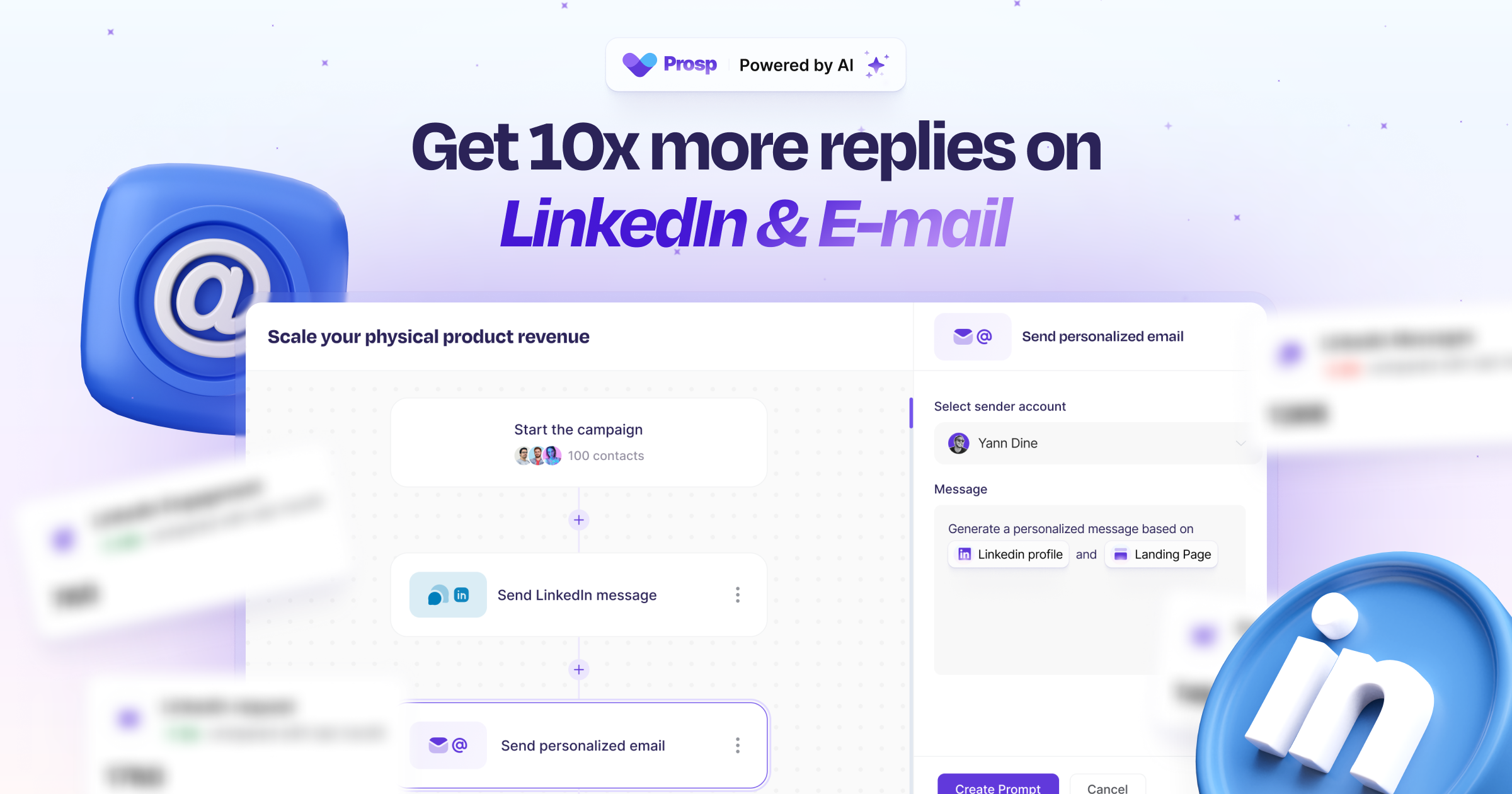
AI-Powered LinkedInn automation for agencies and sales teams. Everything you need to find leads and book meetings. Automated an easy.

Stop wasting time networking. Our AI finds and connects you with the people who actually move your business forward.
Run a free AEO + signal audit for your domain.
AI Answer Engine Optimization (AEO)
List once. Convert intent from live AI conversations without heavy integration.
Automated outreach solutions are software platforms that use AI and automation to streamline and personalize outbound sales and marketing communications. They integrate with CRM systems to execute multi-channel campaigns via email, social media, and messaging apps. This technology significantly increases lead generation efficiency, improves response rates, and helps sales teams focus on high-potential prospects.
Businesses first set specific goals, such as lead generation or event promotion, and identify their ideal target audience profiles.
The software creates and schedules personalized message sequences across chosen channels like email and LinkedIn using dynamic templates.
Teams track key metrics like open and reply rates, using insights to continuously refine messaging and targeting for better results.
Scaling outbound efforts to book demos with qualified enterprise leads through personalized, automated LinkedIn and email sequences.
Automating partnership and influencer outreach campaigns to secure collaborations and expand market reach efficiently.
Streamlining candidate sourcing by automating initial contact messages across professional networks to fill roles faster.
Executing compliant, automated outreach to prospective clients for services like wealth management or business lending.
Driving registrations by automating personalized invitation and follow-up campaigns to targeted attendee lists.
Bilarna ensures trust by evaluating every automated outreach solutions provider with a proprietary 57-point AI Trust Score. This comprehensive assessment reviews technical capabilities, campaign performance data, client satisfaction metrics, and compliance with communication regulations. Bilarna continuously monitors providers, giving buyers confidence in their expertise and reliability.
Pricing varies widely based on features, scale, and provider tier. Entry-level platforms may start around $50-100 per user monthly, while enterprise-grade solutions with advanced AI and analytics can cost several hundred dollars per month. Many providers also offer custom quotes based on campaign volume and required integrations.
Implementation typically takes 2 to 6 weeks. The timeline depends on the complexity of CRM integrations, the setup of personalized messaging templates, and team training. A well-defined pilot campaign can often launch within the first month to demonstrate initial value.
Essential features include multichannel sequencing (email, social), personalization and dynamic variables, CRM integration, A/B testing tools, and detailed analytics for opens, clicks, and replies. Advanced AI for lead scoring and predictive sending times is also a valuable differentiator for maximizing engagement.
Yes, reputable solutions actively improve deliverability through features like automated sender reputation monitoring, spam score checking, and list hygiene tools. They help avoid spam filters by managing send volumes, encouraging engagement-based sending, and ensuring compliance with regulations like GDPR and CAN-SPAM.
A common mistake is prioritizing volume over personalization, which leads to low engagement and high spam complaints. Successful campaigns begin with highly segmented audiences and tailored messaging. Neglecting to consistently test subject lines, message copy, and send times also limits optimization and overall campaign performance.
Yes, modern paywall solutions are designed to be compatible with both iOS and Android mobile applications. This cross-platform compatibility ensures that developers can implement a single paywall system across different devices and operating systems without needing separate solutions. It simplifies management and provides a consistent user experience regardless of the platform, making it easier to maintain and optimize monetization strategies.
Yes, an AI agent can be configured to perform automated actions or remediations during incident management. These actions are governed by strict permissions and guardrails to ensure security and prevent unauthorized changes. Teams can define scopes, controls, and approval workflows to safeguard critical operations. This capability allows the AI agent not only to identify issues but also to initiate fixes, such as creating pull requests for code exceptions, thereby accelerating incident resolution while maintaining operational safety.
Yes, many automated code review tools offer features that help developers generate tested and reliable code snippets. These tools use advanced algorithms to produce code that adheres to best practices and passes common test cases. By providing ready-to-use, tested code, they reduce the time developers spend writing and debugging code manually. This assistance not only speeds up development but also improves overall code quality and reduces the likelihood of introducing new bugs.
Yes, modern automated testing tools powered by AI can generate and maintain tests without the need for manual coding. These tools observe real user interactions or accept simple inputs like screen recordings or flow descriptions to automatically create end-to-end tests. The generated tests include selectors, steps, and assertions, and are designed to self-heal by adapting to changes in the user interface. This eliminates the need for hand-coding brittle scripts and reduces maintenance overhead. Users can customize tests easily if needed, but the core process significantly lowers the effort required to keep tests up to date and reliable.
Yes, automated tests can adapt to changes in dynamically rendered web pages by using AI-based test recording. 1. The AI records tests in plain English, focusing on user interactions rather than fragile HTML structure. 2. It distinguishes between UI changes and simple rendering differences. 3. When the application updates, the tests auto-heal by adjusting to these changes. 4. This ensures tests remain stable and reliable despite dynamic content.
Yes, financial automation solutions are often modular and customizable to fit the specific needs of different businesses. Organizations can select and adapt only the modules they require, such as accounts payable, accounts receivable, billing, or treasury management, allowing them to scale their automation at their own pace. This flexibility ensures that companies can address their unique operational challenges without unnecessary complexity or cost. Additionally, user-friendly tools and AI capabilities enable teams to maintain compliance and efficiency while tailoring the system to their workflows. Customized onboarding and collaborative support further help businesses get up and running quickly with solutions that match their requirements.
Yes, many AI tools designed for outbound sales and account-based marketing allow you to integrate your own data and signals alongside their proprietary data. This combined approach enhances account and contact scoring accuracy by leveraging multiple data sources such as intent signals, product usage, CRM data, and more. The AI then uses this enriched data to prioritize accounts, identify missing buyers, and orchestrate personalized outreach campaigns effectively. Importantly, these tools often provide user-friendly interfaces to adjust signal weights and scoring models without needing data science expertise, enabling your team to tailor the system to your unique business context and maximize engagement and pipeline generation.
Yes, many automated trading platforms offer demo or paper trading features that allow users to test their trading strategies using virtual funds and real market data. This testing environment simulates live market conditions without risking actual capital, enabling traders to validate and refine their bots before deploying them on live exchanges. Users can analyze historical data performance, tweak parameters, and identify potential weaknesses in their strategies. Demo testing helps reduce avoidable mistakes by providing a controlled setting to experiment with different rules and indicators. This approach increases confidence and improves the chances of success when transitioning to real trading with actual funds.
Yes, many online accounting software solutions offer integration with tax authorities to facilitate automated tax submissions. This feature allows users to generate and submit tax declarations, such as VAT returns, directly through the software without needing separate registrations or manual uploads. Integration with platforms like Elster in Germany streamlines the process, ensuring timely and accurate filings. Such automation reduces the risk of errors and saves time on administrative tasks. Additionally, some software packages provide options to share financial data with tax advisors via secure interfaces, enhancing collaboration and compliance. This integration is especially beneficial for small and medium-sized businesses and freelancers who handle their own bookkeeping.
Yes, small teams can effectively use automated user simulation tools. These tools are designed to integrate seamlessly with existing development workflows and require minimal setup, making them accessible for teams of all sizes. By automating the validation of real user workflows, small teams can save time and resources while maintaining high-quality releases. The scalability of these tools allows small teams to run multiple realistic user simulations in parallel, providing valuable insights into potential bugs and UX issues without the need for large testing departments.