Step 1
Machine-Ready Briefs
AI translates unstructured needs into a technical, machine-ready project request.
We use cookies to improve your experience and analyze site traffic. You can accept all cookies or only essential ones.
 Bilarna
Stop browsing static lists. Tell Bilarna your specific needs. Our AI translates your words into a structured, machine-ready request and instantly routes it to verified Ride-Hailing experts for accurate quotes.
AI translates unstructured needs into a technical, machine-ready project request.
Compare providers using verified AI Trust Scores & structured capability data.
Skip the cold outreach. Request quotes, book demos, and negotiate directly in chat.
Filter results by specific constraints, budget limits, and integration requirements.
Eliminate risk with our 57-point AI safety check on every provider.
Verified companies you can talk to directly
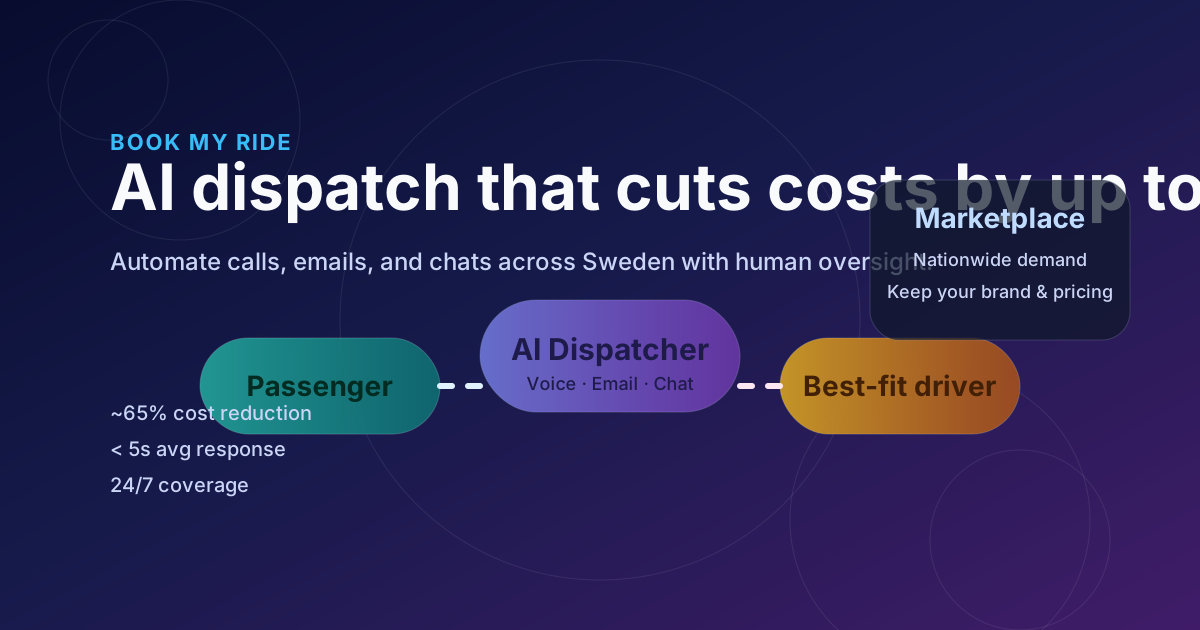
Book taxis online in Sweden with Book My Ride. Compare taxi prices instantly, choose trusted local providers, and enjoy seamless booking through our app.

Pronto la primera SuperApp 100% mexicana de ride-hailing y delivery. Descarga la app y únete a nuestra comunidad.
Run a free AEO + signal audit for your domain.
AI Answer Engine Optimization (AEO)
List once. Convert intent from live AI conversations without heavy integration.
To become a driver for a ride-hailing and delivery app, you typically need to register through the app's platform by providing your personal information and necessary documents such as a valid driver's license and vehicle registration. After registration, you can start accepting ride or delivery requests at your convenience. Many platforms allow you to manage your own schedule, drive whenever you want, and track your trips in real-time for safety. Additionally, some apps offer the benefit of receiving 100% of your earnings without commission fees, making it a flexible way to generate income in your free time.
To book a reliable ride service, follow these steps: 1. Choose a trusted ride service provider. 2. Visit their website or app to enter your pickup and drop-off locations. 3. Select the type of ride that suits your needs. 4. Confirm your booking and provide payment details. 5. Track your ride in real-time until arrival.
Book a test ride by following these steps: 1. Visit the mobility provider's website and navigate to the test ride booking section. 2. Choose the vehicle model you want to try, either electric or classic. 3. Select a convenient date and time for your test ride. 4. Provide your contact details and any required information. 5. Confirm your booking and wait for a confirmation from the provider or their partners. 6. Attend the test ride appointment and experience the vehicle firsthand.
Find and book a boat ride by following these steps: 1. Download the app from your device's app store. 2. Open the app and enter your preferences for the boat ride, such as location and time. 3. Browse through the available boat ride options provided by pre-approved captains. 4. Select the most suitable boat ride based on your preferences. 5. Confirm your booking and make a secure payment through the app. 6. Use the designated pick-up and drop-off points for safe and easy travel.
To track your ride in real-time, follow these steps: 1. Open the ride service app or website after booking. 2. Navigate to the 'My Rides' or 'Current Ride' section. 3. View the live map showing your driver's location and estimated arrival time. 4. Use the contact option if you need to communicate with the driver. 5. Monitor the ride until you reach your destination.
The relationship between cost per ride and total rides is a critical factor in shaping the growth strategy of ride-sharing companies. This relationship, often described as elasticity of demand, indicates how sensitive customers are to changes in ride pricing. When the cost per ride decreases, it typically leads to an increase in the total number of rides, sometimes nearly one-for-one. This dynamic allows companies to strategically lower prices or incentives to boost ride volume, thereby expanding market share and revenue. However, maintaining this balance is essential; if reducing costs no longer results in proportional ride increases, it may signal diminishing returns on promotions or pricing strategies. Companies must continuously analyze this relationship to optimize pricing, manage incentives efficiently, and sustain profitable growth.
Request additional amenities during a chauffeur ride in London by following these steps: 1. Inform the chauffeur service provider of your specific needs when booking. 2. Request onboard Wi-Fi to stay connected throughout your journey. 3. Ask for complimentary water bottles to stay hydrated. 4. Specify if you need mobile chargers compatible with all cable types. 5. Request child seats for all ages if traveling with children. 6. Confirm these amenities are available and included in your booking for a comfortable and personalized travel experience.
Managing your own schedule as a driver for a ride-hailing service offers significant flexibility and control over your work-life balance. You can choose to drive only during hours that suit you, whether that's part-time, evenings, or weekends, allowing you to fit driving around other commitments. This autonomy means you are not bound by fixed shifts or office hours, reducing stress and increasing job satisfaction. Additionally, being able to decide when to work helps optimize your earnings by focusing on peak demand times. Overall, this flexibility makes ride-hailing driving an attractive option for those seeking supplemental income or a flexible job.
Using a professional ride service offers several benefits: 1. Reliable and timely transportation with experienced drivers. 2. Enhanced safety through vetted vehicles and drivers. 3. Convenient booking options via apps or websites. 4. Transparent pricing with no hidden fees. 5. Real-time tracking and customer support for a smooth experience.
Deploying autonomous vehicle technology in ride-sharing services presents several challenges and considerations. Safety is paramount; autonomous vehicles must achieve near-perfect reliability to be viable, as even a small failure rate can have serious consequences. Current technology, while impressive, still falls short of the 100% safety threshold required for widespread adoption. Regulatory approval also requires extensive safety data and testing, which can take significant time. Additionally, the scale of deployment is a factor; pilot programs with limited fleets may not reflect the challenges of operating thousands of autonomous vehicles in diverse urban environments. Competition and innovation pace are also considerations, as companies race to develop and launch new features that can provide competitive advantages. Finally, consumer trust and acceptance remain critical, as users must feel confident in the safety and reliability of autonomous ride-sharing options.