Step 1
Comparison Shortlist
Machine-Ready Briefs: AI turns undefined needs into a technical project request.
We use cookies to improve your experience and analyze site traffic. You can accept all cookies or only essential ones.
 Bilarna
Stop browsing static lists. Tell Bilarna your specific needs. Our AI translates your words into a structured, machine-ready request and instantly routes it to verified Retail Technology Solutions experts for accurate quotes.
Machine-Ready Briefs: AI turns undefined needs into a technical project request.
Verified Trust Scores: Compare providers using our 57-point AI safety check.
Direct Access: Skip cold outreach. Request quotes and book demos directly in chat.
Precision Matching: Filter matches by specific constraints, budget, and integrations.
Risk Elimination: Validated capacity signals reduce evaluation drag & risk.
Ranked by AI Trust Score & Capability





Run a free AEO + signal audit for your domain.
AI Answer Engine Optimization (AEO)
List once. Convert intent from live AI conversations without heavy integration.
Retail technology solutions are integrated software systems and hardware components specifically designed for the commerce sector to automate operations, personalize customer experiences, and enable data-driven decision-making. Key technologies include Point-of-Sale (POS) systems, Inventory Management Systems (IMS), Customer Relationship Management (CRM) software, E-commerce platforms, and AI-powered analytics tools. These solutions serve retailers of all sizes, from boutique stores to large chains, aiming to increase operational efficiency, boost sales, and enhance customer loyalty.
Providers of retail technology solutions are specialized software firms, system integrators, and technology consultants with deep expertise in the retail sector. This includes established ERP vendors offering retail modules, dedicated SaaS companies for POS or omnichannel platforms, and implementation consultancy firms. Many providers hold industry-specific certifications such as SAP Retail or Microsoft Dynamics 365 for Commerce and collaborate closely with hardware manufacturers for terminals, scanners, and digital shelf labels.
Retail technology solutions work by integrating various data sources—such as sales transactions, inventory levels, and online customer interactions—into a central platform that provides real-time insights and automation. Typical workflows involve needs assessment, system selection, custom configuration, data migration, and training of store personnel. Costs vary significantly and are often based on a SaaS (Software-as-a-Service) subscription model with monthly fees per store or transaction, plus one-time implementation fees. Implementation timelines range from a few weeks for standard solutions to several months for enterprise-wide omnichannel systems. Digital touchpoints like online quote requests, document uploads for requirements, and structured feedback are common in the procurement process.
AI sales assistants and 3D visualization tools automate outreach and create immersive product demos. Discover and compare verified B2B providers on Bilarna's AI-powered marketplace.
View AI Sales Assistants & 3D Visualization providersAI-powered retail tools automate forecasting and personalize shopping. Compare verified providers on Bilarna to find the optimal solution for your business needs.
View AI-Powered Retail Tools providersPoint of sale systems are integrated hardware and software solutions that streamline checkout, inventory, and sales reporting. Discover and compare verified providers on Bilarna.
View Point of Sale Systems providersDiscover & compare top retail pos systems for your store. Bilarna's AI platform helps you evaluate providers with a 57-point AI Trust Score and request quotes.
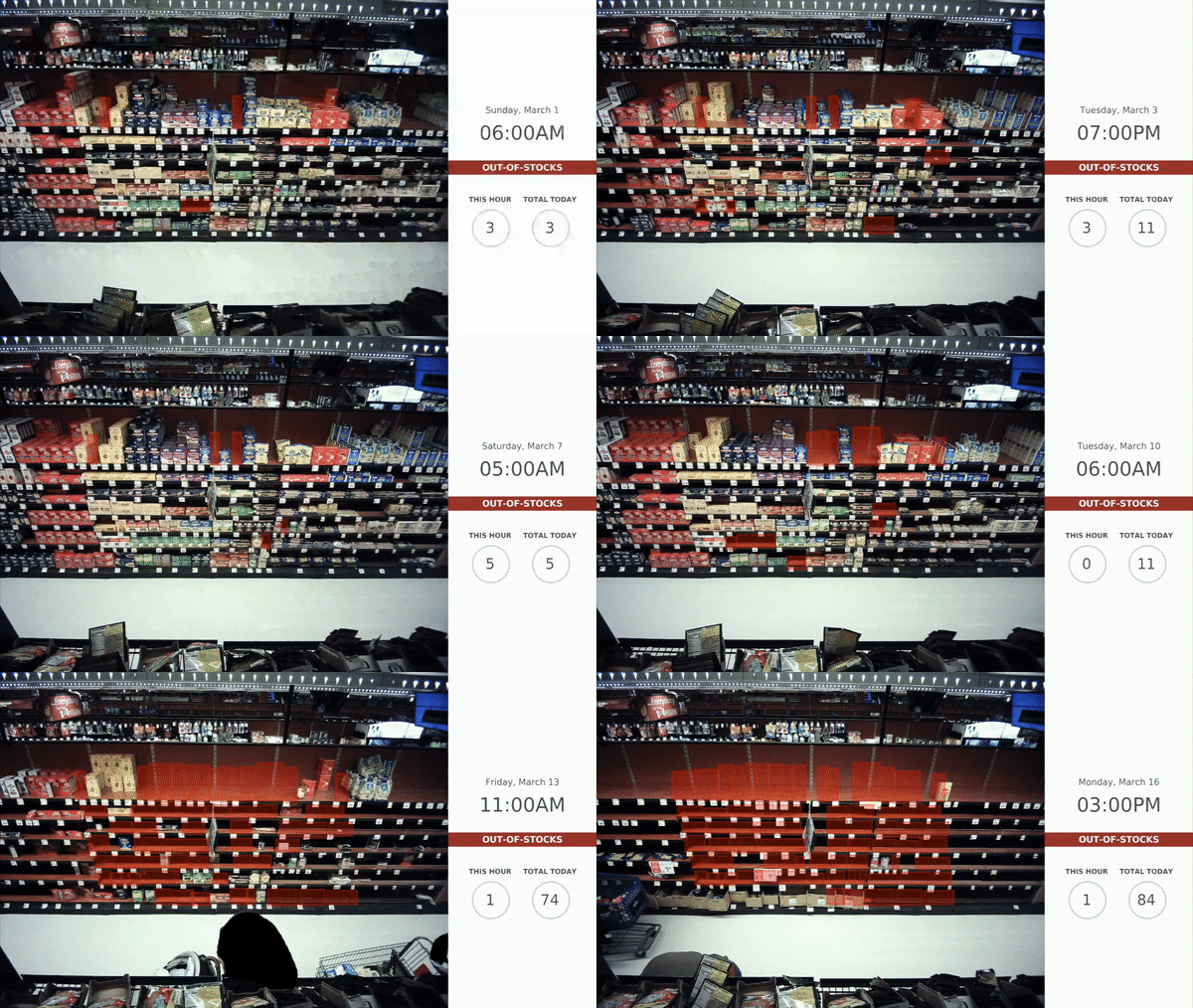
View Retail POS Systems providersShelf management and automation optimizes retail stock efficiency. Compare AI-verified providers and request quotes on the Bilarna platform to drive sales and reduce waste.
View Shelf Management Automation providersHealth monitoring features in wellness technology products, such as tracking heart rate, breathing rate, and sleep patterns, are generally intended for informational and general wellness purposes. These features are not classified as medical devices and have not been approved or authorized by regulatory bodies like the U.S. Food and Drug Administration (FDA). They are not designed to diagnose, treat, or prevent any medical conditions and should not be used as a substitute for professional medical advice or clinical decision-making. Users should always consult qualified healthcare professionals for any health concerns or questions.
Yes, modern paywall solutions are designed to be compatible with both iOS and Android mobile applications. This cross-platform compatibility ensures that developers can implement a single paywall system across different devices and operating systems without needing separate solutions. It simplifies management and provides a consistent user experience regardless of the platform, making it easier to maintain and optimize monetization strategies.
Yes, plant-based meat products are suitable for both restaurants and retail stores. They offer a clean-label, versatile protein option that can appeal to a wide range of customers, including those seeking vegan or plant-based alternatives. Restaurants can incorporate these products into their menus to provide innovative dishes such as plant-based steaks, ribs, or fish filets, catering to diverse dietary preferences. Retail stores can stock these items to meet growing consumer demand for sustainable and ethical food choices. Offering plant-based meats can help businesses attract new customers and support environmentally friendly practices while providing delicious and satisfying meal options.
Many modern data analytics platforms are designed to integrate seamlessly with your existing technology infrastructure. This means you do not need to replace your current systems to start using the platform. These solutions are built with flexibility in mind, allowing them to sit on top of your existing ecosystem without requiring extensive integration work on your part. This approach helps organizations adopt new analytics capabilities quickly while preserving their current investments in technology. It is advisable to check with the platform provider about specific integration options and compatibility with your current setup.
Yes, financial automation solutions are often modular and customizable to fit the specific needs of different businesses. Organizations can select and adapt only the modules they require, such as accounts payable, accounts receivable, billing, or treasury management, allowing them to scale their automation at their own pace. This flexibility ensures that companies can address their unique operational challenges without unnecessary complexity or cost. Additionally, user-friendly tools and AI capabilities enable teams to maintain compliance and efficiency while tailoring the system to their workflows. Customized onboarding and collaborative support further help businesses get up and running quickly with solutions that match their requirements.
Yes, data migration from an existing retail management or manual system to a new platform is typically supported through specialized tools and services. Many providers offer free, expert-assisted migration for key data like products, customers, and suppliers, transforming it into a compatible format. For businesses using manual methods like spreadsheets, direct import functionality is often available through a server version of the platform, allowing data upload from common file types. This process enables merchants to preserve their historical data and operational records without starting from scratch, ensuring a smooth transition. It is advisable to review the specific migration details and supported data types on the platform's official documentation before initiating the transfer.
No, you do not need a photographer to get high-quality professional headshots using AI technology. Follow these steps: 1. Choose an AI-powered headshot platform. 2. Upload your photo to the platform. 3. Let the AI generate studio-quality images automatically. 4. Select your preferred headshot from the options provided. 5. Download and use your professional photo without any photographer involvement.
AI technology does not replace golf course staff but enhances their efficiency. 1. Use AI to automate routine tasks such as booking and customer inquiries. 2. Allow staff to focus on personalized customer service and complex issues. 3. Implement AI as a support tool to reduce workload and improve response times. 4. Train staff to work alongside AI systems for optimal results. 5. Continuously evaluate the balance between AI automation and human interaction.
Formatize Store products are made using advanced CAD software and 3D printing technology, as described on the page. The design process begins with careful refinement using CAD software to ensure precision and innovation. Then, the products are brought to life primarily through 3D printing, which allows for intricate details and customized production. The company emphasizes that everything is made to order, so each item is produced only after a customer places an order, ensuring freshness and quality. This approach enables complete in-house control over the manufacturing process, from design to final output. Consequently, customers receive products that are accurately rendered and built to the designer’s exact specifications.
Nanotechnology-based coating solutions are developed by designing materials and processes at the nanoscale with a clear target application in mind. This involves iterative cycles of testing and optimization to enhance performance and functionality. By focusing on the intended use from the start, developers can tailor the coatings to meet specific requirements such as durability, conductivity, or protective properties. The vertical integration of the development process ensures that each stage, from nanoscale design to final application, is aligned to achieve the best possible outcome.