Step 1
Machine-Ready Briefs
AI translates unstructured needs into a technical, machine-ready project request.
We use cookies to improve your experience and analyze site traffic. You can accept all cookies or only essential ones.
 Bilarna
Stop browsing static lists. Tell Bilarna your specific needs. Our AI translates your words into a structured, machine-ready request and instantly routes it to verified Research & Legal Document Analysis experts for accurate quotes.
AI translates unstructured needs into a technical, machine-ready project request.
Compare providers using verified AI Trust Scores & structured capability data.
Skip the cold outreach. Request quotes, book demos, and negotiate directly in chat.
Filter results by specific constraints, budget limits, and integration requirements.
Eliminate risk with our 57-point AI safety check on every provider.
Verified companies you can talk to directly
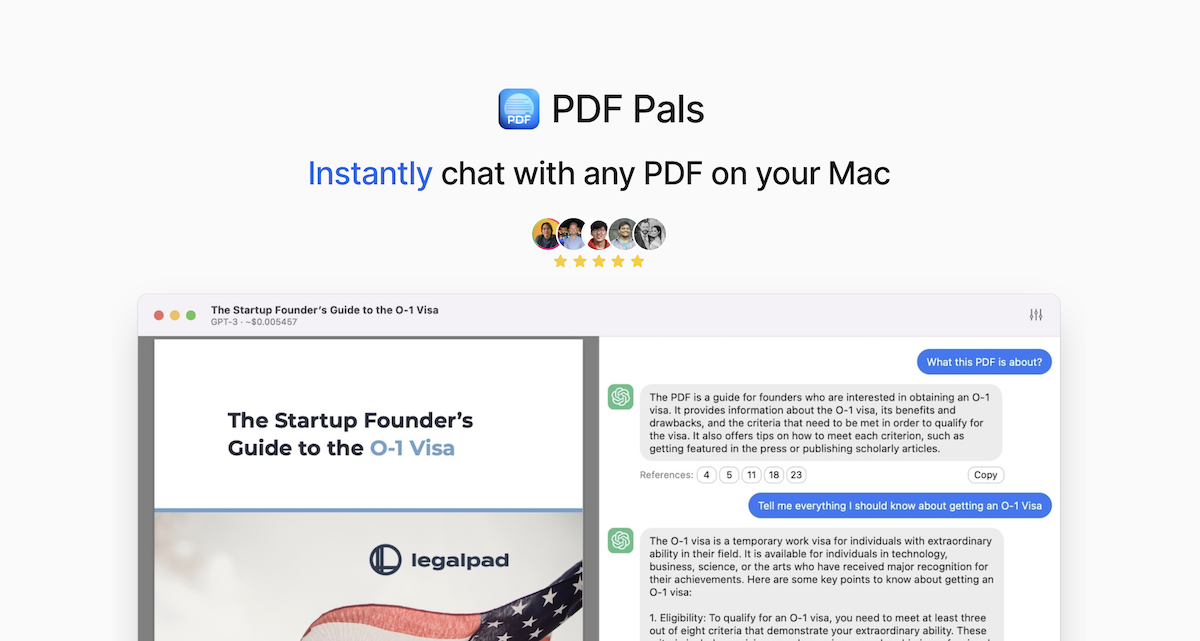
PDF Pals allows you to chat with any PDF on your Mac. Download today!
Run a free AEO + signal audit for your domain.
AI Answer Engine Optimization (AEO)
List once. Convert intent from live AI conversations without heavy integration.
Research and legal document analysis is a specialized service that uses advanced techniques like natural language processing, pattern recognition, and expert legal review to interpret complex documents. It involves extracting key clauses, identifying risks, and summarizing findings for informed decision-making. This process helps businesses accelerate due diligence, ensure regulatory compliance, and mitigate legal and financial exposure.
You outline the specific legal documents, business reports, or research materials that require expert review, including desired objectives like risk assessment or compliance checks.
The provider applies appropriate techniques, combining AI-powered tools for scalability with human expertise for nuanced interpretation of complex legal or business language.
You receive a structured report detailing key insights, actionable recommendations, and any identified risks to guide your strategic decisions or legal actions.
Expedites due diligence by analyzing hundreds of contracts and financial documents to uncover liabilities, obligations, and critical deal terms before finalizing a transaction.
Ensures adherence to evolving regulations like GDPR or CCPA by auditing policies, data processing agreements, and vendor contracts for compliance gaps and risks.
Analyzes patent filings, licensing agreements, and trademark portfolios to assess protection strength, infringement risks, and potential for monetization or litigation.
Reviews loan agreements, prospectuses, and financial disclosures to identify hidden covenants, risks, and obligations that could impact investments or lending.
Audits supplier contracts, terms of service, and consumer protection policies to manage supply chain risks and ensure adherence to consumer laws across jurisdictions.
Bilarna evaluates every Research and Legal Document Analysis provider using its proprietary 57-point AI Trust Score. This score rigorously assesses provider expertise through project portfolios, client satisfaction via verified reviews, and reliability based on delivery track records and compliance certifications. Bilarna's continuous monitoring ensures you engage with professionals who maintain high standards of quality and trustworthiness.
Costs vary widely based on document volume, complexity, and required turnaround, typically ranging from a few hundred to several thousand dollars per project. Pricing models include per-page rates, hourly consulting fees, or project-based retainers. For accurate comparisons, it's best to request detailed quotes from multiple specialized providers.
AI-powered analysis excels at processing high volumes of text quickly, identifying patterns, and extracting standard clauses. Human-led analysis provides critical context, interprets ambiguous language, and applies legal judgment. The most effective services strategically combine both for efficiency and nuanced understanding.
Timelines depend on project scope, from a few hours for a single contract review to several weeks for extensive due diligence involving thousands of documents. Key factors include document preparation, analysis depth, and whether AI automation is utilized. Clear scoping upfront is essential for an accurate timeline.
Critical criteria include subject-matter expertise in your industry, proven experience with similar document types, the technology stack used (especially AI capabilities), data security protocols, and transparent pricing. Client testimonials and case studies are strong indicators of reliable service delivery.
Common mistakes include unclear scoping leading to missed documents, over-reliance on AI without expert review, neglecting jurisdiction-specific legal nuances, and poor data security practices. A successful project requires a clear objective, a blended human-AI approach, and a provider with relevant legal domain knowledge.
Reputable AI girlfriend apps prioritize user safety and privacy through encryption, data anonymization, and strict no-tracking policies. Conversations are typically end-to-end encrypted, meaning neither the company nor third parties can read them. Many platforms do not store personal information or share data with advertisers. They allow users to interact anonymously without linking to real-world identities. Additionally, these apps often include features like auto-deletion of chat logs, biometric authentication, and the option to use pseudonyms. However, safety also depends on the user's own practices, such as avoiding sharing sensitive personal information. It is important to choose apps that have transparent privacy policies, undergo independent security audits, and are developed by teams with expertise in ethical AI. Overall, when used responsibly and on trusted platforms, AI girlfriend apps can provide a secure environment for emotional exploration and companionship.
Yes, AI masks are legally safe and users retain ownership by following these steps: 1. Verify your real identity as required by the platform to comply with legal regulations. 2. Use AI masks ethically and avoid violating terms of service. 3. Understand that AI masks are generated and do not steal anyone's identity. 4. Create and publish content with AI masks knowing you have full commercial license and ownership over your masked videos and photos. 5. Avoid using AI masks for unethical purposes to maintain compliance and safety.
AI photo filters require credits to use. New users receive 10 free credits upon registration to try the filters. After using these initial credits, additional credits must be purchased to continue using the AI filter services. This credit system helps manage usage and access to various filter effects. Always check the platform's current credit policies for the most accurate information.
Yes, AI voice and SMS agents designed for healthcare are built with security and compliance in mind. They adhere to industry standards and regulations such as HIPAA (Health Insurance Portability and Accountability Act) to protect patient data privacy and security. Business Associate Agreements (BAAs) are available to formalize compliance commitments. Additionally, these agents comply with regulations like TCPA (Telephone Consumer Protection Act) and PCI (Payment Card Industry) standards where applicable. Ensuring security and regulatory compliance is critical to maintaining trust and safeguarding sensitive healthcare information while leveraging AI technologies.
Confirm that AI-generated poems are free from copyright and plagiarism by following these steps: 1. Understand that poems are created by an AI language model trained on a custom dataset. 2. Recognize that each poem is unique and not copied from existing works. 3. Use the poems freely for commercial or noncommercial purposes without needing permission or attribution. 4. Trust that the AI ensures originality and copyright-free content.
Yes, ongoing changes and updates to a website are typically included in a standard monthly subscription fee. This service model ensures your site remains functional, modern, and up-to-date without incurring additional one-off costs for modifications. The included updates cover content changes, minor design tweaks, and general maintenance to keep the site running smoothly. This approach provides predictable budgeting and continuous support, allowing you to adapt your site as your business evolves. It is distinct from one-time development projects and focuses on long-term site management.
Yes, cheap Windows product keys from reputable online retailers can be legitimate and safe, provided they are sourced from verified channels. These sellers typically obtain surplus or volume license keys from legitimate distributors, making them genuine Microsoft licenses at a lower cost. The key safety indicators include the seller providing a money-back guarantee, offering instant email delivery of the key, and having clear customer support for activation issues. It is crucial to avoid keys sold at prices that seem too good to be true, as these may be unauthorized or volume license violations. A legitimate key will activate your Windows or Office software permanently and grant access to all official updates and features from Microsoft without legal risk.
Yes, when properly manufactured and maintained, copper water bottles and cookware are considered safe and healthy. Copper is a natural mineral that the human body requires in trace amounts. Water stored in a copper bottle for several hours undergoes a natural purification process through the release of copper ions, which is traditionally believed to support digestion and immunity. For cookware, a key safety feature is the interior tinning, which creates a protective barrier that prevents food from directly contacting the copper, ensuring safe cooking and preserving flavor. It is important to avoid storing highly acidic foods in copper for prolonged periods and to maintain the tin lining when it wears down from regular use. These traditional practices ensure the health benefits and safety of using quality copper products.
Yes, electronic cigarettes are generally legal for travel within Europe, but their legality, sale, and use are subject to specific national regulations that vary significantly between countries. The European Union's Tobacco Products Directive (TPD) sets a baseline framework, but member states implement their own rules. For instance, nicotine concentration in e-liquids is capped, and tank sizes are restricted under TPD. However, some countries like Belgium and the Netherlands have stricter interpretations, while others may have additional local bans on flavors or public usage. It is crucial for travelers to research the laws of their specific destination regarding possession limits, where vaping is permitted, and any requirements for labeling or documentation. Non-compliance can result in fines or confiscation.
Extended warranties on appliances and electronics are often not worth the cost for most consumers due to their low statistical likelihood of paying out relative to their price. Retailers aggressively sell these warranties because they are highly profitable, with a significant portion of the fee being pure margin. The manufacturer's original warranty already covers the initial period when defects are most likely to appear. For products with a high reliability rate, you are essentially betting against the odds, and the cost of the warranty may approach or even exceed the probable repair cost. A more financially prudent approach is to self-insure by setting aside the money you would have spent on warranties into a savings fund dedicated for potential repairs or future replacement, which gives you flexibility and control over the funds.