Step 1
Comparison Shortlist
Machine-Ready Briefs: AI turns undefined needs into a technical project request.
We use cookies to improve your experience and analyze site traffic. You can accept all cookies or only essential ones.
 Bilarna
Stop browsing static lists. Tell Bilarna your specific needs. Our AI translates your words into a structured, machine-ready request and instantly routes it to verified Real-Time Translation Services experts for accurate quotes.
Machine-Ready Briefs: AI turns undefined needs into a technical project request.
Verified Trust Scores: Compare providers using our 57-point AI safety check.
Direct Access: Skip cold outreach. Request quotes and book demos directly in chat.
Precision Matching: Filter matches by specific constraints, budget, and integrations.
Risk Elimination: Validated capacity signals reduce evaluation drag & risk.
Ranked by AI Trust Score & Capability
Run a free AEO + signal audit for your domain.
AI Answer Engine Optimization (AEO)
List once. Convert intent from live AI conversations without heavy integration.
This category encompasses services that provide instant translation of spoken or written language, facilitating seamless communication across different languages. These solutions are designed to address language barriers in conversations, meetings, and messaging, enabling users to speak naturally and understand others in real time. They are ideal for businesses, travelers, and individuals who need quick, accurate translations without delays. The technology often includes voice recognition, speech synthesis, and multilingual support, making interactions more efficient and effective in diverse settings.
Use professional human translation services to complement AI translation by following these steps: 1. Obtain an initial AI-generated translation of your content. 2. Submit the AI translation to professional human translators for review. 3. Have translators correct nuances, cultural references, and context-specific language. 4. Receive the refined translation that combines AI speed with human accuracy. 5. Use the final version for official, marketing, or sensitive communications. 6. Repeat the process for ongoing translation needs to ensure quality.
Real-time lipsync combined with seamless translation allows videos to be adapted instantly for different languages and audiences without losing the natural flow of speech. This technology ensures that the lip movements match the translated audio, making the content more engaging and believable for viewers worldwide. It breaks language barriers by providing accurate and synchronized dubbing, which is essential for global marketing, education, and entertainment. By enhancing accessibility and cultural relevance, it helps businesses and creators reach a broader audience effectively.
Real-time AI translation in virtual meetings works by using advanced language models that can detect and interpret multiple languages spoken during a meeting. The AI listens to the conversation, identifies the languages being used, and instantly translates the speech into the preferred language of each participant. This process happens on the fly without the need for prior setup or rehearsals. The AI can also be briefed with context and technical details through keywords and files to improve accuracy. It integrates seamlessly with popular platforms like Zoom, Google Meet, Slack, and Microsoft Teams, making multilingual communication effortless for global teams.
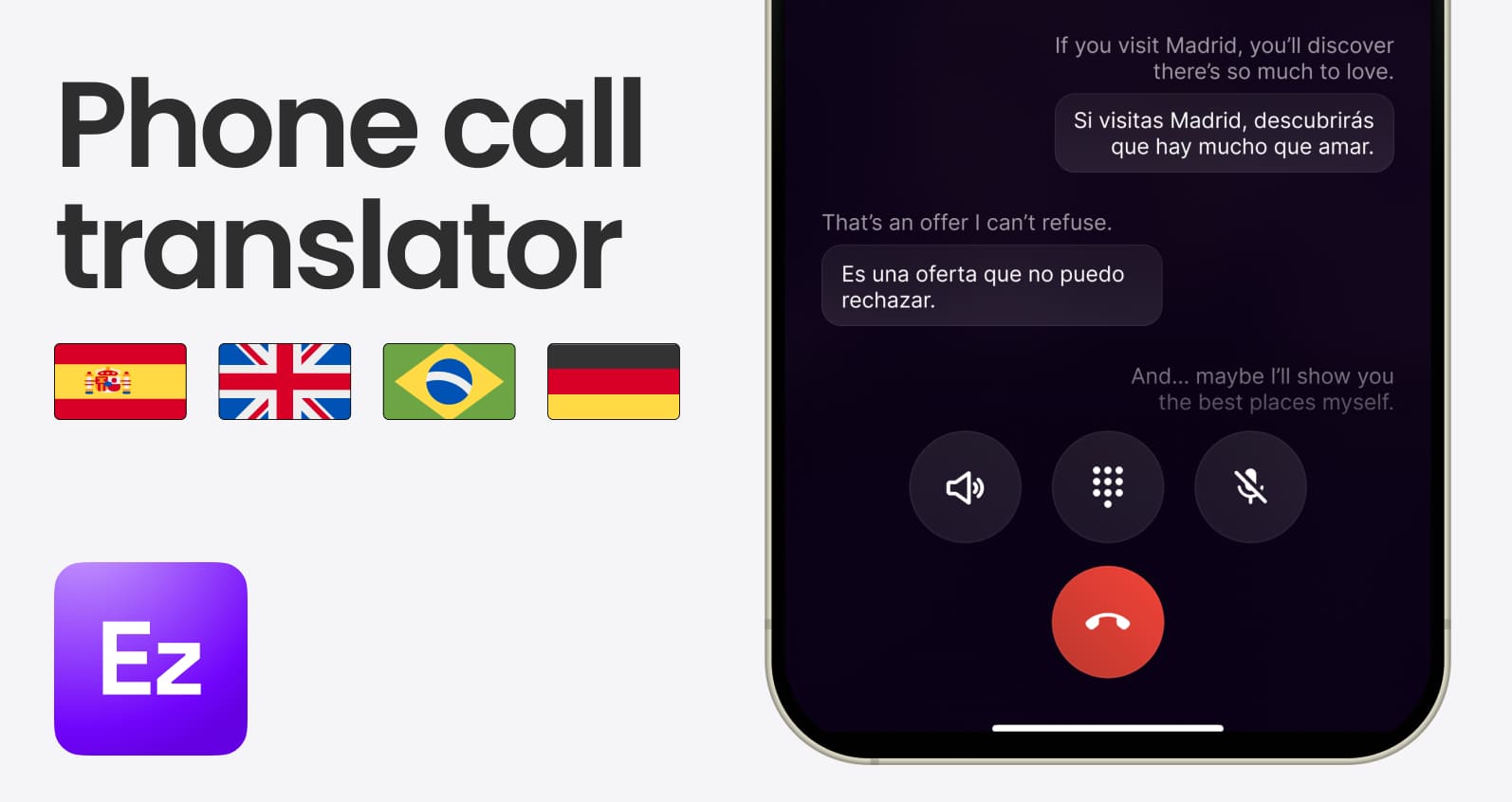
Real-time translation during phone calls and meetings works by capturing spoken language through the device's microphone and instantly converting it into the desired target language. This process involves speech recognition technology to transcribe the spoken words, followed by machine translation algorithms that translate the text. The translated speech is then synthesized back into audio, allowing participants to hear responses in their own language almost immediately. For optimal performance, users need to enable microphone access and speak naturally in full sentences, as this helps the system provide accurate and fluid translations during conversations.
To use real-time translation apps on mobile devices effectively, users must have a compatible smartphone or tablet running on iOS or Android operating systems. The app requires permission to access the device's microphone to capture spoken language for translation. Users should enable microphone access when prompted to allow the app to listen and process speech. Additionally, speaking naturally in full sentences improves translation accuracy and fluidity. A stable internet connection is often necessary since many translation apps rely on cloud-based services to perform complex language processing and deliver real-time results.
Speaking naturally and using full sentences during real-time translation is important because it helps the translation system understand the context and meaning more accurately. Natural speech patterns and complete sentences provide the necessary linguistic cues that improve the quality of speech recognition and machine translation. This reduces errors and awkward phrasing in the translated output. Additionally, continuous speech allows the system to process information more fluidly, resulting in smoother and faster translations. Pausing frequently or using fragmented phrases can disrupt the translation flow and lead to less accurate or delayed results.
Real-time voice translation enhances cross-language communication by providing instant, natural translations that consider tone and context. 1. Use AI-powered translation software that recognizes words, tone, humor, and context. 2. Enable seamless conversation flow without delays or misunderstandings. 3. Integrate the translation tool into communication platforms for live interactions. 4. Train users to utilize the software effectively for diverse cultural exchanges.
Real-time call translation supports over 150 languages and accents. 1. Choose a translation app that offers extensive language coverage. 2. Verify the list of supported languages and regional accents within the app. 3. Select the source and target languages before starting the call. 4. The app will recognize and translate various dialects and accents automatically during the conversation. 5. This broad support ensures effective communication across diverse linguistic backgrounds.
To use SayHi for real-time voice translation, follow these steps: 1. Open the SayHi app on your smartphone or tablet. 2. Select the source and target languages for translation. 3. Tap the microphone icon to start speaking. 4. Speak clearly into the device; the app will capture your voice. 5. SayHi will instantly translate your speech and play the translation aloud. 6. The other person can respond similarly, enabling a seamless bilingual conversation.
Use a real-time voice translation app by following these steps: 1. Open the app and select the languages you want to translate between. 2. Speak into the app’s microphone to have your voice instantly translated into the target language. 3. Listen to or read the translated output for seamless communication. 4. Save important translations locally on your device for easy access later. 5. Utilize the app during meetings, interviews, travel, or language classes to enhance understanding across languages.