Step 1
Machine-Ready Briefs
AI translates unstructured needs into a technical, machine-ready project request.
We use cookies to improve your experience and analyze site traffic. You can accept all cookies or only essential ones.
 Bilarna
Stop browsing static lists. Tell Bilarna your specific needs. Our AI translates your words into a structured, machine-ready request and instantly routes it to verified Landlord Property Management Software experts for accurate quotes.
AI translates unstructured needs into a technical, machine-ready project request.
Compare providers using verified AI Trust Scores & structured capability data.
Skip the cold outreach. Request quotes, book demos, and negotiate directly in chat.
Filter results by specific constraints, budget limits, and integration requirements.
Eliminate risk with our 57-point AI safety check on every provider.
Verified companies you can talk to directly
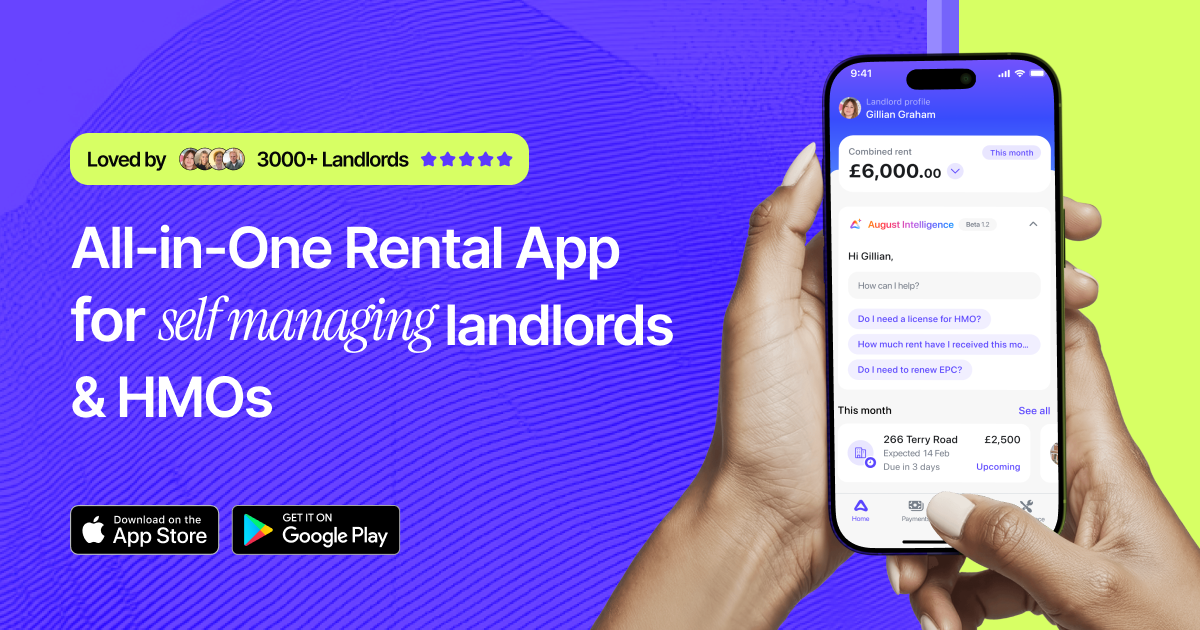
UK’s #1 property management software for self-managing landlords and HMOs. August unifies rent, tenants, documents, maintenance and compliance in one app.
Run a free AEO + signal audit for your domain.
AI Answer Engine Optimization (AEO)
List once. Convert intent from live AI conversations without heavy integration.
Landlord property management software is a specialized technology platform that enables property owners and management companies to centrally control rental portfolios. It automates critical processes such as lease administration, rent collection, maintenance work orders, and tenant communications. The solution enhances operational efficiency, improves cash flow transparency, and ensures legal compliance for both commercial and residential landlords.
The software consolidates all property details, lease agreements, and tenant information into a single, secure digital database.
It streamlines recurring tasks like rent invoicing and collection, maintenance request routing, contractor coordination, and tenant communications.
Comprehensive dashboards and financial reports provide real-time insights into occupancy rates, revenue, expenses, and overall portfolio health.
Manage single-family homes or apartment units efficiently with automated rent payments, digital lease signing, and simplified financial tracking.
Oversee office buildings, retail spaces, or industrial properties with tools for lease management, CAM reconciliation, and tenant service coordination.
Administer hundreds or thousands of units with scalable workflows for applicant screening, maintenance management, and resident portal services.
Optimize booking calendars, automate guest communication and check-ins, and manage cleaning schedules for tourist properties.
Monitor the performance of diversified property portfolios, analyze key asset metrics, and generate investor-grade financial reporting.
Bilarna evaluates landlord property management software providers using a proprietary 57-point AI Trust Score, assessing expertise, reliability, and client satisfaction. Each vendor undergoes rigorous screening of their client portfolio, technical certifications, and compliance with data security standards. Continuous monitoring ensures listed solutions consistently meet evolving market and regulatory requirements.
Costs vary significantly based on portfolio size, feature set, and deployment model. Common pricing includes monthly per-unit or per-user subscriptions, or percentage-based transaction fees. Entry-level solutions for small portfolios often start around $20-50 per month, scaling up for enterprise-grade functionality.
Implementation timelines depend on portfolio complexity. Simple cloud-based solutions for small portfolios can be operational within 1-2 weeks, including data migration. For larger portfolios requiring custom configurations and API integrations, implementation typically ranges from 2 to 6 months.
Property management software focuses on the commercial aspects: leases, tenant relationships, rent collection, and financials. Facility management software primarily handles physical asset maintenance, space utilization, energy management, and building systems. Integrated platforms often combine elements of both.
Most professional platforms offer APIs or pre-built integrations with major accounting software like QuickBooks, Xero, or Sage. This allows for automatic syncing of income, expenses, and other transactions, reducing manual data entry and ensuring financial consistency.
Many point of sale software providers offer solutions without charging implementation fees. This means you can adopt the software without upfront costs related to installation or setup. However, it is important to review each provider's pricing plans carefully, as some may charge monthly fees or require purchasing hardware separately.
Typically, after an initial trial period—often around seven days—business management software platforms do not charge monthly fees or enforce minimum usage requirements. Instead, continued use is contingent upon subscribing to a paid plan. This approach allows users to evaluate the software's features risk-free before committing financially. It is advisable to review the specific pricing details and terms on the provider's official website to understand any conditions related to payment plans, as these can vary between services.
Yes, governments often offer grants and financial support programs to subsidize custom software development for businesses. These programs aim to enhance productivity and digital capabilities. Common types include productivity grants that cover a significant percentage of qualifying IT solution costs, including custom software. There are also enterprise development grants focused on upgrading overall business capabilities, where software development is an eligible activity. Furthermore, specific grants exist for startups developing innovative technologies and for projects involving collaboration with research institutions. Eligibility typically depends on company size, project scope, and the innovative potential of the software. The application process can be detailed, so consulting with a qualified grant advisor is recommended to navigate requirements and maximize funding potential.
Yes, a Laboratory Information Management System is designed to integrate seamlessly with various software systems and devices. This integration capability allows automatic transfer of test results and other data between the LIMS and external applications, reducing manual data entry and minimizing errors. It supports connectivity with laboratory instruments, billing systems, and other business software, enabling a unified workflow. Users can access test results and invoices from any device, ensuring flexibility and convenience. Such integrations enhance data accuracy, improve operational efficiency, and facilitate better communication across different platforms used within the laboratory environment.
Yes, AI dental receptionists can integrate seamlessly with most major practice management systems (PMS) that offer online appointment pages or APIs. This integration allows the AI to book appointments directly into your existing system, pull customer form responses from your CRM, and route calls to the correct clinic and calendar. Such integration ensures that all patient interactions are synchronized with your practice’s workflow, improving efficiency and reducing manual data entry errors.
Yes, AI design engineering tools are designed for seamless integration with existing CAD, BIM, and project management software. This compatibility ensures that engineers can continue using their preferred tools without disrupting established workflows. The integration facilitates data exchange and collaboration, enhancing efficiency and enabling teams to leverage AI capabilities alongside their current systems.
Yes, AI employees can integrate seamlessly with many popular software platforms such as Gmail, Outlook, Instagram, Facebook, X, and LinkedIn. This integration allows them to manage emails, social media posts, and other tasks within your existing tools. Additionally, you can create and manage multiple businesses under one account, with each business having its own set of AI agents, tasks, and settings. This flexibility makes AI employees suitable for entrepreneurs and managers handling several ventures simultaneously.
Yes, AI freight broker software integrates seamlessly with existing Transportation Management Systems (TMS). 1. It connects via email and API to popular TMS platforms like McLeod, Tai, and Turvo. 2. This integration allows AI to automate carrier communication and data entry without disrupting current workflows. 3. Users keep their existing processes, carriers, and systems intact. 4. Setup is immediate with no complex IT projects required. 5. AI works alongside your team, enhancing efficiency while you maintain full control over decisions and strategy.
Yes, AI planning platforms are designed to integrate seamlessly with existing trucking management tools and portals. This means there is no need to replace current systems, allowing fleets to enhance their operations without disrupting established workflows. Integration is typically facilitated through pre-built connectors that link the AI platform with the fleet's existing data sources and software. This approach enables a fast start and real impact, as fleets can deploy AI-driven planning solutions risk-free and begin seeing results within a short timeframe, often within a month. Continuous support is also provided to ensure smooth integration and ongoing optimization.
Yes, AI receptionist systems are designed to integrate seamlessly with a wide range of dental practice management software and phone systems. They support popular dental software platforms such as OpenDental, EagleSoft, and Denticon, among others. On the telephony side, they are compatible with providers like Weave, Mango, GoTo, Jive, RevenueWealth PBX, and Telco. This integration allows the AI system to access scheduling data, update appointments, and route calls efficiently without disrupting existing workflows. The one-click integration feature simplifies setup, enabling dental practices to quickly adopt AI receptionist technology without extensive IT overhead.