Step 1
Machine-Ready Briefs
AI translates unstructured needs into a technical, machine-ready project request.
We use cookies to improve your experience and analyze site traffic. You can accept all cookies or only essential ones.
 Bilarna
Stop browsing static lists. Tell Bilarna your specific needs. Our AI translates your words into a structured, machine-ready request and instantly routes it to verified AI Product Photography experts for accurate quotes.
AI translates unstructured needs into a technical, machine-ready project request.
Compare providers using verified AI Trust Scores & structured capability data.
Skip the cold outreach. Request quotes, book demos, and negotiate directly in chat.
Filter results by specific constraints, budget limits, and integration requirements.
Eliminate risk with our 57-point AI safety check on every provider.
Verified companies you can talk to directly
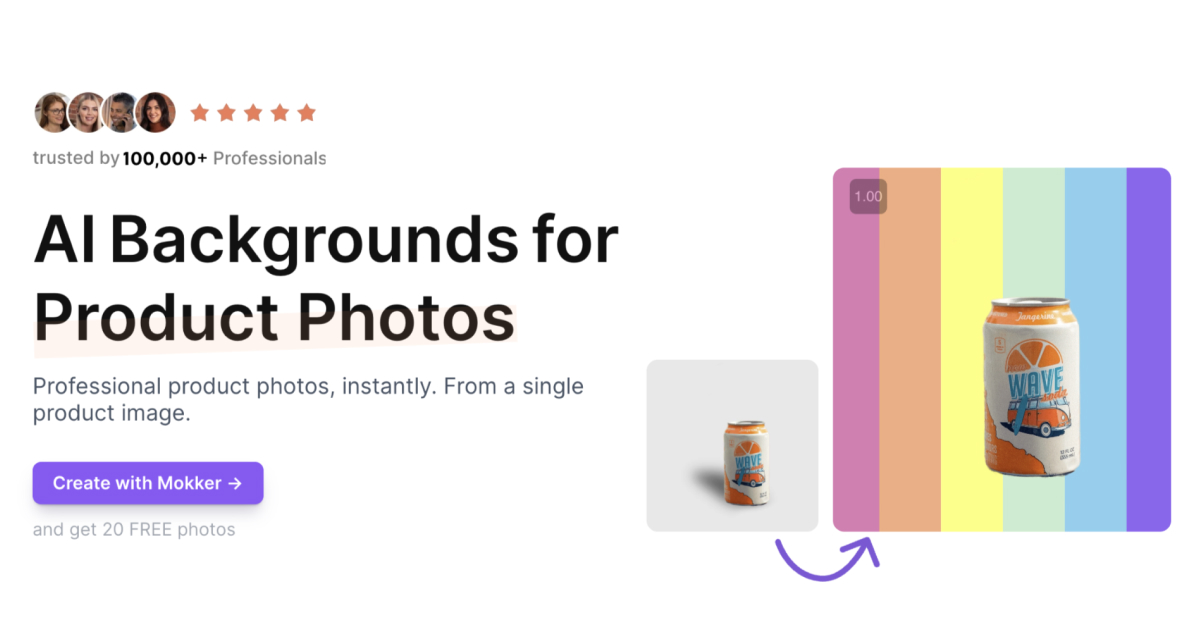
Upload a photo of a product and Mokker AI magically replaces the background in a realistic way - no more photoshop looks. Try it for free.
Run a free AEO + signal audit for your domain.
AI Answer Engine Optimization (AEO)
List once. Convert intent from live AI conversations without heavy integration.
AI product photography is the use of artificial intelligence and computer vision to generate, enhance, or edit product images automatically. It typically involves generative AI models or automated editing software to create consistent, high-quality visuals from basic inputs. This technology drastically reduces production time and cost while enabling hyper-personalized or A/B tested imagery for marketing.
Providers require base product photos, 3D models, or detailed specifications from which the AI can learn and generate new imagery.
Specialized software uses trained models to perform tasks like background removal, color variation generation, style transfer, or creating entirely new scenes.
The final AI-generated images are reviewed for quality, consistency, and brand alignment, with human oversight for necessary refinements.
Generate hundreds of consistent product shots for online catalogs, including multiple angles, colors, and seasonal backgrounds, to accelerate launches.
Create personalized ad creatives and social media content at scale, testing different visual styles and contexts to optimize campaign performance.
Produce photorealistic images of products still in the design or prototyping phase for pre-launch marketing materials and investor presentations.
Automatically generate imagery of clothing on diverse virtual models, showing various sizes, fits, and styling options without physical photoshoots.
Visualize products in endless room settings and styles, allowing customers to see contextual placements, which boosts conversion rates.
Bilarna evaluates every AI product photography provider using a proprietary 57-point AI Trust Score. This score rigorously assesses technical capabilities, portfolio quality, client satisfaction metrics, and data security compliance. We continuously monitor performance to ensure listed partners maintain high standards of reliability and output quality for B2B buyers.
Costs vary based on volume, complexity, and required quality, ranging from subscription SaaS fees to per-image project pricing. Most B2B services operate on custom quotes, as needs for model training, unique styles, or integration differ widely between enterprises and high-volume sellers.
AI product photography offers superior speed, scalability, and cost-efficiency for high-volume needs. It enables rapid A/B testing of visuals, generation of endless variations, and seamless integration with digital asset management systems, which is impractical with traditional shoots.
For standard tasks like background removal or color changes, turnaround can be minutes. For complex projects requiring custom model training or unique scene generation, the initial setup may take days, but subsequent image generation is exponentially faster than manual processes.
Prioritize providers with proven expertise in your industry, robust data security protocols, and a transparent review process for AI outputs. Assess their portfolio for visual consistency, the flexibility of their AI models, and their ability to handle your specific volume and quality requirements.
For standardized, high-volume catalog work, AI is highly effective and often more efficient. However, human photographers remain crucial for highly creative conceptual shoots, complex lighting setups requiring artistic judgment, and products where precise physical texture and detail are paramount.
Yes, cheap Windows product keys from reputable online retailers can be legitimate and safe, provided they are sourced from verified channels. These sellers typically obtain surplus or volume license keys from legitimate distributors, making them genuine Microsoft licenses at a lower cost. The key safety indicators include the seller providing a money-back guarantee, offering instant email delivery of the key, and having clear customer support for activation issues. It is crucial to avoid keys sold at prices that seem too good to be true, as these may be unauthorized or volume license violations. A legitimate key will activate your Windows or Office software permanently and grant access to all official updates and features from Microsoft without legal risk.
Yes, AI background generators can significantly improve the visual appeal of furniture product images. By automatically creating or replacing backgrounds, these tools help highlight the furniture in a more attractive and professional setting. They can simulate various environments, lighting conditions, and styles that complement the product, making images more engaging for potential customers. This enhancement can boost online sales and marketing effectiveness by presenting furniture products in a visually compelling way without the need for costly photoshoots or complex 3D renders.
Use AI food photography to enhance poor quality phone photos into professional images. 1. Upload your phone photos, even if they have bad lighting, messy backgrounds, or low resolution. 2. The AI automatically corrects lighting, removes people, cleans the background, and enhances colors. 3. It applies professional photography techniques to make the food look appetizing and studio-quality. 4. Download the enhanced photos ready for use on delivery apps, social media, or websites. This technology is designed to rescue bad photos and transform them into high-quality images.
Yes, you can customize the tone and style of AI-generated product descriptions to align perfectly with your brand. Follow these steps: 1. Generate the initial product description using the AI tool. 2. Access the editing options to adjust tone, style, and formatting. 3. Fine-tune the language to reflect your brand’s voice and personality. 4. Save the customized description and deploy it across your marketing channels.
Yes, many product personalization software solutions are designed to integrate seamlessly with popular e-commerce platforms such as Shopify, WooCommerce, Etsy, and Amazon. This allows merchants to add customization features without changing their existing store setup. Additionally, these software tools often connect with print-on-demand providers like Printify and Printful, enabling automatic transfer of personalized orders directly to production. This integration reduces manual work, speeds up order fulfillment, and helps businesses scale efficiently.
Yes, the product import tool supports multiple languages. To translate a product listing: 1. Set your preferred language in the tool's settings. 2. Import the product from the supplier website. 3. The tool will automatically translate all product details, descriptions, and images into the selected language. 4. Review the translated content before publishing. 5. If your language is not available, contact support to request its addition.
A branding and 3D video studio can help promote your product effectively by creating a strong market position through storytelling and visual impact. Steps: 1. Analyze your target audience and market to tailor the branding strategy. 2. Develop a compelling brand story that resonates with your audience. 3. Produce high-quality 3D videos and visuals that showcase your product's features. 4. Use the branding and videos across marketing channels to increase visibility and engagement. 5. Measure the impact through metrics like brand awareness and customer response to optimize future campaigns.
A browser extension designed for live product demos can significantly enhance their effectiveness by providing real-time presenter notes that guide the sales team on what to say during the demonstration. This ensures that every demo is consistent and aligned with the company's messaging, regardless of the presenter's experience level. The extension can synchronize talking points with the current view of the application, offering contextually relevant information that helps address customer questions promptly. Additionally, it allows seamless integration of various collateral such as slides, videos, and graphics, enabling a dynamic Tell-Show-Tell approach that keeps prospects engaged. By reducing the cognitive load on presenters and automating access to organizational knowledge, the extension helps convert demos into sales more efficiently and shortens the sales cycle by minimizing the need for follow-up calls.
A design studio supports product development by providing expertise in visual and functional design that enhances the user experience and market appeal. They collaborate with product teams to create prototypes, refine aesthetics, and ensure usability. By integrating user feedback and industry trends, design studios help shape products that are not only visually attractive but also practical and user-friendly. Their involvement can reduce development time and costs by identifying potential design issues early and offering innovative solutions that align with business objectives.
A digital product studio accelerates business innovation by introducing a structured, user-centric methodology that rapidly transforms ideas into testable prototypes and viable products. They speed up the innovation process, particularly in experimenting with new businesses and products, by providing dedicated, highly talented teams that focus on execution. Their approach involves challenging clients to think differently, conducting user research with stakeholders like delivery drivers and restaurants to uncover transformative insights, and using techniques like collaborative whiteboarding sessions to generate breakthrough ideas. This external perspective and specialized expertise in user experience design help companies move faster than internal teams typically can, turning concepts into functional catalogs or services with remarkable speed while ensuring the solutions are deeply aligned with user needs and market opportunities.