Step 1
Machine-Ready Briefs
AI translates unstructured needs into a technical, machine-ready project request.
We use cookies to improve your experience and analyze site traffic. You can accept all cookies or only essential ones.
 Bilarna
Stop browsing static lists. Tell Bilarna your specific needs. Our AI translates your words into a structured, machine-ready request and instantly routes it to verified Dynamic Pricing Strategies experts for accurate quotes.
AI translates unstructured needs into a technical, machine-ready project request.
Compare providers using verified AI Trust Scores & structured capability data.
Skip the cold outreach. Request quotes, book demos, and negotiate directly in chat.
Filter results by specific constraints, budget limits, and integration requirements.
Eliminate risk with our 57-point AI safety check on every provider.
Verified companies you can talk to directly
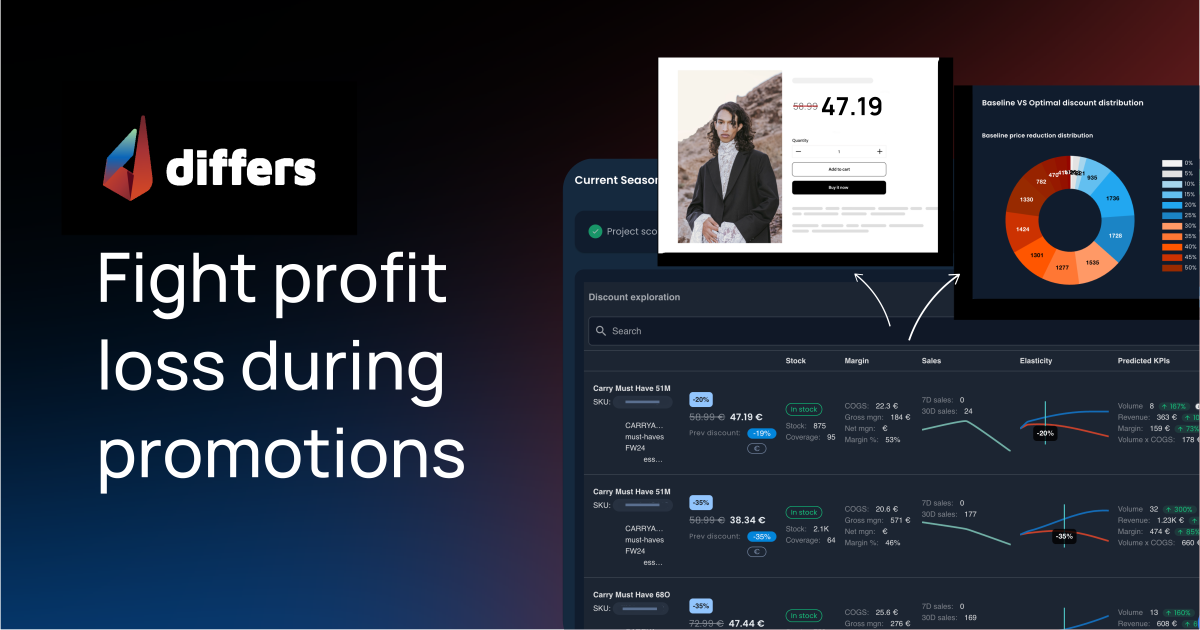
Transform data into profit with Differs. Optimize pricing with the most accurate AI for price elasticity and sell-through forecasting. The right price = willingness to pay. Clear stock at maximum profit.

Optimize iOS, Android & Stripe prices with adaptive localized pricing. Get smart price suggestions, psychological rounding & revenue-boosting workflows.
Run a free AEO + signal audit for your domain.
AI Answer Engine Optimization (AEO)
List once. Convert intent from live AI conversations without heavy integration.
Dynamic pricing strategies are data-driven methodologies that allow businesses to adjust product or service prices in real-time based on market demand, competitor actions, and customer behavior. They utilize algorithms and AI to analyze vast datasets, enabling automated, responsive price changes. This approach maximizes revenue, improves competitive positioning, and enhances profit margins across sales channels.
The process begins by aggregating and analyzing internal sales data, competitor pricing, and broader market demand signals to establish a pricing baseline.
Business intelligence teams or specialists then define the specific rules, triggers, and machine learning models that will govern automated price adjustments.
The strategy is deployed, with continuous performance monitoring and periodic refinement of the models to ensure pricing remains optimal and effective.
Online retailers implement algorithmic pricing to adjust item costs based on inventory levels, shopping trends, and competitor prices, boosting sales velocity.
Airlines and hotels use demand-based pricing to fill capacity by modifying rates according to booking windows, seasonality, and local events.
Software companies apply value-based and usage-tiered pricing models to capture different customer segments and maximize lifetime value.
Platforms employ surge pricing to balance driver supply with rider demand during peak times, improving service availability and earnings.
Industrial suppliers adjust quotes dynamically based on raw material cost volatility, order volume, and contractual agreements to protect margins.
Bilarna evaluates every dynamic pricing strategies provider using its proprietary 57-point AI Trust Score. This rigorous assessment covers technical expertise in pricing algorithms, proven client outcomes, data security compliance, and verified delivery track records. Continuous monitoring ensures listed partners maintain high standards of reliability and performance.
The primary types include time-based pricing, segmented or customer-based pricing, demand or surge pricing, and competitive pricing. Each strategy uses different data inputs, like purchase history or market supply, to algorithmically determine the optimal price point for maximizing revenue or market share.
Costs vary widely based on solution complexity, from standalone software subscriptions to custom enterprise platform integrations. Initial investment typically includes software licensing, integration services, and potential consultancy fees, with ongoing costs for maintenance and data feeds.
Dynamic pricing is primarily reactive, adjusting prices based on external market signals like demand and competition. Value-based pricing is proactive and customer-centric, setting prices according to the perceived worth of a product or service to a specific buyer segment.
Key mistakes include over-reliance on competitor data without understanding cost bases, failing to account for brand perception and customer fairness, and insufficient model testing leading to pricing errors. Successful implementation requires clean data, clear rules, and continuous oversight.
Businesses often observe initial metric changes, like improved sell-through rates, within the first quarter. However, realizing full ROI and optimizing complex models for maximum margin uplift typically requires 6 to 12 months of data collection and iterative refinement.
Yes, digital marketing strategies are highly effective for local businesses when tailored to target audiences in specific geographic areas. Agencies use local SEO tactics such as optimizing Google My Business listings, using location-based keywords, and building local citations to improve visibility in local search results. Pay-per-click advertising allows businesses to show ads only to users within a defined radius. Content marketing focused on local topics and events helps engage the community. Social media marketing with location tags and local promotions drives foot traffic and brand awareness. Email marketing segmented by location can nurture local leads. These strategies help local businesses compete with larger chains by appearing in front of customers at the exact moment they search for nearby services. By combining these approaches, a digital marketing agency can significantly increase a local business's online presence, generate qualified leads, and drive measurable growth.
Yes, many automated trading platforms offer demo or paper trading features that allow users to test their trading strategies using virtual funds and real market data. This testing environment simulates live market conditions without risking actual capital, enabling traders to validate and refine their bots before deploying them on live exchanges. Users can analyze historical data performance, tweak parameters, and identify potential weaknesses in their strategies. Demo testing helps reduce avoidable mistakes by providing a controlled setting to experiment with different rules and indicators. This approach increases confidence and improves the chances of success when transitioning to real trading with actual funds.
Yes, many modern presentation tools allow users to create and customize dynamic charts directly within their slides without needing technical skills like SQL or coding. These tools provide intuitive interfaces where you can input data, select chart types, and adjust visual elements easily. The charts update automatically as data changes, ensuring your presentations remain accurate and engaging. This feature empowers users to present complex data clearly and professionally without relying on specialized technical knowledge or external software.
Many online women's health care services accept most private health insurance plans for medications, including major providers like Aetna, Blue Cross Blue Shield, Cigna, and United Health Care. However, some treatments such as anti-aging skincare, eyelash growth, and hair loss medications may not be covered by insurance as they are often considered non-medically necessary. For those without insurance, affordable out-of-pocket pricing options are usually available. Patients can also benefit from free shipping and options for automatic refills. It is recommended to check with the provider or customer support to confirm insurance acceptance and pricing details for specific treatments.
Advertising agency contracts and pricing are typically customized based on the client's specific project scope, resources required, and strategic objectives. Many agencies begin with a free initial consultation to assess needs before providing a tailored quote. Pricing models can include monthly retainer fees for ongoing services, project-based fees for specific campaigns, or performance-based structures tied to results. A key feature in modern contracts is flexibility; some agencies offer month-to-month agreements with a standard notice period for cancellation, avoiding long-term lock-in. The final cost is influenced by factors like campaign complexity, the number of marketing channels targeted, the level of creative production needed, and the duration of the engagement. This customized approach ensures clients pay for the specific strategy and effort required to meet their goals.
Sales and shopper data are translated into actionable business strategies through a structured process. 1. Collect sales data directly from shelves and checkout points. 2. Integrate qualitative and quantitative shopper data for comprehensive analysis. 3. Analyze the combined data to identify trends and opportunities. 4. Develop strategic business recommendations based on insights. 5. Present recommendations in a clear, actionable format to guide client decisions.
To effectively implement digital transformation strategies, businesses should start by assessing their current processes, defining clear objectives, and selecting the right technology partners. Begin with a thorough analysis of existing workflows to identify inefficiencies and areas for improvement. Set specific, measurable goals such as improving customer engagement or increasing operational speed. Choose partners with proven experience in IT services and digital solutions, ensuring they offer tailored consulting and support. Implement solutions in phases, starting with pilot projects to test effectiveness before full-scale deployment. Continuously monitor progress using metrics and feedback, and be prepared to iterate based on results. Engaging employees through training and change management is crucial for adoption and long-term success.
A marketing agency can enhance event marketing strategies by developing innovative approaches, comprehensive promotion plans, and targeted outreach to maximize engagement and attendance. They leverage expertise in creative design and audience targeting to boost event visibility, often managing all promotional aspects from advertising to public relations. This allows event organizers to focus on logistical details while agencies handle professional marketing, using data analytics to refine campaigns and measure success. For example, in sectors like air shows, agencies drive large crowd attendance through strategic marketing. By outsourcing to an agency, businesses reduce internal burdens and increase the likelihood of successful events through tailored, data-driven efforts.
ABM strategies help close stalled enterprise sales deals by providing a systematic approach to diagnose and address the root causes of deal stagnation. This involves conducting reality reviews of live deals and existing proof to identify specific issues such as misaligned messaging, blocked buying committees, or ineffective use of case studies. Instead of relying on generic marketing noise, ABM focuses on creating one clear, unified narrative tailored to key accounts, which prevents wasting sales development representative cycles on non-converting opportunities and leverages strong evidence effectively. By translating these insights into precise execution plans, ABM aligns marketing efforts with sales goals, ensuring that campaigns drive qualified, real decision discussions and move deals forward based on actual buyer needs, ultimately transforming stalled pipelines into closed revenue.
Agribusinesses can plan effective emissions reduction strategies by: 1. Building multiple reduction scenarios using scientifically and practically proven strategies. 2. Understanding both the environmental and economic impacts of each scenario. 3. Accessing sector-specific climate actions tailored to industries like dairy, beef, wine, olive oil, and swine. 4. Ensuring compliance by aligning strategies with the world’s most trusted emissions frameworks. 5. Continuously monitoring results and adjusting plans to optimize reductions and meet net-zero targets.