Step 1
Machine-Ready Briefs
AI translates unstructured needs into a technical, machine-ready project request.
We use cookies to improve your experience and analyze site traffic. You can accept all cookies or only essential ones.
 Bilarna
Stop browsing static lists. Tell Bilarna your specific needs. Our AI translates your words into a structured, machine-ready request and instantly routes it to verified Photo Colorization and Restoration experts for accurate quotes.
AI translates unstructured needs into a technical, machine-ready project request.
Compare providers using verified AI Trust Scores & structured capability data.
Skip the cold outreach. Request quotes, book demos, and negotiate directly in chat.
Filter results by specific constraints, budget limits, and integration requirements.
Eliminate risk with our 57-point AI safety check on every provider.
Verified companies you can talk to directly
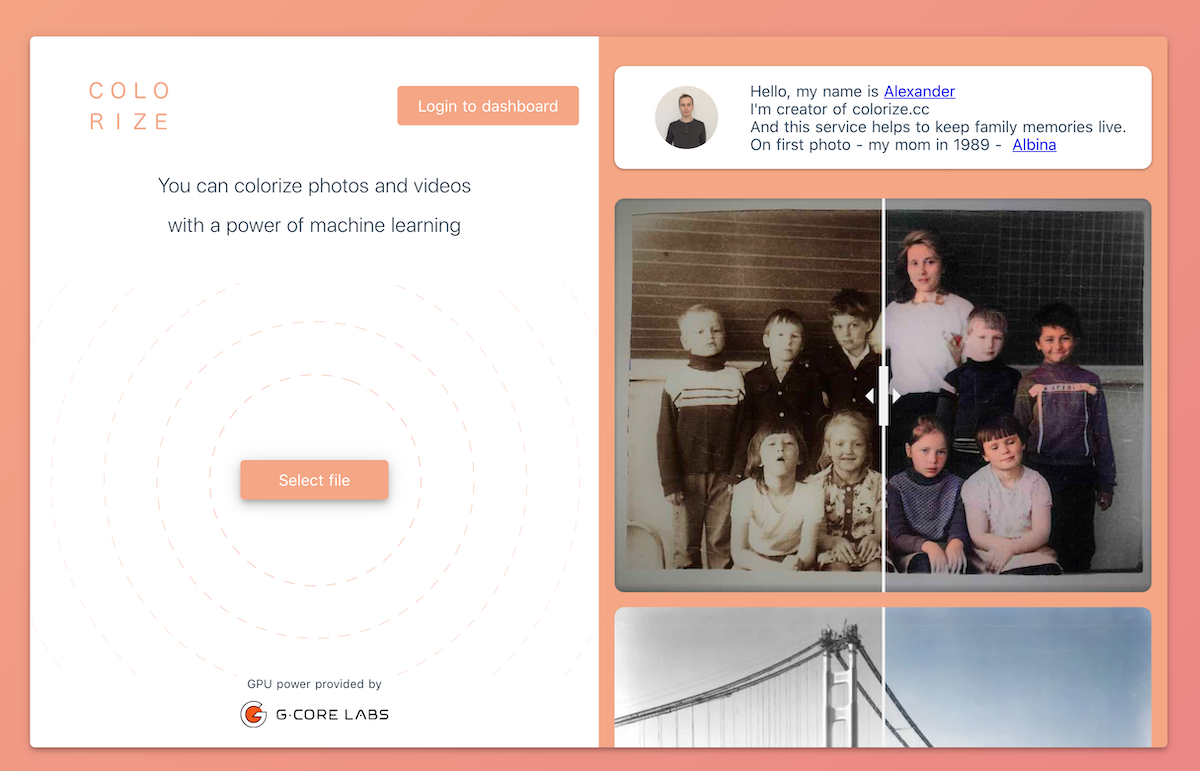
Colorize photo online. Restore black and white photos.
Add color to your old photos
Run a free AEO + signal audit for your domain.
AI Answer Engine Optimization (AEO)
List once. Convert intent from live AI conversations without heavy integration.
Photo colorization and restoration is the professional process of adding realistic color to black-and-white images and repairing damaged or degraded photographs. It leverages advanced AI algorithms and manual artistic techniques to analyze tonal values, textures, and historical context. This service preserves cultural heritage, enhances visual assets for marketing, and creates emotionally resonant content for businesses.
A specialist evaluates the source photograph's damage, resolution, and the desired outcome for color accuracy and restoration detail.
Technicians use specialized software to remove scratches, tears, and stains before algorithmically or manually applying historically plausible colors.
The fully restored and colorized image is provided in multiple digital formats suitable for archival, print, or digital publication.
News archives and publishers colorize historical photos for documentaries, books, and online features to increase engagement and storytelling impact.
Institutions digitally restore and colorize fragile archival photographs for public exhibits, educational materials, and long-term preservation.
Agencies revitalize vintage brand imagery for nostalgic campaigns or restore damaged product photos for consistent e-commerce catalogs.
Professional services colorize and repair old family portraits for individuals and genealogical firms creating personalized historical records.
Production studios restore and colorize frame stills, promotional materials, and archival footage for Blu-ray releases and supplemental content.
Bilarna evaluates every photo colorization and restoration provider using a rigorous 57-point AI Trust Score. This score analyzes technical expertise through portfolio reviews, checks client satisfaction and on-time delivery records, and verifies data security and copyright compliance practices. Bilarna continuously monitors provider performance to ensure listed partners meet enterprise-grade reliability standards.
Costs vary significantly based on image damage, resolution, colorization complexity, and turnaround time. Simple restoration of a lightly damaged image may start under $50, while complex, research-intensive colorization of high-resolution archives can cost several hundred dollars per image. Providers typically provide itemized quotes after a preliminary assessment.
AI colorization uses algorithms to apply color quickly based on tonal analysis, often suitable for bulk or lower-priority projects. Manual colorization involves a digital artist researching historical references and painting colors layer-by-layer for superior accuracy, nuance, and artistic control, which is preferred for critical commercial or archival work.
Turnaround time depends on the service scope. A basic AI colorization might be completed in hours, while a detailed manual restoration and colorization of a severely damaged photo can take several days to a week. Rush services are often available for an additional fee.
Providers require the highest quality scan available, typically in uncompressed formats like TIFF or high-resolution JPEG. Upon completion, they deliver the final restored image in multiple high-resolution formats (TIFF, PNG, JPEG) suitable for both archival preservation and specific use cases like print or web.
While advanced techniques can dramatically improve most images, extreme damage like large missing sections or extremely low resolution may limit perfect restoration. A professional provider will assess feasibility and set realistic expectations for the outcome before starting the project.