Step 1
Machine-Ready Briefs
AI translates unstructured needs into a technical, machine-ready project request.
We use cookies to improve your experience and analyze site traffic. You can accept all cookies or only essential ones.
 Bilarna
Stop browsing static lists. Tell Bilarna your specific needs. Our AI translates your words into a structured, machine-ready request and instantly routes it to verified Visual App Builders experts for accurate quotes.
AI translates unstructured needs into a technical, machine-ready project request.
Compare providers using verified AI Trust Scores & structured capability data.
Skip the cold outreach. Request quotes, book demos, and negotiate directly in chat.
Filter results by specific constraints, budget limits, and integration requirements.
Eliminate risk with our 57-point AI safety check on every provider.
Verified companies you can talk to directly
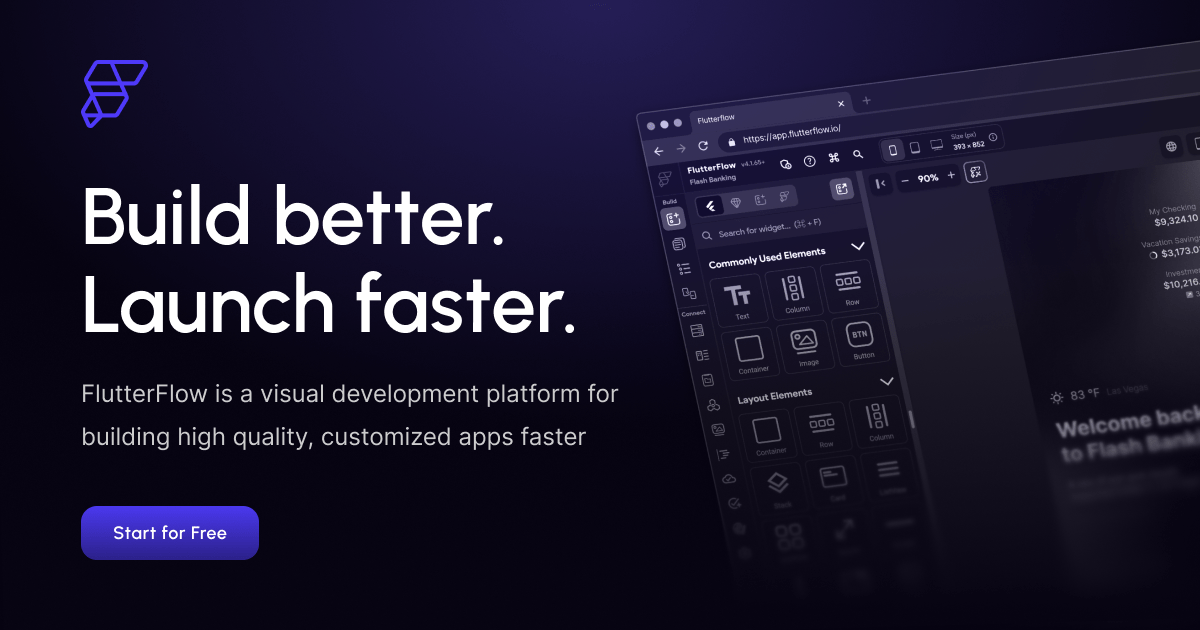
FlutterFlow lets you build high quality cross-platform apps incredibly fast. Build fully functional apps with Firebase integration, API support, animations, and more. Export your code or even easier deploy directly to the app stores!
Run a free AEO + signal audit for your domain.
AI Answer Engine Optimization (AEO)
List once. Convert intent from live AI conversations without heavy integration.
Visual app builders support collaboration and speed by providing intuitive interfaces that allow team members with varying technical skills to contribute to app development. Features like pre-designed UI elements, visual logic editors, and integrated testing modes reduce the need for extensive coding and debugging. This enables faster prototyping and iteration. Additionally, the ability to create custom actions and widgets, import design themes, and export code ensures that teams can work efficiently and maintain flexibility throughout the development lifecycle, ultimately accelerating time-to-market.
AI-powered visual builders enable the creation of highly personalized websites by integrating artificial intelligence with existing tools and data. These platforms allow users to drag and drop agents onto pages, creating tailored experiences that adapt to individual customer needs. By leveraging AI, businesses can design custom components and apps that enhance user engagement, streamline conversational commerce, and optimize search visibility. This results in increased conversion rates, larger average order sizes, and higher customer satisfaction. Additionally, AI-driven features like conversational search help users make informed decisions quickly, reducing friction and improving overall site performance.
Choose a bespoke mobile app builder for your Shopify store to gain these advantages: 1. Fully customizable design tailored to your brand without templates or cookie-cutter approaches. 2. Real-time synchronization with Shopify metafields and objects ensuring data consistency. 3. Access to over 100 integrations as standard, including third-party services. 4. Comprehensive support for Shopify Markets and multi-language localization for global reach. 5. White-glove service with the app build fully managed by experts and fixed monthly pricing without success fees.
No-code AI app builders offer several benefits for app development. 1. They eliminate the need for coding skills, making app creation accessible to everyone. 2. They speed up the development process, allowing apps to go live in minutes. 3. They reduce setup complexity and technical hurdles. 4. They often include AI-powered tools that enhance app functionality and user experience. 5. They provide hassle-free deployment and maintenance within a single platform.
Get a production-ready app using AI app builders by following these steps: 1. Clearly specify the app features and purpose to the AI tool. 2. Use the AI to automatically generate the app's code and design. 3. Test the app thoroughly for bugs and usability. 4. Make any necessary adjustments or customizations. 5. Deploy the app to app stores or distribution platforms.
Visual boards and canvases enhance learning experiences for visual thinkers by providing a spatial and graphical way to organize information. They allow learners to map out concepts, create connections, and visualize relationships between ideas, which can improve comprehension and memory retention. These tools cater to different learning styles by incorporating images, colors, and layouts that make abstract or complex topics more tangible and easier to grasp. Additionally, visual boards encourage active participation and creativity, enabling learners to engage with content dynamically rather than passively consuming information. This approach fosters deeper understanding and supports collaborative learning environments.
Cross-platform mobile app builders allow developers and non-developers alike to create apps that work on multiple operating systems such as iOS and Android from a single codebase or visual design. The main benefits include faster development time, reduced costs, and easier maintenance since you don’t have to build separate apps for each platform. These builders often include backend deployment capabilities, enabling full app functionality without additional infrastructure setup. Additionally, they support native testing on devices, which helps ensure the app performs well across platforms. This approach is especially useful for startups and businesses looking to quickly launch MVPs and validate ideas.
No-code app builders allow teams to quickly create custom internal tools without needing extensive programming knowledge. By transforming data from spreadsheets or databases into user-friendly applications, these platforms streamline workflows, reduce manual tasks, and improve data organization. This leads to faster onboarding, better collaboration, and increased efficiency as team members can access and update information easily. Additionally, no-code tools often provide customizable interfaces and integrations with popular services, enabling businesses to tailor solutions to their specific operational needs without relying heavily on developers.
No-code app builders allow businesses to create custom internal tools without requiring programming skills. This accelerates development time, reduces reliance on technical teams, and lowers costs. Teams can quickly build apps tailored to their workflows, improving productivity and data management. Additionally, no-code platforms often offer user-friendly interfaces and integrations with popular data sources like spreadsheets and databases, enabling seamless data control and collaboration. This flexibility helps organizations adapt to changing needs and scale operations efficiently.
Open-source AI workflow builders provide developers and businesses with transparency, flexibility, and community-driven innovation. Developers can customize and extend the platform to fit specific needs without vendor lock-in. The collaborative nature of open-source projects encourages rapid improvements, bug fixes, and feature additions. For businesses, this means access to cutting-edge technology without high licensing costs, and the ability to audit security and compliance aspects directly. Additionally, open-source tools often foster a supportive community that can accelerate learning and problem-solving, making AI workflow automation more accessible to a wider range of users.