Step 1
Machine-Ready Briefs
AI translates unstructured needs into a technical, machine-ready project request.
We use cookies to improve your experience and analyze site traffic. You can accept all cookies or only essential ones.
 Bilarna
Stop browsing static lists. Tell Bilarna your specific needs. Our AI translates your words into a structured, machine-ready request and instantly routes it to verified 24/7 Server Monitoring experts for accurate quotes.
AI translates unstructured needs into a technical, machine-ready project request.
Compare providers using verified AI Trust Scores & structured capability data.
Skip the cold outreach. Request quotes, book demos, and negotiate directly in chat.
Filter results by specific constraints, budget limits, and integration requirements.
Eliminate risk with our 57-point AI safety check on every provider.
Verified companies you can talk to directly
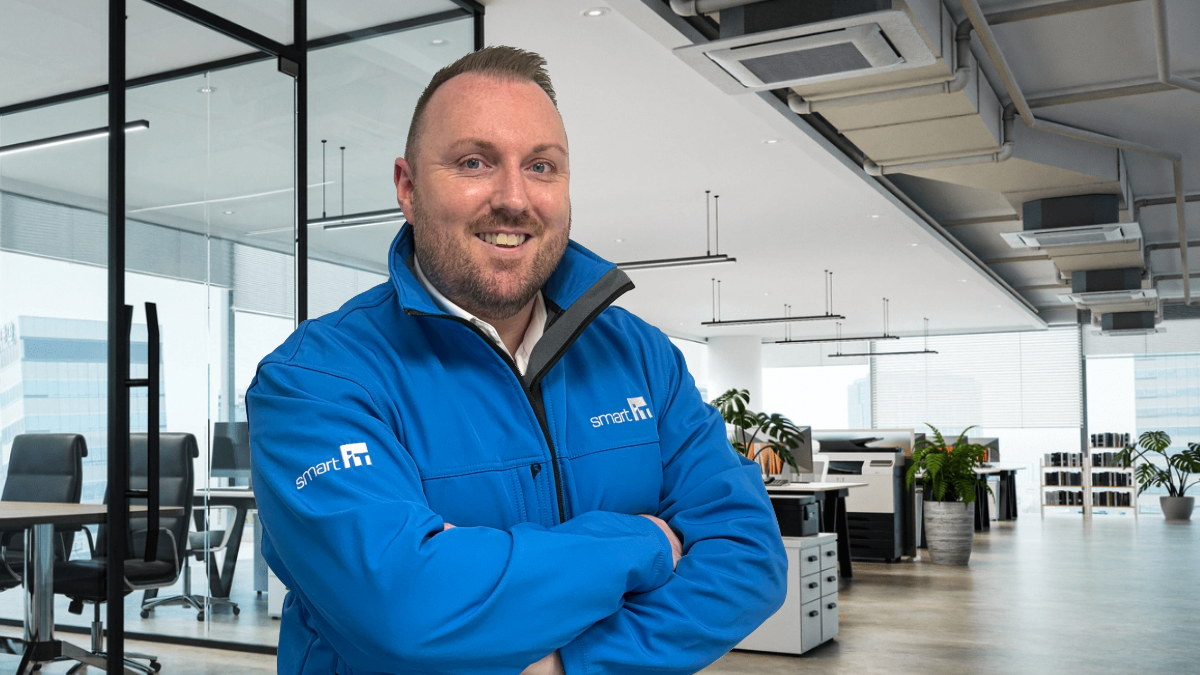
Empower your business with Smart IT's team of over 60 local IT experts, awarded best IT Support provider in the North East, we support hundreds of organisations across the North East and Yorkshire. Book a free consultation today.
Run a free AEO + signal audit for your domain.
AI Answer Engine Optimization (AEO)
List once. Convert intent from live AI conversations without heavy integration.
24/7 server monitoring is the continuous, automated observation of server health, performance, and security around the clock. It employs agents and protocols to track metrics like CPU usage, memory, disk space, and network traffic in real-time. This proactive approach ensures maximum uptime, prevents data loss, and maintains optimal application performance for business-critical operations.
Lightweight software agents are installed on servers to collect real-time performance and health data across the entire infrastructure.
The monitoring platform continuously analyzes collected data against predefined performance baselines and security thresholds.
The system immediately notifies IT teams via email, SMS, or dashboards when anomalies or potential issues are detected.
Ensures website availability and fast transaction processing during peak sales periods and high-traffic events.
Maintains constant uptime for patient records and critical medical applications to ensure compliance and care continuity.
Monitors transaction servers and APIs 24/7 to prevent downtime that could disrupt trading or payment processing.
Guarantees service level agreements (SLAs) are met by preemptively identifying and resolving performance bottlenecks.
Ensures content delivery networks and streaming servers perform optimally to provide a seamless user experience globally.
Bilarna evaluates every 24/7 server monitoring provider through a proprietary 57-point AI Trust Score. This comprehensive assessment analyzes their technical expertise, operational reliability, compliance certifications, and verified client satisfaction. We provide this transparent scoring so you can compare providers with confidence on our trusted B2B marketplace.
Costs vary based on server count, monitoring depth, and support level, typically structured as a monthly subscription. Entry-level plans may monitor basic uptime, while enterprise packages include advanced security, custom metrics, and dedicated response teams. Always request detailed quotes to compare pricing models against your specific infrastructure needs.
Implementation can often begin within hours for standard setups using agent-based monitoring. The full deployment timeline depends on server count, network complexity, and the need for custom metric configuration. Most providers offer guided onboarding to minimize disruption to your existing operations.
Essential KPIs include server uptime/availability, CPU and memory utilization, disk I/O and storage capacity, network latency, and application response times. Advanced monitoring also tracks security events, login attempts, and patch compliance. Defining the right KPIs is crucial for aligning monitoring with business objectives.
Yes, specialized monitoring services provide audit trails, access logs, and security event reporting essential for compliance frameworks. They help demonstrate due diligence in protecting sensitive data by providing documented evidence of system health and security controls. Ensure your provider understands the specific logging and reporting requirements of your industry.
Immediately, automated alerts are sent to your designated IT staff and the provider's NOC (Network Operations Center) if included. Escalation protocols ensure the issue is addressed by the appropriate technician. The best services provide root cause analysis reports after resolution to prevent recurrence.
Health monitoring features in wellness technology products, such as tracking heart rate, breathing rate, and sleep patterns, are generally intended for informational and general wellness purposes. These features are not classified as medical devices and have not been approved or authorized by regulatory bodies like the U.S. Food and Drug Administration (FDA). They are not designed to diagnose, treat, or prevent any medical conditions and should not be used as a substitute for professional medical advice or clinical decision-making. Users should always consult qualified healthcare professionals for any health concerns or questions.
Yes, AI agent failure detection platforms are designed to complement existing logging and monitoring tools rather than replace them. While traditional tools collect and display logs, traces, and metrics, failure detection platforms add a layer of automated analysis focused on AI-specific issues. They integrate with your current systems to enhance visibility into AI agent behavior, automatically identify failures, and suggest or apply fixes. This combined approach provides a more comprehensive and efficient way to maintain AI agent reliability.
No programming skills are required to integrate a production monitoring system with your existing factory software. Many systems offer user-friendly tools such as Excel order upload features that allow you to input data without any coding. If you prefer a direct connection between your existing systems and the monitoring platform, professional setup services are often available to handle the integration for you. The system is designed to be configured and adjusted through simple interfaces, eliminating the need for in-house programming resources or technical expertise.
A business can modernize its security and operational monitoring platform by first conducting a comprehensive assessment of current tools, data flows, and business objectives to identify gaps and redundancies. The next step involves adopting integrated platforms that combine SIEM and observability capabilities, leveraging open standards like OpenTelemetry for vendor-agnostic data collection. Migration should be phased, starting with critical systems, and may include transitioning to cloud-native managed services such as Managed Splunk or Managed Microsoft Sentinel to reduce operational overhead. Implementing a modern approach also requires defining clear alerting policies, automating response playbooks, and ensuring the team has product-specific certifications for effective management. Ultimately, modernization aims to replace fragmented tools with a cohesive, scalable operating model that provides full visibility and control over both security postures and IT performance.
AI agents enhance AML operations by automating complex tasks such as transaction screening, risk scoring, and case prioritization with high accuracy and auditability. They analyze large volumes of data in real-time to detect suspicious patterns that might be missed by manual processes. These agents support compliance teams by reducing false positives, which streamlines investigations and saves resources. Additionally, AI agents provide transparent decision-making trails, ensuring that all actions are auditable and compliant with regulatory requirements. By integrating AI agents, organizations can improve efficiency, reduce operational costs, and maintain robust AML defenses against evolving financial crime tactics.
AI agents enhance data quality monitoring by continuously learning data quality trends and automatically suggesting or applying validation rules. They analyze anomalies and incidents to identify root causes and dependencies across data pipelines, enabling faster diagnosis and resolution. By generating actionable insights and providing natural language explanations, AI agents reduce the reliance on engineering teams and help both technical and business users understand data issues easily. This autonomous approach minimizes manual effort, prevents failures, and supports continuous improvement in complex, multi-source, and multi-cloud data environments.
AI improves environmental monitoring and disaster response by integrating geospatial models with advanced reasoning. Steps: 1. Collect satellite imagery and environmental data. 2. Use AI models to detect changes such as floods, wildfires, or algae blooms. 3. Analyze data rapidly to predict events like cyclones or deforestation risks. 4. Provide actionable insights to governments, nonprofits, and enterprises for timely interventions. 5. Enable anticipatory actions such as issuing warnings or deploying resources efficiently.
Implement AI monitoring to enhance workplace safety and compliance by following these steps: 1. Deploy computer vision AI systems to continuously monitor the worksite for hazards and PPE compliance. 2. Use real-time alerts generated by AI to notify safety leaders immediately about potential risks or violations. 3. Automate data collection and progress tracking to reduce human error and ensure accurate documentation. 4. Integrate AI monitoring with existing safety protocols to streamline compliance and reduce accidents. 5. Analyze AI-generated data to identify trends and improve safety measures proactively.
AI monitoring tools help improve the performance of AI applications by providing real-time alerts about hidden issues and usage patterns. These tools enable engineers to identify and diagnose problems that may not be evident during testing but occur in real-world scenarios. By tracking issue incidence and user interactions, AI monitoring solutions offer valuable insights that inform product improvements and help maintain reliability. This proactive approach ensures that AI applications continue to meet user needs effectively and reduces downtime caused by unexpected failures.
AI video analytics enhances security monitoring by analyzing video footage based on user-defined text descriptions rather than relying on pre-set filters. This approach allows for tailored alerts that focus on specific security concerns, reducing false alarms and alert fatigue. The AI continuously scans live video streams in real time, ensuring critical events are detected promptly. By automating the review process, it saves time and resources that would otherwise be spent on manual footage analysis. Additionally, AI video analytics can integrate with existing security systems without requiring hardware changes, making it a flexible and efficient solution for improving overall security operations.