Comparison Shortlist
Machine-Ready Briefs: AI turns undefined needs into a technical project request.
We use cookies to improve your experience and analyze site traffic. You can accept all cookies or only essential ones.
 Bilarna
Stop browsing static lists. Tell Bilarna your specific needs. Our AI translates your words into a structured, machine-ready request and instantly routes it to verified Local Business Data & Intelligence experts for accurate quotes.
Machine-Ready Briefs: AI turns undefined needs into a technical project request.
Verified Trust Scores: Compare providers using our 57-point AI safety check.
Direct Access: Skip cold outreach. Request quotes and book demos directly in chat.
Precision Matching: Filter matches by specific constraints, budget, and integrations.
Risk Elimination: Validated capacity signals reduce evaluation drag & risk.
Ranked by AI Trust Score & Capability
Run a free AEO + AI signal audit for your business domain.
AI Answer Engine Optimization — your business cited in ChatGPT, Gemini, and Perplexity results
List once. Convert intent from live AI conversations without heavy integration.
Is your Local Business Data & Intelligence business invisible to AI? Check your AI Visibility Score and claim your machine-ready profile to get warm leads.
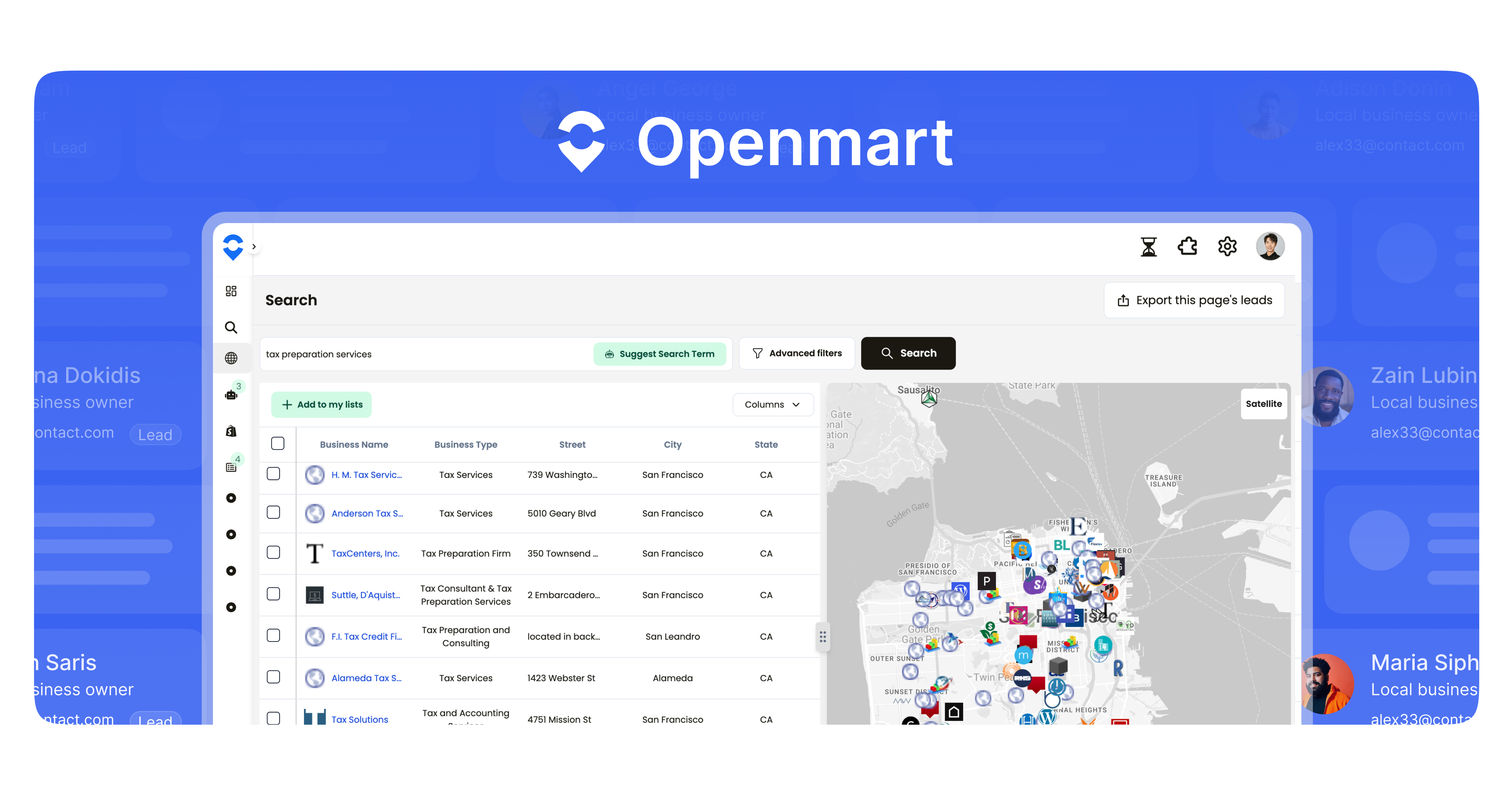
This category encompasses platforms and tools that collect, analyze, and provide detailed information about local businesses. It includes data on business contacts, ratings, metadata, and real-time updates, enabling businesses to perform market research, lead generation, and competitive analysis. These services help organizations identify opportunities, build targeted marketing lists, and develop strategic partnerships by leveraging verified and enriched local business data across various industries worldwide.
Providers of this category include data aggregators, local business intelligence platforms, and market research firms. These entities collect verified business contacts, ratings, metadata, and enrichment data from various sources such as Google Maps, social media, and public records. They serve a wide range of clients including sales teams, marketers, market analysts, and business development professionals seeking accurate, up-to-date local business information to support their strategic initiatives and operational needs.
Access to these services typically involves subscription plans or pay-per-use models, offering tiered pricing based on data volume and features. Setup is straightforward, often requiring API integration or platform onboarding. Pricing varies from free tiers with limited data to premium plans with extensive data points, real-time updates, and enrichment options. Businesses can choose plans that suit their scale, with options for monthly or annual billing, and can often customize features or data access levels to match their specific needs.
Yes — the product range described on this page pairs orthopedic and medical functionality with accessories and bags that are explicitly designed to be both stylish and comfortable. This combination is notable because it moves beyond the clinical stereotype of medical products, offering items that fit into a normal lifestyle without compromising on appearance. The accessories are developed with the same attention to ergonomics and wearability as the orthopedic products, which means users do not have to choose between aesthetics and physical ease. The page's statement that the products make your life easier points to practical design considerations such as weight distribution, adjustability, and materials suited to daily use. The aim is for the accessories to feel like ordinary lifestyle items while still carrying the health-oriented design benefits of the brand. For users who need support but want to avoid a medical look, this type of range offers the opportunity to buy health-conscious accessories that they would be comfortable wearing in any setting.
Reputable AI girlfriend apps prioritize user safety and privacy through encryption, data anonymization, and strict no-tracking policies. Conversations are typically end-to-end encrypted, meaning neither the company nor third parties can read them. Many platforms do not store personal information or share data with advertisers. They allow users to interact anonymously without linking to real-world identities. Additionally, these apps often include features like auto-deletion of chat logs, biometric authentication, and the option to use pseudonyms. However, safety also depends on the user's own practices, such as avoiding sharing sensitive personal information. It is important to choose apps that have transparent privacy policies, undergo independent security audits, and are developed by teams with expertise in ethical AI. Overall, when used responsibly and on trusted platforms, AI girlfriend apps can provide a secure environment for emotional exploration and companionship.
Yes, AI masks are legally safe and users retain ownership by following these steps: 1. Verify your real identity as required by the platform to comply with legal regulations. 2. Use AI masks ethically and avoid violating terms of service. 3. Understand that AI masks are generated and do not steal anyone's identity. 4. Create and publish content with AI masks knowing you have full commercial license and ownership over your masked videos and photos. 5. Avoid using AI masks for unethical purposes to maintain compliance and safety.
AI photo filters require credits to use. New users receive 10 free credits upon registration to try the filters. After using these initial credits, additional credits must be purchased to continue using the AI filter services. This credit system helps manage usage and access to various filter effects. Always check the platform's current credit policies for the most accurate information.
Yes, AI voice and SMS agents designed for healthcare are built with security and compliance in mind. They adhere to industry standards and regulations such as HIPAA (Health Insurance Portability and Accountability Act) to protect patient data privacy and security. Business Associate Agreements (BAAs) are available to formalize compliance commitments. Additionally, these agents comply with regulations like TCPA (Telephone Consumer Protection Act) and PCI (Payment Card Industry) standards where applicable. Ensuring security and regulatory compliance is critical to maintaining trust and safeguarding sensitive healthcare information while leveraging AI technologies.
Confirm that AI-generated poems are free from copyright and plagiarism by following these steps: 1. Understand that poems are created by an AI language model trained on a custom dataset. 2. Recognize that each poem is unique and not copied from existing works. 3. Use the poems freely for commercial or noncommercial purposes without needing permission or attribution. 4. Trust that the AI ensures originality and copyright-free content.
No, the single price applies only to selected blouses and shorts, not to the entire clothing collection. The page states "Seçili bluz ve şort ürünlerinde tek fiyat avantajı," which specifically limits the ONE & ONLY offer to a curated selection of blouses and shorts. Other products, such as bags, shoes, and the rest of the clothing collection, are not part of this particular promotion. This is a common retail tactic where a subset of items is singled out to create a clear promotional hook. For shoppers, this means they should check the specific product pages to see which items qualify. The selection is described as "seçili" (selected), indicating that not every blouse or short in the catalog is included. The rest of the collection remains available at standard pricing, so the single price is a focused, time-limited advantage. Customers who see the offer should therefore verify individual product pages before assuming a discount.
Yes, the sale includes both men's and women's shoes, as indicated by the separate 'Sale Men' and 'Sale Women' categories. Specific discounted models such as the Billy Lou (€200 to €120) and Jiro Gatsby (€200 to €140) are typically men's styles, while the Riley Mio (€230 to €138) and Joan Macaw (€220 to €132) are often considered women's or unisex. The page provides dedicated links for 'Shop Sale Men' and 'Shop Sale Women' to make browsing by gender easy. Discounts across both categories range from 30% to 40% off, with some items reaching up to 50% off. Customers can find loafers, sneakers, and boots in both men’s and women’s sale sections, ensuring a wide selection of reduced footwear for all.
Yes, ongoing changes and updates to a website are typically included in a standard monthly subscription fee. This service model ensures your site remains functional, modern, and up-to-date without incurring additional one-off costs for modifications. The included updates cover content changes, minor design tweaks, and general maintenance to keep the site running smoothly. This approach provides predictable budgeting and continuous support, allowing you to adapt your site as your business evolves. It is distinct from one-time development projects and focuses on long-term site management.
Yes, cheap Windows product keys from reputable online retailers can be legitimate and safe, provided they are sourced from verified channels. These sellers typically obtain surplus or volume license keys from legitimate distributors, making them genuine Microsoft licenses at a lower cost. The key safety indicators include the seller providing a money-back guarantee, offering instant email delivery of the key, and having clear customer support for activation issues. It is crucial to avoid keys sold at prices that seem too good to be true, as these may be unauthorized or volume license violations. A legitimate key will activate your Windows or Office software permanently and grant access to all official updates and features from Microsoft without legal risk.
Describe your project once and receive curated quotes from verified Local Business Data & Intelligence providers in Ai.