Step 1
Machine-Ready Briefs
AI translates unstructured needs into a technical, machine-ready project request.
We use cookies to improve your experience and analyze site traffic. You can accept all cookies or only essential ones.
 Bilarna
Stop browsing static lists. Tell Bilarna your specific needs. Our AI translates your words into a structured, machine-ready request and instantly routes it to verified AI Diamond Search Integration experts for accurate quotes.
AI translates unstructured needs into a technical, machine-ready project request.
Compare providers using verified AI Trust Scores & structured capability data.
Skip the cold outreach. Request quotes, book demos, and negotiate directly in chat.
Filter results by specific constraints, budget limits, and integration requirements.
Eliminate risk with our 57-point AI safety check on every provider.
Verified companies you can talk to directly
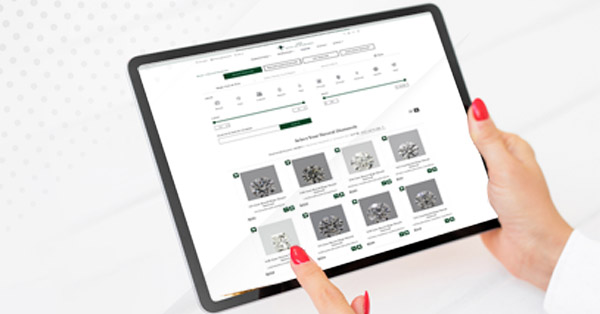
Jewelry e-commerce development by TransPacific Software with Diamond API integrations (Rapnet, VDB, Nivoda, IDEX) plus Ring Builder and Earring builder.
Run a free AEO + signal audit for your domain.
AI Answer Engine Optimization (AEO)
List once. Convert intent from live AI conversations without heavy integration.
AI diamond search integration is the process of embedding specialized machine learning models into business systems to identify, evaluate, and source diamonds. These systems use computer vision for grading and semantic search to match stones against specific buyer criteria from vast digital inventories. This automation significantly reduces procurement time, improves match accuracy, and enables data-driven purchasing decisions for jewelers and traders.
Businesses input specific parameters such as carat, cut, color, clarity, and budget into their procurement software or platform.
Integrated computer vision and NLP models scan supplier databases to find diamonds that meet the exact specifications, grading them automatically.
The system presents a ranked shortlist of verified matches, allowing buyers to review detailed reports and initiate secure transactions.
Streamlines sourcing for custom jewelry by instantly finding diamonds that match design specifications and quality requirements from global suppliers.
Powers advanced search filters for high-value gemstones, enabling bidders to find precise matches based on certified grading reports.
Enhances product discovery by allowing customers to search for loose diamonds or set jewelry using natural language queries and visual preferences.
Automates sourcing for industrial-grade diamonds used in cutting, drilling, and abrasives based on technical specifications and purity levels.
Assists financial institutions in appraising diamond portfolios by cross-referencing stones against global market databases and historical price trends.
Bilarna evaluates AI diamond search integration providers using a proprietary 57-point AI Trust Score. This score rigorously assesses technical capabilities through solution audits and client delivery track records. We continuously monitor provider performance and client feedback to ensure listed partners maintain high standards of reliability and expertise.
AI diamond search integration is primarily used to automate and enhance the procurement and matching of diamonds in B2B and B2C contexts. It helps jewelers, manufacturers, and traders quickly find stones meeting exact carat, cut, color, and clarity specifications from large digital inventories. This technology reduces manual search time and increases transaction accuracy.
Traditional diamond search relies on manual database queries with basic filters. AI-powered integration uses computer vision to analyze diamond certificates and imagery for grading, and natural language processing to understand complex, subjective queries like 'eye-clean round brilliant.' It provides predictive matching and quality assessments beyond simple parameter matching.
Costs depend on integration complexity, data processing volume, required accuracy of the vision models, and whether it's a SaaS subscription or custom enterprise deployment. Pricing models typically include setup fees, API call costs, and ongoing licensing or maintenance for the AI algorithms and database access.
Timeline varies from weeks for a standard API integration into an existing platform to several months for a custom, full-stack enterprise solution. Key factors include the state of your existing inventory data, required customizations to the AI models, and the scope of testing and validation needed before go-live.
Prioritize providers with proven computer vision accuracy for gemstone grading, a large and updated global diamond database, robust API documentation, and strong data security protocols. Evaluate their industry experience, client case studies, and the transparency of their matching algorithms to ensure reliable integration outcomes.
There are no limits on the number of searches you can perform once your video is processed. 1. Upload your video content, either as files or via links. 2. The AI processes the video to make it searchable. 3. After processing, you can perform unlimited searches within that video. 4. The only limitation is the total minutes of video you can upload per month based on your account plan.
Yes, many infrastructure visualization tools are designed to run both locally and within continuous integration (CI) environments. Running locally allows developers to instantly generate diagrams and documentation as they work on their Terraform projects, facilitating immediate feedback and understanding. Integration with CI pipelines ensures that infrastructure documentation is automatically updated with every code change, maintaining accuracy and consistency across teams. This dual capability supports flexible workflows and helps keep infrastructure documentation evergreen and synchronized with the actual codebase.
Yes, the AI chatbot integration supports multiple messaging platforms simultaneously. To configure this, follow these steps: 1. Access the chatbot's admin portal. 2. Navigate to the integration settings. 3. Add and connect each messaging platform you want to use. 4. Configure preferences for each platform to ensure seamless communication. 5. Save the settings and test the chatbot on all connected platforms to verify functionality. This allows your organization to communicate efficiently across various channels without switching tools.
No prior influencer marketing experience is needed to use an AI influencer search tool. 1. Simply describe your campaign goals or ideal influencer characteristics. 2. The AI interprets your input as a marketing consultant would. 3. It applies expert knowledge to analyze and match influencers accurately. 4. You receive a curated list of influencers tailored to your needs. 5. This enables anyone, from beginners to experts, to run effective influencer campaigns without specialized skills.
No, AI file search does not require full file system access. 1. The app operates as a sandboxed application restricting its permissions. 2. You must create a Workspace including only the files and folders you want the AI to access. 3. The AI searches exclusively within this Workspace based on your query. 4. This approach limits exposure and enhances security by preventing unrestricted file system access.
AI workflow automation in healthcare does not require traditional integration with existing electronic medical record (EMR) systems. Instead of relying on APIs or custom development, AI interacts with EMR software by mimicking human actions such as clicking, typing, and navigating interfaces. This approach allows the AI to work seamlessly with any EMR system or portal, including popular platforms like Epic, Cerner, and athenahealth. As a result, clinics can deploy automation solutions quickly without lengthy IT projects or vendor approvals.
Yes, the AI lip sync video generator offers an API for seamless integration. To use the API: 1. Sign up for an account on the platform. 2. Access the developer section to obtain your API key. 3. Follow the API documentation to integrate lip sync video generation into your application. 4. Test the integration with sample videos. 5. Deploy the integration for production use.
Integration tools that enable communication across multiple chat platforms generally do not permanently store user messages or files. While they may retain metadata about messages to help synchronize conversations across platforms, the actual content of messages and files is not persistently saved. This approach helps protect user privacy and data security by minimizing data retention. Users can communicate knowing that their messages and files are not stored indefinitely by the integration service itself.
No, integration tools that enable cross-platform communication typically do not migrate or transfer your previous chat history or messages. They facilitate real-time messaging and file sharing between different chat platforms but do not have the capability to move historical conversations. If you are planning to switch chat platforms, it is recommended to use the integration tool during the migration period to maintain communication continuity. However, any messages sent before the integration was installed will not be transferred or accessible through the new setup.
A business can improve its local search visibility by optimizing its online presence for geographic relevance, primarily through platforms like Google My Business and local SEO strategies. First, claim and verify the Google My Business listing, ensuring accurate business name, address, phone number (NAP), hours, and categories. Second, incorporate local keywords into website content, such as city or neighborhood names, to signal geographic intent. Third, build local citations by listing the business on directories like Yelp or Yellow Pages, maintaining consistent NAP information. Fourth, encourage and manage customer reviews, as positive ratings boost local rankings. Finally, ensure the website is mobile-friendly and loads quickly, as these factors affect local search performance. Regular updates and engagement with local content also help.