Step 1
Machine-Ready Briefs
AI translates unstructured needs into a technical, machine-ready project request.
We use cookies to improve your experience and analyze site traffic. You can accept all cookies or only essential ones.
 Bilarna
Stop browsing static lists. Tell Bilarna your specific needs. Our AI translates your words into a structured, machine-ready request and instantly routes it to verified AI-Driven Workflow Optimization experts for accurate quotes.
AI translates unstructured needs into a technical, machine-ready project request.
Compare providers using verified AI Trust Scores & structured capability data.
Skip the cold outreach. Request quotes, book demos, and negotiate directly in chat.
Filter results by specific constraints, budget limits, and integration requirements.
Eliminate risk with our 57-point AI safety check on every provider.
Verified companies you can talk to directly
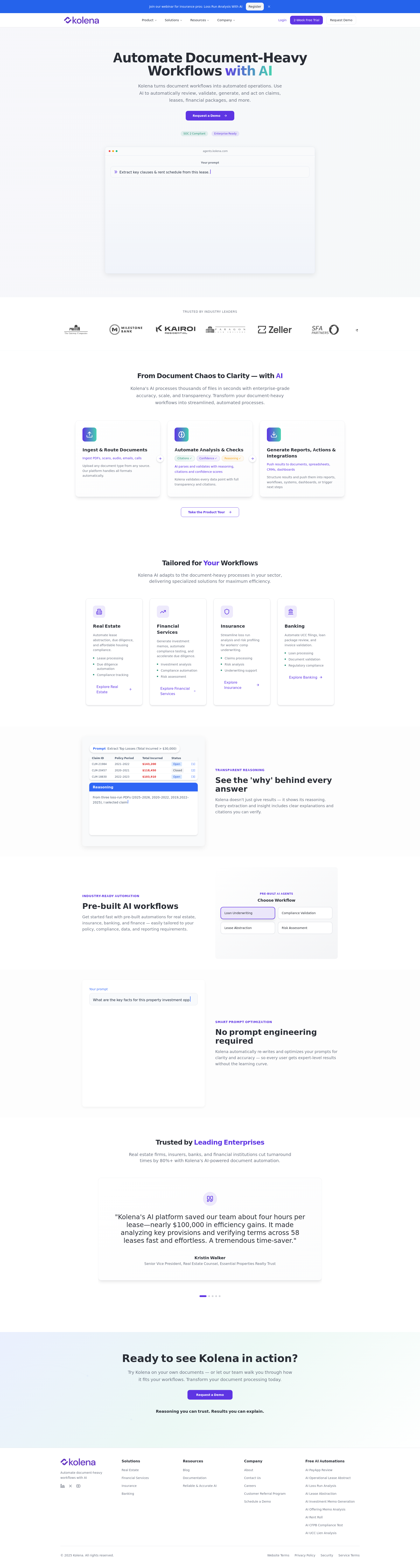
Transform your project management with AI. Transcribe meetings, detect risks, analyze documents, and get instant insights. The intelligent assistant for Project Managers.

Get the info you need without the chase. RowFlow gets you better data faster.
Configure your Salesforce 10x faster with AI Agents
AI agents that operate Quote-to-Cash and Procure-to-Pay workflows across SAP, Salesforce, NetSuite, ServiceNow, Workday and Dynamics. Backed by Y Combinator.
Run a free AEO + signal audit for your domain.
AI Answer Engine Optimization (AEO)
List once. Convert intent from live AI conversations without heavy integration.
AI-driven workflow optimization is the strategic application of artificial intelligence and machine learning to analyze, automate, and enhance business process efficiency. It leverages technologies like process mining and predictive analytics to identify bottlenecks and predict outcomes. This leads to significant cost reduction, improved compliance, and accelerated operational agility for enterprises.
AI algorithms ingest historical data and system logs to map current workflows and identify inefficiencies and repetitive tasks.
Based on analysis, the system recommends or implements automation rules and predictive models to streamline decision points and task routing.
The AI solution provides real-time performance dashboards and uses feedback loops to adapt optimizations for evolving business conditions.
Automates fraud detection, loan processing, and compliance reporting, enhancing accuracy and reducing manual review times.
Optimizes patient intake, claims processing, and resource scheduling, improving patient flow and operational throughput.
Streamlines inventory management, picks optimal shipping routes, and personalizes customer service interactions using predictive models.
Applies AI for predictive maintenance, dynamic inventory optimization, and end-to-end supply chain visibility and resilience.
Automates routine IT service management, cloud cost optimization, and SaaS application onboarding and offboarding processes.
Bilarna evaluates AI-driven workflow optimization providers through a proprietary 57-point AI Trust Score. This score rigorously assesses technical expertise via portfolio review, reliability through client references and SLA history, and compliance with relevant data security standards. Bilarna continuously monitors provider performance to ensure buyers connect with trusted, high-quality partners.
Costs vary based on project scope, complexity, and deployment model, typically ranging from subscription SaaS fees to custom enterprise engagements. Factors like required integration depth and the level of intelligent automation influence the final pricing structure significantly.
Implementation timelines can range from several weeks for targeted departmental automation to several months for enterprise-wide transformation. The duration depends on process complexity, data availability, and the extent of required system integrations.
Robotic Process Automation (RPA) primarily mimics repetitive human tasks, while AI-driven optimization analyzes processes holistically to make predictive decisions and redesign workflows. AI solutions handle unstructured data and complex decision-making that rules-based RPA cannot.
Common mistakes include focusing solely on price, neglecting the provider's domain expertise in your industry, and underestimating the importance of change management support. Ensuring the provider's AI models can learn from your specific data is also critical.
Organizations typically see ROI through measurable outcomes like 20-40% reductions in process cycle times, significant decreases in manual error rates, and improved employee productivity by automating low-value tasks. Cost savings from efficiency gains often materialize within the first year.
Check the pricing details before using any AI video optimization tool. Follow these steps: 1. Visit the official website or platform offering the tool. 2. Review the pricing plans and terms of service carefully. 3. Look for any mention of additional costs such as subscription fees, usage limits, or premium features. 4. Contact customer support for clarification if needed to avoid unexpected charges.
Yes, AI-driven CRM updates can handle custom fields and automate follow-up tasks. The AI agents are designed to understand all custom objects and fields within your CRM, allowing you to specify exactly how data should be synced. Moreover, professional and enterprise plans often include automation features that enable tasks such as email follow-ups and spreadsheet updates to be performed automatically with high accuracy. This capability helps streamline workflows and reduces manual operational work.
Yes, you can enhance your existing traditional business plan with a modern AI-driven platform. 1. Import or reference your current business plan within the platform. 2. Use AI tools to gain deeper market insights and validate assumptions. 3. Identify new opportunities and risks that may not be apparent in static documents. 4. Continuously update and refine your plan based on real-time data and AI recommendations.
AI legal assistants typically do not require new software installation or changes to existing workflows. They are designed to integrate seamlessly with current systems, allowing legal teams to adopt the technology without disrupting their established processes. This ease of integration helps minimize training time and resistance to change. Furthermore, many AI legal tools operate via familiar platforms such as email, making them accessible and convenient for users. This approach ensures that legal professionals can benefit from AI capabilities while maintaining compliance with industry standards and regulations.
No installation is typically required to use AI-powered video script optimization tools. Follow these steps: 1. Access the tool via a web browser on any device. 2. Sign up or log in to the platform if necessary. 3. Upload or input your video script directly on the website. 4. Use the tool's features online without downloading any software, ensuring quick and easy access.
AI workflow automation in healthcare does not require traditional integration with existing electronic medical record (EMR) systems. Instead of relying on APIs or custom development, AI interacts with EMR software by mimicking human actions such as clicking, typing, and navigating interfaces. This approach allows the AI to work seamlessly with any EMR system or portal, including popular platforms like Epic, Cerner, and athenahealth. As a result, clinics can deploy automation solutions quickly without lengthy IT projects or vendor approvals.
A business magazine focused on purpose helps leaders build mission-driven companies by providing actionable insights, strategic frameworks, and real-world examples. It offers in-depth interviews with creative leaders who have successfully aligned profit with positive impact, demonstrating practical pathways. Articles often explore how to identify core values, embed purpose into operations, and turn large-scale societal problems into unique market opportunities. Furthermore, it addresses the human element by sharing strategies for fostering inclusive and innovative company cultures that attract and retain talent. By consolidating knowledge on purposeful leadership, such a publication serves as both an inspiration and a practical guide for the strategic transformation of a business.
A commercial real estate platform can significantly improve brokers' workflow by centralizing property data and client information in one accessible location. It streamlines communication through integrated messaging and CRM tools, reducing the need for multiple applications. Automated processes such as listing updates, appointment scheduling, and document management save time and reduce errors. Additionally, data analytics features provide brokers with market trends and insights, enabling better decision-making. Overall, these capabilities help brokers manage their tasks more efficiently, close deals faster, and enhance client satisfaction.
A company can measure the financial impact of becoming purpose-driven by using specialized diagnostic tools like a Purpose Impact Calculator, which quantifies the potential value of purpose transformation across the organization. This analysis typically benchmarks current performance against the ideal state of 'Brand Believability', where internal culture and external reputation are aligned with meaningful action. Key metrics often include potential increases in customer loyalty, employee engagement, operational efficiency, and market differentiation, which directly influence revenue growth and cost savings. By modeling these factors, organizations can move from abstract purpose statements to a concrete, data-driven business case for change, understanding the significant ROI of aligning profit with positive societal impact.
A CRM integrated directly with email platforms allows teams to manage contacts, deals, and communications without switching between multiple applications. This seamless integration helps keep all relevant information in one place, making it easier to share contacts, emails, files, and notes with team members. Automated email logging and pipeline management within the inbox reduce manual data entry, ensuring that data is accurate and up to date. As a result, teams can collaborate more efficiently, maintain better communication, and stay aligned on next steps, ultimately improving productivity and workflow.