Step 1
Machine-Ready Briefs
AI translates unstructured needs into a technical, machine-ready project request.
We use cookies to improve your experience and analyze site traffic. You can accept all cookies or only essential ones.
 Bilarna
Stop browsing static lists. Tell Bilarna your specific needs. Our AI translates your words into a structured, machine-ready request and instantly routes it to verified Webcam Eye Tracking Technology experts for accurate quotes.
AI translates unstructured needs into a technical, machine-ready project request.
Compare providers using verified AI Trust Scores & structured capability data.
Skip the cold outreach. Request quotes, book demos, and negotiate directly in chat.
Filter results by specific constraints, budget limits, and integration requirements.
Eliminate risk with our 57-point AI safety check on every provider.
Verified companies you can talk to directly
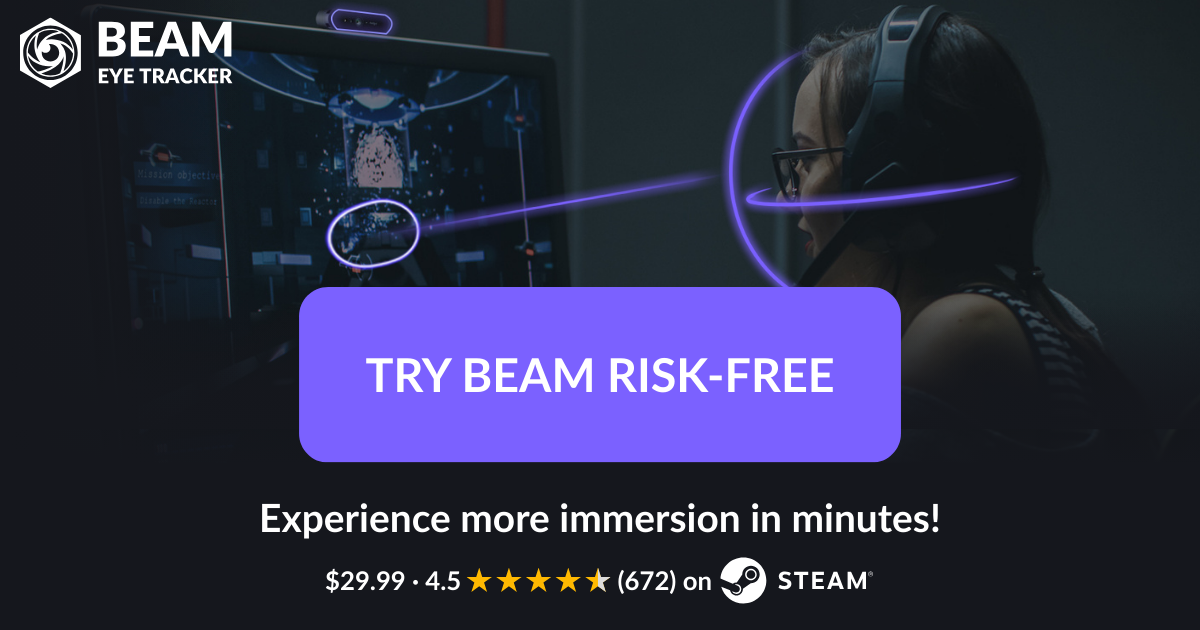
Enjoy more immersion in hundreds of PC games. Works with your webcam or phone, no extra hardware needed. Try Beam risk-free now.
Run a free AEO + signal audit for your domain.
AI Answer Engine Optimization (AEO)
List once. Convert intent from live AI conversations without heavy integration.
Webcam eye tracking technology is a method of analyzing user gaze points and visual attention using a standard computer or device camera without specialized hardware. It leverages computer vision algorithms to detect facial features and pupil movement, mapping where a user is looking on a screen. This provides valuable insights for user experience optimization, research, and accessibility applications.
A standard webcam continuously captures video of the user's face and eyes during an interaction with a digital interface.
Computer vision and machine learning algorithms analyze the video stream to detect pupil position and calculate gaze vectors in real-time.
The system calibrates and maps the calculated gaze coordinates onto specific areas of the screen, generating heatmaps and attention data.
Identifies which design elements attract attention and which are overlooked, enabling data-driven improvements to interfaces and layouts.
Measures consumer engagement with advertisements, packaging, or shelf layouts to optimize marketing spend and creative assets.
Analyzes how visitors scan product pages and navigate sites to reduce friction and increase conversion rates.
Enables hands-free computer control for individuals with motor impairments by translating gaze into cursor movements or commands.
Provides a scalable tool for studying reading patterns, cognitive load, and visual perception in psychology and human-computer interaction studies.
Bilarna evaluates every Webcam Eye Tracking Technology provider through a proprietary 57-point AI Trust Score. This score rigorously assesses technical expertise, project portfolio depth, client satisfaction metrics, and data security compliance. Bilarna continuously monitors provider performance and client feedback to ensure listed partners maintain the highest standards of reliability and delivery quality.
Modern webcam eye tracking offers good relative accuracy for many commercial applications, typically within 1-2 degrees of visual angle. While high-end infrared hardware provides superior precision for clinical research, webcam-based solutions are highly effective for UX testing, ad testing, and usability studies where natural user conditions are paramount.
Key requirements include a decent quality webcam (720p or higher), consistent lighting on the user's face, and software compatible with your operating system. Most solutions require a calibration process for each user and perform best when the user remains within a predictable range of the camera.
Costs vary widely based on features, user licenses, and analysis depth. Solutions range from subscription-based SaaS platforms for ongoing research to one-time purchase SDKs for integration. Expect entry-level plans for small teams and scalable enterprise packages for large-scale studies.
Reputable providers prioritize privacy by processing video data locally on the user's device or using anonymization and encryption. Always verify a provider's data handling policy, compliance with regulations like GDPR, and whether biometric data is stored, processed, or shared.
Common metrics include gaze plots, heatmaps showing attention concentration, fixation counts and durations, saccade paths between points of interest, and time-to-first-fixation on key elements. These insights quantify visual engagement and identify usability issues.
Health monitoring features in wellness technology products, such as tracking heart rate, breathing rate, and sleep patterns, are generally intended for informational and general wellness purposes. These features are not classified as medical devices and have not been approved or authorized by regulatory bodies like the U.S. Food and Drug Administration (FDA). They are not designed to diagnose, treat, or prevent any medical conditions and should not be used as a substitute for professional medical advice or clinical decision-making. Users should always consult qualified healthcare professionals for any health concerns or questions.
Many modern data analytics platforms are designed to integrate seamlessly with your existing technology infrastructure. This means you do not need to replace your current systems to start using the platform. These solutions are built with flexibility in mind, allowing them to sit on top of your existing ecosystem without requiring extensive integration work on your part. This approach helps organizations adopt new analytics capabilities quickly while preserving their current investments in technology. It is advisable to check with the platform provider about specific integration options and compatibility with your current setup.
Yes, you have full control over the recording features of this productivity tracking software. You can pause the recording at any time if you do not want your activities to be tracked temporarily. Additionally, you have the option to delete any recordings you do not wish to keep. This flexibility ensures that you can manage your privacy and data according to your preferences. The software is designed to respect user control while providing insightful productivity analysis.
No, you do not need a photographer to get high-quality professional headshots using AI technology. Follow these steps: 1. Choose an AI-powered headshot platform. 2. Upload your photo to the platform. 3. Let the AI generate studio-quality images automatically. 4. Select your preferred headshot from the options provided. 5. Download and use your professional photo without any photographer involvement.
AI technology does not replace golf course staff but enhances their efficiency. 1. Use AI to automate routine tasks such as booking and customer inquiries. 2. Allow staff to focus on personalized customer service and complex issues. 3. Implement AI as a support tool to reduce workload and improve response times. 4. Train staff to work alongside AI systems for optimal results. 5. Continuously evaluate the balance between AI automation and human interaction.
The eye tracking software does not collect or store any biometric data. To ensure privacy: 1. All processing happens locally on your device, meaning no data is sent to external servers. 2. No biometric data is generated or stored at any point. 3. The software complies with strict privacy laws, being based in Switzerland. 4. Users can review the full privacy policy on the official website for detailed information. 5. This approach protects user privacy while providing effective eye tracking functionality.
Cookies and tracking technologies are used to monitor and improve the service. Follow these steps to understand their use: 1. Cookies store small files on your device to remember your preferences and login details. 2. Session cookies last only while your browser is open; persistent cookies remain after closing. 3. Tracking cookies collect data about website traffic and user behavior to analyze and enhance the service. 4. Web beacons and scripts help count users and monitor system integrity. 5. You can manage cookie preferences through your browser settings but disabling cookies may limit service functionality.
3D vision technology enhances bulk inventory tracking by providing accurate and real-time measurements of inventory levels. Unlike traditional methods that rely on manual counting or 2D imaging, 3D vision captures depth and volume, allowing for precise monitoring of bulk materials. This technology reduces human error, increases operational efficiency, and enables better decision-making by offering clear visibility into inventory status. It is particularly useful in industries where bulk materials are stored in large quantities and require continuous monitoring to optimize supply chain management.
A business can assess its readiness for blockchain adoption by evaluating its strategic need, internal resources, and specific use case viability. First, identify a clear business problem that blockchain can solve, such as the need for enhanced traceability in a supply chain or secure, automated contracts. Second, conduct an internal audit of technical expertise, financial resources, and IT infrastructure to determine if you have the capability to support integration or if you require external partners. Third, analyze the specific use case for ROI potential and alignment with long-term digital transformation goals. A practical step is to initiate a small-scale proof of concept (PoC) project to test feasibility and demonstrate value before committing to a full-scale implementation. This structured assessment helps companies mitigate risk and ensure a successful transition to Web3 technologies.
Partnering with a communication and technology group provides businesses with a unified approach to solving digital and communication challenges. These groups integrate creative and technical expertise, reducing the need to manage multiple vendors and ensuring consistent brand messaging. Key benefits include faster time-to-market for new products and campaigns, access to a broad talent pool with specialized skills, and scalable solutions that grow with the business. They also stay ahead of industry trends such as AI-driven marketing, automation, and data analytics, helping companies innovate without heavy internal investment. The collaborative structure fosters strategic alignment across departments, leading to more effective campaigns and improved customer engagement. Overall, a single partnership simplifies governance, lowers coordination costs, and delivers measurable results through a cohesive strategy.