Step 1
Comparison Shortlist
Machine-Ready Briefs: AI turns undefined needs into a technical project request.
We use cookies to improve your experience and analyze site traffic. You can accept all cookies or only essential ones.
 Bilarna
Stop browsing static lists. Tell Bilarna your specific needs. Our AI translates your words into a structured, machine-ready request and instantly routes it to verified E-commerce Personalization experts for accurate quotes.
Machine-Ready Briefs: AI turns undefined needs into a technical project request.
Verified Trust Scores: Compare providers using our 57-point AI safety check.
Direct Access: Skip cold outreach. Request quotes and book demos directly in chat.
Precision Matching: Filter matches by specific constraints, budget, and integrations.
Risk Elimination: Validated capacity signals reduce evaluation drag & risk.
Ranked by AI Trust Score & Capability

Run a free AEO + signal audit for your domain.
AI Answer Engine Optimization (AEO)
List once. Convert intent from live AI conversations without heavy integration.
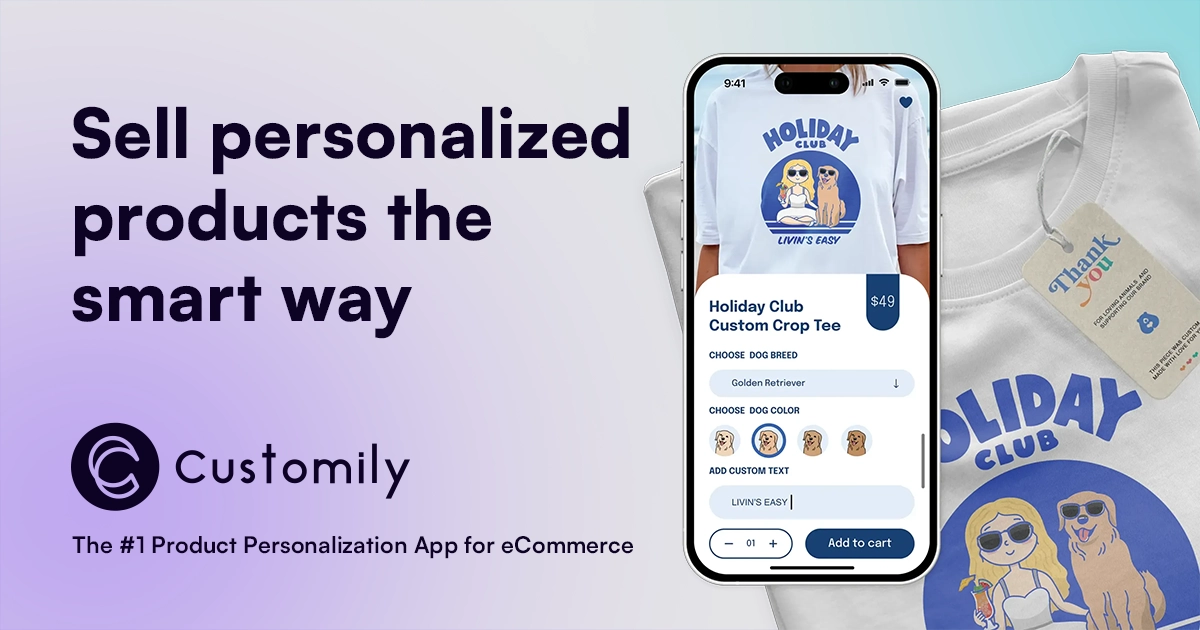
This category encompasses tools and platforms that enable online stores to offer personalized products to their customers. These solutions allow customers to customize items such as apparel, accessories, home decor, and more in real-time, often with live previews. By integrating such software, e-commerce businesses can enhance customer engagement, increase sales, and differentiate themselves in competitive markets. Personalization software typically supports various product types, offers design flexibility, and connects seamlessly with print-on-demand services, making it easier for merchants to fulfill customized orders efficiently.
Providers of this category are typically software developers and technology companies specializing in e-commerce solutions. They create platforms and tools that enable online retailers to offer customizable products, often integrating with popular e-commerce platforms like Shopify, WooCommerce, and marketplaces such as Etsy and Amazon. These providers focus on delivering user-friendly interfaces, seamless integrations with print-on-demand services, and advanced features like real-time previews and AI-powered design assistance. Their goal is to empower merchants of all sizes to easily implement product personalization, enhance customer experience, and increase sales through innovative, scalable solutions.
Delivery and setup for this category typically involve integrating the personalization software with existing e-commerce platforms and print-on-demand services. Pricing models are usually usage-based, meaning merchants pay per order or per design, making it cost-effective for small and large businesses alike. Implementation may require initial configuration and customization to match branding and product offerings. Many providers offer free trials or demos to help merchants understand the platform's capabilities before committing. Ongoing support and updates are often included to ensure smooth operation and access to new features, allowing businesses to scale their personalization efforts efficiently and effectively.
Product customization software enables bespoke product configuration and personalization. Compare and source verified solutions for your business on the Bilarna marketplace.
View Product Customization Software providersYes, many product personalization software solutions are designed to integrate seamlessly with popular e-commerce platforms such as Shopify, WooCommerce, Etsy, and Amazon. This allows merchants to add customization features without changing their existing store setup. Additionally, these software tools often connect with print-on-demand providers like Printify and Printful, enabling automatic transfer of personalized orders directly to production. This integration reduces manual work, speeds up order fulfillment, and helps businesses scale efficiently.
Most e-commerce platforms offer tools to manage orders and shipping details through a centralized dashboard, but they typically do not handle the physical delivery of products themselves. Instead, they allow integration with third-party logistics providers or shipping services, enabling you to automate shipping processes and track deliveries efficiently. You can create accounts with delivery partners and connect them to your store to streamline order fulfillment. This separation allows businesses to focus on sales and customer service while leveraging specialized delivery services to handle logistics and ensure timely delivery to customers.
A Shopify development agency helps grow your e-commerce business by enhancing both the customer experience and the technical foundation of your store, directly impacting conversions and customer loyalty. They achieve this through strategic design and UX/UI improvements that turn visitors into customers by creating intuitive and brand-aligned shopping journeys. Technical development and custom functionality, such as checkout extensibility and seamless integrations, remove friction and enable scalable operations. Ongoing optimization through A/B testing, page speed enhancements, and SEO increases visibility and conversion rates over time. Furthermore, proactive maintenance and support ensure platform stability, security, and compatibility with new updates, preventing downtime and technical issues that can lose sales. This holistic approach transforms a store from a static website into a high-performing, adaptable sales channel that fosters lifelong customer relationships.
AI applications can significantly benefit businesses in digital marketing and e-commerce by automating and optimizing various processes. They help improve customer experience through personalized recommendations, chatbots, and AI agents that provide real-time support. AI can analyze large datasets to identify trends, optimize marketing campaigns, and increase conversion rates. It also enables smarter inventory management and demand forecasting. By integrating AI, businesses can create new value, streamline operations, and enhance collaboration between humans and technology, ultimately driving growth and efficiency.
AI customer support agents can significantly improve e-commerce support efficiency by automating up to 90% of support tickets. They learn your specific business processes and tone of voice within minutes, allowing them to handle customer inquiries quickly and accurately across multiple channels such as email, chat, WhatsApp, social media, and reviews. This automation reduces response times to under two minutes and lowers the cost per ticket by up to 80%. Additionally, AI agents can manage complex workflows and take actions directly within your existing systems, such as canceling orders or generating invoices, without requiring technical skills. This leads to higher customer satisfaction rates and allows human agents to focus on more critical or nuanced cases.
Use AI to enhance personalization in B2B cold email campaigns by following these steps: 1. Upload your B2B company database into the system. 2. Let AI analyze company websites to find accurate company names and verify target audience fit. 3. Generate personalized email content tailored to each recipient based on AI insights. 4. Integrate AI-generated emails into your email sequence for maximum engagement. 5. Continuously optimize campaigns using AI-driven analytics and feedback.
Use AI to analyze core metrics and provide actionable insights. 1. Collect data from your e-commerce store, competitors, and market. 2. Use AI tools to detect anomalies and outliers in your data. 3. Identify high-potential products to focus marketing efforts. 4. Decode competitors' strategies such as email campaigns and discounts. 5. Track global trends and market shifts to adapt marketing plans. 6. Use AI-powered models to predict spending and optimize budget allocation. 7. Continuously audit accounts and monitor competitor ads in real-time.
AI can help recover abandoned shopping carts by automatically identifying customers who left items in their carts without completing the purchase. It can send personalized reminders or offers to encourage customers to return and finalize their orders. Additionally, AI agents can provide instant support to address any concerns or questions that might have prevented the purchase, improving the chances of conversion. This automation operates 24/7, ensuring timely engagement with potential buyers and increasing overall sales efficiency.
AI can significantly enhance customer support in e-commerce by automating routine tasks such as ticket resolution, order status updates, and product exchanges. This automation reduces response times and operational costs while maintaining consistent and accurate communication. AI-powered chat assistants provide instant, personalized responses to customer inquiries 24/7, improving satisfaction and freeing human agents to handle more complex issues. Additionally, AI can monitor customer sentiment and escalate sensitive cases to human agents, ensuring empathy and nuanced support when needed. Overall, AI helps e-commerce businesses scale their support efficiently, improve customer experience, and increase loyalty.
Implement AI solutions to enhance your e-commerce business performance. 1. Use smart product recommendations to increase customer engagement. 2. Automate customer service for faster response times. 3. Apply real-time pricing adjustments to stay competitive. 4. Optimize your e-commerce platform with expert AI consulting and implementation services. 5. Monitor AI-driven analytics to continuously improve conversion rates.