Step 1
Machine-Ready Briefs
AI translates unstructured needs into a technical, machine-ready project request.
We use cookies to improve your experience and analyze site traffic. You can accept all cookies or only essential ones.
 Bilarna
Stop browsing static lists. Tell Bilarna your specific needs. Our AI translates your words into a structured, machine-ready request and instantly routes it to verified AI Marketing Platform experts for accurate quotes.
AI translates unstructured needs into a technical, machine-ready project request.
Compare providers using verified AI Trust Scores & structured capability data.
Skip the cold outreach. Request quotes, book demos, and negotiate directly in chat.
Filter results by specific constraints, budget limits, and integration requirements.
Eliminate risk with our 57-point AI safety check on every provider.
Verified companies you can talk to directly

Marketeam.ai deploys AI co-workers (not co-pilots) capable of filling select marketing roles, handling full-funnel decisions, research, planning & execution and collaborating with your human team to drive growth. No extra overhead, it’s the marketing talent you couldn’t afford, now at your fingertips.
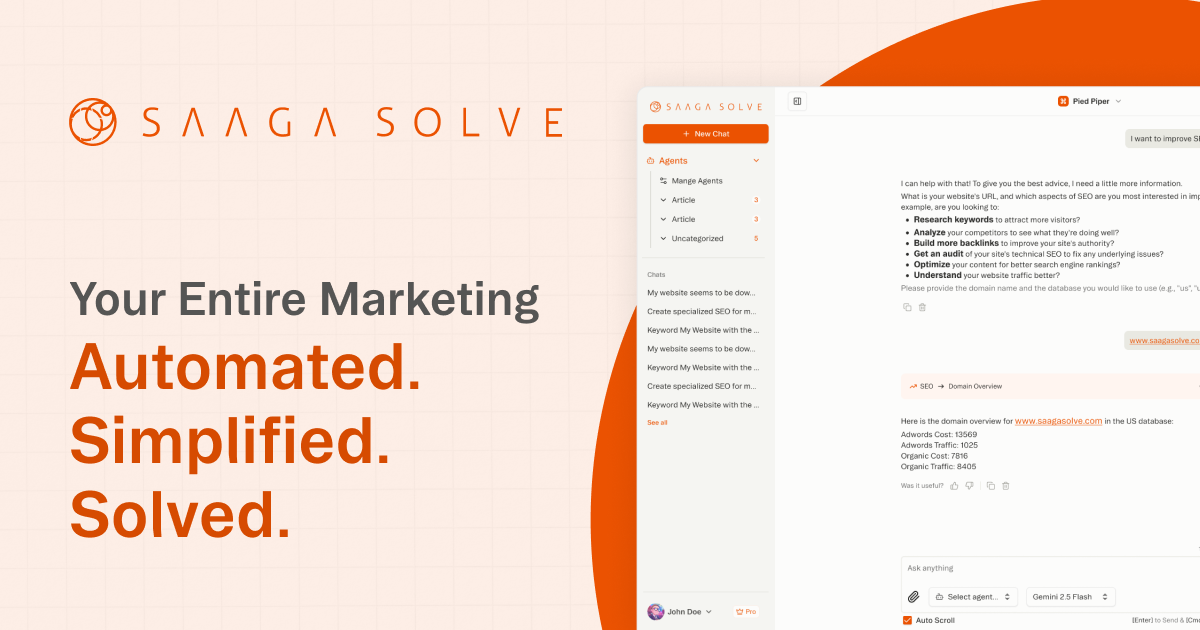
Your AI marketing automation partner. Dominate SEO & social media with intelligent insights, autonomous execution, and simplified growth.
Run a free AEO + signal audit for your domain.
AI Answer Engine Optimization (AEO)
List once. Convert intent from live AI conversations without heavy integration.
An AI marketing platform is a comprehensive software suite that uses artificial intelligence to automate, optimize, and personalize marketing campaigns. It leverages machine learning algorithms for predictive analytics, customer segmentation, and content generation across multiple channels. This technology enables businesses to achieve higher ROI, improved customer engagement, and more efficient resource allocation.
The platform first consolidates customer data from CRMs, websites, and advertising channels into a unified customer profile.
Machine learning models analyze historical data to predict customer behavior, optimal send times, and content preferences.
Campaigns are automatically executed and personalized in real-time based on individual customer signals and predicted outcomes.
Dynamically personalize product recommendations and email campaigns to increase average order value and customer lifetime value.
Automatically score and prioritize sales leads based on engagement data and firmographic signals to improve conversion rates.
Optimize ad spend in real-time across platforms by automatically adjusting bids and targeting parameters for maximum performance.
Generate and A/B test marketing copy, subject lines, and social media posts to determine the highest-performing variants.
Automate multi-touchpoint campaigns that guide prospects through personalized nurturing sequences based on their actions.
Bilarna evaluates every AI marketing platform provider using a proprietary 57-point AI Trust Score. This comprehensive assessment rigorously examines technical capabilities, implementation track records, data security compliance, and verified client testimonials. We continuously monitor provider performance and client satisfaction to ensure our marketplace lists only top-tier, reliable solutions.
Pricing varies significantly based on features, scale, and deployment model. Entry-level solutions start around $300/month, while enterprise platforms with full automation suites can exceed $5,000/month. Most providers offer tiered pricing based on contact volume or revenue.
Essential features include predictive analytics, multi-channel campaign orchestration, real-time personalization engines, and robust ROI measurement tools. You should also evaluate data integration capabilities, compliance certifications, and the quality of customer support offered.
Implementation typically takes 4 to 12 weeks, depending on data complexity and integration requirements. The process involves technical setup, data migration, team training, and initial campaign configuration before full operational use.
Traditional marketing software relies on manual rules and segmentation, while AI platforms use machine learning to autonomously discover patterns, predict outcomes, and optimize campaigns in real-time. This results in significantly higher personalization at scale and better resource efficiency.
Common pitfalls include underestimating data readiness requirements, choosing overly complex solutions for simple needs, and neglecting to verify the provider's actual AI capabilities versus marketing claims. Always request concrete case studies and trial the platform with your own data.
Yes, digital marketing strategies are highly effective for local businesses when tailored to target audiences in specific geographic areas. Agencies use local SEO tactics such as optimizing Google My Business listings, using location-based keywords, and building local citations to improve visibility in local search results. Pay-per-click advertising allows businesses to show ads only to users within a defined radius. Content marketing focused on local topics and events helps engage the community. Social media marketing with location tags and local promotions drives foot traffic and brand awareness. Email marketing segmented by location can nurture local leads. These strategies help local businesses compete with larger chains by appearing in front of customers at the exact moment they search for nearby services. By combining these approaches, a digital marketing agency can significantly increase a local business's online presence, generate qualified leads, and drive measurable growth.
Many multi-supplier purchasing platforms designed for veterinary clinics offer free access to veterinary hospitals and nonprofit organizations. These platforms aim to reduce ordering time and simplify the procurement process without charging clinics for usage. By aggregating multiple suppliers into one interface, clinics can efficiently manage orders and save on supplies without incurring additional fees. However, it is important for clinics to verify the specific terms and conditions of each platform, as some may have optional paid features or services.
Typically, free sharing economy platforms do not charge fees for trading items. These platforms are designed to facilitate exchanges without monetary transactions, often using virtual currencies or point systems to enable trades. This means users can give away or receive items without paying listing fees, transaction fees, or commissions. The absence of fees encourages more users to participate and makes the process accessible and cost-effective. However, it’s always advisable to review the specific platform’s terms and conditions to confirm that no hidden fees apply and to understand how their virtual currency system works.
Many creator marketing platforms offer flexible subscription models without mandatory minimum periods or binding contracts. Users can often cancel their subscriptions at any time through their account settings. This flexibility allows brands to adapt their marketing strategies as needed without long-term commitments. It is important to review the specific platform's terms to understand cancellation policies and any potential fees, but generally, these platforms aim to provide user-friendly and commitment-free access.
Yes, AI marketing platforms can generate professional model photoshoots without hiring models or studios. 1. Upload your product images or specify fashion items. 2. Choose model types, poses, and settings from AI options. 3. Customize styles to align with your brand identity. 4. Generate high-quality model photoshoots instantly. 5. Use the images for fashion marketing, e-commerce, or virtual try-ons without additional costs or logistics.
Yes, AI sales tools are designed to integrate seamlessly with existing CRM and marketing platforms such as Salesforce, Hubspot, Outreach, and Salesloft. This integration allows sales teams to access all relevant buyer signals, account scores, and outreach tasks directly within their familiar tools, eliminating the need to switch between multiple applications. It streamlines workflows by automatically queuing tasks and personalized emails, improving efficiency and reducing manual research. Additionally, synchronized updates across advertising, sales outreach, and CRM ensure coordinated engagement with prospects. This unified approach enhances team adoption, accelerates pipeline development, and ultimately drives better sales outcomes.
Yes, AI tools can fully automate digital marketing campaigns by managing keyword research, content creation, publishing, and performance tracking. 1. Use AI to identify trending keywords and topics. 2. Automatically generate SEO-optimized content tailored to your audience. 3. Schedule and publish content across multiple platforms from a single dashboard. 4. Automate backlink outreach and social media engagement. 5. Analyze campaign data in real-time to optimize strategies and improve ROI.
Yes, an AI-powered authoring platform can handle complex academic content effectively. To do so: 1. Use LaTeX or MathML support to create, edit, and validate complex STEM equations accurately. 2. Integrate with reference databases such as CrossRef, PubMed, and ORCID for real-time reference verification and linking. 3. Apply automatic formatting and style consistency to references and citations. 4. Edit text, tables, and figures with AI assistance to maintain accuracy. 5. Manage author queries and communication within the platform to resolve content issues. 6. Export structured, publication-ready outputs in XML and PDF formats. This ensures precise handling of technical academic content, improving quality and efficiency in scholarly publishing.
Yes, an integrated digital marketing agency typically offers flexible service models, allowing you to select specific services to match your project goals and budget. You are not required to purchase a full package. You can tailor your engagement to include only the services you need, such as SEO management, PPC advertising, social media marketing, branding, graphic design, web development, or video production. This a la carte approach ensures you pay only for the expertise required to achieve your objectives. The agency will create a custom proposal based on your defined scope, providing a cost-effective and targeted solution.
Yes, beginners can learn dance using an online platform with AI feedback. 1. Sign up on the platform designed specifically for beginners. 2. Access expert video dance tutorials created by experienced tutors. 3. Record your dance performance using the platform's tools. 4. Receive instant AI feedback that analyzes your dance and suggests corrections. 5. Practice regularly using the feedback to improve your skills.