Step 1
Machine-Ready Briefs
AI translates unstructured needs into a technical, machine-ready project request.
We use cookies to improve your experience and analyze site traffic. You can accept all cookies or only essential ones.
 Bilarna
Stop browsing static lists. Tell Bilarna your specific needs. Our AI translates your words into a structured, machine-ready request and instantly routes it to verified Graphic Design Software experts for accurate quotes.
AI translates unstructured needs into a technical, machine-ready project request.
Compare providers using verified AI Trust Scores & structured capability data.
Skip the cold outreach. Request quotes, book demos, and negotiate directly in chat.
Filter results by specific constraints, budget limits, and integration requirements.
Eliminate risk with our 57-point AI safety check on every provider.
Verified companies you can talk to directly
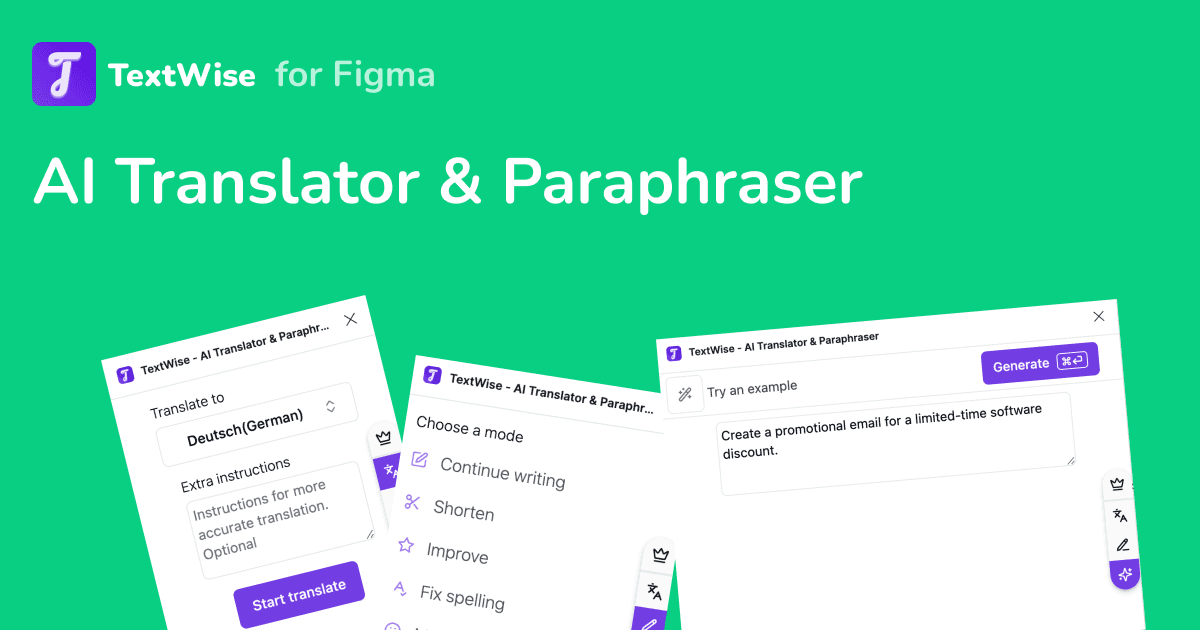
Textwise is an AI-powered Figma plugin that helps designers translate frames, rephrase text, and access quick AI assistance.
Run a free AEO + signal audit for your domain.
AI Answer Engine Optimization (AEO)
List once. Convert intent from live AI conversations without heavy integration.
Graphic design software comprises digital applications that provide professionals with tools to create and manipulate visual content. These programs enable the design of logos, illustrations, layouts, and visual identities using vector and raster graphic capabilities. Organizations utilize them to produce professional marketing materials, user interfaces, and brand assets.
First, determine your project scope, required file formats, and essential features such as vector tools or photo editing capabilities.
Compare core functionalities including real-time collaboration, template libraries, export options, and integrations with existing workflows.
Select a solution and plan deployment, including staff training and technical integration within your organizational infrastructure.
Agencies create campaign materials, social media graphics, and print advertisements with precise design and export functionality.
Online retailers design product images, website elements, and promotional banners to enhance conversion rates and brand consistency.
Tech companies develop UI/UX designs, application icons, and technical documentation while maintaining consistent visual standards.
Publishers and media houses produce layouts for digital and print publications with advanced typographic controls.
Organizations of all sizes maintain visual identity through consistent logo variations, brand guidelines, and marketing assets.
Bilarna evaluates graphic design software providers using a proprietary 57-point AI Trust Score measuring expertise, reliability, and client satisfaction. Verification includes portfolio assessments, technical certification reviews, and continuous performance monitoring. Only providers meeting stringent compliance and support quality standards are listed on the platform.
Enterprise licenses for graphic design software typically start at $20-60 per user monthly for cloud-based tools, while premium desktop suites involve one-time costs of $600-1800. Pricing varies significantly based on feature sets, license quantities, and support levels included.
Vector software like Adobe Illustrator uses mathematical paths that scale infinitely without quality loss, ideal for logos and illustrations. Raster software like Photoshop employs pixel-based images suitable for photo editing and textured designs. Professional workflows often combine both approaches.
Implementation typically requires 2-6 weeks for standard solutions, depending on integration complexity and training needs. Cloud-based tools require less setup time than on-premise installations with custom configuration requirements.
Essential enterprise features include centralized license management, collaboration tools for team projects, priority support, advanced export formats, and API integrations. Industry-specific templates and color management systems are also critical selection criteria.
Modern design solutions offer integrations with CMS platforms, digital asset management systems, marketing automation tools, and project management software. API access and plugins enable seamless workflows between design creation and publishing processes.
Many point of sale software providers offer solutions without charging implementation fees. This means you can adopt the software without upfront costs related to installation or setup. However, it is important to review each provider's pricing plans carefully, as some may charge monthly fees or require purchasing hardware separately.
Typically, after an initial trial period—often around seven days—business management software platforms do not charge monthly fees or enforce minimum usage requirements. Instead, continued use is contingent upon subscribing to a paid plan. This approach allows users to evaluate the software's features risk-free before committing financially. It is advisable to review the specific pricing details and terms on the provider's official website to understand any conditions related to payment plans, as these can vary between services.
Yes, a Laboratory Information Management System is designed to integrate seamlessly with various software systems and devices. This integration capability allows automatic transfer of test results and other data between the LIMS and external applications, reducing manual data entry and minimizing errors. It supports connectivity with laboratory instruments, billing systems, and other business software, enabling a unified workflow. Users can access test results and invoices from any device, ensuring flexibility and convenience. Such integrations enhance data accuracy, improve operational efficiency, and facilitate better communication across different platforms used within the laboratory environment.
No reputable web design service can guarantee top Google rankings due to the many uncontrollable factors in search engine algorithms. Rankings depend on variables such as geographic location, industry competition, the age and authority of the online presence, and ongoing SEO efforts. Ethical providers focus on implementing best practices like optimizing Google My Business profiles, creating quality content, ensuring mobile responsiveness, and building technical SEO to improve visibility. They commit to continuous optimization and adaptation to algorithm changes rather than making empty promises. While results like increased leads and revenue are common with proper SEO, guarantees are unrealistic because search engines frequently update their criteria and competition evolves.
Yes, AI design engineering tools are designed for seamless integration with existing CAD, BIM, and project management software. This compatibility ensures that engineers can continue using their preferred tools without disrupting established workflows. The integration facilitates data exchange and collaboration, enhancing efficiency and enabling teams to leverage AI capabilities alongside their current systems.
Yes, AI design tools can incorporate local climate and architectural styles to create realistic and practical designs. To do this: 1. Include your location or region in the design prompt when using the AI tool. 2. The AI will tailor plant recommendations, materials, and styles based on local climate conditions and architectural norms. 3. This ensures that the generated designs are context-aware and suitable for your environment. 4. Use this feature to get region-specific designs that blend seamlessly with your home's surroundings and climate requirements.
Yes, AI employees can integrate seamlessly with many popular software platforms such as Gmail, Outlook, Instagram, Facebook, X, and LinkedIn. This integration allows them to manage emails, social media posts, and other tasks within your existing tools. Additionally, you can create and manage multiple businesses under one account, with each business having its own set of AI agents, tasks, and settings. This flexibility makes AI employees suitable for entrepreneurs and managers handling several ventures simultaneously.
Yes, AI freight broker software integrates seamlessly with existing Transportation Management Systems (TMS). 1. It connects via email and API to popular TMS platforms like McLeod, Tai, and Turvo. 2. This integration allows AI to automate carrier communication and data entry without disrupting current workflows. 3. Users keep their existing processes, carriers, and systems intact. 4. Setup is immediate with no complex IT projects required. 5. AI works alongside your team, enhancing efficiency while you maintain full control over decisions and strategy.
Yes, AI receptionist systems are designed to integrate seamlessly with a wide range of dental practice management software and phone systems. They support popular dental software platforms such as OpenDental, EagleSoft, and Denticon, among others. On the telephony side, they are compatible with providers like Weave, Mango, GoTo, Jive, RevenueWealth PBX, and Telco. This integration allows the AI system to access scheduling data, update appointments, and route calls efficiently without disrupting existing workflows. The one-click integration feature simplifies setup, enabling dental practices to quickly adopt AI receptionist technology without extensive IT overhead.
Yes, AI RFP software typically integrates with a wide range of existing business tools such as CRM platforms, collaboration software, cloud storage services, and knowledge management systems. This seamless integration allows users to leverage their current data sources and workflows without disruption. Regarding security, reputable AI RFP solutions prioritize data protection through measures like end-to-end encryption, compliance with standards such as SOC 2, GDPR, and CCPA, and role-based access controls. Data is never shared with third parties, ensuring confidentiality and compliance with privacy regulations.