Step 1
Machine-Ready Briefs
AI translates unstructured needs into a technical, machine-ready project request.
We use cookies to improve your experience and analyze site traffic. You can accept all cookies or only essential ones.
 Bilarna
Stop browsing static lists. Tell Bilarna your specific needs. Our AI translates your words into a structured, machine-ready request and instantly routes it to verified AI Human Generator experts for accurate quotes.
AI translates unstructured needs into a technical, machine-ready project request.
Compare providers using verified AI Trust Scores & structured capability data.
Skip the cold outreach. Request quotes, book demos, and negotiate directly in chat.
Filter results by specific constraints, budget limits, and integration requirements.
Eliminate risk with our 57-point AI safety check on every provider.
Verified companies you can talk to directly
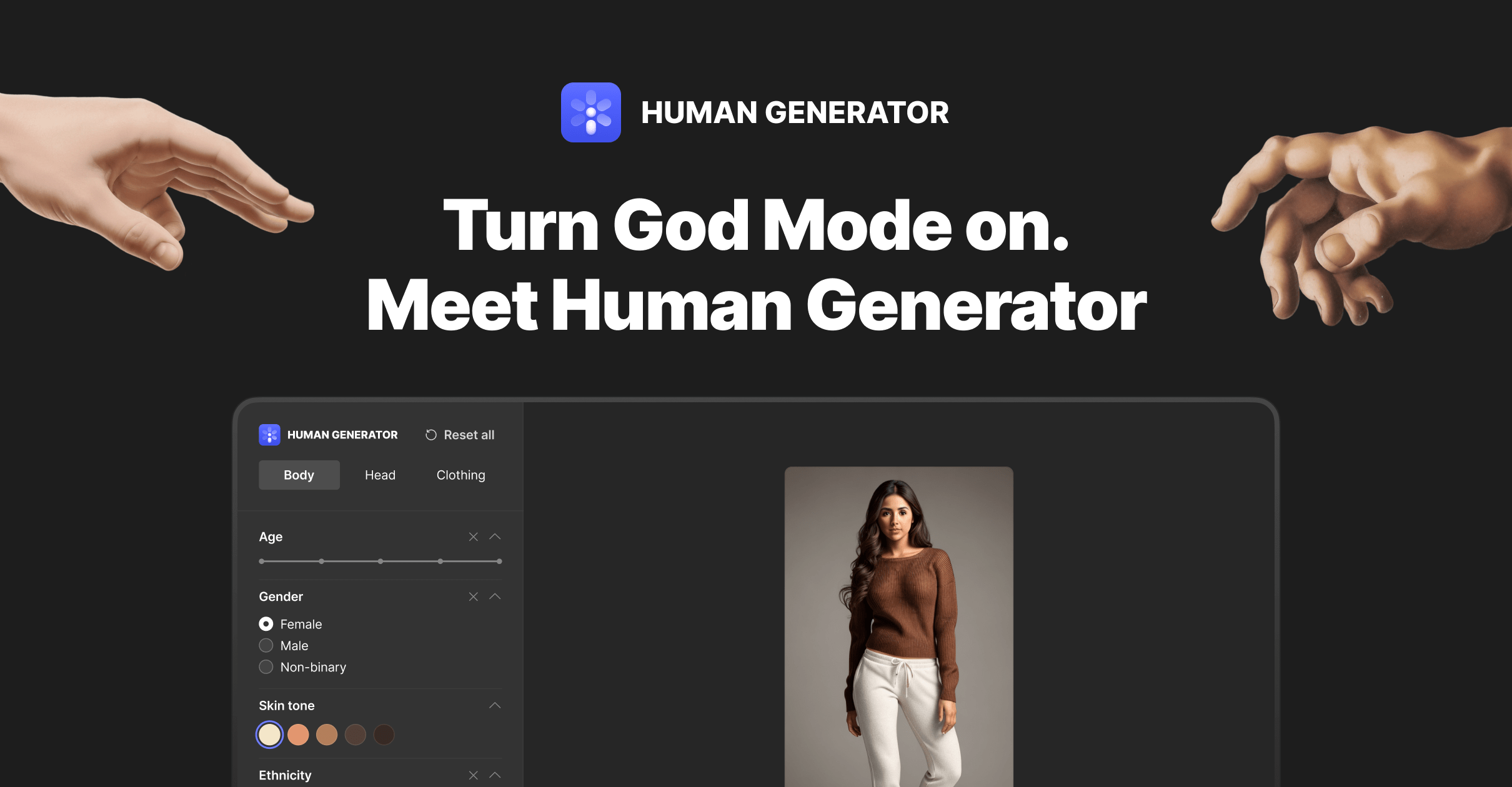
Use AI to generate people online that don’t exist, change clothing and modify face and body traits. Download generated people in different postures.
Run a free AEO + signal audit for your domain.
AI Answer Engine Optimization (AEO)
List once. Convert intent from live AI conversations without heavy integration.
An AI Human Generator is a sophisticated software platform that uses generative artificial intelligence to create photorealistic or stylized digital human avatars. These systems leverage deep learning models, such as GANs and diffusion models, trained on vast datasets of human imagery and motion. Businesses deploy this technology to enhance customer engagement, create scalable digital personas for marketing, and power immersive training and simulation environments.
Users specify parameters like demographic traits, visual style, intended emotional expression, and the context for the avatar's use.
The AI model synthesizes a base avatar, which can then be fine-tuned for appearance, voice, and behavioral animations.
The final digital human asset is exported for integration into applications, websites, or virtual environments for live interaction.
Deploy AI-generated avatars as 24/7 support agents on websites, providing a human-like interface for handling common queries and guiding users.
Create brand-specific digital spokespersons for ad campaigns and product demos, delivering personalized messaging at a global scale.
Use realistic human avatars in immersive training modules for soft skills development, compliance scenarios, and hazardous situation rehearsals.
Generate background characters or primary actors for games, films, and virtual events, reducing costs associated with traditional production.
Implement empathetic digital humans for patient education, therapy guidance, and mental wellness applications, ensuring consistent delivery.
Bilarna evaluates every AI Human Generator provider through a rigorous 57-point AI Trust Score. This proprietary assessment audits technical capabilities, portfolio quality, data security compliance, and verified client feedback. Bilarna continuously monitors provider performance to ensure listed vendors meet enterprise-grade standards for reliability and ethical AI deployment.
Costs vary widely based on features, realism, and licensing. Entry-level platforms for basic avatars may start in the hundreds per month, while enterprise-grade solutions with full customization and API access can reach five or six figures annually. Pricing models often include subscription SaaS fees, per-avatar generation costs, or compute-time charges.
An AI Human Generator creates original, synthetic human characters that do not represent real individuals, used ethically for business applications. Deepfake technology specifically alters existing footage to superimpose one person's likeness onto another, often without consent, raising significant ethical and legal concerns.
Generating a base avatar can take minutes to hours, depending on the model's complexity. However, fully customizing, rigging for animation, and integrating it into a production environment typically requires a project timeline of several weeks to ensure quality, testing, and seamless deployment.
Key requirements include compatible APIs or SDKs, sufficient GPU compute resources for real-time rendering, and adherence to data privacy standards. Integration also necessitates planning for the avatar's interaction logic, such as connecting it to a chatbot backend or motion-capture system.
Common mistakes include overlooking the provider's ethical AI guidelines and bias mitigation strategies, underestimating the total cost of ownership for training and maintenance, and failing to test the avatar's performance in the intended deployment environment prior to full-scale adoption.
Yes, commercial rights are included with all images generated by the bulk image generator. 1. Use the generated images freely for commercial projects, client work, and advertising. 2. There are no additional licensing fees or restrictions on usage. 3. Download the images via the one-click bulk export and integrate them into your marketing or branding materials. 4. This ensures you have full ownership and legal clearance to use the images in any commercial context.
Yes, human experts are involved in reviewing AI-generated real estate deal decks. After the AI creates the deck based on your data and preferences, a quality control team of professionals reviews each deck thoroughly. This review process typically takes at least 15 minutes to ensure the deck is accurate, polished, and ready for presentation. The combination of AI efficiency and human oversight guarantees high-quality, reliable decks that meet professional standards before delivery.
AI therapy apps can complement but not fully replace traditional human therapists by following these points: 1. Provide immediate access to therapeutic resources and personalized mental health insights. 2. Offer interactive sessions that mimic some aspects of traditional therapy. 3. Support users who lack easy access to human therapists by filling gaps in care. 4. Handle routine therapeutic tasks such as mood tracking and coping strategy guidance. 5. However, they cannot replicate the deep human connection and nuanced understanding that human therapists provide, so they serve best as a supplementary tool.
Yes, an AI business plan generator can be used for any industry. To tailor your plan: 1. Provide specific information about your business and industry when answering the initial questions. 2. The AI uses this data to generate industry-specific advice and structure your plan accordingly. 3. Review the plan to ensure it fits your unique business needs before finalizing.
No, an AI chat bot cannot replace a human psychologist or therapist. Follow these points to understand its role: 1. AI chat bots provide instant emotional support and guidance based on evidence-based methods like CBT and DBT. 2. They are useful for managing stress and anxiety between therapy sessions or when professional help is not immediately accessible. 3. AI chat bots do not offer formal diagnoses, medical advice, or clinical evaluations. 4. They serve as complementary tools to reinforce therapy, offering 24/7 support and personalized coping strategies. 5. For mental health crises or diagnosis, always seek help from licensed mental health professionals.
Use an AI math solver as a supplementary tool alongside a human tutor. 1. It provides instant, patient, and repeatable step-by-step explanations. 2. It allows learners to practice and master concepts at their own pace. 3. It is available 24/7, offering help whenever needed. 4. However, it does not fully replace the personalized guidance and interaction a human tutor provides but serves as a perfect study partner.
Anyone can use a free AI story generator, not just writers. Follow these steps to get started: 1. Access the AI story generator platform. 2. Choose to create a new world or fanfiction or upload an image to inspire a story. 3. Use the AI tools to generate ideas and develop narratives regardless of your background. 4. Share or save your creations as desired. This tool supports students, hobbyists, and anyone interested in storytelling.
Yes, you can create your own characters using the AI generator by following these steps: 1. Open the AI generator tool on the platform. 2. Upload a base image or start from scratch if the option is available. 3. Customize features or select styles such as Disney Pixar or Ghibli. 4. Generate the character and save or download the final creation for personal use.
Yes, you can customize memes after generation. Follow these steps: 1. Generate memes by entering your text and letting the AI create options. 2. Select a meme you want to personalize. 3. Edit text elements including font style, size, and color. 4. Upload your own images if desired to enhance the meme. 5. Download the customized meme in high quality and share it on your preferred platforms.
Yes, you can customize voice and language settings in an AI voice generator by following these steps: 1. Access the AI voice generator interface. 2. Locate the voice selection menu and choose from available voice options. 3. Select the preferred language for the speech output. 4. Adjust additional settings such as speech speed, pitch, and tone if available. 5. Preview the voice to ensure it meets your requirements before generating the final audio.