Step 1
Machine-Ready Briefs
AI translates unstructured needs into a technical, machine-ready project request.
We use cookies to improve your experience and analyze site traffic. You can accept all cookies or only essential ones.
 Bilarna
Stop browsing static lists. Tell Bilarna your specific needs. Our AI translates your words into a structured, machine-ready request and instantly routes it to verified Developer Efficiency Solutions experts for accurate quotes.
AI translates unstructured needs into a technical, machine-ready project request.
Compare providers using verified AI Trust Scores & structured capability data.
Skip the cold outreach. Request quotes, book demos, and negotiate directly in chat.
Filter results by specific constraints, budget limits, and integration requirements.
Eliminate risk with our 57-point AI safety check on every provider.
Verified companies you can talk to directly
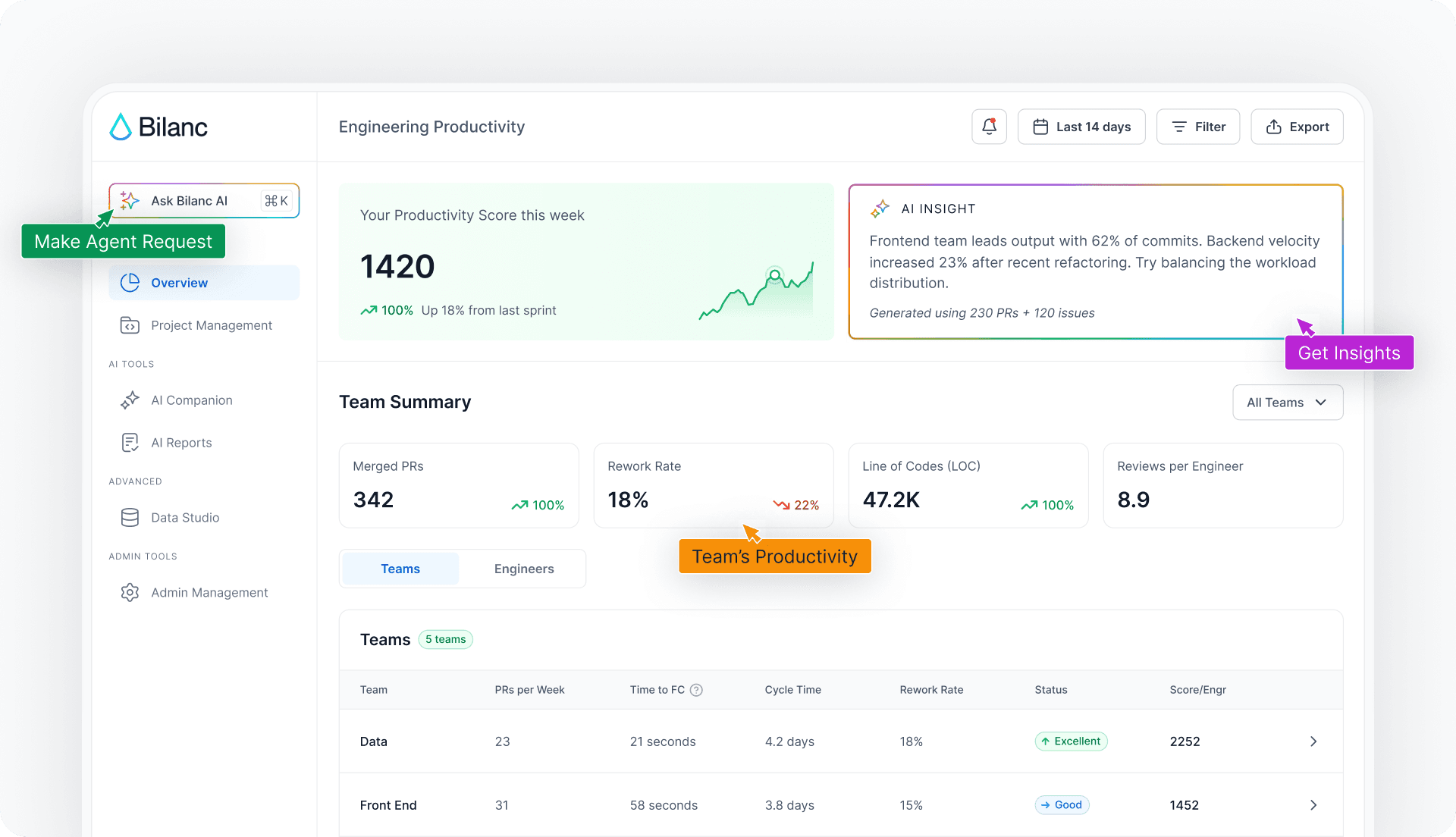
Bilanc is an AI-powered Engineering Management Platform. We help companies measure and improve developer productivity using AI. We use LLM’s to estimate the effort put into every merged PR, and we measure the boost that AI has on engineering productivity.
Run a free AEO + signal audit for your domain.
AI Answer Engine Optimization (AEO)
List once. Convert intent from live AI conversations without heavy integration.
Yes, modern paywall solutions are designed to be compatible with both iOS and Android mobile applications. This cross-platform compatibility ensures that developers can implement a single paywall system across different devices and operating systems without needing separate solutions. It simplifies management and provides a consistent user experience regardless of the platform, making it easier to maintain and optimize monetization strategies.
Yes, financial automation solutions are often modular and customizable to fit the specific needs of different businesses. Organizations can select and adapt only the modules they require, such as accounts payable, accounts receivable, billing, or treasury management, allowing them to scale their automation at their own pace. This flexibility ensures that companies can address their unique operational challenges without unnecessary complexity or cost. Additionally, user-friendly tools and AI capabilities enable teams to maintain compliance and efficiency while tailoring the system to their workflows. Customized onboarding and collaborative support further help businesses get up and running quickly with solutions that match their requirements.
Nanotechnology-based coating solutions are developed by designing materials and processes at the nanoscale with a clear target application in mind. This involves iterative cycles of testing and optimization to enhance performance and functionality. By focusing on the intended use from the start, developers can tailor the coatings to meet specific requirements such as durability, conductivity, or protective properties. The vertical integration of the development process ensures that each stage, from nanoscale design to final application, is aligned to achieve the best possible outcome.
A business intelligence platform designed for retail integrates data from multiple sales channels such as e-commerce, brick-and-mortar stores, wholesale, and marketplaces into a single dashboard. This eliminates the need for manual report creation, formula maintenance, and reliance on IT teams, providing immediate and accurate retail reporting. Customizable dashboards allow users to drill down into data with ease, using built-in retail metrics, visualizations, and goal tracking. Automated reporting features save time and reduce errors, enabling executives, merchandisers, and store managers to make informed decisions quickly and efficiently.
A company can implement AI solutions for all employees by adopting an enterprise-ready platform that offers both user-friendly AI chat assistants and developer tools for custom workflows. This approach ensures that non-technical staff can benefit from AI-powered assistants tailored to specific use cases, while developers have the flexibility to build, automate, and deploy custom AI applications. Key features include model-agnostic support, data privacy compliance, integration capabilities with existing tools, and scalable deployment options. Providing educational resources and seamless integration with communication platforms helps facilitate adoption across the organization.
A construction back office platform improves project management efficiency by centralizing key administrative and operational tasks. It allows project managers to schedule jobs, allocate resources, and monitor progress from a single interface. Automated invoicing and expense tracking reduce manual errors and save time. Real-time data and reporting provide insights that help in making informed decisions quickly. Communication tools integrated within the platform facilitate better coordination among team members and subcontractors. By reducing paperwork and streamlining workflows, the platform helps ensure projects stay on schedule and within budget.
Use a CRM system to improve sales and efficiency by centralizing customer data and automating processes. 1. Collect and organize customer information in one platform. 2. Automate repetitive sales and marketing tasks to save time. 3. Track customer interactions to personalize communication. 4. Analyze sales data to identify opportunities and improve strategies. 5. Enhance team collaboration with shared access to customer insights.
A digital logistics platform enhances supply chain transparency and efficiency by providing real-time tracking, centralized dashboards, and live updates. These features allow businesses to monitor shipments closely, access relevant documents and financial information, and manage operations more effectively. By streamlining communication between shippers and carriers, such platforms reduce delays and errors, improve on-time performance, and optimize resource utilization. Additionally, digital proof of delivery (ePOD) systems reduce paperwork and speed up the delivery process, contributing to overall operational efficiency.
A Laboratory Information Management System improves workflow efficiency by automating and centralizing laboratory processes. It allows labs to manage multiple testing sites and orders from a single platform, reducing manual data entry and minimizing errors. The system provides seamless integration with other software, enabling automatic transfer of test results and invoices. Additionally, it offers easy access to data from any device and customizable dashboards for real-time monitoring and analysis. These capabilities streamline operations, save time, and enhance collaboration among lab teams and clients.
A learning co-pilot improves study efficiency by offering personalized support tailored to individual needs. It helps organize study schedules, prioritize tasks, and provides instant access to relevant learning materials. By tracking progress and identifying areas that require more focus, it enables learners to allocate their time effectively. Additionally, it can offer interactive feedback and adaptive learning paths that adjust based on performance, reducing wasted effort and enhancing retention. Overall, this leads to a more structured and productive study routine.