Step 1
Machine-Ready Briefs
AI translates unstructured needs into a technical, machine-ready project request.
We use cookies to improve your experience and analyze site traffic. You can accept all cookies or only essential ones.
 Bilarna
Stop browsing static lists. Tell Bilarna your specific needs. Our AI translates your words into a structured, machine-ready request and instantly routes it to verified Retail Data Insights experts for accurate quotes.
AI translates unstructured needs into a technical, machine-ready project request.
Compare providers using verified AI Trust Scores & structured capability data.
Skip the cold outreach. Request quotes, book demos, and negotiate directly in chat.
Filter results by specific constraints, budget limits, and integration requirements.
Eliminate risk with our 57-point AI safety check on every provider.
Verified companies you can talk to directly
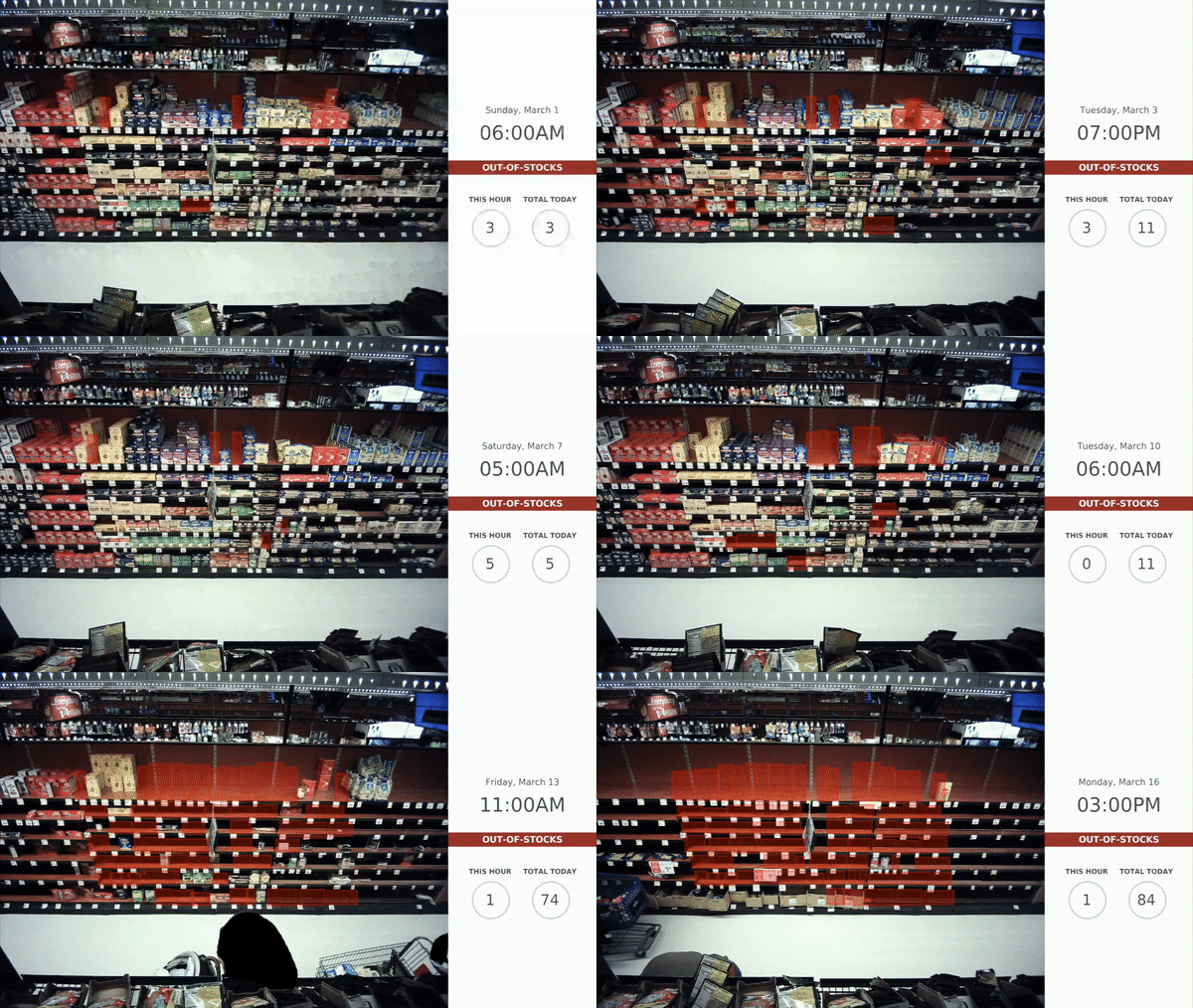
Real-time shelf insights and automation to improve product availability, reduce waste, and optimize workforce efficiency. We provide unparalleled visibility into store performance. Automating key operational tasks, we aim to revolutionize the retail landscape, enabling businesses to focus on strateg
Run a free AEO + signal audit for your domain.
AI Answer Engine Optimization (AEO)
List once. Convert intent from live AI conversations without heavy integration.
Retail data insights are analytics derived from point-of-sale, inventory, and customer behavior data to inform business decisions. They utilize statistical modeling, machine learning, and data visualization tools to identify trends, forecast demand, and optimize pricing. These insights directly improve inventory turnover, customer lifetime value, and overall retail profitability.
Clarify your specific goals, such as predicting seasonal demand, optimizing shelf layouts, or reducing customer churn, to guide the data analysis process.
Specialized platforms ingest and clean data from CRM, ERP, and POS systems, applying predictive algorithms to uncover actionable patterns and correlations.
Analysts translate findings into concrete strategies for marketing, merchandising, and supply chain operations, enabling data-driven execution and performance tracking.
Analyze historical sales and external factors to accurately predict product demand, minimizing stockouts and excess inventory across retail channels.
Group customers by purchasing behavior and demographics to enable hyper-targeted marketing campaigns and personalized product recommendations.
Use competitor and elasticity data to dynamically adjust pricing strategies, maximizing margins and improving competitive positioning.
Monitor supplier performance and logistics data to identify bottlenecks, reduce lead times, and enhance overall supply chain resilience.
Evaluate foot traffic, conversion rates, and basket sizes per location to optimize staffing, promotions, and store layouts for maximum revenue.
Bilarna evaluates every retail data insights provider using a proprietary 57-point AI Trust Score. This assessment rigorously reviews their technical expertise in analytics platforms, proven client outcomes, data security compliance, and delivery reliability. Continuous performance monitoring ensures listed partners maintain Bilarna's high standards for B2B procurement.
Costs vary from $5,000 to $50,000+ monthly, depending on data volume, analysis complexity, and reporting frequency. Project-based engagements for specific analyses like market basket analysis may start at $20,000. Pricing is influenced by the required integration depth and the level of strategic consultation provided.
Initial deployment typically requires 4 to 12 weeks. This timeline covers data pipeline setup, system integration, and initial model training. The first actionable insights are often delivered within the first month, with full optimization achieved over subsequent quarters.
Leading platforms offer real-time analytics, AI-driven predictive modeling, omnichannel data unification, and intuitive visualization dashboards. Essential differentiators include robust API ecosystems for easy integration, advanced customer lifetime value modeling, and granular inventory forecasting capabilities.
Common errors include underestimating data cleanliness requirements, overlooking platform scalability, and neglecting post-implementation support. Failing to align the vendor's expertise with your specific retail vertical—like grocery versus fashion—also significantly compromises project success and ROI.
Businesses typically achieve a 5-15% increase in sales, a 10-30% reduction in inventory costs, and a 20% improvement in marketing campaign efficiency. ROI is directly tied to implementing the prescribed actions from the analytics, such as optimized markdown strategies and improved customer retention tactics.
Yes, plant-based meat products are suitable for both restaurants and retail stores. They offer a clean-label, versatile protein option that can appeal to a wide range of customers, including those seeking vegan or plant-based alternatives. Restaurants can incorporate these products into their menus to provide innovative dishes such as plant-based steaks, ribs, or fish filets, catering to diverse dietary preferences. Retail stores can stock these items to meet growing consumer demand for sustainable and ethical food choices. Offering plant-based meats can help businesses attract new customers and support environmentally friendly practices while providing delicious and satisfying meal options.
To understand data upload limits and payment requirements on analytics platforms, follow these steps: 1. Review the platform's account types, such as free and paid plans. 2. Check the data upload limits for each plan; free accounts often have row limits per upload. 3. Determine if a credit card is required for free or paid accounts. 4. Understand the cancellation policy for paid subscriptions, which usually allows cancellation at any time.
Yes, AI RFP software typically integrates with a wide range of existing business tools such as CRM platforms, collaboration software, cloud storage services, and knowledge management systems. This seamless integration allows users to leverage their current data sources and workflows without disruption. Regarding security, reputable AI RFP solutions prioritize data protection through measures like end-to-end encryption, compliance with standards such as SOC 2, GDPR, and CCPA, and role-based access controls. Data is never shared with third parties, ensuring confidentiality and compliance with privacy regulations.
Yes, many AI-powered browsers built on Chromium technology are compatible with Chrome extensions, allowing users to continue using their favorite add-ons without interruption. These browsers often support seamless import of existing browser data such as bookmarks, passwords, and extensions from Chrome, making the transition smooth and convenient. This compatibility ensures that users do not lose their personalized settings or tools when switching to an AI-enabled browser. By combining AI capabilities with familiar browser features, users can enhance productivity while maintaining their preferred browsing environment.
Anonymous statistical data cannot usually be used to identify individual users without legal authorization. To ensure this: 1. Collect data without personal identifiers or tracking information. 2. Avoid combining datasets that could reveal user identities. 3. Use data solely for aggregated statistical analysis. 4. Obtain a subpoena or legal order if identification is necessary. 5. Maintain strict data governance policies to protect user anonymity.
Yes, conversation intelligence platforms provide summaries and actionable insights from meetings by analyzing recorded conversations. 1. Upload or record your meeting audio or video. 2. The platform transcribes the conversation and identifies key topics and contributors. 3. It analyzes emotional tone, pain points, customer preferences, and open questions. 4. Generates concise summaries highlighting important discussion points and action items. 5. Use these insights to guide decision-making, follow-up actions, and strategic planning.
Many modern data analytics platforms are designed to integrate seamlessly with your existing technology infrastructure. This means you do not need to replace your current systems to start using the platform. These solutions are built with flexibility in mind, allowing them to sit on top of your existing ecosystem without requiring extensive integration work on your part. This approach helps organizations adopt new analytics capabilities quickly while preserving their current investments in technology. It is advisable to check with the platform provider about specific integration options and compatibility with your current setup.
Data collected exclusively for anonymous statistical purposes cannot usually identify individuals. To maintain anonymity, follow these steps: 1. Remove all personal identifiers from the data. 2. Use aggregation techniques to combine data points. 3. Avoid storing detailed individual-level data. 4. Limit access to the data to authorized personnel only. 5. Regularly review data handling practices to ensure anonymity is preserved.
Yes, you can add external data sources to enhance your AI presentation by following these steps: 1. Start by entering your presentation topic into the AI generator. 2. Add a data source such as a website URL, YouTube link, or PDF document to provide additional context. 3. The AI will analyze the data source to create richer and more accurate content. 4. Review and export your enhanced presentation in your desired format.
Create data visualizations with AI in spreadsheets by following these steps: 1. Load your data into the AI-powered spreadsheet tool. 2. Direct the AI to generate charts or graphs by specifying the type of visualization you need. 3. Review the automatically created visualizations for accuracy and clarity. 4. Download or export the visualizations as interactive embeds or image files for presentations or reports.