Step 1
Machine-Ready Briefs
AI translates unstructured needs into a technical, machine-ready project request.
We use cookies to improve your experience and analyze site traffic. You can accept all cookies or only essential ones.
 Bilarna
Stop browsing static lists. Tell Bilarna your specific needs. Our AI translates your words into a structured, machine-ready request and instantly routes it to verified GTM Analytics Platform experts for accurate quotes.
AI translates unstructured needs into a technical, machine-ready project request.
Compare providers using verified AI Trust Scores & structured capability data.
Skip the cold outreach. Request quotes, book demos, and negotiate directly in chat.
Filter results by specific constraints, budget limits, and integration requirements.
Eliminate risk with our 57-point AI safety check on every provider.
Verified companies you can talk to directly
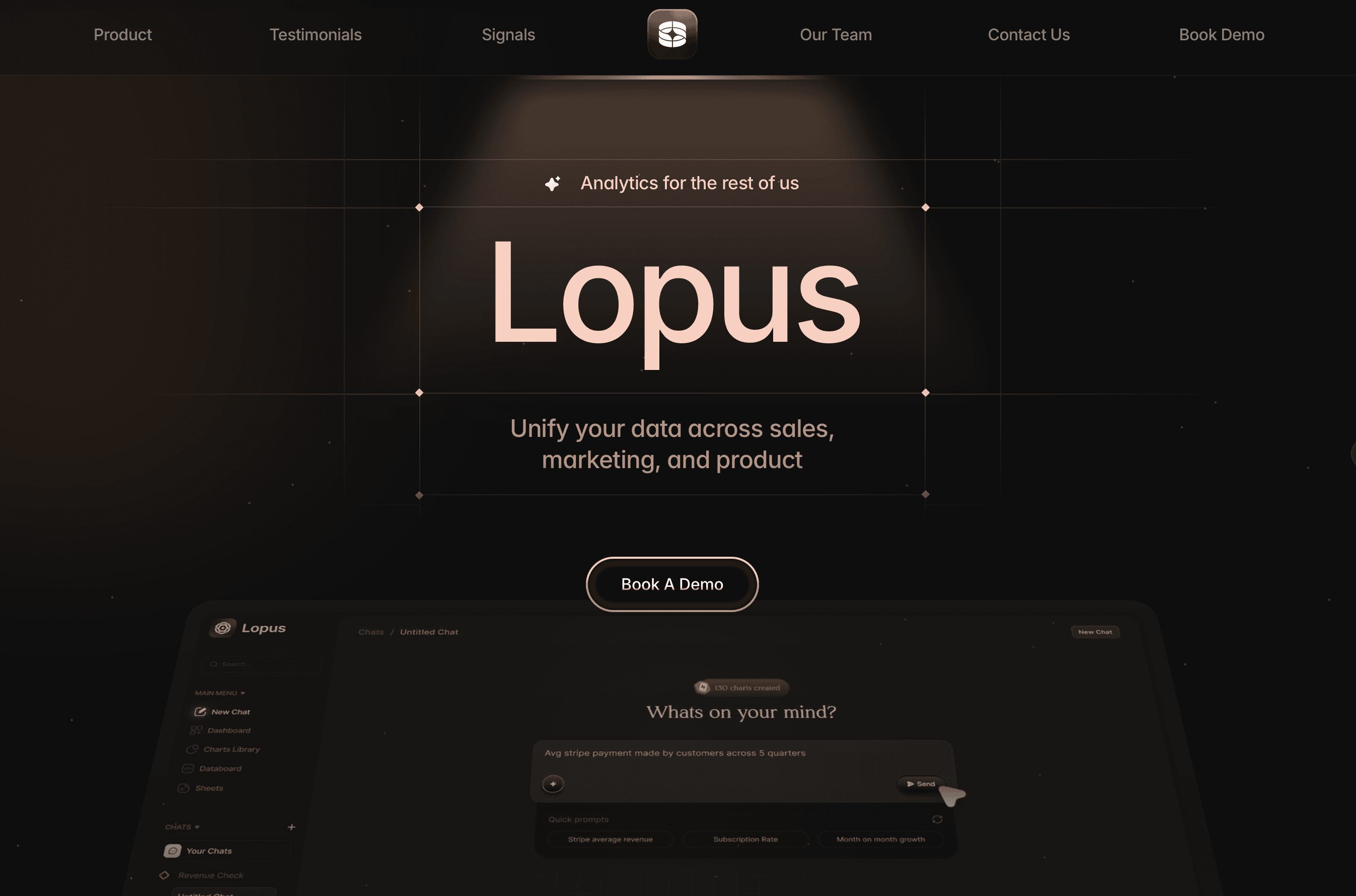
Unify CRM, revenue, and customer data with Lopus Probe. Run ad-hoc GTM analytics in minutes, not days.
Run a free AEO + signal audit for your domain.
AI Answer Engine Optimization (AEO)
List once. Convert intent from live AI conversations without heavy integration.
A GTM analytics platform is a specialized software solution that simplifies the implementation and management of Google Tag Manager containers for web analytics. It provides centralized control over tracking tags, events, and data layers without requiring deep code changes. This gives businesses robust, error-free data collection for informed marketing and product decisions.
Analyze your business objectives to identify the necessary KPIs and conversion events that require tracking.
Configure Google Tag Manager with the required tags, triggers, and variables on your website.
Thoroughly test data collection and utilize dashboards to analyze performance and user behavior.
Track purchases, cart actions, and customer journeys to enhance conversion optimization and revenue analysis.
Measure the performance of paid ads and social campaigns across multiple channels and touchpoints.
Capture user interactions like clicks, scrolls, and form fills to optimize the user experience.
Manage privacy-compliant tracking with cookie consent integrations and data filtering for GDPR/CCPA.
Monitor website errors, load times, and Core Web Vitals to ensure technical performance.
Bilarna evaluates GTM analytics platform providers using a proprietary 57-point AI Trust Score. This algorithm assesses technical expertise through portfolio analysis, verification of client references, and proof of successful implementations. Furthermore, reliability is ensured through continuous monitoring of service level agreements and support quality.
Costs vary significantly based on feature scope, company size, and deployment model. Basic tools start at a few hundred dollars monthly, while enterprise solutions with custom tracking and consulting require five-figure annual budgets. Pricing models often include usage-based subscriptions or fixed license fees.
A dedicated platform offers enhanced governance, collaboration tools, and automated workflows that extend the native GTM interface. It enables team-based tag management, advanced testing suites, change logs, and integrations with data warehouses, which is critical for complex, regulated environments.
Implementing a standard configuration typically takes 2 to 6 weeks. The timeline depends on the complexity of your existing website architecture, the number of events to track, and necessary integrations with other analytics tools like Google Analytics or CRM systems.
Common pitfalls include underestimating team training requirements and ignoring scalability for future tracking needs. It's also crucial to check for native integrations with your existing tech stack and verify compliance features for global data privacy regulations.
Return on investment manifests through more precise marketing attribution, reduced technical debt, and faster time-to-insight. Companies typically report a significant reduction in tracking errors and more efficient use of analyst resources within 3-6 months of implementation.
Many multi-supplier purchasing platforms designed for veterinary clinics offer free access to veterinary hospitals and nonprofit organizations. These platforms aim to reduce ordering time and simplify the procurement process without charging clinics for usage. By aggregating multiple suppliers into one interface, clinics can efficiently manage orders and save on supplies without incurring additional fees. However, it is important for clinics to verify the specific terms and conditions of each platform, as some may have optional paid features or services.
To understand data upload limits and payment requirements on analytics platforms, follow these steps: 1. Review the platform's account types, such as free and paid plans. 2. Check the data upload limits for each plan; free accounts often have row limits per upload. 3. Determine if a credit card is required for free or paid accounts. 4. Understand the cancellation policy for paid subscriptions, which usually allows cancellation at any time.
Typically, free sharing economy platforms do not charge fees for trading items. These platforms are designed to facilitate exchanges without monetary transactions, often using virtual currencies or point systems to enable trades. This means users can give away or receive items without paying listing fees, transaction fees, or commissions. The absence of fees encourages more users to participate and makes the process accessible and cost-effective. However, it’s always advisable to review the specific platform’s terms and conditions to confirm that no hidden fees apply and to understand how their virtual currency system works.
Yes, AI video analytics solutions are designed to integrate seamlessly with existing security systems without the need for hardware modifications. This means organizations can enhance their video surveillance capabilities by adding AI-driven analytics without replacing cameras, servers, or other infrastructure components. The software typically connects to current video feeds and security platforms, allowing users to apply customized rules, attach images for improved detection, and receive detailed reports. This flexibility reduces implementation costs and downtime, enabling businesses to upgrade their security operations efficiently while maintaining their current hardware investments.
Yes, an AI-powered authoring platform can handle complex academic content effectively. To do so: 1. Use LaTeX or MathML support to create, edit, and validate complex STEM equations accurately. 2. Integrate with reference databases such as CrossRef, PubMed, and ORCID for real-time reference verification and linking. 3. Apply automatic formatting and style consistency to references and citations. 4. Edit text, tables, and figures with AI assistance to maintain accuracy. 5. Manage author queries and communication within the platform to resolve content issues. 6. Export structured, publication-ready outputs in XML and PDF formats. This ensures precise handling of technical academic content, improving quality and efficiency in scholarly publishing.
Yes, beginners can learn dance using an online platform with AI feedback. 1. Sign up on the platform designed specifically for beginners. 2. Access expert video dance tutorials created by experienced tutors. 3. Record your dance performance using the platform's tools. 4. Receive instant AI feedback that analyzes your dance and suggests corrections. 5. Practice regularly using the feedback to improve your skills.
Many modern data analytics platforms are designed to integrate seamlessly with your existing technology infrastructure. This means you do not need to replace your current systems to start using the platform. These solutions are built with flexibility in mind, allowing them to sit on top of your existing ecosystem without requiring extensive integration work on your part. This approach helps organizations adopt new analytics capabilities quickly while preserving their current investments in technology. It is advisable to check with the platform provider about specific integration options and compatibility with your current setup.
Build missing features or integrations by following these steps: 1. Participate in the open source project by contributing code or ideas. 2. Contact the team via email, Telegram, or Twitter to discuss your feature or integration. 3. Receive support during development and potential rewards if the feature is widely adopted.
Yes, you can cancel or change your subscription anytime by following these steps: 1. Log in to your account dashboard on the AI study platform. 2. Navigate to the subscription or billing section. 3. Choose to cancel, upgrade, or downgrade your subscription plan. 4. Confirm your choice to apply the changes immediately. 5. No long-term commitments or cancellation fees apply, allowing flexible subscription management.
Yes, the platform welcomes contributions from people around the world who have inspiring stories to share. If you have a unique cultural experience, a personal narrative, or a meaningful moment captured through Instagram or other media, you can get in touch with the website team. They encourage storytellers to share diverse perspectives that enrich the collection and connect global audiences through authentic storytelling.