Step 1
Machine-Ready Briefs
AI translates unstructured needs into a technical, machine-ready project request.
We use cookies to improve your experience and analyze site traffic. You can accept all cookies or only essential ones.
 Bilarna
Stop browsing static lists. Tell Bilarna your specific needs. Our AI translates your words into a structured, machine-ready request and instantly routes it to verified Proactive Security Testing experts for accurate quotes.
AI translates unstructured needs into a technical, machine-ready project request.
Compare providers using verified AI Trust Scores & structured capability data.
Skip the cold outreach. Request quotes, book demos, and negotiate directly in chat.
Filter results by specific constraints, budget limits, and integration requirements.
Eliminate risk with our 57-point AI safety check on every provider.
Verified companies you can talk to directly
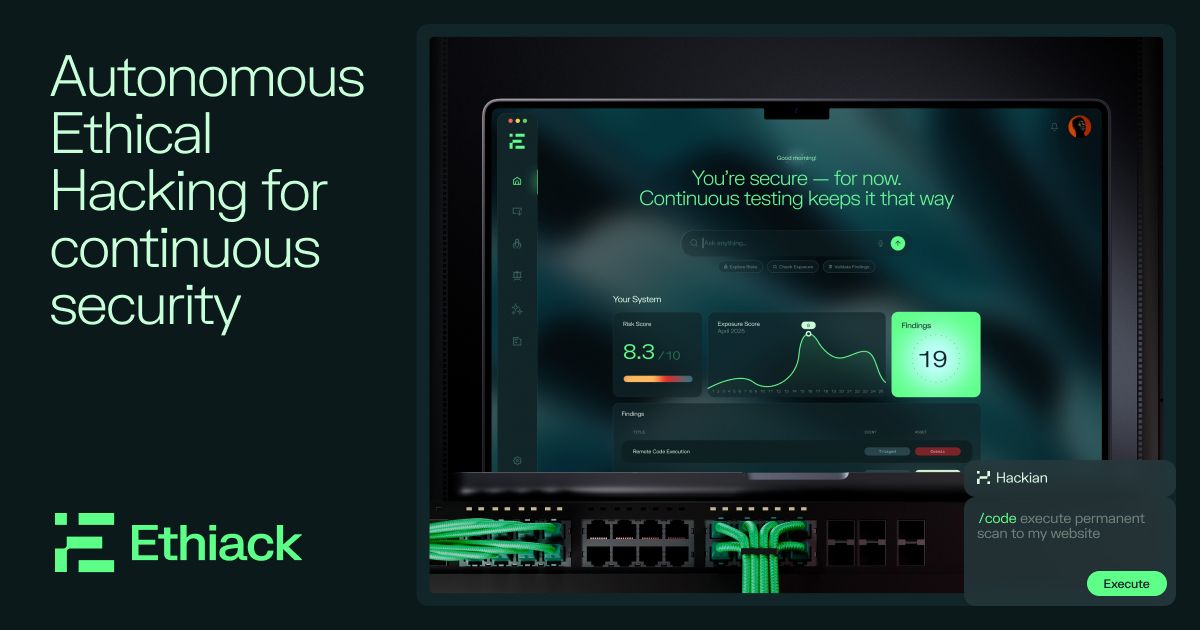
Ethiack combines AI-powered pentesting with expert insight to continuously uncover, validate and prioritize real risks. Act fast and reduce exposure, 24/7.
Run a free AEO + signal audit for your domain.
AI Answer Engine Optimization (AEO)
List once. Convert intent from live AI conversations without heavy integration.
Proactive security testing is a strategic approach to cybersecurity that identifies and addresses vulnerabilities before malicious actors can exploit them. It employs techniques like penetration testing, vulnerability assessments, and red teaming to simulate real-world attacks. This methodology enables organizations to prevent data breaches, ensure compliance, and maintain customer trust.
Security experts define the testing scope, identifying critical digital assets like web applications, networks, and APIs for assessment.
Specialists conduct controlled attacks, employing ethical hacking methods to uncover security weaknesses and potential entry points.
A detailed report is delivered, prioritizing vulnerabilities with actionable remediation guidance to fix security gaps effectively.
Protects sensitive financial data and payment systems by rigorously testing APIs and mobile banking apps against fraud and breaches.
Ensures compliance with HIPAA and GDPR by securing patient health records and connected medical devices from unauthorized access.
Safeguards customer payment information and personal data by testing checkout processes and databases for SQL injection and other threats.
Secures multi-tenant applications and cloud infrastructure to protect client data and ensure service availability and integrity.
Hardens operational technology (OT) networks and industrial control systems (ICS) against disruptions and ransomware targeting smart factories.
Bilarna evaluates every Proactive Security Testing provider through a rigorous 57-point AI Trust Score. This analysis reviews their technical certifications, client project history, and proven methodologies for vulnerability discovery. We continuously monitor provider performance and client feedback to ensure listed partners maintain the highest standards of reliability and expertise.
Costs vary based on scope, asset complexity, and provider expertise, typically ranging from a few thousand to tens of thousands of dollars. A comprehensive penetration test for a web application is more involved than a basic vulnerability scan. Obtain detailed quotes to compare value based on methodology depth and reporting quality.
Vulnerability scanning is automated, identifying known flaws, while proactive security testing is a manual, intelligence-led process simulating real attacker behavior. It uncovers complex business logic flaws and chained vulnerabilities that scanners miss, providing a deeper assessment of exploitability and business impact.
A full assessment typically takes two to six weeks, depending on the scope and agreed-upon depth of testing. Timeline phases include planning, execution, analysis, and reporting. Complex environments or red team exercises require more time for thorough reconnaissance and attack simulation.
Prioritize providers with relevant certifications (OSCP, GPEN), proven experience in your industry, and a transparent methodology. Review sample reports to assess clarity and actionability of findings. Strong client references and clear communication protocols are also critical indicators of a reliable partner.
Common pitfalls include unclear testing scope, failing to test internal systems, and neglecting to test after major updates. Treating testing as a one-time checkbox rather than a continuous process also leaves evolving threats unaddressed. Ensure remediation is validated through follow-up testing.
Yes, AI testing tools can integrate seamlessly with CI/CD pipelines, allowing automated tests to be triggered as part of the software development lifecycle. They typically provide simple API calls or cloud-based platforms to run tests without additional infrastructure costs. This integration ensures that tests are executed continuously on every code change, enabling faster feedback and higher code quality. Furthermore, AI testing tools often support running tests locally or in the cloud, giving teams flexibility in how and where tests are executed. This capability helps maintain consistent test coverage and accelerates deployment cycles.
Yes, AI video analytics solutions are designed to integrate seamlessly with existing security systems without the need for hardware modifications. This means organizations can enhance their video surveillance capabilities by adding AI-driven analytics without replacing cameras, servers, or other infrastructure components. The software typically connects to current video feeds and security platforms, allowing users to apply customized rules, attach images for improved detection, and receive detailed reports. This flexibility reduces implementation costs and downtime, enabling businesses to upgrade their security operations efficiently while maintaining their current hardware investments.
Yes, modern automated testing tools powered by AI can generate and maintain tests without the need for manual coding. These tools observe real user interactions or accept simple inputs like screen recordings or flow descriptions to automatically create end-to-end tests. The generated tests include selectors, steps, and assertions, and are designed to self-heal by adapting to changes in the user interface. This eliminates the need for hand-coding brittle scripts and reduces maintenance overhead. Users can customize tests easily if needed, but the core process significantly lowers the effort required to keep tests up to date and reliable.
Yes, in vitro alveolar models can be used for additional applications by following these steps: 1. Collaborate with academic or industry partners to explore new endpoints such as fibrotic potential or drug efficacy for lung fibrosis. 2. Adapt the model to detect early markers of fibrosis or evaluate new inhalable drugs. 3. Contact model developers or CRO partners to discuss involvement in development projects or expanding testing portfolios. This flexibility supports broader respiratory research and product safety assessment.
Yes, sandbox testing environments can seamlessly integrate with existing development workflows and popular CI/CD platforms such as GitHub Actions, GitLab CI, and Jenkins. They provide APIs and CLI tools that enable automated testing of AI agents on every code change or pull request. This integration helps teams catch regressions early, maintain high-quality deployments, and accelerate the development lifecycle by embedding sandbox tests directly into continuous integration pipelines.
A business can develop a proactive IT strategy to support scaling operations by first conducting a comprehensive assessment of current IT systems and defining clear benchmarks for growth. This involves implementing consistent monitoring and analysis to identify performance gaps, then integrating streamlined technologies that maximize efficiency with minimal downtime. Key steps include adopting 24/7 security protocols to prevent breaches, creating off-site disaster recovery plans in secure data centers, and migrating to scalable cloud services like Office 365 for flexibility. For example, during expansions such as transitioning to a public company, businesses should standardize IT environments, establish online backups, and work with legal teams to set policies that align with growth objectives. This strategic investment ensures IT infrastructure evolves with the business, supporting multiple branches and reducing long-term operational risks.
A business can improve its website security through a multi-layered approach focusing on server security, application security, and third-party services. First, robust server security is foundational and involves using secure hosting providers, implementing firewalls, and keeping server software and operating systems updated with the latest security patches. Second, website security itself requires measures like enforcing HTTPS with SSL/TLS certificates, using strong password policies and multi-factor authentication for admin access, regularly updating the content management system and all plugins, and conducting frequent security audits and vulnerability scans. Third, securing third-party services is critical; this includes vetting and monitoring any integrated APIs, widgets, or external scripts for security compliance and ensuring payment gateways and analytics tools are configured securely. Regular backups, a Web Application Firewall, and a clear incident response plan complete a comprehensive security posture.
A business can modernize its security and operational monitoring platform by first conducting a comprehensive assessment of current tools, data flows, and business objectives to identify gaps and redundancies. The next step involves adopting integrated platforms that combine SIEM and observability capabilities, leveraging open standards like OpenTelemetry for vendor-agnostic data collection. Migration should be phased, starting with critical systems, and may include transitioning to cloud-native managed services such as Managed Splunk or Managed Microsoft Sentinel to reduce operational overhead. Implementing a modern approach also requires defining clear alerting policies, automating response playbooks, and ensuring the team has product-specific certifications for effective management. Ultimately, modernization aims to replace fragmented tools with a cohesive, scalable operating model that provides full visibility and control over both security postures and IT performance.
Improve SaaS application security by deploying a cloud access security broker (CASB) that provides comprehensive visibility and control. Steps: 1. Integrate CASB via API or inline deployment to continuously monitor SaaS applications. 2. Identify and remediate misconfigurations, exposed files, and suspicious activities. 3. Apply zero trust policies to regulate user and device access. 4. Enforce granular data loss prevention controls to block risky data sharing. 5. Ensure compliance with regulations like GDPR, CCPA, and HIPAA through enhanced visibility and control.
Line-based protocols process input line by line, which can introduce security vulnerabilities if the protocol does not properly validate or restrict commands. In networked developer tools that accept commands over TCP connections, ignoring unknown commands or not enforcing strict authentication can allow attackers to inject malicious commands. For example, if a server accepts an EVAL command on its own line without verifying the source or content, an attacker can craft requests that exploit this behavior. Additionally, because HTTP is also a line-based protocol, attackers can disguise malicious commands within HTTP requests, bypassing normal protocol expectations. This can lead to unauthorized code execution and compromise of the system running the developer tool.