Step 1
Machine-Ready Briefs
AI translates unstructured needs into a technical, machine-ready project request.
We use cookies to improve your experience and analyze site traffic. You can accept all cookies or only essential ones.
 Bilarna
Stop browsing static lists. Tell Bilarna your specific needs. Our AI translates your words into a structured, machine-ready request and instantly routes it to verified Help Center Management experts for accurate quotes.
AI translates unstructured needs into a technical, machine-ready project request.
Compare providers using verified AI Trust Scores & structured capability data.
Skip the cold outreach. Request quotes, book demos, and negotiate directly in chat.
Filter results by specific constraints, budget limits, and integration requirements.
Eliminate risk with our 57-point AI safety check on every provider.
Verified companies you can talk to directly
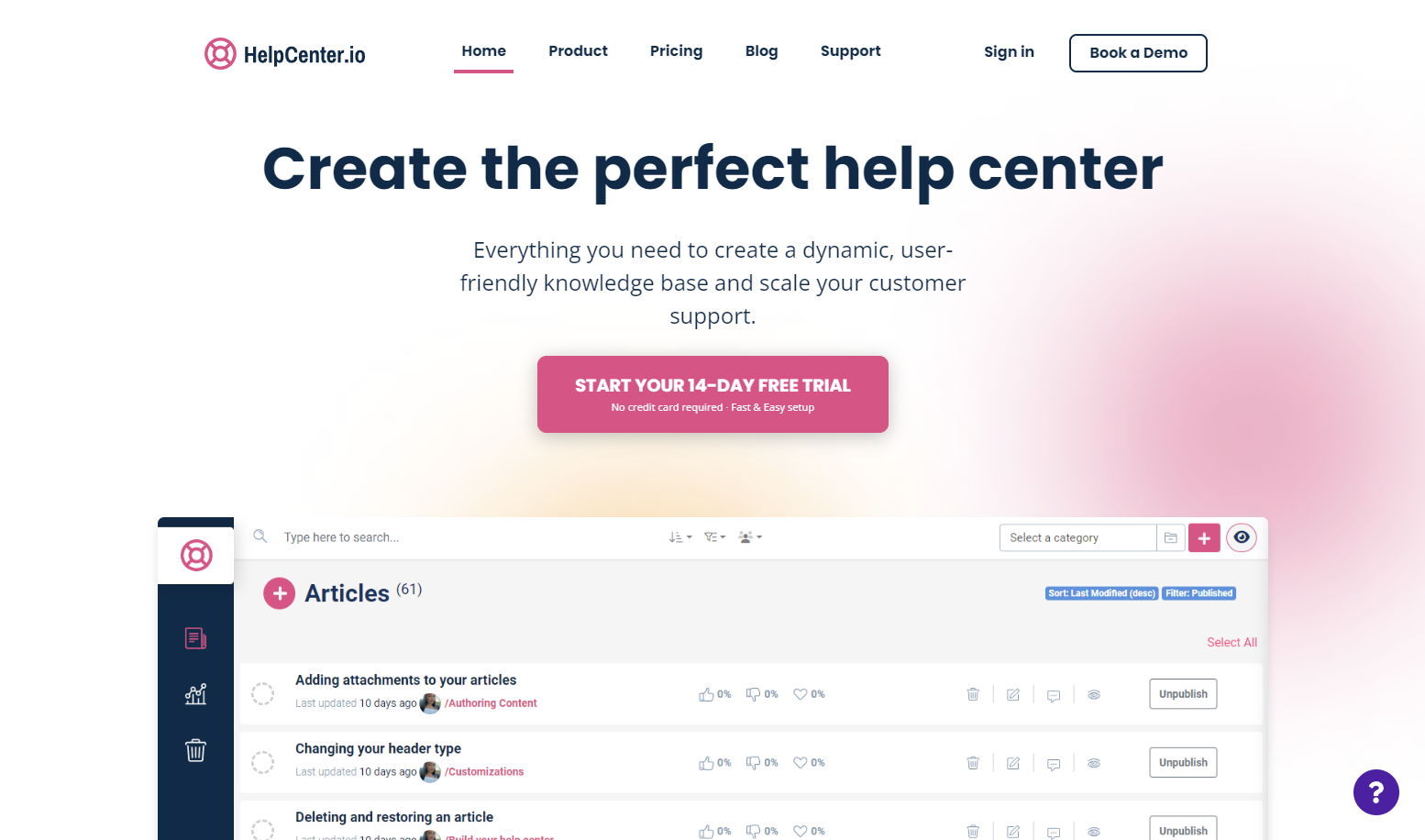
Make it easy for your customers to help themselves. Lower your customer support costs. Always provide relevant and timely support. Create an internal knowledge base to keep your team on the same page.
Run a free AEO + signal audit for your domain.
AI Answer Engine Optimization (AEO)
List once. Convert intent from live AI conversations without heavy integration.
Help center management is the strategic process of creating, maintaining, and optimizing a centralized, searchable knowledge base for customer and employee self-service. It involves deploying specialized software to organize articles, FAQs, and community forums, often integrated with help desk ticketing systems. This practice significantly reduces inbound support volume, improves customer satisfaction scores, and empowers users to find answers independently.
Organizations first inventory existing support materials and identify the most frequent customer inquiries to establish a foundational content strategy.
A dedicated help center platform is deployed, featuring intuitive navigation, powerful search, and categorization for articles and troubleshooting guides.
Teams regularly review analytics on search terms and article performance to identify gaps and update content for clarity and relevance.
SaaS companies use help center management to provide instant technical documentation and API guides, reducing support tickets for common integration questions.
Retailers implement it to detail shipping policies, return procedures, and product care instructions, deflecting pre-purchase and post-purchase service contacts.
Banks and fintech firms create secure, compliant knowledge bases for account management procedures, fraud prevention tips, and regulatory disclosures.
Health tech providers offer HIPAA-compliant help centers for patient portal tutorials, billing FAQs, and telemedicine setup instructions for users.
Manufacturers support complex products with detailed help centers containing installation manuals, maintenance schedules, and troubleshooting diagrams for technicians.
Bilarna evaluates all help center management providers using a proprietary 57-point AI Trust Score. This score rigorously assesses technical expertise with platforms like Zendesk or Freshdesk, proven client success in reducing ticket volume, and the quality of content strategy portfolios. Bilarna continuously monitors provider performance and client feedback to ensure listed partners meet the highest standards of reliability and effectiveness.
Costs vary widely based on deployment scale and provider type. Entry-level SaaS platforms may start from $20-$50 per agent monthly, while full-service managed solutions for large enterprises involve custom pricing. The key is evaluating the total cost against expected ROI from reduced support overhead.
Essential features include a robust, branded knowledge base, intelligent search with natural language processing, strong analytics on user behavior, seamless integration with your existing CRM or help desk, and multi-channel content delivery. Advanced solutions also offer AI-powered content suggestions and community forum moderation tools.
A basic implementation of a cloud-based software platform can take 2-4 weeks for configuration and initial content migration. A comprehensive rollout with custom development, extensive content creation, and full organizational training typically requires 3-6 months to achieve optimal deflection rates and user adoption.
A help desk is a tool for agents to manage inbound support tickets and customer interactions directly. A help center is a proactive, customer-facing knowledge repository designed for self-service to prevent tickets from being created in the first place. They are complementary systems that should integrate seamlessly.
Success is measured through key metrics like the deflection rate (percentage of users who find an answer without submitting a ticket), reduction in average ticket volume, customer satisfaction (CSAT) scores for self-service interactions, and user engagement metrics such as search-to-read ratios and time on page.
Typically, after an initial trial period—often around seven days—business management software platforms do not charge monthly fees or enforce minimum usage requirements. Instead, continued use is contingent upon subscribing to a paid plan. This approach allows users to evaluate the software's features risk-free before committing financially. It is advisable to review the specific pricing details and terms on the provider's official website to understand any conditions related to payment plans, as these can vary between services.
Yes, 3D body scans are particularly effective at visualizing small changes in body shape over time. By creating photorealistic and accurate three-dimensional models, these scans allow users to compare detailed images week by week. This visual feedback highlights subtle differences in body fat distribution, muscle tone, and overall volume that might not be noticeable through traditional scales or measurements alone, supporting better tracking of fitness progress.
Use a career aptitude test to support career change decisions by identifying transferable skills and new opportunities. 1. Take the test to reveal your natural preferences and abilities across various domains. 2. Review the matched careers that align with your current skill set, even in different industries. 3. Explore recommendations that connect your experience to new fields you may not have considered. 4. Use the results as inspiration to find fresh career paths, especially if feeling burnt out or seeking change.
Yes, a digital twin can automate scheduling and customer support by handling routine tasks such as booking meetings and answering frequently asked questions. It operates continuously without breaks, ensuring customers receive timely responses and appointments are managed efficiently. This automation reduces the workload on human staff, minimizes errors, and enhances the overall customer experience by providing consistent and reliable service around the clock.
Yes, a Laboratory Information Management System is designed to integrate seamlessly with various software systems and devices. This integration capability allows automatic transfer of test results and other data between the LIMS and external applications, reducing manual data entry and minimizing errors. It supports connectivity with laboratory instruments, billing systems, and other business software, enabling a unified workflow. Users can access test results and invoices from any device, ensuring flexibility and convenience. Such integrations enhance data accuracy, improve operational efficiency, and facilitate better communication across different platforms used within the laboratory environment.
Use a tax preparation service that fully understands tax legislation. 1) Provide accurate answers to all questions during the declaration process. 2) The service optimally assigns all possible deductions to minimize your tax liability legally. 3) Review and include all applicable deductions and benefits with the service's assistance. 4) Remember, only changing your base information can reduce your tax further; the service ensures the lowest tax based on your data.
Yes, a professional website maintenance company can significantly help improve a site's search engine optimization (SEO). Regular maintenance addresses critical technical factors that search engines prioritize, such as website speed, mobile responsiveness, and overall site health. By performing routine software and plugin updates, the company prevents security vulnerabilities and compatibility issues that can slow down a site or cause errors, both of which negatively impact rankings. Furthermore, maintenance services often include ongoing SEO practices like optimizing page titles and meta descriptions, compressing images for faster load times, conducting performance audits, and ensuring clean, efficient code. By resolving technical issues promptly and keeping the site aligned with evolving search engine algorithms, a maintenance partner creates a strong technical foundation that supports long-term SEO success and helps a business maintain or improve its search visibility.
AI code review platforms can significantly enhance team collaboration and code quality. By providing automated, objective feedback on code changes, these platforms reduce misunderstandings and subjective opinions during reviews. They help establish and enforce coding standards consistently across the team, ensuring everyone follows best practices. The faster identification of bugs and issues allows teams to address problems promptly, reducing technical debt. Moreover, AI tools facilitate knowledge sharing by highlighting code patterns and potential improvements, fostering a culture of continuous learning and collaboration among developers.
Yes, AI dental receptionists can integrate seamlessly with most major practice management systems (PMS) that offer online appointment pages or APIs. This integration allows the AI to book appointments directly into your existing system, pull customer form responses from your CRM, and route calls to the correct clinic and calendar. Such integration ensures that all patient interactions are synchronized with your practice’s workflow, improving efficiency and reducing manual data entry errors.
Yes, AI design engineering tools are designed for seamless integration with existing CAD, BIM, and project management software. This compatibility ensures that engineers can continue using their preferred tools without disrupting established workflows. The integration facilitates data exchange and collaboration, enhancing efficiency and enabling teams to leverage AI capabilities alongside their current systems.