Step 1
Machine-Ready Briefs
AI translates unstructured needs into a technical, machine-ready project request.
We use cookies to improve your experience and analyze site traffic. You can accept all cookies or only essential ones.
 Bilarna
Stop browsing static lists. Tell Bilarna your specific needs. Our AI translates your words into a structured, machine-ready request and instantly routes it to verified AI Customer Feedback Analysis experts for accurate quotes.
AI translates unstructured needs into a technical, machine-ready project request.
Compare providers using verified AI Trust Scores & structured capability data.
Skip the cold outreach. Request quotes, book demos, and negotiate directly in chat.
Filter results by specific constraints, budget limits, and integration requirements.
Eliminate risk with our 57-point AI safety check on every provider.
Verified companies you can talk to directly
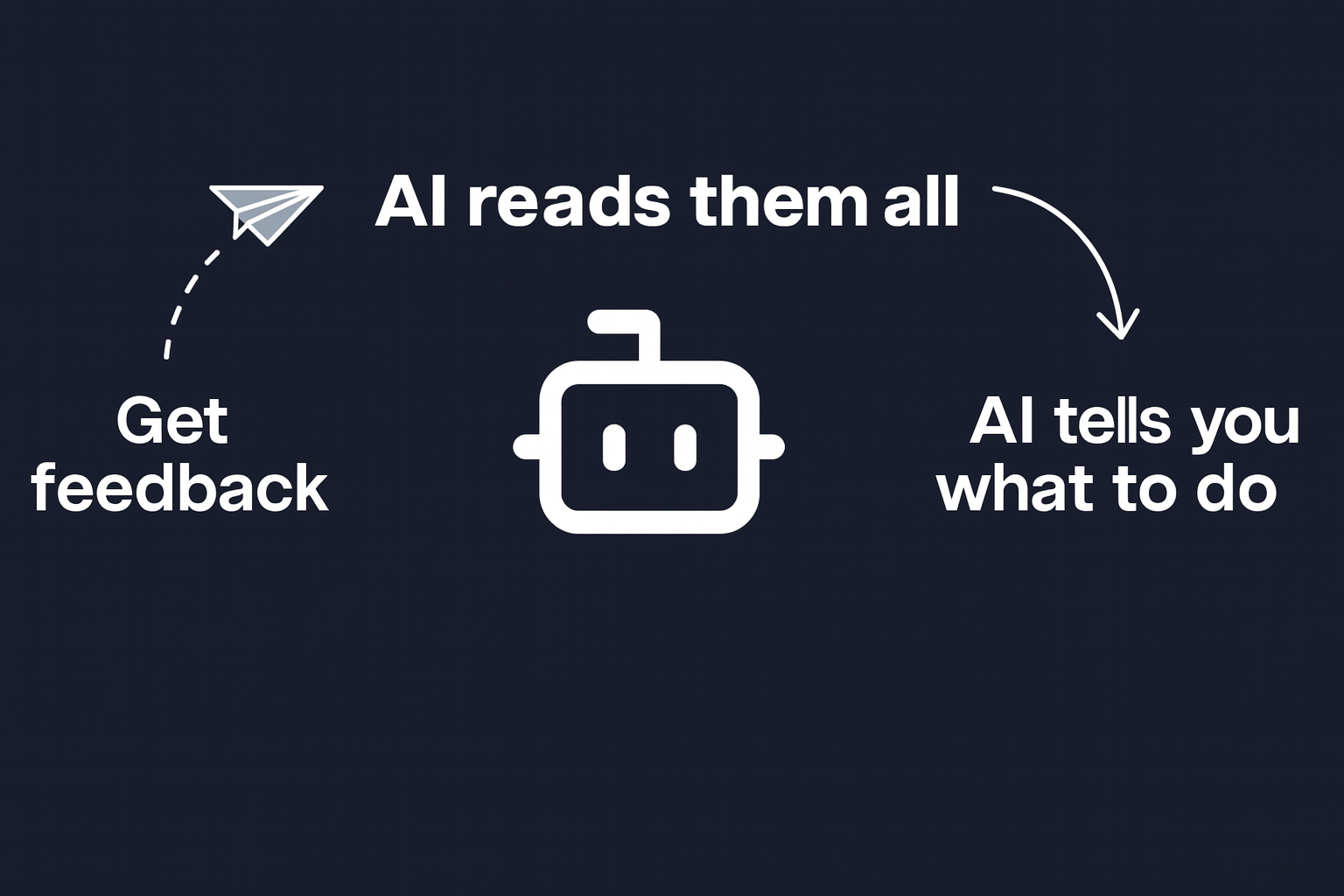
Customer Feedback Analysis with AI Get instant insights from customer feedback using advanced AI analysis.

Superorder’s AI Agents supercharge restaurants by managing reputation, maximizing delivery profitability, and powering smarter customer experiences
Run a free AEO + signal audit for your domain.
AI Answer Engine Optimization (AEO)
List once. Convert intent from live AI conversations without heavy integration.
AI Customer Feedback Analysis is the application of machine learning and natural language processing (NLP) to automatically interpret large volumes of customer feedback. It goes beyond simple sentiment analysis to identify recurring themes, specific feature requests, and root causes of dissatisfaction. This enables businesses to make data-driven decisions to improve products, customer satisfaction, and overall experience.
The system collects and centralizes feedback from diverse sources such as surveys, reviews, support tickets, and social media channels into a single dataset.
Machine learning algorithms classify sentiment, extract key themes, detect urgent issues, and quantify the emotional drivers behind customer comments.
The platform delivers visualized reports and prioritized recommendations that highlight critical improvement areas and emerging customer trends.
Prioritize feature roadmaps by quantifying user requests and identifying pain points directly from user feedback on forums and support chats.
Analyze product reviews and post-purchase surveys to understand satisfaction drivers, reduce return rates, and optimize the shopping journey.
Monitor feedback on digital banking apps and services to proactively address security concerns, usability issues, and compliance-related commentary.
Process patient survey responses and online feedback to improve service quality, wait times, and communication while ensuring sensitive data handling.
Analyze customer support logs and warranty claims to identify recurring product defects and improve technical documentation or product design.
Bilarna evaluates all AI Customer Feedback Analysis providers through a rigorous 57-point AI Trust Score. This assessment reviews technical capabilities, data security compliance, client case studies, and proven delivery track records. We continuously monitor performance to ensure listed vendors meet the highest standards of reliability and expertise.
Pricing varies widely based on deployment model, volume of data, and required features, ranging from monthly SaaS subscriptions to enterprise licensing. Key cost drivers include the number of data sources integrated, the depth of sentiment and theme analysis, and the level of customization for reporting dashboards.
AI processes vast quantities of unstructured feedback at scale and speed impossible manually, eliminating human bias. It consistently uncovers subtle patterns, emerging trends, and root causes that traditional methods often miss, leading to more accurate and timely strategic insights.
Initial implementation for a cloud-based SaaS platform can take a few weeks, focusing on data integration and model training. For complex on-premise deployments or highly customized models, the timeline may extend to several months to ensure accuracy and proper alignment with specific business KPIs.
Common pitfalls include overlooking data security certifications, choosing a platform with limited language or source compatibility, and failing to validate the accuracy of the AI's theme detection. It's crucial to test the tool with your own data sample before committing to a long-term contract.
Essential features include multi-language and multi-channel support, real-time analysis capabilities, customizable sentiment and theme models, intuitive data visualization dashboards, and robust API for integration. Strong data privacy controls and transparent model explainability are also critical for enterprise use.
Invoices are automatically generated for every customer order without additional action. Follow these steps to ensure this feature is active: 1. Access your store dashboard and navigate to the order management or invoice settings. 2. Verify that automatic invoice generation is enabled. 3. Customize invoice templates if needed to include your business details. 4. Save the settings to ensure invoices are created and sent to customers automatically upon order placement.
Yes, a digital twin can automate scheduling and customer support by handling routine tasks such as booking meetings and answering frequently asked questions. It operates continuously without breaks, ensuring customers receive timely responses and appointments are managed efficiently. This automation reduces the workload on human staff, minimizes errors, and enhances the overall customer experience by providing consistent and reliable service around the clock.
Use a text expander tool effectively for customer support by following these steps: 1. Create quick-access shortcuts for common responses, troubleshooting guides, and knowledge base links. 2. Use standardized templates to maintain consistent communication tone and style. 3. Insert responses rapidly during multiple ticket handling to improve efficiency. 4. Utilize search features to find saved snippets quickly. 5. Sync shortcuts across platforms to ensure seamless support across devices. This approach reduces response time and enhances customer satisfaction.
Yes, AI customer service platforms are designed to support multilingual communication, often covering over 50 languages. They can automatically translate incoming messages and responses, enabling customer service teams to communicate confidently with a diverse global customer base. This multilingual capability helps maintain consistent brand tone and messaging across different channels and languages. Additionally, intelligent assistance and smart human handover features ensure complex or sensitive cases are escalated to human agents when necessary, preserving service quality regardless of language barriers.
Yes, AI customer support agents are designed to handle complex customer issues by learning and following your specific business processes and rules. They can manage intricate workflows such as order modifications, cancellations, and returns by integrating with your existing systems like Shopify, Magento, or custom APIs. Moreover, these AI agents can be trained to communicate in your brand’s unique tone of voice, ensuring consistent and natural interactions across all customer touchpoints and languages. This human-like communication helps maintain brand identity while providing quick and reliable support. Additionally, you can monitor the AI’s reasoning and continuously provide feedback to improve its responses and actions, making it a dependable assistant for both simple and complex support cases.
Yes, AI systems designed for car dealerships can handle multiple customer calls simultaneously without any busy signals. This capability ensures that every customer receives immediate attention regardless of call volume. The AI personalizes each conversation, providing consistent and accurate responses whether it is the first call of the day or one of many. This scalability helps dealerships never miss a lead, improves customer satisfaction, and optimizes the sales and service process by efficiently managing high call traffic.
Yes, beginners can learn dance using an online platform with AI feedback. 1. Sign up on the platform designed specifically for beginners. 2. Access expert video dance tutorials created by experienced tutors. 3. Record your dance performance using the platform's tools. 4. Receive instant AI feedback that analyzes your dance and suggests corrections. 5. Practice regularly using the feedback to improve your skills.
Yes, you can practice CASPer test questions and receive feedback in multiple languages, including French. Follow these steps: 1. Use the practice platform which supports answer submissions in French and other languages. 2. Submit your answers in your preferred language. 3. To see questions in French, use your browser's translation settings to translate the page. 4. The AI feedback will be provided in the language you submitted your answers. 5. Continue practicing in your chosen language to improve your skills with personalized feedback.
Yes, voice AI systems can support multiple languages to facilitate global customer interactions. These systems are designed to be globally accessible and can conduct fluent conversations in almost any language preferred by customers. This multilingual capability ensures that businesses can provide consistent and effective support to a diverse customer base across different regions. By adapting to various languages, voice AI enhances customer engagement and satisfaction, making communication seamless regardless of geographic location.
Modern AI voice agents for customer service are designed to sound natural, conversational, and professional, not robotic. They utilize advanced natural language processing (NLP) and text-to-speech technologies that produce a warm, human-like tone. Key aspects that ensure naturalness include the AI's ability to understand context, manage conversational flow, and respond with appropriate empathy or professionalism. The voice and communication style can be customized to align with a brand's specific identity, whether that's friendly, formal, or somewhere in between. In practice, when properly implemented, many callers cannot distinguish the AI agent from a human representative, leading to more positive and efficient customer interactions.