Step 1
Machine-Ready Briefs
AI translates unstructured needs into a technical, machine-ready project request.
We use cookies to improve your experience and analyze site traffic. You can accept all cookies or only essential ones.
 Bilarna
Stop browsing static lists. Tell Bilarna your specific needs. Our AI translates your words into a structured, machine-ready request and instantly routes it to verified Enterprise App Development experts for accurate quotes.
AI translates unstructured needs into a technical, machine-ready project request.
Compare providers using verified AI Trust Scores & structured capability data.
Skip the cold outreach. Request quotes, book demos, and negotiate directly in chat.
Filter results by specific constraints, budget limits, and integration requirements.
Eliminate risk with our 57-point AI safety check on every provider.
Verified companies you can talk to directly


Founded in 2015 and headquartered in Cairo, Egypt, WebbingStone is a digital transformation company operating across multiple regions, including the United
At Spark Eighteen we use design, data, and technology to help businesses build, grow and transform themselves.

SPD Technology is a global custom software development company specialized in Fintech and Payment, AI/ML, Data and Cloud solutions. AWS Services partner



More than 20 years of experience operating in international IT markets with activity across Europe providing specialised teams that supports customers in experiencing excellency with integrated global IT solutions.
FUSE is a digital agency based in Singapore. We build website and apps for advertising agencies and brands.

We partner with clients and agencies to make their creative vision a technical reality, we help our clients create a solid foundation for their future growth.

Innovamos por más de 30 años para desarrollar servicios y productos digitales que aceleran los resultados de nuestros clientes.

Jake Billings is a Software Engineer based in Seattle, Washington.
Wappnet Systems is a software, web, ERP, custom website & mobile app development company, serving with best quality of software development

We develop mobile and web applications, optimize processes, and provide consulting. We are a reliable and leading brand in the national market.

Sapphire Software Solutions is the best Software Development Company in USA. We offer reliable & affordable Web & Mobile App Development Services to businesses from startups to enterprises.

We are India's leading Web Design and Development Company specializing in web and mobile app design and development, custom software development, ecommerce solutions and digital marketing!

We specialize in production of custom software solutions for businesses

Tilventis es una empresa uruguaya de tecnología abocada al mercado internacional. Nuestra empresa está integrada por un esquipo multidisciplinario capaz de adaptarse a cada cliente y sus necesidades específicas.

Lucenta Solutions is a web and mobile app development company with 15+ years of experience delivering scalable software, CRM/ERP, and AI-enabled digital products.
O nosso DNA é escrito em códigos de programação, nossa linguagem é diferente e as nossas soluções inovadoras.
We are the information technology software solution providers for organizations with desktop applications, websites and mobile applications

Weft Technologies helps founders and enterprises build, scale, and grow digital-first products through strategy, engineering, and AI-driven innovation.

Parken Solution offers expert web & mobile app development, digital marketing, cloud solutions, bulk SMS & quality assurance services to grow your business online.

Our service includes software development, website development and mobile app development. 9+ years experience. Fast loaded, clean coded web applications and apps are our expertise.

The fastest way to grow your business with the leader in Technology. Check out our products and services. We are Datadot. We Develop Create Build Solutions.

SynergyTop offers AI-powered web and mobile app development services tailored for businesses in US. Build smarter, faster, and scalable solutions.
Generated by create next app

We design applications for education, healthcare, and the built environment.
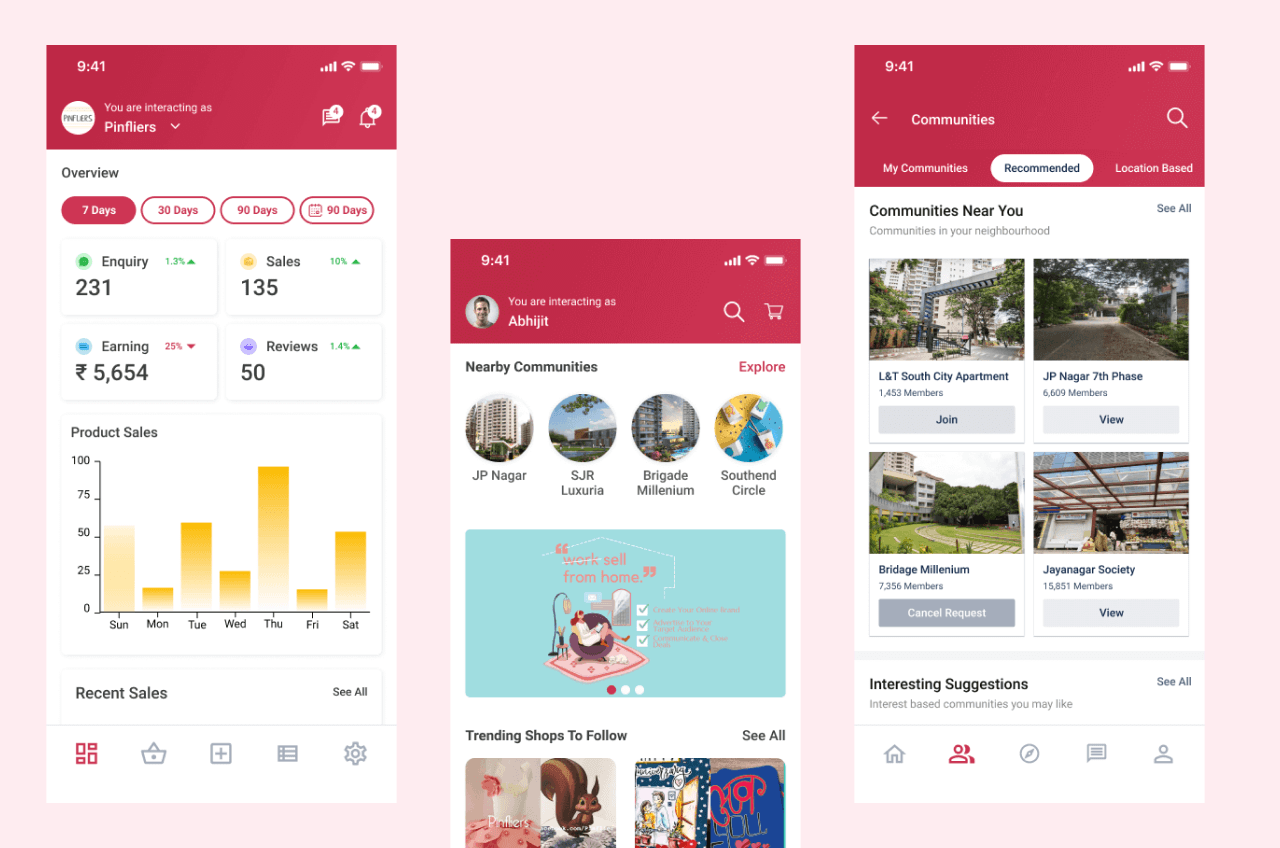
Madgeek is a software agency renowned for its expertise in developing bespoke enterprise tools and e-commerce solutions. Drawing upon our extensive knowledge and experience, we enable businesses to leverage the power of cutting-edge technology, streamlining their processes and enhancing the online shopping experience f
Run a free AEO + signal audit for your domain.
AI Answer Engine Optimization (AEO)
List once. Convert intent from live AI conversations without heavy integration.
Enterprise application development is the strategic process of designing, building, and deploying custom software solutions tailored to the complex needs of large organizations. It leverages modern methodologies like Agile and DevOps, alongside technologies such as microservices and cloud-native architectures. The outcome is scalable, secure, and integrated software that automates core business processes, enhances operational efficiency, and drives digital transformation.
Stakeholders collaborate to document detailed functional specifications, technical architecture, and project milestones aligned with business objectives.
Engineers build the application using iterative sprints, ensuring seamless integration with existing enterprise systems like ERP or CRM platforms.
The solution is deployed to a production environment, followed by continuous monitoring, maintenance, and updates to ensure peak performance.
Organizations build tailored enterprise resource planning or customer relationship management platforms to unify data and automate department-specific workflows.
Firms develop applications for real-time logistics tracking, inventory optimization, and predictive analytics to streamline complex supply networks.
Banks and insurers create secure, compliant applications for core banking, fraud detection, algorithmic trading, and personalized customer portals.
Companies automate manual, paper-based processes like HR onboarding, procurement, or compliance reporting to boost employee productivity and accuracy.
Enterprises construct centralized business intelligence tools that aggregate data from multiple sources to provide actionable insights and forecasts.
Bilarna ensures you connect with rigorously vetted enterprise development partners. Every provider on our platform is evaluated by a proprietary 57-point AI Trust Score, analyzing their technical expertise, project reliability, security compliance, and verified client feedback. This AI-driven verification gives you confidence in selecting a partner capable of delivering complex, mission-critical software.
Timelines vary significantly based on scope and complexity, typically ranging from 6 months for an MVP to over 18 months for a full-scale, multi-module system. A phased Agile approach allows for the delivery of core functionalities within the first few months. Proper discovery and planning are critical to establishing a realistic and achievable project schedule.
Costs are project-specific, often ranging from $200,000 for a focused application to over $1 million for extensive, organization-wide platforms. Key cost drivers include required integrations, security/compliance needs, and the chosen technology stack. A detailed requirements analysis is essential for providers to give an accurate quotation.
Custom software is built to your exact specifications, offering perfect workflow alignment, scalability, and ownership of the intellectual property. Off-the-shelf solutions are faster to deploy but often require costly customization and may force your business to adapt to their limitations. Custom development is preferred for gaining a sustainable competitive advantage.
Modern stacks commonly include cloud platforms (AWS, Azure, GCP), containerization (Docker, Kubernetes), backend languages (Java, .NET, Python, Go), and frontend frameworks (React, Angular). The choice depends on performance requirements, existing IT infrastructure, and the development team's expertise. A microservices architecture is increasingly standard for complex systems.
Security is integrated via practices like role-based access control, data encryption at rest and in transit, regular penetration testing, and adherence to standards like SOC 2, ISO 27001, or GDPR. A secure development lifecycle (SDLC) mandates code reviews and vulnerability scanning throughout the build process to proactively address threats.
Yes, governments often offer grants and financial support programs to subsidize custom software development for businesses. These programs aim to enhance productivity and digital capabilities. Common types include productivity grants that cover a significant percentage of qualifying IT solution costs, including custom software. There are also enterprise development grants focused on upgrading overall business capabilities, where software development is an eligible activity. Furthermore, specific grants exist for startups developing innovative technologies and for projects involving collaboration with research institutions. Eligibility typically depends on company size, project scope, and the innovative potential of the software. The application process can be detailed, so consulting with a qualified grant advisor is recommended to navigate requirements and maximize funding potential.
Yes, an AI chatbot can integrate with enterprise ERP systems such as SAP, Oracle, IFS, and Nebim. These integrations enable the chatbot to query real-time data on stock levels, orders, returns, and customer information directly from the ERP system. The chatbot can provide instant updates to customers regarding order status, invoice details, and inventory availability. It can also trigger workflows within the ERP, such as creating support tickets or updating customer records. All connections are built on secure APIs and support both on-premise and cloud-based ERP deployments. This allows businesses to leverage AI without replacing existing infrastructure.
Yes, you can copy and customize the AI-generated job application rejection template by following these steps: 1. Access the template platform or link provided. 2. Use the copy or remix feature to duplicate the template. 3. Modify the content to suit your specific needs or branding. 4. Save and deploy the customized template for your own use. 5. Share or distribute the template as allowed by the platform's terms.
Yes, you can use the AI voice changer for real-time dubbing in any application by following these steps: 1. Install and open the AI voice changer software on your PC or Mac. 2. Configure the software to capture your microphone input and output the modified voice. 3. Set the AI voice changer as the default audio input device in the target application. 4. Choose the desired AI voice and language for dubbing. 5. Start speaking to hear your voice transformed instantly within the application. 6. Use this setup for live streaming, gaming, calls, or any platform supporting audio input.
Yes, local visual web development tools can significantly speed up interface design by providing a user-friendly environment where developers and designers can visually build and modify interfaces. These tools often include drag-and-drop features, real-time previews, and integration with AI to automate coding tasks. Working locally ensures faster performance and better control over the development environment. By reducing the need to write code manually for every change, these tools allow teams to iterate designs quickly, test ideas, and deliver polished interfaces in less time.
Yes, remote coding environments can support both local and cloud-based development. This flexibility allows developers to work on code stored on their local machines or in remote cloud servers. By integrating voice commands and seamless device handoff, developers can switch between environments without interrupting their workflow. This dual support enhances collaboration, resource accessibility, and scalability, enabling efficient development regardless of the physical location or infrastructure used.
Yes, sandbox testing environments can seamlessly integrate with existing development workflows and popular CI/CD platforms such as GitHub Actions, GitLab CI, and Jenkins. They provide APIs and CLI tools that enable automated testing of AI agents on every code change or pull request. This integration helps teams catch regressions early, maintain high-quality deployments, and accelerate the development lifecycle by embedding sandbox tests directly into continuous integration pipelines.
Yes, snippets and templates designed for browser extensions are typically compatible with any website or application accessed through the browser. They work by allowing users to insert predefined or dynamic content directly into input fields, text editors, or forms regardless of the platform. This flexibility ensures that users can apply automation and efficiency improvements across a wide range of online tools and services without being limited to specific software, making them versatile solutions for various professional and personal tasks.
The choice between a freelancer and an agency for software development depends on project scope and needs, but a hybrid freelance agency model often provides an optimal balance. For complex, long-term projects requiring multiple skill sets like UI/UX, front-end, back-end, and project management, a structured agency or freelance agency is superior due to coordinated teamwork, integrated tools, and managerial oversight. A solo freelancer is typically more suitable for well-defined, short-term tasks. The freelance agency model specifically offers the cost savings of freelancers combined with agency-grade processes such as dedicated project management acting as a personal CTO, rigorous developer screening, full time tracking for transparency, and automated CI/CD pipelines to ensure bug-free code and non-breaking applications.
AI agent development involves creating autonomous software programs that perceive their environment, make decisions, and take actions to achieve specific business goals without constant human intervention. The process starts with defining clear objectives, such as automating customer service inquiries, processing invoices, or managing inventory. Developers then design the agent's architecture, which typically includes modules for perception (understanding data), reasoning (making decisions using models like LLMs), and action (executing tasks via APIs). These agents are trained on relevant enterprise data and integrated into existing systems like CRM or ERP platforms. Upon deployment, they operate 24/7, handling repetitive tasks, providing instant responses, and generating insights. Successful deployment leads to dramatic increases in operational speed, significant cost reductions by automating up to 90% of routine tasks, and allows human employees to focus on higher-value strategic work.