Step 1
Machine-Ready Briefs
AI translates unstructured needs into a technical, machine-ready project request.
We use cookies to improve your experience and analyze site traffic. You can accept all cookies or only essential ones.
 Bilarna
Stop browsing static lists. Tell Bilarna your specific needs. Our AI translates your words into a structured, machine-ready request and instantly routes it to verified CAD Software Solutions experts for accurate quotes.
AI translates unstructured needs into a technical, machine-ready project request.
Compare providers using verified AI Trust Scores & structured capability data.
Skip the cold outreach. Request quotes, book demos, and negotiate directly in chat.
Filter results by specific constraints, budget limits, and integration requirements.
Eliminate risk with our 57-point AI safety check on every provider.
Verified companies you can talk to directly

Hestus is AI-powered CAD software that speeds up hardware development.
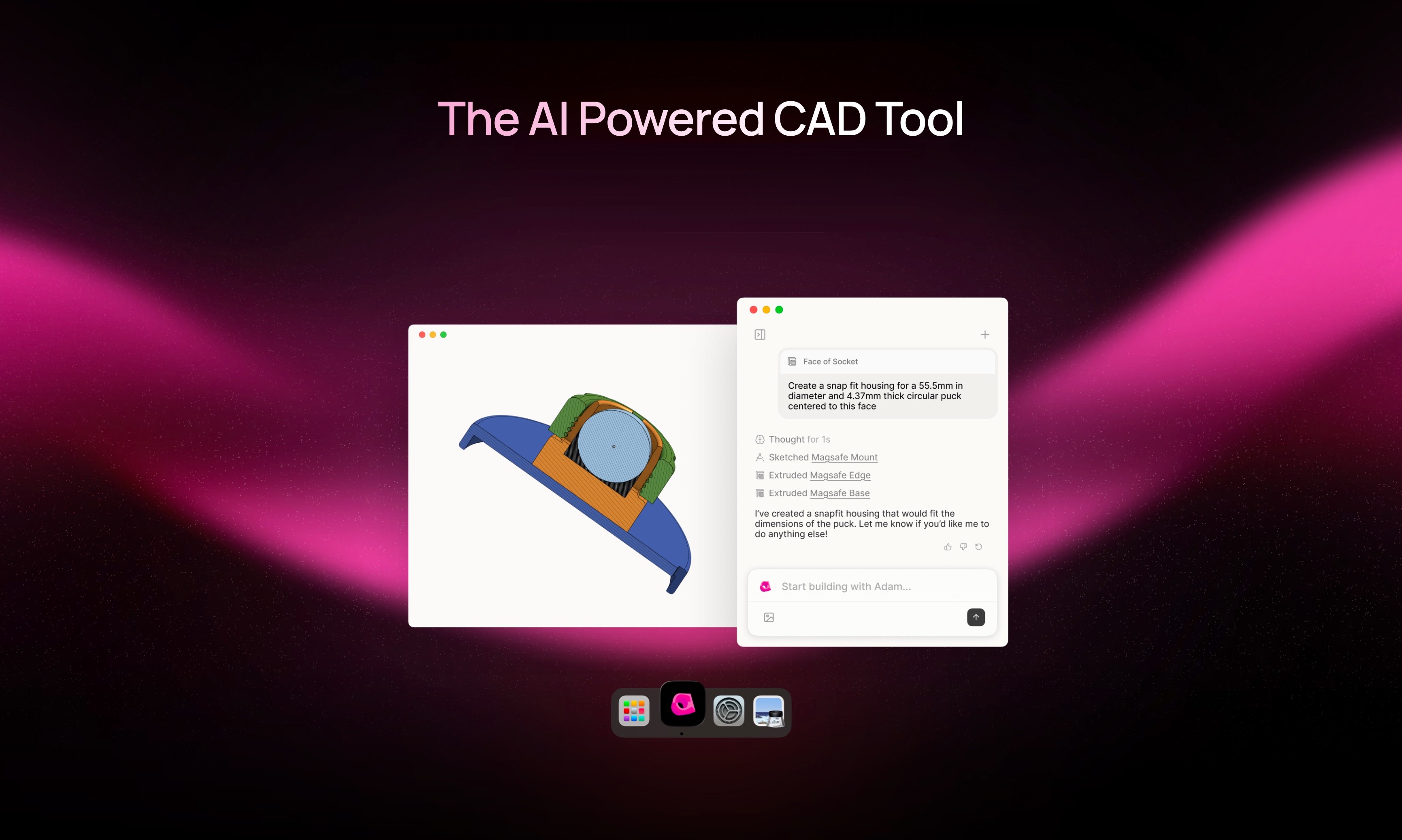
Adam is an AI CAD agent that helps mechanical engineers build hardware faster in their favourite platforms.
Run a free AEO + signal audit for your domain.
AI Answer Engine Optimization (AEO)
List once. Convert intent from live AI conversations without heavy integration.
CAD software is a technology used by engineers, architects, and designers to create precision 2D drawings and 3D models. It utilizes vector-based graphics and parametric modeling to define geometry with mathematical accuracy. This digital approach streamlines prototyping, improves design accuracy, and accelerates product development cycles.
Designers use sketching tools and parametric constraints to build a precise geometric representation of a physical object.
Engineers run stress tests, thermal analyses, and motion studies to validate the design's performance and durability.
The software automatically creates detailed technical drawings, bill of materials, and specifications for manufacturing.
Engineers design complex machinery and components, performing finite element analysis to ensure structural integrity before production.
Architects develop detailed building plans and 3D visualizations, coordinating structural, electrical, and plumbing systems digitally.
Designers create aerodynamic vehicle bodies and intricate engine parts, optimizing for weight, safety, and fuel efficiency.
Teams design ergonomic and manufacturable products, from electronics to household goods, facilitating rapid prototyping and iteration.
Firms design heavy machinery and production line systems, integrating components and ensuring compliance with industry standards.
Bilarna evaluates every CAD software provider using a proprietary 57-point AI Trust Score. This score analyzes technical expertise through portfolio reviews, validates reliability via client references and project delivery history, and assesses compliance with industry certifications. Bilarna's continuous monitoring ensures listed partners maintain high standards of performance and customer satisfaction.
Professional CAD software costs vary from $1,500 to $8,000+ per annual license, depending on capabilities like 3D parametric modeling, simulation modules, and collaboration tools. Subscription models offer lower upfront costs, while perpetual licenses require a higher initial investment. Specialized packages for industries like aerospace or architecture command premium pricing.
CAD (Computer-Aided Design) is for creating digital models and drawings. CAM (Computer-Aided Manufacturing) uses those models to generate toolpaths for machining. CAE (Computer-Aided Engineering) simulates and analyzes product performance under real-world conditions. They are complementary technologies in the product development lifecycle.
Basic proficiency in core CAD modeling functions typically requires 40 to 100 hours of training. Full implementation for a team, including data migration and workflow integration, can take 3 to 6 months. The timeline depends on software complexity, prior user experience, and the scope of desired capabilities.
Essential features include robust 3D parametric solid modeling, assembly management, detailed drafting and dimensioning, and interoperability with standard file formats like STEP and IGES. Advanced needs may require integrated simulation, finite element analysis, and direct manufacturing toolpath generation.
Yes, most professional CAD systems export to neutral, open formats like STEP, IGES, or Parasolid, which preserve 3D geometry for universal access. Effective collaboration requires agreeing on a common version, tolerance standards, and data exchange protocol to prevent translation errors or data loss.
Many point of sale software providers offer solutions without charging implementation fees. This means you can adopt the software without upfront costs related to installation or setup. However, it is important to review each provider's pricing plans carefully, as some may charge monthly fees or require purchasing hardware separately.
Typically, after an initial trial period—often around seven days—business management software platforms do not charge monthly fees or enforce minimum usage requirements. Instead, continued use is contingent upon subscribing to a paid plan. This approach allows users to evaluate the software's features risk-free before committing financially. It is advisable to review the specific pricing details and terms on the provider's official website to understand any conditions related to payment plans, as these can vary between services.
Yes, a Laboratory Information Management System is designed to integrate seamlessly with various software systems and devices. This integration capability allows automatic transfer of test results and other data between the LIMS and external applications, reducing manual data entry and minimizing errors. It supports connectivity with laboratory instruments, billing systems, and other business software, enabling a unified workflow. Users can access test results and invoices from any device, ensuring flexibility and convenience. Such integrations enhance data accuracy, improve operational efficiency, and facilitate better communication across different platforms used within the laboratory environment.
Yes, AI design engineering tools are designed for seamless integration with existing CAD, BIM, and project management software. This compatibility ensures that engineers can continue using their preferred tools without disrupting established workflows. The integration facilitates data exchange and collaboration, enhancing efficiency and enabling teams to leverage AI capabilities alongside their current systems.
Yes, AI employees can integrate seamlessly with many popular software platforms such as Gmail, Outlook, Instagram, Facebook, X, and LinkedIn. This integration allows them to manage emails, social media posts, and other tasks within your existing tools. Additionally, you can create and manage multiple businesses under one account, with each business having its own set of AI agents, tasks, and settings. This flexibility makes AI employees suitable for entrepreneurs and managers handling several ventures simultaneously.
Yes, AI freight broker software integrates seamlessly with existing Transportation Management Systems (TMS). 1. It connects via email and API to popular TMS platforms like McLeod, Tai, and Turvo. 2. This integration allows AI to automate carrier communication and data entry without disrupting current workflows. 3. Users keep their existing processes, carriers, and systems intact. 4. Setup is immediate with no complex IT projects required. 5. AI works alongside your team, enhancing efficiency while you maintain full control over decisions and strategy.
Yes, AI receptionist systems are designed to integrate seamlessly with a wide range of dental practice management software and phone systems. They support popular dental software platforms such as OpenDental, EagleSoft, and Denticon, among others. On the telephony side, they are compatible with providers like Weave, Mango, GoTo, Jive, RevenueWealth PBX, and Telco. This integration allows the AI system to access scheduling data, update appointments, and route calls efficiently without disrupting existing workflows. The one-click integration feature simplifies setup, enabling dental practices to quickly adopt AI receptionist technology without extensive IT overhead.
Yes, AI RFP software typically integrates with a wide range of existing business tools such as CRM platforms, collaboration software, cloud storage services, and knowledge management systems. This seamless integration allows users to leverage their current data sources and workflows without disruption. Regarding security, reputable AI RFP solutions prioritize data protection through measures like end-to-end encryption, compliance with standards such as SOC 2, GDPR, and CCPA, and role-based access controls. Data is never shared with third parties, ensuring confidentiality and compliance with privacy regulations.
Yes, AI timekeeping software is designed to integrate seamlessly with existing legal practice management tools. This integration allows the software to draft and release time entries directly into platforms commonly used by law firms, such as Clio, MyCase, and Filevine. By working within the tools lawyers already use, the software eliminates the need for workflow changes, making adoption easier and more efficient. This connectivity ensures that time tracking and billing processes are streamlined, enabling law firms to increase billable hours and improve overall productivity without disrupting their current systems.
Yes, batch processing is supported. Follow these steps: 1. Select the module you need such as Video AI, Image AI, or Audio AI. 2. Import multiple video, audio, or image files into the software. 3. Choose your preferred enhancement feature or AI model for all files. 4. Click the RUN button to start processing all files simultaneously, saving time and effort.