Step 1
Machine-Ready Briefs
AI translates unstructured needs into a technical, machine-ready project request.
We use cookies to improve your experience and analyze site traffic. You can accept all cookies or only essential ones.
 Bilarna
Stop browsing static lists. Tell Bilarna your specific needs. Our AI translates your words into a structured, machine-ready request and instantly routes it to verified Workflow Automation Solutions experts for accurate quotes.
AI translates unstructured needs into a technical, machine-ready project request.
Compare providers using verified AI Trust Scores & structured capability data.
Skip the cold outreach. Request quotes, book demos, and negotiate directly in chat.
Filter results by specific constraints, budget limits, and integration requirements.
Eliminate risk with our 57-point AI safety check on every provider.
Verified companies you can talk to directly

A leading BPO company providing digital transformation, office, supply chain, and managed workforce services.

Stay updated with the latest news and insights on business automation, AI agentic systems, process efficiency, digitalization, interactive technologies, video production and movie industry. Expert reviews and analysis from Indeform.

Automate repetitive tasks from your team's inbox with context aware AI. Extract, validate, and process complex documents at scale.

Save 80% Cost, Increase 500% Ops Efficiency & 99% accuracy in processing documents with KlearStack, Document AI Platform. Trusted by BFSI & Logistics Companies!

Tinkery is the Commercial Intelligence Platform for SMBs that allows you to manage your data more efficiently
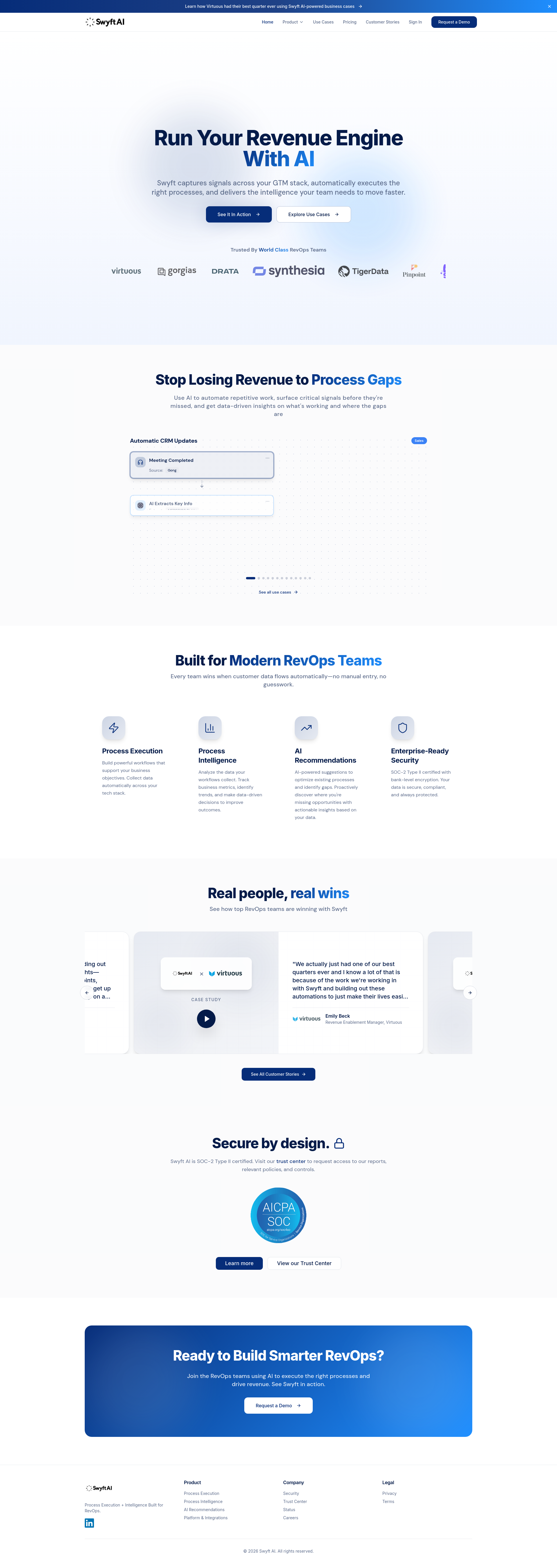
Build AI-powered RevOps workflows that analyze customer interactions, sync data across systems, and deliver actionable insights. Process Automation + Intelligence built for RevOps teams.

Signal87 AI is a next-generation document intelligence platform that empowers organizations to transform static information into actionable insights.
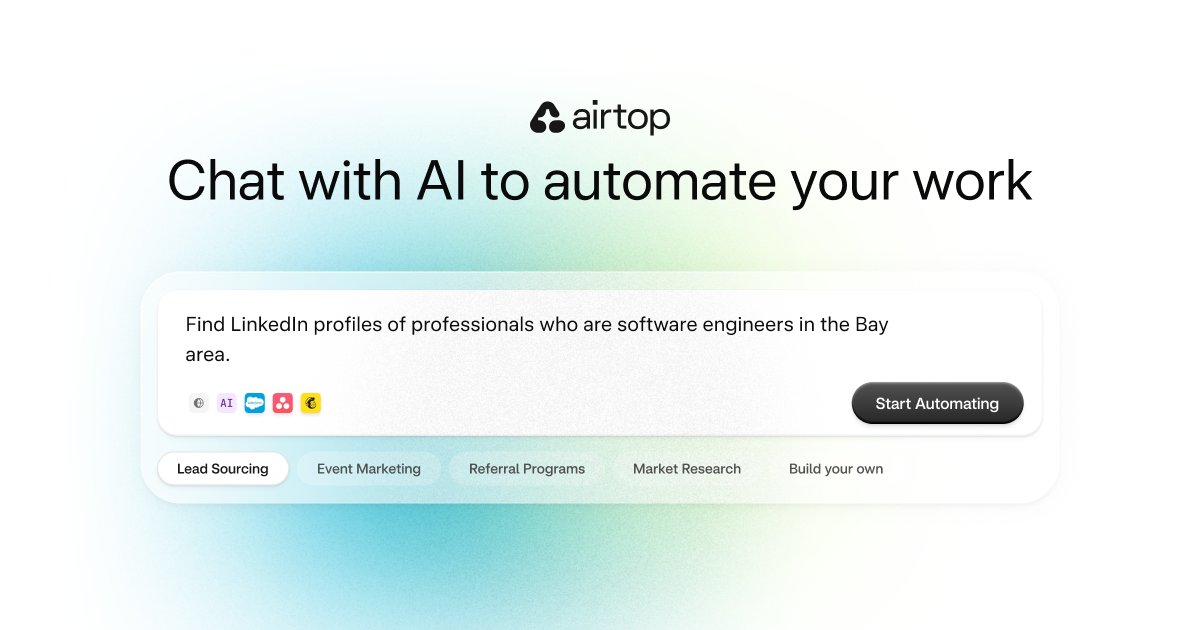
Build powerful automations instantly with Airtop Agents, the first code-free web agent builder. Type in plain English and connect with Slack, Gmail, Google Sheets, Airtable, HubSpot, and more.
Aident.ai helps businesses automate workflows and marketing operations using AI-driven orchestration.

Beawre Digital SL helps you manage and control your risks in many different sectors. Avoid risks in documentation control for construction and engineering. Control GDPR and privacy issues with our software. Reduce risks in IoT and health systems.
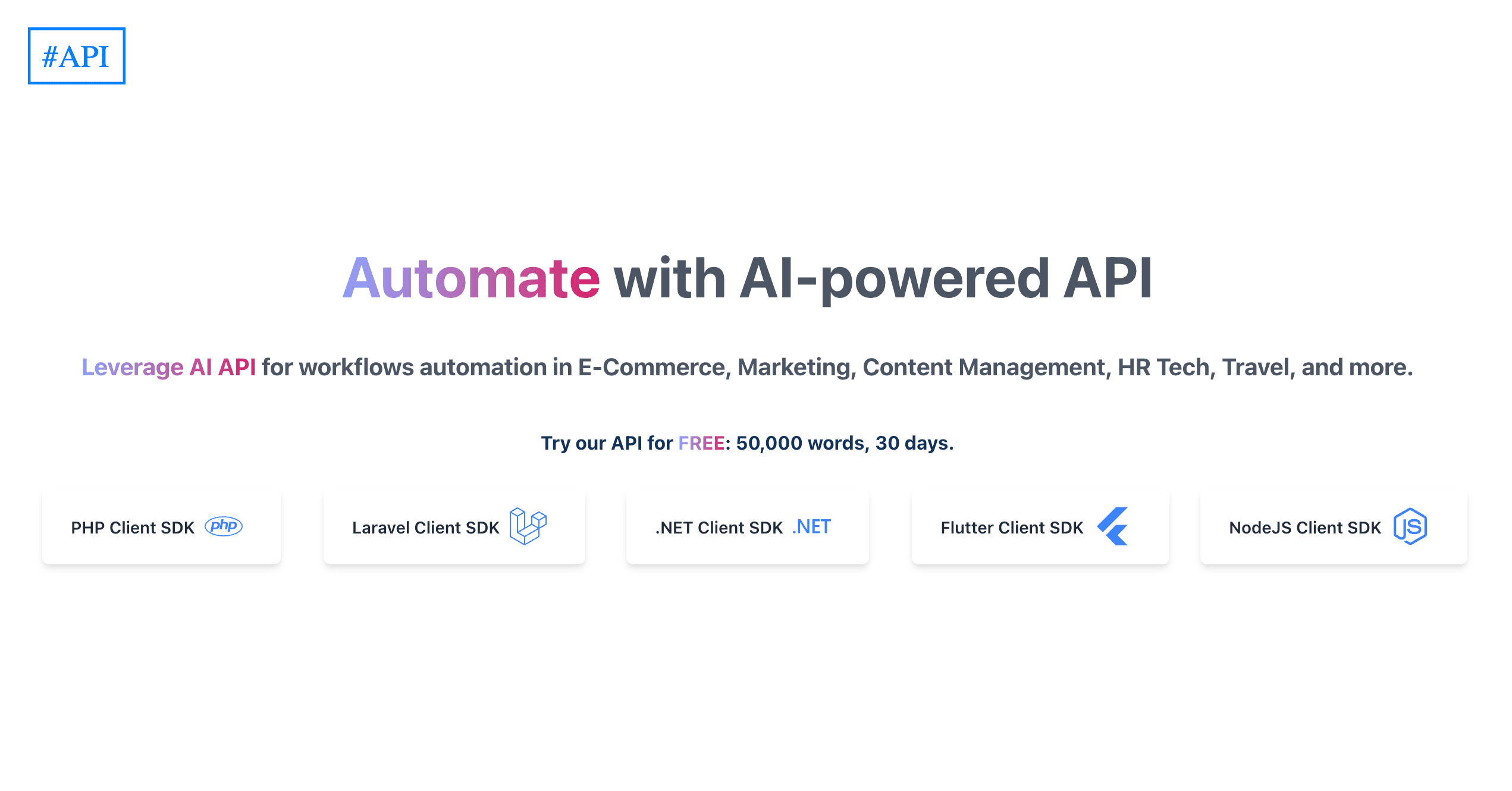
Leverage AI API to streamline workflow in E-Commerce, Marketing, Content Management, HR Tech, Travel, and more.

Create desktop automations in minutes. The faster, easier alternative to RPA. Warpdrive helps teams turn their repetitive tasks into instant desktop automations. No coding, no waiting, no sweat.
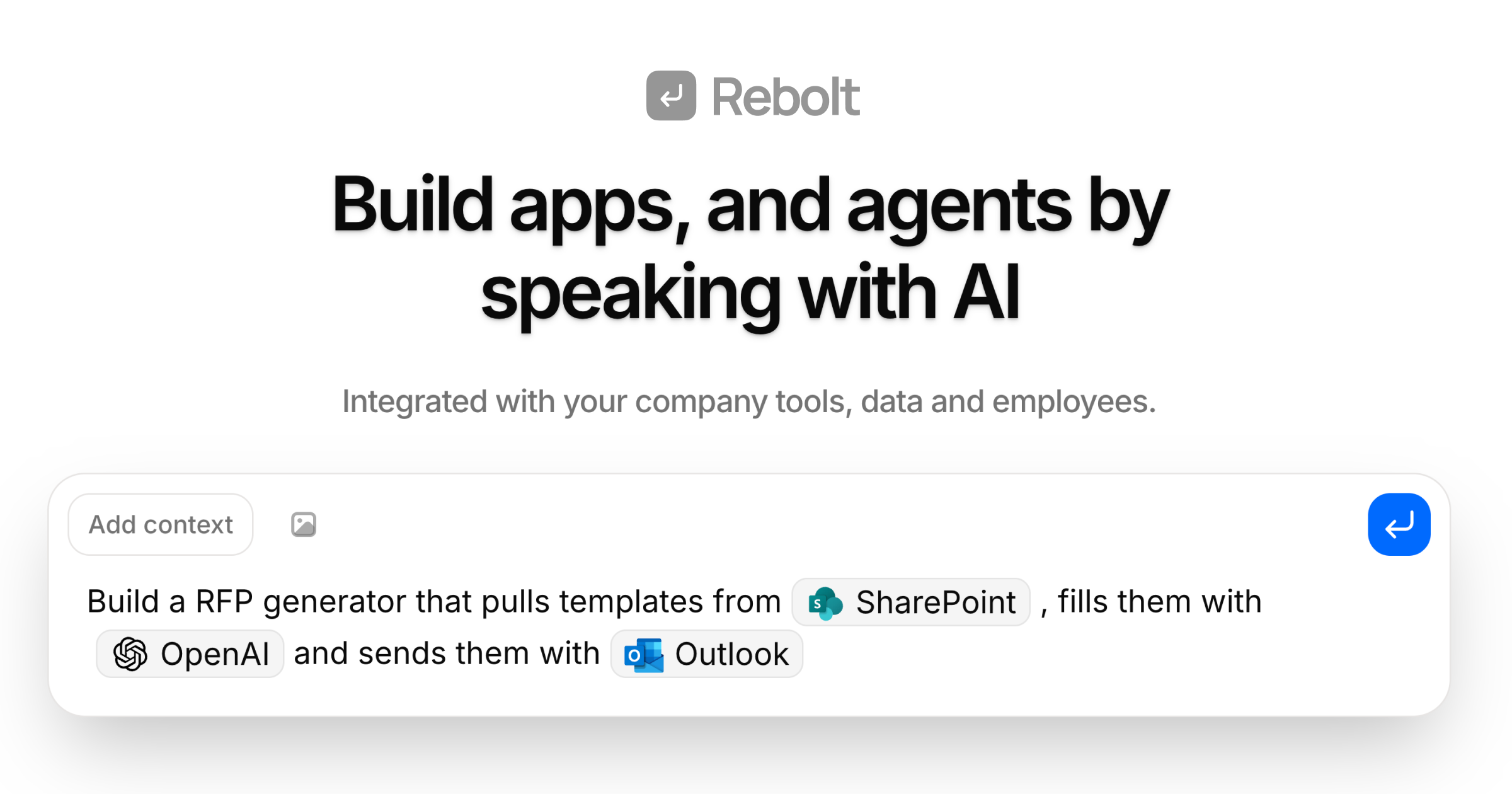
Rebolt helps you build powerful AI applications that connect to your data sources. Create custom integrations, automate workflows, and scale your business with our no-code AI platform.

Juzi Bot enterprise-grade Agentic digital-employee platform combines large models with enterprise-wide data and links WeChat, Douyin, DingTalk, Lark, WhatsApp, etc., to power autonomous intelligent agents that redefine human–machine collaboration and next-gen productivity—already deployed in over 1,

Deploy and run agents in an intuitive UI anyone can use. All backed by Dialtone's best-in-class AI infrastructure and agent orchestration platform.

Comena automatisiert die Angebots- und Auftragserfassung von der Inbox ins ERP
AI workers to automate back office work for insurance, logistics and finance companies.

Fintelite offers AI-powered document processing and forensics solutions, automating invoice, receipt, financial document management, and ensuring document authenticity with speed, accuracy, and cost efficiency.

Transform your document workflows with Mindee's AI-powered data extraction APIs. Automate data capture from invoices, receipts, IDs, and more with industry-leading accuracy and speed. Integrate easily with your existing systems and streamline document processing for businesses of all sizes
Build browser bots quickly, without code. Automate website actions and repetitive tasks using just your browser, on any website or web app.
AI agents that operate Quote-to-Cash and Procure-to-Pay workflows across SAP, Salesforce, NetSuite, ServiceNow, Workday and Dynamics. Backed by Y Combinator.
Run a free AEO + signal audit for your domain.
AI Answer Engine Optimization (AEO)
List once. Convert intent from live AI conversations without heavy integration.
Workflow automation solutions are integrated software and service packages that replace repetitive, manual business processes with rule-based automation. They leverage technologies like Robotic Process Automation (RPA), AI-driven decision engines, and API integrations to execute tasks across disparate systems. This results in increased operational efficiency, minimized human error, and the liberation of human resources for higher-value strategic work.
Existing manual workflows are analyzed, documented, and translated into automatable rule sets to identify bottlenecks and optimization opportunities.
The solution is connected to existing enterprise software like ERP, CRM, and databases to enable seamless, error-free data exchange and task execution.
Automated workflows are deployed into the production environment, monitored, and iteratively refined based on performance analytics to drive ongoing efficiency gains.
Automating invoice processing, payment runs, and month-end closures to ensure compliance and reduce processing times by up to 80%.
Streamlining applicant tracking, contract generation, and new hire checklists to minimize administrative overhead and improve the employee experience.
Seamlessly automating order intake, inventory updates, and shipping notifications across multiple sales channels for faster delivery.
Orchestrating inventory management, production scheduling, and supplier communications to enable just-in-time manufacturing and reduce carrying costs.
Automating ticket routing, incident escalation, and standard solution provisioning to drastically reduce mean time to resolution (MTTR).
Bilarna evaluates workflow automation providers using a proprietary 57-point AI Trust Score. This rigorous assessment covers expertise depth, project portfolio quality, compliance certifications, and verified client satisfaction metrics. Bilarna continuously monitors provider performance, ensuring only reliable, high-caliber partners are listed on the marketplace.
Costs vary significantly based on process complexity, scale, and integration depth. They typically include software licensing, implementation services, and ongoing maintenance. A detailed needs assessment is crucial for an accurate budget forecast.
Implementation can range from weeks for standard processes to several months for complex, enterprise-wide transformations. The timeline depends on process intricacy, existing IT infrastructure, and the chosen automation methodology.
RPA focuses on automating specific, repetitive tasks by mimicking user interactions, often at the UI level. Workflow automation orchestrates entire business processes using rules and system-level integrations, enabling broader, more intelligent end-to-end process management.
Key selection criteria include industry-specific experience, platform scalability and flexibility, quality of integration capabilities, and robust post-implementation support. Proven success in your sector is a critical indicator of provider suitability.
ROI manifests through significant cost savings from reduced manual labor, faster processing speeds, and minimized errors. Additional benefits include improved regulatory compliance, enhanced process scalability, and increased employee satisfaction by removing tedious tasks.
Yes, modern paywall solutions are designed to be compatible with both iOS and Android mobile applications. This cross-platform compatibility ensures that developers can implement a single paywall system across different devices and operating systems without needing separate solutions. It simplifies management and provides a consistent user experience regardless of the platform, making it easier to maintain and optimize monetization strategies.
Yes, automation tools are designed to handle complex multi-page forms effectively. They can reliably navigate through multiple pages, input data accurately, and manage conditional logic or validations that forms may require. This capability reduces the risk of human error and speeds up the completion process. By automating form filling, businesses can ensure consistency and accuracy in data entry, especially when dealing with large volumes of forms or repetitive tasks. This is particularly useful in sectors like healthcare, finance, and insurance where form accuracy is critical.
Yes, financial automation solutions are often modular and customizable to fit the specific needs of different businesses. Organizations can select and adapt only the modules they require, such as accounts payable, accounts receivable, billing, or treasury management, allowing them to scale their automation at their own pace. This flexibility ensures that companies can address their unique operational challenges without unnecessary complexity or cost. Additionally, user-friendly tools and AI capabilities enable teams to maintain compliance and efficiency while tailoring the system to their workflows. Customized onboarding and collaborative support further help businesses get up and running quickly with solutions that match their requirements.
AI legal assistants typically do not require new software installation or changes to existing workflows. They are designed to integrate seamlessly with current systems, allowing legal teams to adopt the technology without disrupting their established processes. This ease of integration helps minimize training time and resistance to change. Furthermore, many AI legal tools operate via familiar platforms such as email, making them accessible and convenient for users. This approach ensures that legal professionals can benefit from AI capabilities while maintaining compliance with industry standards and regulations.
No, you do not need technical skills or a developer to implement business automation. Modern automation services are designed to be managed by business users and process owners. The implementation typically involves you describing your business workflows and goals in plain language to a specialist or through a guided platform. The service provider then handles the technical translation, system configuration, and integration work. This approach allows you to focus on defining the desired outcomes while experts manage the underlying technology. Many platforms also offer no-code or low-code visual builders that enable users to design and modify automations using drag-and-drop interfaces, making the technology accessible without programming knowledge.
Creating automation workflows for desktop applications typically requires some basic technical skills, mainly the ability to write simple code snippets. However, many modern automation platforms allow users to describe workflows in plain English or natural language, making it easier for those with limited coding experience. The automation engine then interprets these instructions to perform tasks such as opening applications, entering data, or extracting information. This approach lowers the barrier to entry, enabling developers and automation engineers to quickly build and trigger workflows without deep programming knowledge.
No, you generally do not need technical skills to use an AI-based accounting automation tool. These platforms are designed with user-friendly interfaces tailored for accountants and finance teams rather than IT specialists. They often include guided workflows and step-by-step instructions to help users connect their tax portals, configure settings, and review automated data entries. The artificial intelligence component works in the background to classify and suggest accounting data, while users maintain control over final approvals. This approach ensures that even those without technical expertise can efficiently automate invoice processing and improve accuracy.
No, you do not need technical skills to use an AI-based invoice automation tool. These platforms are designed with user-friendly interfaces tailored for accountants and finance teams rather than IT specialists. The software typically guides users step-by-step through the setup and daily operations, making it accessible even for those without a technical background. The artificial intelligence handles complex tasks like data classification and error detection automatically, allowing users to focus on reviewing and approving the processed invoices with confidence.
AI workflow automation in healthcare does not require traditional integration with existing electronic medical record (EMR) systems. Instead of relying on APIs or custom development, AI interacts with EMR software by mimicking human actions such as clicking, typing, and navigating interfaces. This approach allows the AI to work seamlessly with any EMR system or portal, including popular platforms like Epic, Cerner, and athenahealth. As a result, clinics can deploy automation solutions quickly without lengthy IT projects or vendor approvals.
AI agent development involves creating autonomous software programs that perceive their environment, make decisions, and take actions to achieve specific business goals without constant human intervention. The process starts with defining clear objectives, such as automating customer service inquiries, processing invoices, or managing inventory. Developers then design the agent's architecture, which typically includes modules for perception (understanding data), reasoning (making decisions using models like LLMs), and action (executing tasks via APIs). These agents are trained on relevant enterprise data and integrated into existing systems like CRM or ERP platforms. Upon deployment, they operate 24/7, handling repetitive tasks, providing instant responses, and generating insights. Successful deployment leads to dramatic increases in operational speed, significant cost reductions by automating up to 90% of routine tasks, and allows human employees to focus on higher-value strategic work.