Step 1
Machine-Ready Briefs
AI translates unstructured needs into a technical, machine-ready project request.
We use cookies to improve your experience and analyze site traffic. You can accept all cookies or only essential ones.
 Bilarna
Stop browsing static lists. Tell Bilarna your specific needs. Our AI translates your words into a structured, machine-ready request and instantly routes it to verified Workflow Automation Platform experts for accurate quotes.
AI translates unstructured needs into a technical, machine-ready project request.
Compare providers using verified AI Trust Scores & structured capability data.
Skip the cold outreach. Request quotes, book demos, and negotiate directly in chat.
Filter results by specific constraints, budget limits, and integration requirements.
Eliminate risk with our 57-point AI safety check on every provider.
Verified companies you can talk to directly

Discover REKAP, an AI platform that automates workflows to boost team productivity with smart solutions designed for efficient business operations today.
Achieve in 13 weeks what others take a year to do.
Discover how AI employees can revolutionize your business, boost productivity, and streamline operations. Explore our cutting-edge AI solutions today.

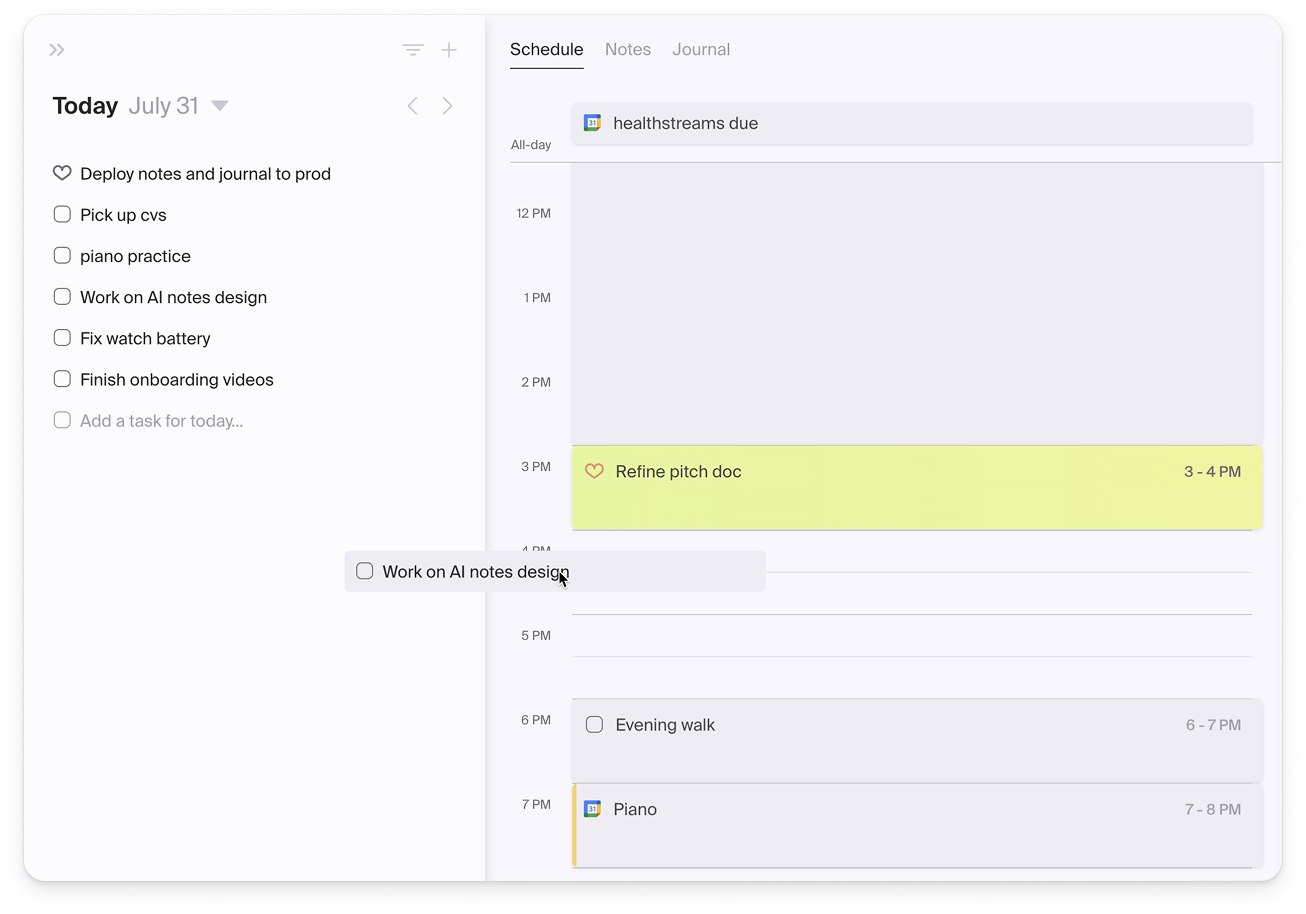
Easily plan and manage tasks, projects, and workflow automatically around your busy schedule powered by AI. Start using TimeHero's for planning work today.

Swatle - The AI-powered platform for modern teams. Streamline workflows, automate tasks, and accelerate growth.
Timetics.ai is a booking platform where you can create meaningful meetings, with visual seat plan, AI-powered experience, and all the tools needed for your business.

Swiftgum déploie des workflows IA capables de lire vos documents, vérifier les informations, rapprocher les données et vous alerter instantanément — sur des tâches qui étaient impossibles à automatiser jusqu'ici.

We leverage cutting-edge machine learning to save you time and money, our guiding mission is to make workflows more scalable and efficient, through smart AI-powered business process automation.

Unlock your team's full potential and drive your business forward with Varolio's AI-powered inbox

Enterprise MCP servers connecting AI agents to 1,400+ business apps. Secure, scalable agentic AI workflows built on the #1 iPaaS.
Extract data from documents, invoices, contracts, and bank statements to your tools like monday.com without any coding or technicalities.
Wazzap AI est une solution d'automatisation WhatsApp qui vous permet de gérer vos conversations, qualifier vos leads et prendre des rendez-vous automatiquement

Ushur uses AI-powered automation to boost engagement, streamline workflows, and enhance service with personalized interactions and integrations.

AI workflows as code. Deployed in minutes.


Pipefy’s AI Agents take charge of repetitive tasks and processes, ensuring everything stays on track. Build your dream team right now!

Bring Claude's AI assistance to your browser. Ask questions, analyze data, automate tasks, and navigate sites in Chrome. Works with Claude Code and Desktop.
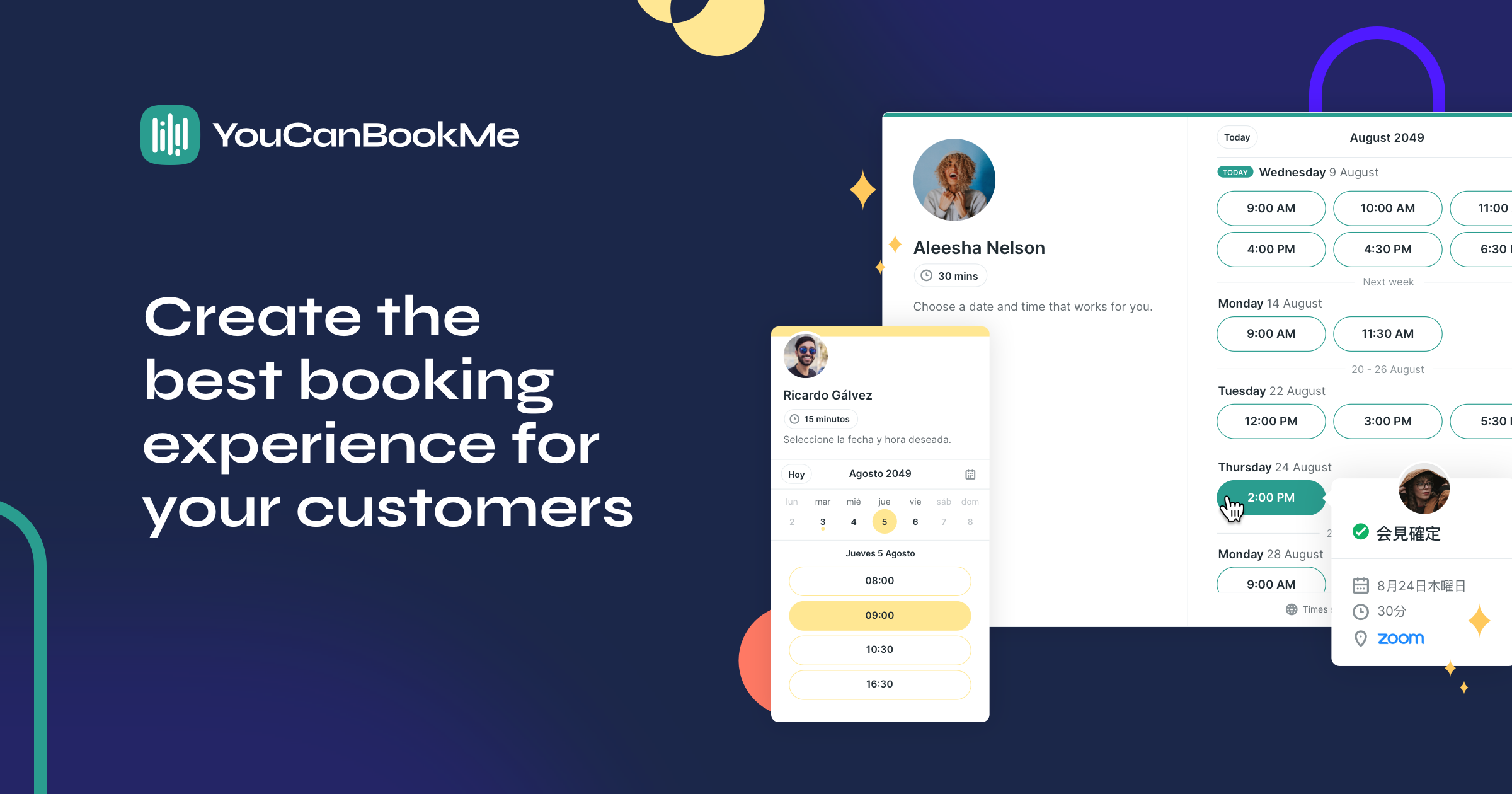
Create the best booking experience for your customers with fully customizable online scheduling. Trusted by 1M+ users worldwide.

Wir automatisieren Ihre Geschäftsprozesse – schnell, sicher und skalierbar. Von Workflow-Automatisierung bis CRM-Integration.

Meet Viq, your AI co-pilot in the first-ever Agentic OS for Commerce. Unify your tools, automate complex workflows, and command your business growth from one central AI Command Centre.

EVIMO One helps infrastructure operators maximize uptime and cut OPEX with native-AI diagnostics, predictive maintenance, and workflow automation.

We design and operate end-to-end automations and AI agents to eliminate manual work and raise margins. Results-First guarantee; operational in 30 days.
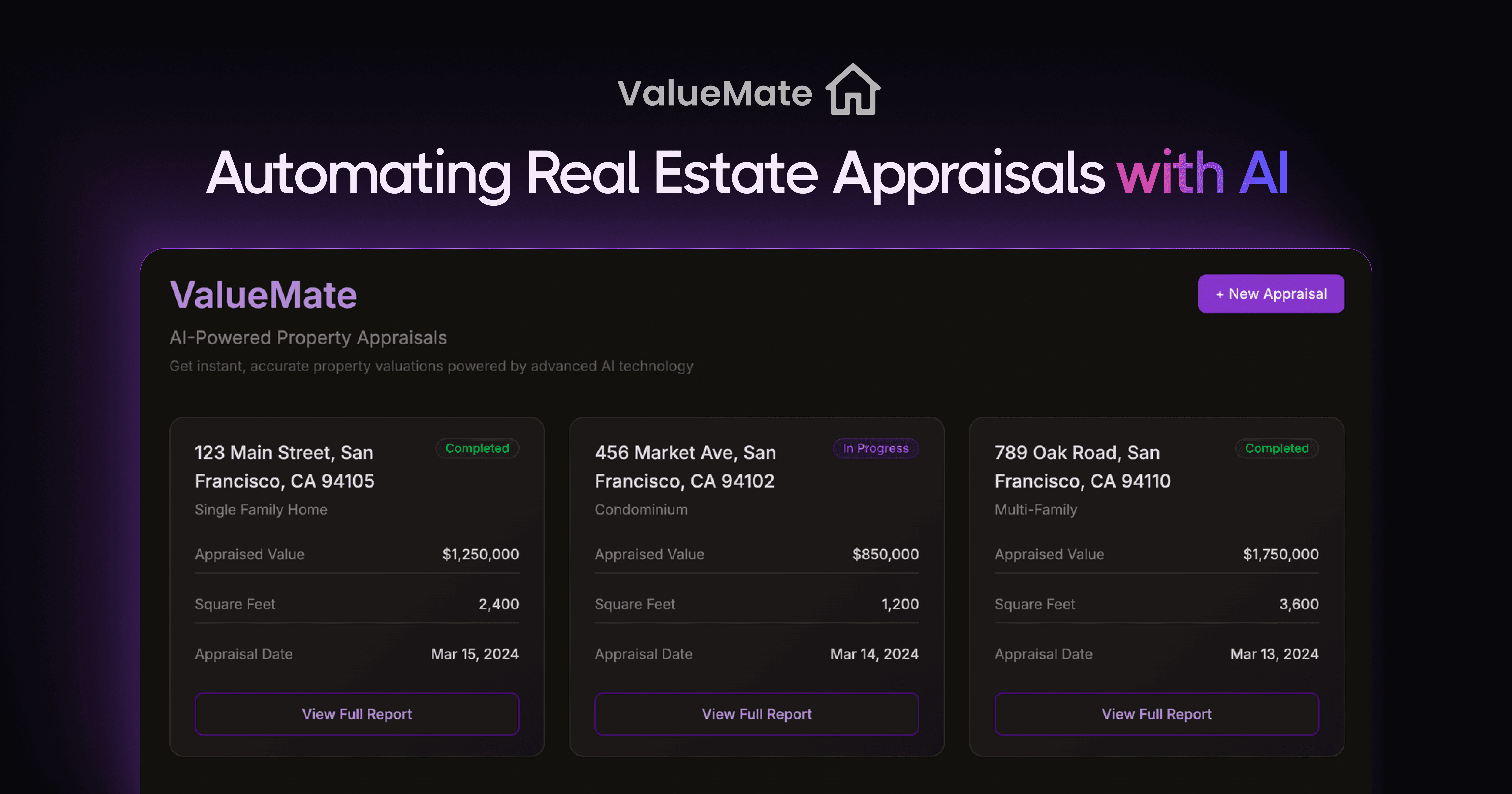
ValueMate Automates Appraisal Workflows wtih AI. Cut down appraisal turaround times by 80%.

Tracecat is the open source AI automation platform for enterprise workflows, agents, and tickets. Turn simple prompts into secure, scalable agents and workflows with 100+ integrations.

Sola is an agentic process automation platform that makes it easy for companies to automate data entry, scraping, and processing flows using LLMs and computer vision – delivering results much faster and with less effort than traditional RPA tools.
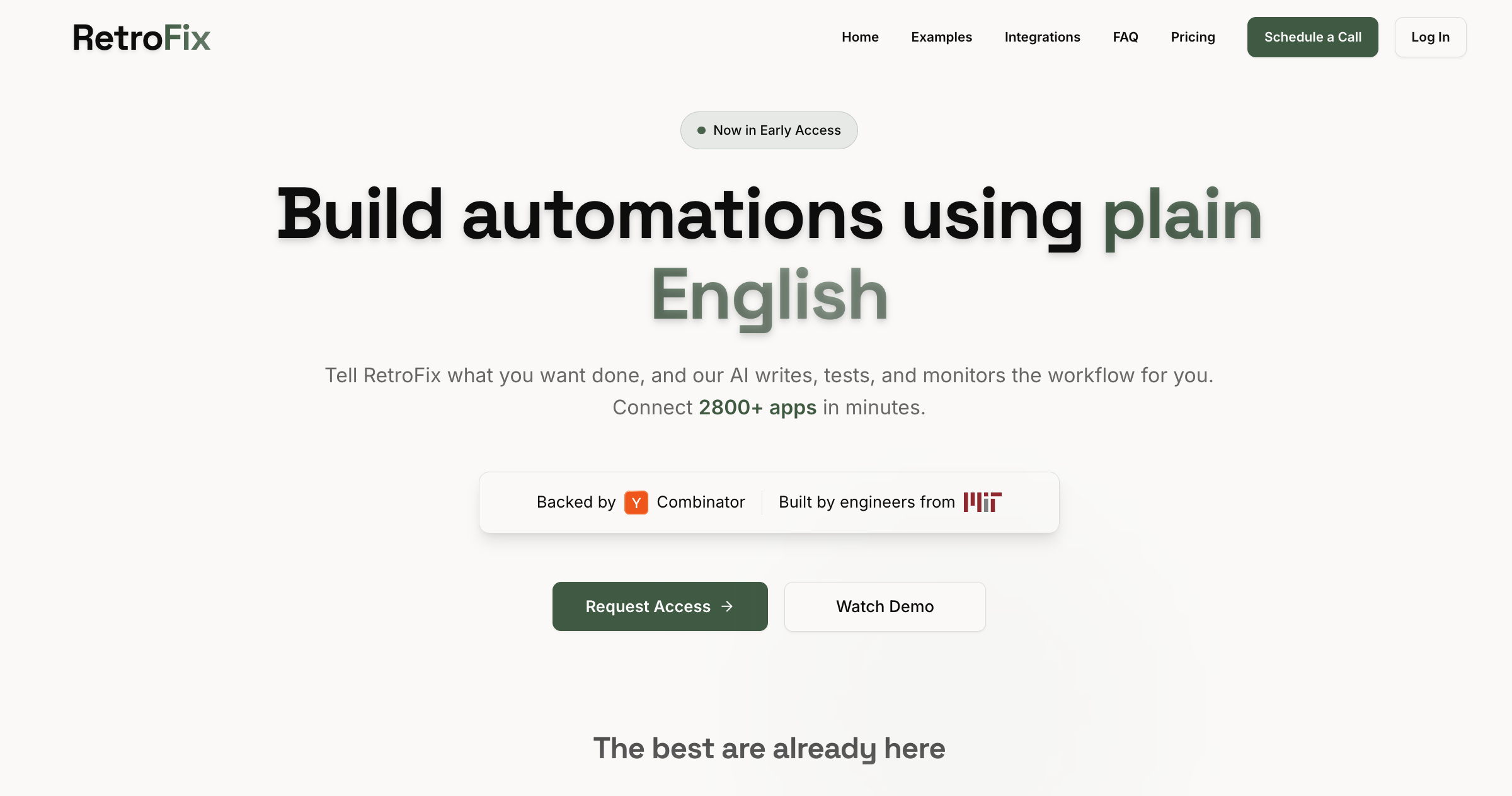
Build powerful workflows in plain English. RetroFix connects 2800+ apps with AI-powered automation. No coding required—perfect for browser automation and business workflows.

Production ready automation for the next generation of businesses. Deploy intelligent robots that integrate seamlessly into existing workflows.

Luminai’s proprietary AI systems eliminate the manual, repetitive work from your business processes.
Run a free AEO + signal audit for your domain.
AI Answer Engine Optimization (AEO)
List once. Convert intent from live AI conversations without heavy integration.
Workflow automation is the use of software and rules to automate sequences of tasks, data, and approvals across digital systems. It leverages technologies like Robotic Process Automation (RPA), API integrations, and low-code platforms to connect disparate applications. This reduces manual effort, accelerates process completion, and minimizes human error for improved operational consistency.
Business analysts document existing manual workflows to pinpoint repetitive, rule-based tasks suitable for automation.
Developers or citizen integrators use visual builders or scripts to define triggers, actions, and decision rules.
The automated workflow is launched into production, with dashboards tracking execution speed, error rates, and ROI.
Automates invoice processing, purchase order approvals, and month-end financial closes, reducing processing time by over 70%.
Routes support tickets, sends automated responses, and escalates complex issues, improving first-response times and agent productivity.
Streamlines employee onboarding, leave request approvals, and payroll data validation, ensuring policy compliance and a smoother employee experience.
Connects online stores, inventory systems, and shipping carriers to automatically process orders, update stock, and generate tracking numbers.
Automates server provisioning, security patch deployment, and backup verification, enhancing system reliability and reducing manual intervention.
Bilarna evaluates every workflow automation provider using a proprietary 57-point AI Trust Score. This assessment covers technical expertise through portfolio and code reviews, verifies reliability via client reference checks and delivery track records, and audits compliance with relevant standards like SOC 2 or ISO 27001. Bilarna's continuous monitoring ensures providers maintain high performance and security postures.
Costs vary widely from $5,000 for simple departmental bots to $500,000+ for enterprise-wide orchestration platforms. Key factors include process complexity, number of integrations, licensing model (SaaS vs. on-premise), and required customization. A clear ROI analysis is essential for budget justification.
Implementation timelines range from 2-4 weeks for a single, well-defined process to 6-12 months for a multi-department digital transformation program. The duration depends on process discovery depth, integration complexity, change management requirements, and the chosen deployment methodology (agile vs. waterfall).
Prioritize providers with proven expertise in your industry, robust integration capabilities (APIs, pre-built connectors), strong security and compliance credentials, and scalable pricing. Assess their platform's ease of use for both developers and business users, and evaluate the quality of their technical support and change management services.
Robotic Process Automation (RPA) focuses on mimicking human actions to automate repetitive tasks within specific applications, often at the UI layer. Workflow automation is a broader discipline that orchestrates tasks, data, and approvals across multiple systems using APIs and business logic, enabling end-to-end process automation beyond simple task repetition.
A major pitfall is automating inefficient or broken processes, which simply speeds up poor outcomes. Always map, analyze, and optimize the process manually first. Another mistake is neglecting change management; failing to train users and secure stakeholder buy-in can lead to low adoption and project failure despite technical success.
Yes, automation tools are designed to handle complex multi-page forms effectively. They can reliably navigate through multiple pages, input data accurately, and manage conditional logic or validations that forms may require. This capability reduces the risk of human error and speeds up the completion process. By automating form filling, businesses can ensure consistency and accuracy in data entry, especially when dealing with large volumes of forms or repetitive tasks. This is particularly useful in sectors like healthcare, finance, and insurance where form accuracy is critical.
Yes, financial automation solutions are often modular and customizable to fit the specific needs of different businesses. Organizations can select and adapt only the modules they require, such as accounts payable, accounts receivable, billing, or treasury management, allowing them to scale their automation at their own pace. This flexibility ensures that companies can address their unique operational challenges without unnecessary complexity or cost. Additionally, user-friendly tools and AI capabilities enable teams to maintain compliance and efficiency while tailoring the system to their workflows. Customized onboarding and collaborative support further help businesses get up and running quickly with solutions that match their requirements.
AI legal assistants typically do not require new software installation or changes to existing workflows. They are designed to integrate seamlessly with current systems, allowing legal teams to adopt the technology without disrupting their established processes. This ease of integration helps minimize training time and resistance to change. Furthermore, many AI legal tools operate via familiar platforms such as email, making them accessible and convenient for users. This approach ensures that legal professionals can benefit from AI capabilities while maintaining compliance with industry standards and regulations.
No, you do not need technical skills or a developer to implement business automation. Modern automation services are designed to be managed by business users and process owners. The implementation typically involves you describing your business workflows and goals in plain language to a specialist or through a guided platform. The service provider then handles the technical translation, system configuration, and integration work. This approach allows you to focus on defining the desired outcomes while experts manage the underlying technology. Many platforms also offer no-code or low-code visual builders that enable users to design and modify automations using drag-and-drop interfaces, making the technology accessible without programming knowledge.
Creating automation workflows for desktop applications typically requires some basic technical skills, mainly the ability to write simple code snippets. However, many modern automation platforms allow users to describe workflows in plain English or natural language, making it easier for those with limited coding experience. The automation engine then interprets these instructions to perform tasks such as opening applications, entering data, or extracting information. This approach lowers the barrier to entry, enabling developers and automation engineers to quickly build and trigger workflows without deep programming knowledge.
No, you generally do not need technical skills to use an AI-based accounting automation tool. These platforms are designed with user-friendly interfaces tailored for accountants and finance teams rather than IT specialists. They often include guided workflows and step-by-step instructions to help users connect their tax portals, configure settings, and review automated data entries. The artificial intelligence component works in the background to classify and suggest accounting data, while users maintain control over final approvals. This approach ensures that even those without technical expertise can efficiently automate invoice processing and improve accuracy.
No, you do not need technical skills to use an AI-based invoice automation tool. These platforms are designed with user-friendly interfaces tailored for accountants and finance teams rather than IT specialists. The software typically guides users step-by-step through the setup and daily operations, making it accessible even for those without a technical background. The artificial intelligence handles complex tasks like data classification and error detection automatically, allowing users to focus on reviewing and approving the processed invoices with confidence.
AI workflow automation in healthcare does not require traditional integration with existing electronic medical record (EMR) systems. Instead of relying on APIs or custom development, AI interacts with EMR software by mimicking human actions such as clicking, typing, and navigating interfaces. This approach allows the AI to work seamlessly with any EMR system or portal, including popular platforms like Epic, Cerner, and athenahealth. As a result, clinics can deploy automation solutions quickly without lengthy IT projects or vendor approvals.
AI agent development involves creating autonomous software programs that perceive their environment, make decisions, and take actions to achieve specific business goals without constant human intervention. The process starts with defining clear objectives, such as automating customer service inquiries, processing invoices, or managing inventory. Developers then design the agent's architecture, which typically includes modules for perception (understanding data), reasoning (making decisions using models like LLMs), and action (executing tasks via APIs). These agents are trained on relevant enterprise data and integrated into existing systems like CRM or ERP platforms. Upon deployment, they operate 24/7, handling repetitive tasks, providing instant responses, and generating insights. Successful deployment leads to dramatic increases in operational speed, significant cost reductions by automating up to 90% of routine tasks, and allows human employees to focus on higher-value strategic work.
A commercial real estate platform can significantly improve brokers' workflow by centralizing property data and client information in one accessible location. It streamlines communication through integrated messaging and CRM tools, reducing the need for multiple applications. Automated processes such as listing updates, appointment scheduling, and document management save time and reduce errors. Additionally, data analytics features provide brokers with market trends and insights, enabling better decision-making. Overall, these capabilities help brokers manage their tasks more efficiently, close deals faster, and enhance client satisfaction.