Step 1
Machine-Ready Briefs
AI translates unstructured needs into a technical, machine-ready project request.
We use cookies to improve your experience and analyze site traffic. You can accept all cookies or only essential ones.
 Bilarna
Stop browsing static lists. Tell Bilarna your specific needs. Our AI translates your words into a structured, machine-ready request and instantly routes it to verified Data and Voice Intelligence Solutions experts for accurate quotes.
AI translates unstructured needs into a technical, machine-ready project request.
Compare providers using verified AI Trust Scores & structured capability data.
Skip the cold outreach. Request quotes, book demos, and negotiate directly in chat.
Filter results by specific constraints, budget limits, and integration requirements.
Eliminate risk with our 57-point AI safety check on every provider.
Verified companies you can talk to directly
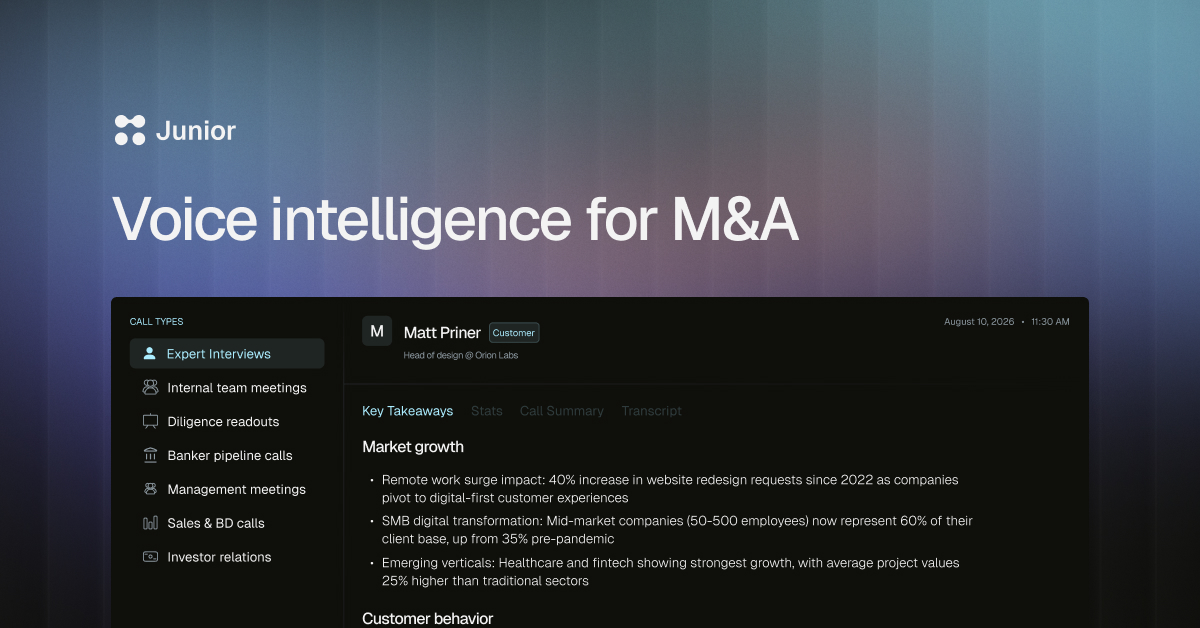
Junior delivers industry-leading transcription and dynamic knowledge graphs for investors, advisors, and consultants. SOC 2 Type II certified, built for compliance, and trusted by top firms to save time, surface insights, and power billion-dollar deals.
Run a free AEO + signal audit for your domain.
AI Answer Engine Optimization (AEO)
List once. Convert intent from live AI conversations without heavy integration.
Data and voice intelligence solutions are integrated platforms that apply artificial intelligence and machine learning to analyze both structured datasets and unstructured voice communications. These systems synthesize insights from customer calls, meetings, and operational data to identify patterns, sentiments, and actionable intelligence. The result is improved customer experience, optimized operations, and data-driven strategic decision-making for enterprises.
Organizations first identify specific business goals, such as improving customer sentiment analysis or uncovering sales process inefficiencies from call data.
The solution ingests and normalizes data from diverse sources, including CRM systems, call recordings, and operational databases, for unified analysis.
AI models analyze the consolidated data to produce dashboards, automated alerts, and prescriptive recommendations for teams to implement.
Banks use voice analytics to monitor customer interactions for regulatory compliance, fraud detection, and identifying mis-selling risks in real-time.
Providers analyze patient call center interactions to reduce wait times, personalize care, and improve satisfaction scores through sentiment tracking.
Retailers correlate support call reasons with purchase data to identify product issues, reduce return rates, and train agents more effectively.
Plants integrate sensor data with operator voice logs from the factory floor to predict equipment failures and streamline maintenance schedules.
Software companies analyze user feedback from support calls and usage data to prioritize feature development and enhance user onboarding.
Bilarna evaluates every provider through a proprietary 57-point AI Trust Score, assessing technical expertise, project delivery reliability, and client satisfaction. This includes rigorous checks of provider portfolios, client reference validation, and verification of relevant data security certifications. Continuous performance monitoring on Bilarna ensures listed partners maintain high service standards.
Costs vary widely based on deployment scale, data volume, and required features, typically ranging from mid-five-figure annual subscriptions for SaaS platforms to custom enterprise deployments costing significantly more. Pricing models often include per-user fees, consumption-based pricing for API calls, or flat-rate enterprise licenses.
Implementation timelines range from 4-12 weeks for standard SaaS deployments with existing connectors. Complex, on-premise deployments integrating with legacy telephony systems can take 6 months or more, depending on data infrastructure and customization requirements.
Basic speech analytics primarily transcribes and keywords call content. Full voice intelligence incorporates conversational AI, sentiment analysis, and integrates findings with other business data (like CRM) to provide holistic insights into customer behavior and operational efficiency.
Common pitfalls include overlooking data integration capabilities, underestimating the importance of real-time processing, and choosing a vendor without industry-specific AI models. Buyers should also prioritize vendors with strong data governance and clear explainability for their AI insights.
Measurable returns often include a 10-25% increase in contact center efficiency, a 15-30% improvement in customer satisfaction scores, and a significant reduction in compliance risks. ROI is typically realized within 6-12 months through reduced handling times and better conversion rates.