Machine-Ready Briefs
AI translates unstructured needs into a technical, machine-ready project request.
We use cookies to improve your experience and analyze site traffic. You can accept all cookies or only essential ones.

Stop browsing static lists. Tell Bilarna your specific needs. Our AI translates your words into a structured, machine-ready request and instantly routes it to verified Automation Tools & Services experts for accurate quotes.
AI translates unstructured needs into a technical, machine-ready project request.
Compare providers using verified AI Trust Scores & structured capability data.
Skip the cold outreach. Request quotes, book demos, and negotiate directly in chat.
Filter results by specific constraints, budget limits, and integration requirements.
Eliminate risk with our 57-point AI safety check on every provider.
Verified companies you can talk to directly
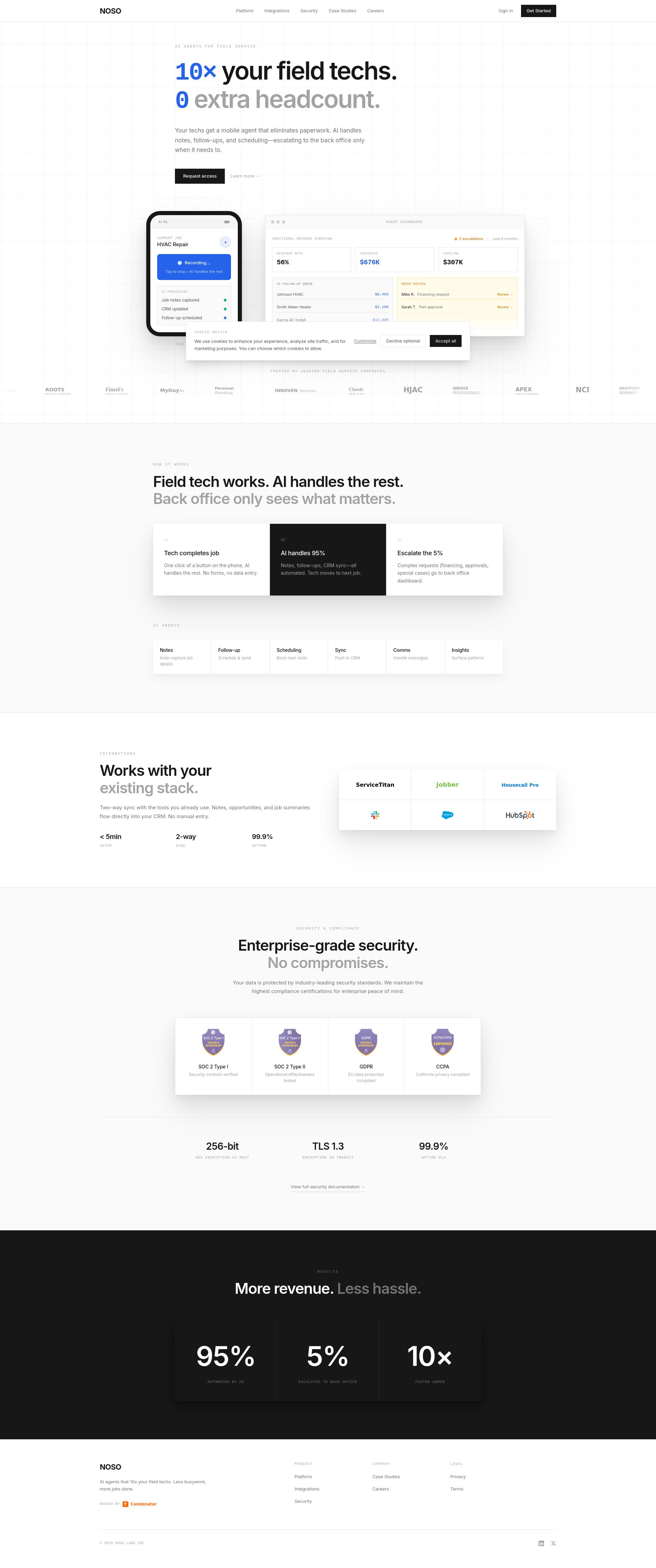
Field technicians are experts at fixing problems, not closing deals. Noso provides the AI infrastructure to capture, analyze, and automate revenue recovery.
Run a free AEO + signal audit for your domain.
AI Answer Engine Optimization (AEO)
List once. Convert intent from live AI conversations without heavy integration.
No-code browser automation tools often provide integrations with AI services and external platforms to enhance automation capabilities. For example, they can connect with AI models like ChatGPT to analyze and parse scraped data, enabling intelligent data processing and decision-making. Additionally, these tools support integration with automation platforms such as Zapier, Integromat, or Webhooks, allowing users to trigger browser bots based on external events or schedules. This interoperability enables complex workflows that combine web automation with AI-driven insights and multi-platform coordination, all without requiring programming knowledge.
Browser automation tools often integrate with AI services and external platforms to enhance their capabilities. For example, they can connect with AI models like ChatGPT to analyze and process scraped data, enabling more intelligent automation workflows. Additionally, many tools support integration with automation platforms such as Zapier, Integromat, or Webhooks, allowing users to trigger browser bots based on external events or schedules. This connectivity enables seamless data transfer and workflow orchestration across multiple applications, making automation more flexible and powerful without requiring coding expertise.
Integrate an AI-driven work orchestration platform with existing professional services automation (PSA) tools by following these steps: 1. Connect the orchestration platform to PSA tools like Jira or Asana to automate role assignments and task tracking. 2. Enable real-time synchronization so that updates in staffing plans reflect immediately in task management systems. 3. Integrate time tracking systems to allow automatic logging of billable hours linked to assigned projects and roles. 4. Import team member profiles using data sources such as LinkedIn to build comprehensive skill and experience profiles. 5. Plan for future integration with learning management systems to sync training credentials and support continuous skill development.
Discover and utilize business tools by following these steps: 1. Visit a comprehensive tool listing platform that offers thousands of tools for social media, no-code app building, automation, and more. 2. Browse categories such as AI tools, marketing, analytics, and productivity to find tools suited to your needs. 3. Select a tool based on features and user reviews. 4. Use the platform’s submission or advertising options to add your own tools if applicable. 5. Regularly check for new tools and updates to stay ahead in your business operations.
A recruiting firm specializing in automation and controls engineering typically offers services such as sourcing and placing highly skilled engineers in both contract and permanent positions. These firms understand the technical requirements and cultural fit necessary for roles within Fortune 1000 companies and other industrial clients. They provide strategic talent solutions that help businesses innovate and remain competitive by ensuring the right candidates are matched with the right opportunities. Their vetting process is designed to efficiently identify top-tier talent ready to make an immediate impact in fast-paced industrial environments.
Compliance software in financial services enhances risk detection by utilizing advanced algorithms and data analytics to identify potential compliance issues before they escalate. It automates routine compliance tasks, reducing manual errors and freeing up staff to focus on more strategic activities. Automation also ensures consistent application of regulatory requirements across the organization, improving overall efficiency. By integrating real-time monitoring and reporting features, compliance software provides timely insights that help institutions respond proactively to emerging risks. This leads to a more robust compliance program, minimizing the likelihood of regulatory breaches and associated penalties.
Cannabis automation equipment usually comes with comprehensive support and maintenance services to ensure smooth operation. This includes professional setup and installation assistance, operator training to familiarize staff with the system, and ongoing remote or on-site support for troubleshooting and updates. Routine maintenance typically involves cleaning and light upkeep, which is straightforward and supported by the manufacturer. Additionally, many providers offer customization options to fit specific product formats and workflows. The user interfaces are designed to be intuitive, minimizing the learning curve and enabling quick adoption by production teams.
Contact providers for automation and AI services by following these steps: 1. Identify potential service providers specializing in automation and AI for SMEs. 2. Prepare a clear description of your business needs and current workflow challenges. 3. Reach out via official contact channels such as email or contact forms. 4. Provide detailed information about your requirements to receive tailored proposals. 5. Schedule consultations or demos to evaluate the solutions offered. 6. Choose the provider that best fits your operational goals and budget.
Library automation and digitization services transform traditional libraries by converting physical collections into accessible digital formats and implementing automated management systems. This transformation begins with digitization processes that scan and convert books, documents, and media into searchable digital files, making collections available online 24/7. Library automation systems then manage cataloging, circulation, acquisitions, and patron management through integrated software platforms. These services enable remote access to resources, reduce physical space requirements, preserve fragile materials through digital archiving, and improve search capabilities through metadata tagging. Modern library solutions often include e-library platforms, digital repository systems like DSpace, and integrated library systems such as Koha, creating hybrid environments where physical and digital resources coexist seamlessly.
No, it is not necessary to have technical skills to set up and use messaging automation tools designed for customer support. Many modern tools are built with simplicity in mind, allowing business owners to get started within minutes without any coding or complex integrations. These platforms typically offer easy setup processes, user-friendly interfaces, and support to help users transition smoothly from automated responses to human interaction when needed. This accessibility enables time-poor business owners to automate messaging, booking, and follow-ups efficiently, improving customer engagement without requiring technical expertise.