Step 1
Machine-Ready Briefs
AI translates unstructured needs into a technical, machine-ready project request.
We use cookies to improve your experience and analyze site traffic. You can accept all cookies or only essential ones.
 Bilarna
Stop browsing static lists. Tell Bilarna your specific needs. Our AI translates your words into a structured, machine-ready request and instantly routes it to verified No-Code Business Automation experts for accurate quotes.
AI translates unstructured needs into a technical, machine-ready project request.
Compare providers using verified AI Trust Scores & structured capability data.
Skip the cold outreach. Request quotes, book demos, and negotiate directly in chat.
Filter results by specific constraints, budget limits, and integration requirements.
Eliminate risk with our 57-point AI safety check on every provider.
Verified companies you can talk to directly
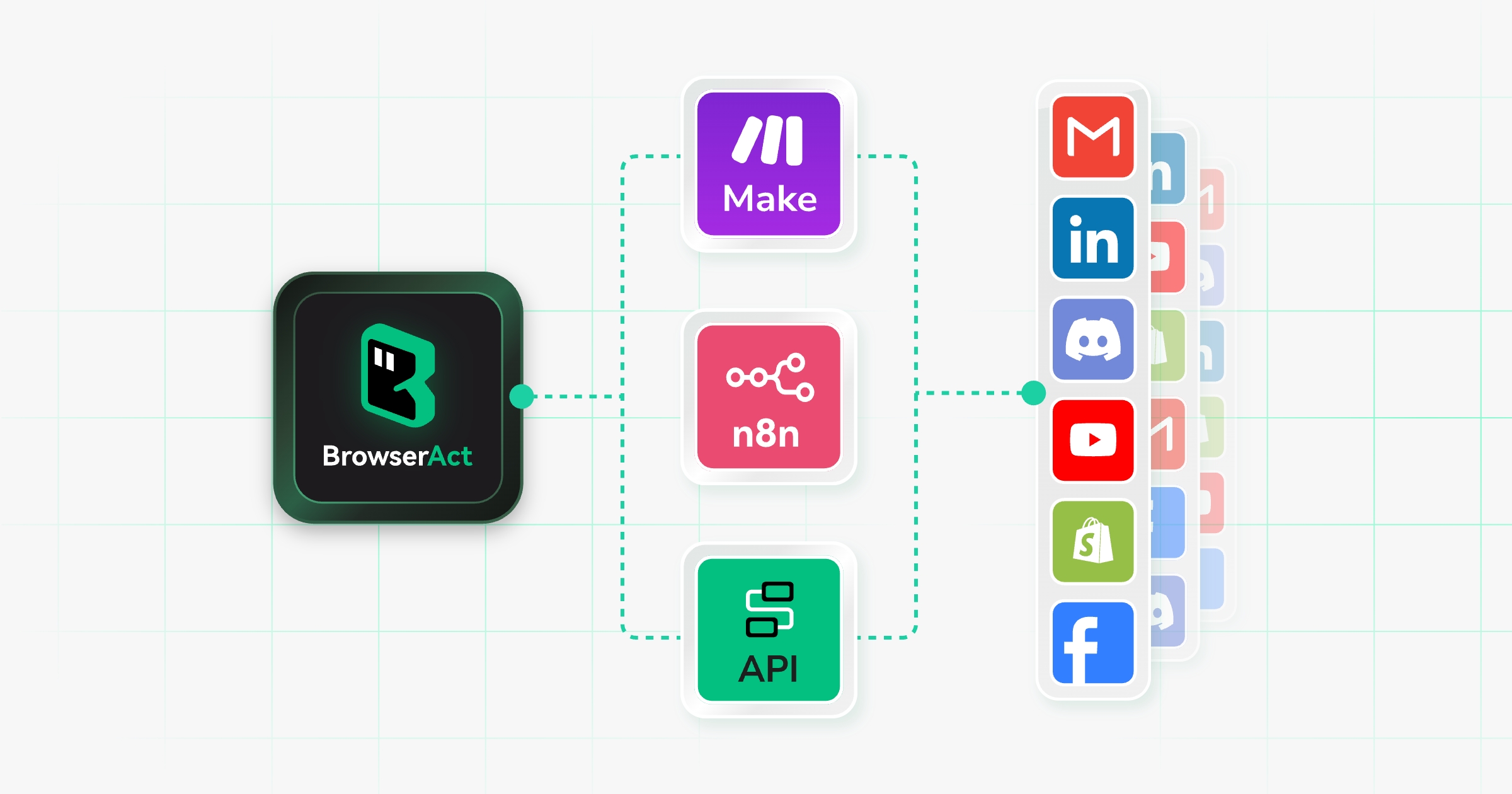
Instantly scrape data from any site with our AI-powered tool. User-friendly, no-code solutions with Make and n8n automation for scalable, cost-effective results
Run a free AEO + signal audit for your domain.
AI Answer Engine Optimization (AEO)
List once. Convert intent from live AI conversations without heavy integration.
No-code business automation is the practice of creating automated workflows and processes without writing traditional programming code. It utilizes visual development interfaces, drag-and-drop builders, and pre-built connectors to integrate disparate business applications. This approach empowers business teams to streamline operations, reduce manual errors, and accelerate digital transformation at a lower cost and complexity.
Users visually design the sequence of tasks and logic flows between different apps using intuitive drag-and-drop interfaces and templates.
Business rules are set by defining specific triggers, like an incoming email, and the subsequent automated actions across connected software systems.
The automated process is activated and runs continuously, with dashboards providing real-time monitoring, logs, and performance analytics.
Automates order fulfillment by connecting online stores, inventory management, and shipping platforms to eliminate manual data entry and speed up delivery.
Streamlines sales pipelines by automatically capturing leads from forms, assigning tasks to reps, and updating contact records across marketing and CRM tools.
Reduces accounting errors by automatically matching purchase orders, invoices, and payments between ERP, banking, and accounting software.
Improves IT support efficiency by auto-creating tickets from employee emails, routing them by priority, and updating knowledge bases upon resolution.
Accelerates new hire integration by triggering a coordinated sequence of tasks across HRIS, IT provisioning, payroll, and internal communication tools.
Bilarna evaluates every no-code business automation provider through a proprietary 57-point AI Trust Score. This comprehensive assessment rigorously analyzes technical expertise, project delivery reliability, security compliance, and verified client satisfaction metrics. Bilarna continuously monitors provider performance to ensure buyers connect only with pre-vetted, trustworthy specialists.
Costs vary based on platform licensing, implementation scope, and connector volume, typically ranging from a few hundred to several thousand euros monthly. Subscription models for no-code tools are common, while implementation services may be project-based or retainer-driven. The total investment is significantly lower than custom-coded solutions, with faster ROI from reduced manual labor.
Robotic Process Automation (RPA) typically uses software bots to mimic repetitive user interactions at the UI level, often requiring more technical configuration. No-code business automation focuses on API-driven, back-end integration between cloud applications using visual workflows. No-code is generally more accessible for business users and better suited for connecting modern SaaS platforms.
Simple automations can be built and deployed in days or weeks, while complex, multi-department workflows may require a month or more of design and testing. Implementation time depends on process complexity, the number of systems integrated, and data validation requirements. The visual nature of no-code platforms dramatically accelerates development compared to traditional coding.
Common pitfalls include overlooking the provider's expertise with your specific tech stack and industry compliance requirements. Buyers often underestimate the importance of scalable architecture and post-launch support for maintaining complex workflows. Failing to define clear process ownership and change management within your team also leads to suboptimal outcomes.
Organizations typically achieve a 40-70% reduction in manual process time, leading to lower operational costs and fewer human errors. Automation increases data accuracy, improves employee productivity by eliminating tedious tasks, and enhances customer experience through faster response times. It also provides better process visibility and analytics for continuous operational improvement.
Yes, electronic signatures are legally valid for most business contracts as long as they meet compliance requirements. They carry the same legal weight as handwritten signatures but offer additional benefits such as faster processing, enhanced security through encryption and authentication, and easier management. Digital signatures use cryptographic methods to verify identity and ensure tamper resistance. Modern electronic signature software provides audit trails and compliance with international standards, making electronic signatures enforceable and reliable for businesses handling contracts, NDAs, invoices, and other agreements.
Yes, business templates and contracts are fully customizable. To adapt them to your specific needs, follow these steps: 1. Download the template or contract after purchase. 2. Open the file in the compatible software, such as Notion or a word processor. 3. Review each section carefully and identify areas that require changes. 4. Edit text, fields, and sections to reflect your unique business details and requirements. 5. Save the customized version for your records. 6. Use the tailored document for your business operations, ensuring it meets your legal and organizational standards.
Many point of sale software providers offer solutions without charging implementation fees. This means you can adopt the software without upfront costs related to installation or setup. However, it is important to review each provider's pricing plans carefully, as some may charge monthly fees or require purchasing hardware separately.
Fees for opening a business bank account vary depending on the bank and the type of account. Some banks offer free account opening promotions, especially for new businesses or startups. However, there may be other fees such as monthly maintenance charges, transaction fees, or charges for additional services. It is advisable to review the bank's fee schedule carefully and ask about any hidden costs before opening an account to ensure it fits your business budget.
No, there are no fees or credit score impacts when prequalifying for business capital offers. Follow these steps: 1. Submit your business information for prequalification. 2. Receive offers without any hidden fees. 3. Understand that your credit score will not be affected during this process. 4. Proceed with confidence knowing there is no waiting period or financial penalty.
Typically, after an initial trial period—often around seven days—business management software platforms do not charge monthly fees or enforce minimum usage requirements. Instead, continued use is contingent upon subscribing to a paid plan. This approach allows users to evaluate the software's features risk-free before committing financially. It is advisable to review the specific pricing details and terms on the provider's official website to understand any conditions related to payment plans, as these can vary between services.
Yes, there are limits on using the satisfaction guarantee for business idea validation. You can utilize the guarantee a maximum of two times per customer. After two uses, any further requests for dissatisfaction-based report revisions or coupon codes will not be eligible. This policy ensures fair use and helps maintain service quality for all customers.
Yes, a Google Business Profile can be deleted by the owner through the Google Business Profile Manager, but the listing may persist online. To delete it, log into the Google account that manages the profile, visit business.google.com, find the listing, click the three-dot menu, and select 'Remove Business Profile.' This action removes your management access and profile content, yet Google often retains listings in search results due to caching or external claims. For complete removal, additional steps are necessary, such as reporting the profile as outdated via Google Search Console or submitting a removal request directly to Google with valid reasons like business closure. Professional reputation management services can assist by using legal takedowns or SEO strategies to suppress unwanted listings, ensuring your online footprint is cleaned up after rebranding or closures.
Yes, modern QR code ordering systems are designed to integrate seamlessly with existing POS (Point of Sale) and payment systems. This integration allows orders placed via QR codes to be automatically entered into the restaurant’s POS, ensuring accurate and efficient order management. It also supports various payment gateways, enabling guests to pay online securely and conveniently. Integration helps staff manage orders without changing their usual workflow and supports features like real-time stock updates, upselling prompts, and bill payment options, enhancing overall operational efficiency.
No reputable web design service can guarantee top Google rankings due to the many uncontrollable factors in search engine algorithms. Rankings depend on variables such as geographic location, industry competition, the age and authority of the online presence, and ongoing SEO efforts. Ethical providers focus on implementing best practices like optimizing Google My Business profiles, creating quality content, ensuring mobile responsiveness, and building technical SEO to improve visibility. They commit to continuous optimization and adaptation to algorithm changes rather than making empty promises. While results like increased leads and revenue are common with proper SEO, guarantees are unrealistic because search engines frequently update their criteria and competition evolves.