Step 1
Machine-Ready Briefs
AI translates unstructured needs into a technical, machine-ready project request.
We use cookies to improve your experience and analyze site traffic. You can accept all cookies or only essential ones.
 Bilarna
Stop browsing static lists. Tell Bilarna your specific needs. Our AI translates your words into a structured, machine-ready request and instantly routes it to verified AI-Driven Data Analysis & Insights experts for accurate quotes.
AI translates unstructured needs into a technical, machine-ready project request.
Compare providers using verified AI Trust Scores & structured capability data.
Skip the cold outreach. Request quotes, book demos, and negotiate directly in chat.
Filter results by specific constraints, budget limits, and integration requirements.
Eliminate risk with our 57-point AI safety check on every provider.
Verified companies you can talk to directly
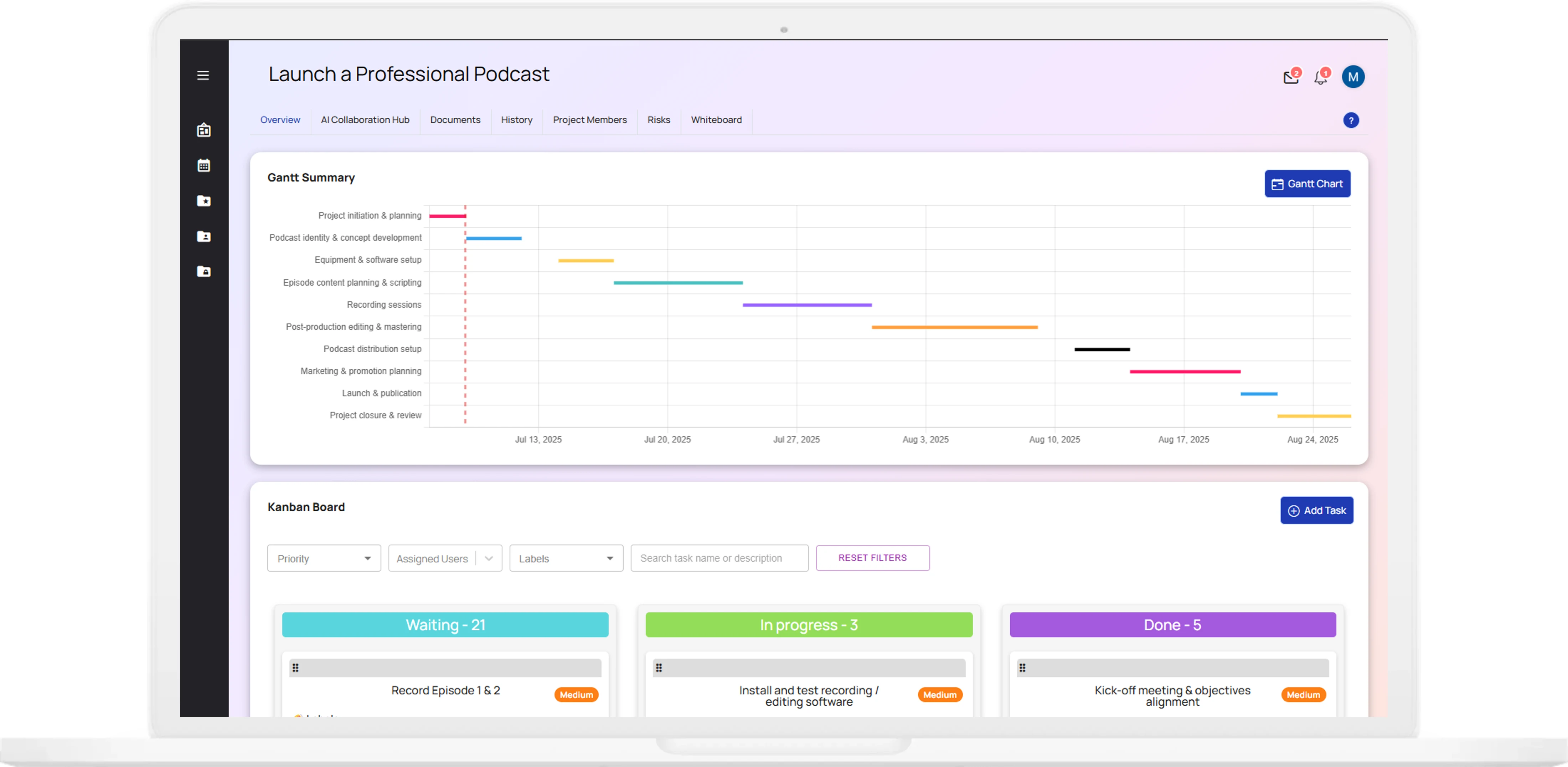
Artificial Intelligence for Project Management | Discover how Altirya uses cutting-edge artificial intelligence to optimize project planning, budgeting, risk assessment, and collaboration. Sign up for free.
Run a free AEO + signal audit for your domain.
AI Answer Engine Optimization (AEO)
List once. Convert intent from live AI conversations without heavy integration.
Start using the AI-powered data analysis tool by following these steps: 1. Upload your dataset in CSV, TSV, or Excel format. 2. Explore your data using the Exploratory Data Analysis (EDA) tab to view distributions and basic plots. 3. Begin with simple requests such as generating basic plots or summaries. 4. Gradually increase complexity by asking for correlations or advanced visualizations. 5. Use the Q&A box to ask questions about code, results, or errors. 6. Reset the session to analyze a new dataset or start over. 7. Download your results as an HTML report once analysis is complete.
You can upload data files in the following formats for analysis: 1. CSV (Comma-Separated Values) files. 2. TSV or tab-delimited text files. 3. Excel spreadsheet files. Ensure your data is structured with rows as observations and columns as variables. Prepare and clean your data beforehand, naming columns properly. Complex data types may not be supported; consider alternative platforms for those.
AI-driven data analysis tools often include robust security features to protect data privacy. These features typically involve row-level security, which restricts data access based on user roles, ensuring that individuals only see data relevant to their permissions. Context filtering further refines data visibility by applying specific filters based on the user's context or needs. Additionally, role-based permissions manage who can view or interact with certain data sets. Together, these measures safeguard sensitive information while enabling secure and trusted data analysis within organizations.
User data privacy is handled by following these steps: 1. Personal information is collected only when provided directly by the user. 2. Usage data such as browser type and visited pages are collected without IP or demographic data. 3. Uploaded data is stored temporarily during the session and deleted immediately after. 4. Data sent to AI models is limited to structural information and optionally a random sample of five rows. 5. Users can opt out of sharing data structure and prompts via settings. 6. Data is stored securely using Google Analytics and SQL databases to improve services. 7. The service commits to not selling or renting personal data except as described in the privacy policy.
Implement data analysis and visualization by following these steps: 1. Collect and organize relevant business data. 2. Choose appropriate data analysis tools and techniques. 3. Analyze data to identify trends, patterns, and key metrics. 4. Design dashboards and visualizations that clearly communicate insights. 5. Integrate dashboards into business workflows for easy access. 6. Continuously update data and visualizations to support decision-making.
Use an AI-powered platform to automate data analysis by following these steps: 1. Connect your data sources such as spreadsheets, data warehouses, or applications. 2. Use AI agents to generate queries and analyze data with SQL, Python, or no-code tools. 3. Automate insights delivery through workflow connectors like Slack or email. 4. Build customized dashboards quickly to visualize data and share with your team. 5. Schedule automated runs to keep insights updated regularly. This approach accelerates exploratory analysis and enables self-service analytics for all technical levels.
Setting up an AI-based data analysis tool typically involves a few straightforward steps. First, connect your data source, which can be a variety of databases such as PostgreSQL, MySQL, Snowflake, or even CSV files. The connection process is designed to be quick, often taking less than a minute. Once connected, you can start asking natural language questions directly to the tool. The AI converts these questions into SQL queries in real-time, exploring the data iteratively to provide detailed answers and generate interactive visualizations. For developers, embedding the tool into applications via API or iframe can be done in just a few minutes with minimal coding.
Obtain valuable data insights from in-video analysis using AI by following these steps: 1. Analyze demographics to understand the audience profile. 2. Detect positive and negative sentiment expressed in the video content. 3. Generate word clouds and keyword reports to identify trending topics. 4. Assess brand safety by detecting sensitive content such as nudity, minors, or inappropriate language. 5. Combine these insights to make informed marketing and product decisions based on authentic video data.
Startups can improve their conversion rates by leveraging data-driven insights that analyze user behavior and product performance. By integrating analytics data with session replays and funnel analysis, businesses can identify high-impact optimization opportunities. Prioritizing these opportunities based on key performance indicators (KPIs) allows startups to focus on changes that yield the greatest improvements. Additionally, comparing product flows and user experiences with competitors helps uncover actionable suggestions. Implementing these insights autonomously on a regular basis can lead to steady growth in conversion, activation, and retention rates.
Using AI-driven insights directly from a data stack allows organizations to access real-time, accurate, and governed information without manual intervention. This approach leverages the full potential of existing data infrastructure by applying AI algorithms that understand the semantic layer and business rules. Benefits include faster decision-making, reduced errors, improved data governance, and enhanced trust in the insights provided. It also enables data teams to focus on higher-value activities rather than routine data processing tasks.