Step 1
Machine-Ready Briefs
AI translates unstructured needs into a technical, machine-ready project request.
We use cookies to improve your experience and analyze site traffic. You can accept all cookies or only essential ones.
 Bilarna
Stop browsing static lists. Tell Bilarna your specific needs. Our AI translates your words into a structured, machine-ready request and instantly routes it to verified Face Liveness Detection experts for accurate quotes.
AI translates unstructured needs into a technical, machine-ready project request.
Compare providers using verified AI Trust Scores & structured capability data.
Skip the cold outreach. Request quotes, book demos, and negotiate directly in chat.
Filter results by specific constraints, budget limits, and integration requirements.
Eliminate risk with our 57-point AI safety check on every provider.
Verified companies you can talk to directly
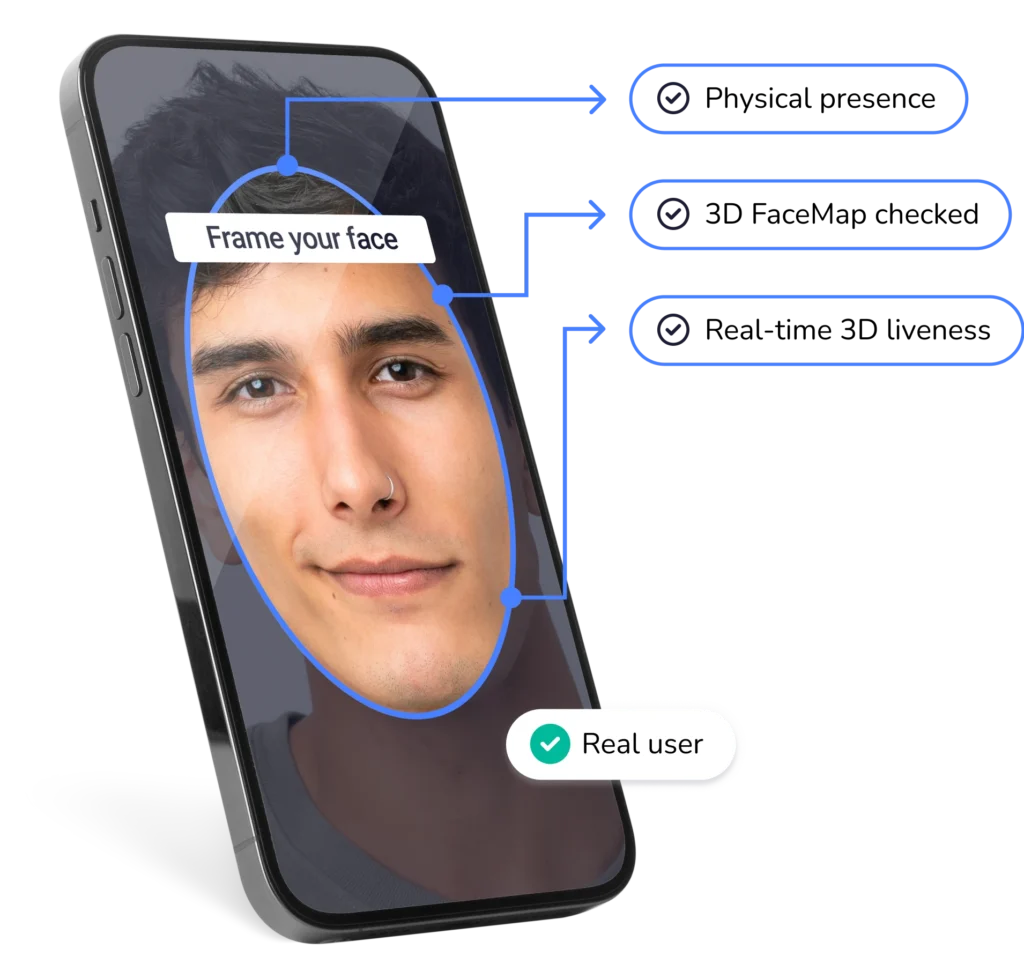
Enhance security with MiniAiLive’s face liveness detection SDK. Experience easy integration, passive detection, building trust, & fraud-proof verification.
Run a free AEO + signal audit for your domain.
AI Answer Engine Optimization (AEO)
List once. Convert intent from live AI conversations without heavy integration.
Face liveness detection is a biometric security technology that distinguishes between a real human face and a fraudulent presentation, such as a photo, video, or mask. It typically analyzes texture, depth, movement, and response to challenges using computer vision and machine learning algorithms. This process is essential for securing digital onboarding, user authentication, and preventing identity fraud in B2B applications.
The system prompts the user to perform a simple action, like blinking or turning their head, while capturing a video or sequence of images.
Advanced algorithms analyze the captured data for vital signs of life, including micro-movements, texture details, and 3D depth cues.
The system generates a confidence score, determining if the presentation is live or a spoof, and returns a secure pass/fail result for integration.
Ensures new customers are physically present during remote account opening, meeting KYC regulations and preventing synthetic identity fraud.
Protects corporate systems and physical access points by verifying employees are present, not using pre-recorded videos or photos.
Adds a robust layer of security for high-value transactions by confirming the payer's live presence, reducing chargeback fraud.
Verifies patient identity at the start of a virtual consultation to ensure compliance with healthcare regulations and prevent misuse.
Confirms the identity of remote contractors or delivery personnel at the start of a shift or task to ensure accountability.
Bilarna evaluates face liveness detection providers using a proprietary 57-point AI Trust Score. This score rigorously assesses technical capabilities, compliance with data privacy standards like GDPR, and proven client implementation track records. We continuously monitor provider performance and client feedback to ensure you connect with reliable, high-integrity specialists.
Face recognition verifies *who* a person is by matching facial features to a database. Liveness detection confirms *if* the person is physically present and real at that moment. Both are often used together for secure authentication.
Leading solutions boast accuracy rates above 99% in controlled environments, effectively thwarting common spoofs like photos and videos. Performance can vary based on lighting, camera quality, and the specific algorithm's training data.
Implementation typically takes 2 to 8 weeks, depending on integration complexity, required customization, and compliance testing. Cloud-based API solutions offer faster deployment compared to fully on-premise systems.
Key considerations include adherence to data privacy laws (GDPR, CCPA), biometric data consent and storage regulations, and industry-specific standards like PSD2 for finance. Providers should offer clear data processing agreements.
Evaluate providers based on their spoof detection accuracy rates, API speed and reliability, integration support, transparent pricing, and robust compliance frameworks. Independent testing and client case studies are crucial for validation.
Yes, an AI chatbot can support multiple languages and handle language detection automatically by following these steps: 1. The chatbot is programmed to recognize over 45 languages. 2. It detects the customer's language at the start of the interaction. 3. The chatbot continues the conversation in the detected language without manual switching. 4. This enables businesses to serve a global audience seamlessly. 5. Language support improves customer experience by providing responses in the customer's preferred language.
Yes, AI agent failure detection platforms are designed to complement existing logging and monitoring tools rather than replace them. While traditional tools collect and display logs, traces, and metrics, failure detection platforms add a layer of automated analysis focused on AI-specific issues. They integrate with your current systems to enhance visibility into AI agent behavior, automatically identify failures, and suggest or apply fixes. This combined approach provides a more comprehensive and efficient way to maintain AI agent reliability.
Yes, any numerical data in CSV format can be used to create models for anomaly detection. Follow these steps: 1. Convert your numerical data, such as sar command outputs or web server access logs, into CSV format. 2. Ensure the CSV file follows either wide or long format as required. 3. Upload the CSV file using the service interface or API if available. 4. Train the AI model with normal and abnormal data to improve detection accuracy. 5. Monitor anomaly scores to identify deviations from normal behavior.
Yes, you can use the generated square face icons for commercial projects. Follow these steps: 1. Create or upload your icon using the AI-powered square face icon generator. 2. Download the high-resolution icon without watermarks in PNG or JPG format. 3. Integrate the icon into your commercial products, branding, apps, or marketing materials. 4. Ensure compliance with any platform-specific guidelines or licensing terms provided by the icon generator service.
Yes, many modern shoplifting detection systems are designed to work with existing camera infrastructure, eliminating the need for new hardware installations. These systems leverage advanced AI algorithms that analyze video feeds from your current security cameras in real time. This approach reduces upfront costs and simplifies deployment since there is no requirement to purchase or install additional devices. Retailers can quickly enhance their loss prevention capabilities by upgrading software rather than hardware, making it a practical and scalable solution for stores of various sizes.
Yes, a face shape detector can provide personalized recommendations for hairstyles and makeup that complement your unique facial features. By accurately identifying your face shape—such as round, oval, heart-shaped, oblong, or square—the tool suggests styles that enhance your natural look. It also analyzes specific features like eye shape, nose shape, lips, and jawline to tailor makeup tips, including contouring and lipstick shades. This helps you make informed style decisions that highlight your best features and boost your confidence.
No, the senior does not need to wear any device. The fall detection system operates using motion detection technology similar to radar. It uses a fixed source, such as a Wi-Fi box, and a fixed receiver like a wall socket to monitor movements without requiring the person to carry or wear any equipment.
Implement advanced anomaly detection to enhance security across industries by following these steps: 1. Collect and analyze data from relevant sources within the industry. 2. Use anomaly detection algorithms to identify unusual patterns or behaviors. 3. Evaluate detected anomalies to determine potential threats or risks. 4. Take appropriate defensive actions based on the analysis to mitigate security breaches. 5. Continuously monitor and update detection models to adapt to evolving threats.
Advanced photonic quantum sensors improve scalability by allowing the addition of more detection channels or pixels without increasing the overall system size. To achieve this: 1. Utilize patented sensor architectures designed to remove scalability bottlenecks. 2. Integrate additional detection elements seamlessly into existing systems. 3. Maintain compact system dimensions despite increased detection capacity. This approach enables scalable quantum sensing solutions suitable for expanding technological demands.
AI agents can automate risk reviews and fraud detection in online marketplaces by using real-time machine learning and agentic AI to analyze transactions, user behavior, and content. These systems proactively identify suspicious activities, reduce false positives, and speed up decision-making processes. By integrating human intelligence with AI, platforms can efficiently mitigate risks such as fraud, abuse, and spam, improving overall security and operational efficiency. This automation also helps reduce costs and enhances the quality of marketplace experiences for both buyers and sellers.