Step 1
Machine-Ready Briefs
AI translates unstructured needs into a technical, machine-ready project request.
We use cookies to improve your experience and analyze site traffic. You can accept all cookies or only essential ones.
 Bilarna
Stop browsing static lists. Tell Bilarna your specific needs. Our AI translates your words into a structured, machine-ready request and instantly routes it to verified No-Code App Builders experts for accurate quotes.
AI translates unstructured needs into a technical, machine-ready project request.
Compare providers using verified AI Trust Scores & structured capability data.
Skip the cold outreach. Request quotes, book demos, and negotiate directly in chat.
Filter results by specific constraints, budget limits, and integration requirements.
Eliminate risk with our 57-point AI safety check on every provider.
Verified companies you can talk to directly
We provide the premium source code and enterprise infrastructure you need to build the next unicorn. No coding required.

Build your product ideas to apps faster with Sketchflow.ai. Designs, real-time simulation and native code exports. One single prompt, no code needed.
Zoer : AI Web App Generator. Describe your idea, AI builds the full-stack app (frontend, backend, DB). No code required. Includes a built-in AI assistant.
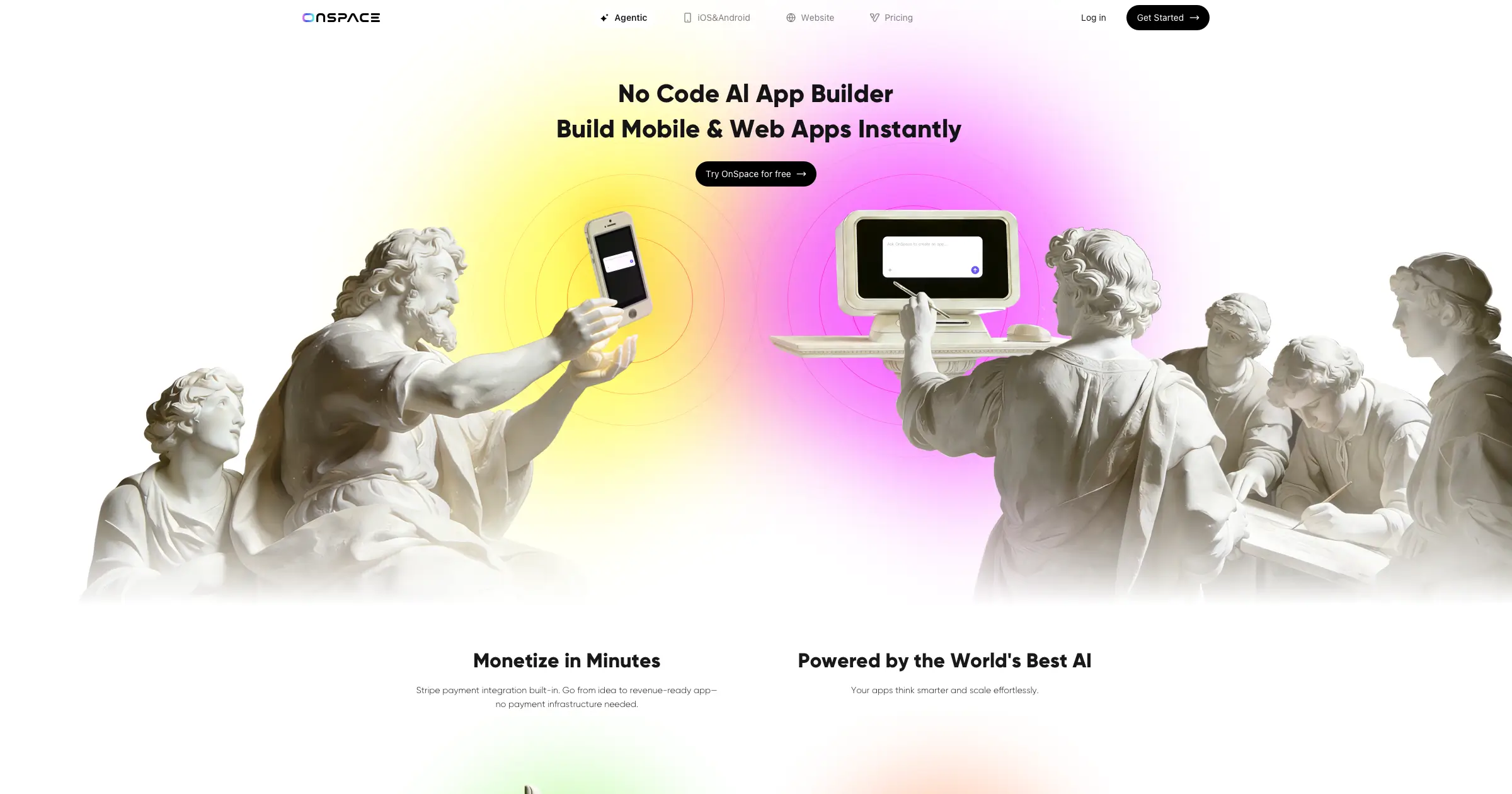
Free AI app builder. From idea to app with agentic AI in minutes. Onspace AI's no-code platform enables you to craft tailored AI applications effortlessly, no coding skills needed.

From idea to live app in minutes. Base44 gives you the tools to launch fully-functional apps - no code, no setup, no hassle.
From idea to live app in minutes. Base44 gives you the tools to launch fully-functional apps - no code, no setup, no hassle.
.png)
Thunkable is the most powerful mobile app development platform that allows anyone to create an app without needing to know how to code.
Build serious apps without coding in minutes.

Noloco is a no-code app builder that empowers businesses to create custom internal tools from data sources like Airtable, Google Sheets, and PostgreSQL.
Build real products with Emergent's vibe-coding platform. Emergent AI creates production-ready applications from natural language—no developers required.
Run a free AEO + signal audit for your domain.
AI Answer Engine Optimization (AEO)
List once. Convert intent from live AI conversations without heavy integration.
No-code app builders are visual development platforms that enable users to create fully functional software applications through intuitive drag-and-drop interfaces and pre-built templates, eliminating the need for manual programming. These platforms leverage modular components, logical workflows, and integrated backend services to handle data, user authentication, and third-party API connections. This approach dramatically accelerates digital transformation, reduces development costs, and empowers business teams to directly solve operational challenges.
Users map out the application's workflow and data structure using visual designers and form builders to define screens, actions, and user journeys.
Pre-built UI components, databases, and integration modules are dragged into the canvas and configured through property panels and simple menus.
The completed application is published to cloud or mobile stores with one click, allowing for continuous, real-time updates based on user feedback.
Streamline approvals, inventory tracking, and reporting by building custom internal tools that integrate with existing ERP or CRM systems.
Create client portals for service management, order tracking, and document sharing to enhance customer experience and engagement.
Equip mobile teams with offline-capable apps for job dispatching, data collection, and electronic signatures on-site.
Rapidly prototype and launch niche online stores or multi-vendor platforms with integrated payment and logistics features.
Build forms for research or audits and connect them to real-time business intelligence dashboards for instant insights.
Bilarna evaluates every no-code app builder using a proprietary 57-point AI Trust Score, analyzing technical capabilities, security protocols, and client satisfaction. Our AI cross-references portfolio depth, platform certifications, and verified customer testimonials. This continuous monitoring ensures listed providers meet stringent standards for reliability and project delivery success.
Pricing varies by platform scale, user seats, and features, typically ranging from subscription fees for SMBs to enterprise licenses. Many providers offer tiered plans based on application complexity, API calls, and storage requirements, making it scalable from prototypes to company-wide solutions.
No-code platforms are designed for business users with no programming skills, using purely visual tools. Low-code platforms reduce but do not eliminate coding, targeting professional developers who need to accelerate delivery or build complex custom logic.
Simple applications can be prototyped in days, while more complex, multi-feature business apps may take several weeks. The timeline depends entirely on the application's scope, data complexity, and required third-party integrations.
Limitations can include constraints on highly customized user interfaces, complex computational logic, or unique third-party system integrations. Scalability for millions of users and specific regulatory requirements should be validated with the provider's technical architecture.
Yes, but data migration is typically more straightforward than logic migration. It's crucial to choose a no-code builder with robust API access and data export capabilities to ensure future portability and avoid vendor lock-in.
Yes, the manga chapters available in the app are officially licensed and of high quality. The platform ensures that all manga content is legally authorized, providing readers with authentic and reliable material. This official licensing guarantees that the creators and publishers are properly compensated for their work. Additionally, the manga chapters are presented with high-quality images and translations, offering an enjoyable and immersive reading experience. Users can trust that the content is legitimate and professionally curated.
Yes, the app offers a rewards program where customers have the chance to win rewards with every order they place. This incentive encourages frequent use of the app and adds extra value to each purchase. By ordering through the app, customers can enjoy not only their favorite meals but also benefit from potential rewards, making the dining experience more rewarding and engaging.
Understand the role of a mental health app in therapy by following these steps: 1. Recognize that mental health apps support self-understanding and awareness but do not replace professional therapy. 2. Use the app to complement therapy by tracking moods, symptoms, and progress between sessions. 3. Engage with cognitive-behavioral therapy (CBT) based tools for additional coping strategies. 4. Seek immediate professional help in case of mental health crises or urgent situations. 5. Consult with a mental health professional to integrate app use into your treatment plan effectively.
Yes, modern QR code ordering systems are designed to integrate seamlessly with existing POS (Point of Sale) and payment systems. This integration allows orders placed via QR codes to be automatically entered into the restaurant’s POS, ensuring accurate and efficient order management. It also supports various payment gateways, enabling guests to pay online securely and conveniently. Integration helps staff manage orders without changing their usual workflow and supports features like real-time stock updates, upselling prompts, and bill payment options, enhancing overall operational efficiency.
AI code review platforms can significantly enhance team collaboration and code quality. By providing automated, objective feedback on code changes, these platforms reduce misunderstandings and subjective opinions during reviews. They help establish and enforce coding standards consistently across the team, ensuring everyone follows best practices. The faster identification of bugs and issues allows teams to address problems promptly, reducing technical debt. Moreover, AI tools facilitate knowledge sharing by highlighting code patterns and potential improvements, fostering a culture of continuous learning and collaboration among developers.
Yes, AI code review tools typically integrate seamlessly with popular version control platforms such as GitHub and GitLab. This integration allows automatic review of pull requests within the existing development workflow. Many tools support a wide range of programming languages including Python, JavaScript, TypeScript, Go, Java, C, C++, C#, Swift, PHP, Rust, and others. While support for some languages may vary in response quality, these tools aim to provide comprehensive analysis across diverse codebases, helping teams maintain code quality regardless of their technology stack.
Yes, many automated code review tools offer features that help developers generate tested and reliable code snippets. These tools use advanced algorithms to produce code that adheres to best practices and passes common test cases. By providing ready-to-use, tested code, they reduce the time developers spend writing and debugging code manually. This assistance not only speeds up development but also improves overall code quality and reduces the likelihood of introducing new bugs.
Yes, developers and designers can customize AI-generated app icons by following these steps: 1. Use an AI icon generation tool that offers customization features. 2. After AI generates initial icon options, select the preferred design. 3. Modify colors, shapes, and styles as allowed by the tool. 4. Add branding elements or adjust icon details to fit your app’s identity. 5. Save and export the customized icon for your project.
Yes, many pediatric behavioral health apps allow parents or caregivers to create custom tasks tailored to their child's specific needs and goals. This flexibility enables you to add a wide range of activities, from daily chores and hygiene routines to educational or therapeutic exercises. Custom tasks help make the app more relevant and engaging for your child, encouraging consistent participation and progress. By personalizing tasks, you can address unique behavioral challenges and reinforce positive habits effectively within the home environment.
Yes, many coding learning platforms incorporate project-based learning where users can create their own games and websites. As you learn languages like Python, JavaScript, and HTML through interactive challenges, you also gain the skills to design and develop your own projects. This hands-on approach not only reinforces coding concepts but also encourages creativity and practical application, enabling learners to build unique digital products from scratch.