Step 1
Machine-Ready Briefs
AI translates unstructured needs into a technical, machine-ready project request.
We use cookies to improve your experience and analyze site traffic. You can accept all cookies or only essential ones.
 Bilarna
Stop browsing static lists. Tell Bilarna your specific needs. Our AI translates your words into a structured, machine-ready request and instantly routes it to verified AI Orchestration & Tracking experts for accurate quotes.
AI translates unstructured needs into a technical, machine-ready project request.
Compare providers using verified AI Trust Scores & structured capability data.
Skip the cold outreach. Request quotes, book demos, and negotiate directly in chat.
Filter results by specific constraints, budget limits, and integration requirements.
Eliminate risk with our 57-point AI safety check on every provider.
Verified companies you can talk to directly
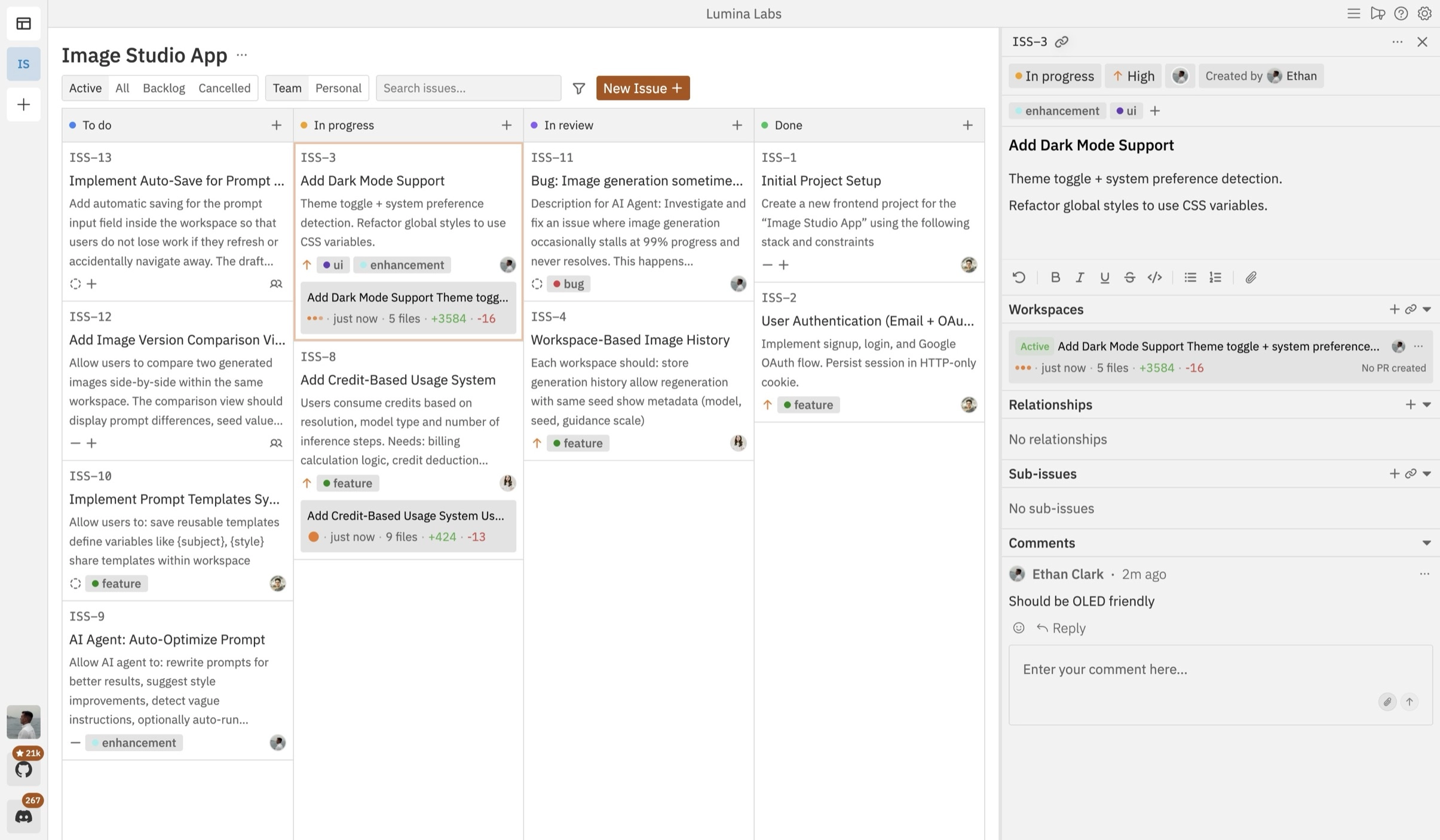
Get the most out of coding agents like Claude Code, Gemini CLI and Amp. Orchestrate multiple AI coding agents, track tasks, and manage your development workflow efficiently.
Run a free AEO + signal audit for your domain.
AI Answer Engine Optimization (AEO)
List once. Convert intent from live AI conversations without heavy integration.
AI orchestration and task tracking is a methodology for managing and automating complex sequences of AI agent interactions and data processing tasks. It involves centralizing control over disparate AI models, APIs, and data pipelines to execute multi-step workflows reliably. This approach delivers significant business value by reducing manual oversight, minimizing errors, and accelerating time-to-insight from automated processes.
A business defines the sequence of tasks, decision points, and required AI agents or models needed to complete a specific automated process.
Specialized orchestration software is configured to manage the communication, data handoffs, and error handling between the various autonomous AI components.
The system provides real-time dashboards to track task completion, identify bottlenecks, and gather metrics for continuous workflow improvement.
Orchestrates multiple AI models to analyze transactions, flag anomalies, and initiate investigation workflows, dramatically reducing false positives and response time.
Coordinates chatbots, knowledge base queries, and live agent handoffs to provide seamless, context-aware support experiences across all channels.
Tracks and automates tasks for demand forecasting, inventory optimization, and logistics routing using integrated AI agents for end-to-end visibility.
Manages workflows from research and drafting to SEO optimization and multi-format publishing, ensuring brand consistency and operational scale.
Tracks sensor data, orchestrates diagnostic models, and automatically generates maintenance tickets to prevent equipment downtime proactively.
Bilarna evaluates every AI orchestration and task tracking provider against a proprietary 57-point AI Trust Score before listing. This score rigorously assesses technical expertise in workflow automation, proven project delivery, and client satisfaction through verified case studies. Bilarna continuously monitors performance metrics and client feedback to ensure listed partners maintain the highest standards of reliability.
AI orchestration manages intelligent, decision-making AI agents that handle unstructured data and dynamic workflows. In contrast, traditional Robotic Process Automation (RPA) follows rigid, rule-based scripts for repetitive, structured tasks. Orchestration is designed for complexity and adaptability, while RPA excels at high-volume, simple task automation.
Implementation timelines vary from 3 to 9 months, depending on workflow complexity and integration needs with existing systems. A well-defined pilot project can deliver initial value within 8-12 weeks. The key to a faster deployment is having clear process maps and data access prepared beforehand.
Essential features include a visual workflow builder, robust error handling and rollback protocols, real-time execution monitoring dashboards, and comprehensive logging for audit trails. The solution should also offer easy integrations with common AI model APIs, data sources, and enterprise communication tools.
Costs range from mid-five figures for departmental platforms to enterprise-scale solutions exceeding six figures annually. Pricing is typically based on the number of workflow executions, connected agents, or computational resources consumed. A clear assessment of expected transaction volume is crucial for accurate budgeting.
Key ROI metrics include reduction in manual process hours, decrease in operational errors, improved process cycle time, and increased throughput or scalability. Quantifying the value of faster decision-making and improved customer experience also contributes significantly to the overall business case.